
10K Steps or Post-Meal Walks: Which One Wins?
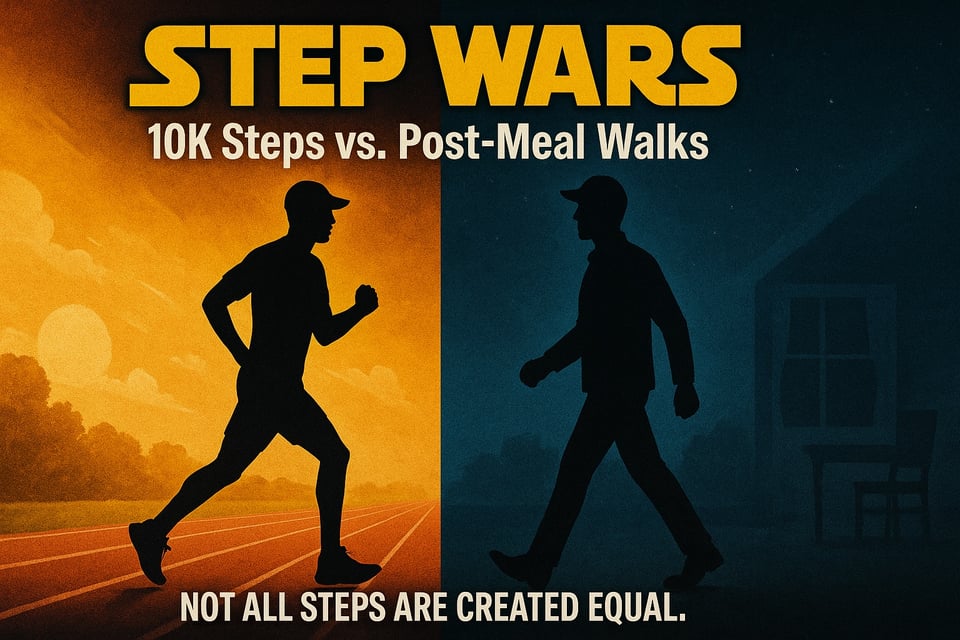
It’s 7:30 PM. You’re pacing around your living room like a Roomba with a purpose. Why? Because your step tracker says 8,437, and you're chasing that magic number: 10,000 steps. It’s a badge of honor, a digital high-five, a goal that’s somehow become gospel.
But here’s the twist: What if you’ve been walking toward the wrong finish line?
The Birth of 10,000 Steps: A Marketing Masterstroke
Let’s rewind to Tokyo, 1965. A Japanese company launches a pedometer named the “manpo-kei,” which literally translates to “10,000 step meter.” It wasn’t based on science. It was based on what sounded motivating and marketable. And it worked. People bought in. Over time, 10,000 steps became a health mantra around the world.
But recent studies suggest you don’t need to hit that magic number to see benefits. In fact, walking just 6,000 to 8,000 steps per day can already reduce your risk of chronic disease — especially if those steps are timed right.
Enter: The Digestive Stroll
Now meet the quiet disruptor: the post-meal walk. Not a marathon. Not a hike. Just 10–15 minutes of light walking after you eat.
This idea isn’t new. Cultures around the world have practiced this casually — think Italy’s passeggiata after dinner. But it was popularized in modern health circles by Dr. Michael Mosley, a British physician and science journalist, who spotlighted how post-meal movement can flatten blood sugar spikes.
Here’s what the science says:
Even 2 minutes of walking after a meal can significantly lower post-meal blood sugar levels (2022 meta-analysis, Sports Medicine).
Post-meal walks help muscles act like sponges, soaking up glucose from your bloodstream.
This light movement mimics a gentle insulin effect — without needing your pancreas to work overtime.
The Step Dilemma: Is More Always Better?
Let’s be honest: marching in circles before bed just to hit 10K might be missing the forest for the trees. Sure, total movement matters. But when it comes to metabolic health — balancing blood sugar, managing energy crashes, and avoiding that post-meal slump — when you walk might matter more than how much you walk.
So, if you’re choosing between a 3,000-step midnight loop and a 10-minute post-dinner stroll? Go with the stroll. It’s efficient, evidence-based, and doesn’t require 20 laps around your kitchen island.
Your Metabolic Move:
Start small. Try a 10-minute walk after your next meal. No trackers. No pressure. Just a habit with high returns.
Because in the end, it’s not about chasing numbers. It’s about moving with purpose.
Takeaway:
Forget the step count. Time your walk, tame your glucose.
Take the next step.
Great health starts with everyday choices.
GlucoSpike predicts sugar spikes, how much time to walk, and what to balance.
Available on the App Store and Play Store.