Which One's Pink?
I’m back, this part also took me a while, but I’m happy with the results. I can’t really think of anything else to say here so, enjoy :)
Part 3: The Wall (1979)
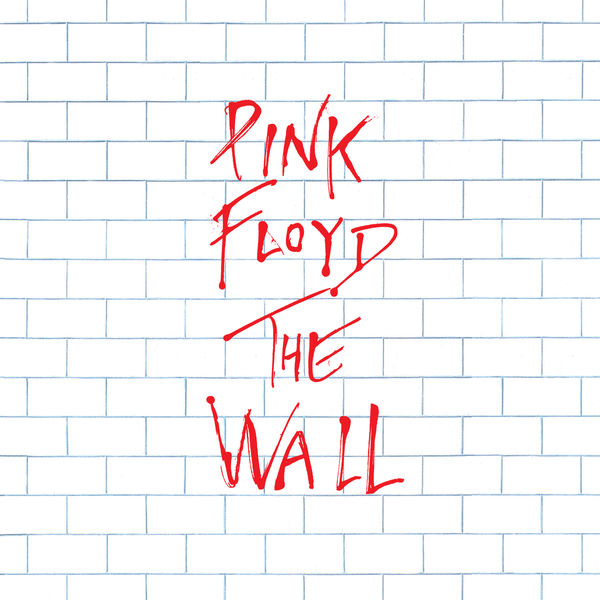
In my mind, there are five distinct eras of Pink Floyd. You’ve got “The Piper At the Gates of Dawn” and “A Saucerful of Secrets” (the Syd Barrett era), you’ve got “More” through “Obscured By Clouds” (the finding their sound again era), you’ve got “The Dark Side of the Moon” through “Animals” (the equal participation glory days era), you’ve got “The Wall” and “The Final Cut”, (the Roger Waters era), and finally there’s “A Momentary Lapse In Reason” through “The Endless River.” (the David Gilmour era)
And while planning this review, I had decided that I’d review The Piper because it had the most of Syd, skip the experimental era because I was already reviewing four albums, I’d do The Dark Side because it’s arguably the most famous, I’d do “The Division Bell” because it’s my favorite from the David Gilmour era, and I’d do “The Final Cut” because it’s the most obvious example of “this is essentially Roger’s solo album.”
But I was only about 4 tracks into my re-listen of “The Final Cut” when I remembered just how much I actually hate that album, and that I could basically make the same points about “The Wall” whilst not making myself sit through a god awful record. So here we are, not sitting through a god awful record, let’s talk about Pink Floyd’s 1979 release, “The Wall.”
Even more so than Dark Side, “The Wall” is really meant to be experienced in its entirety. It’s not built to be picked apart and sorted into playlists. And sometimes, I think that might be its primal flaw. Once you start looking at these tracks by themselves, a significant number of them feel weak, like filler. But I also don’t think it’s fair to judge them like that, because more than an album, “The Wall” is a musical. It uses the tracks between its high points to tell its story.
But before we get into the story, I think it’s also important to note all that was happening behind the scenes with the band at this point. Roger wrote “The Wall” whilst Pink Floyd was on their first stadium tour, “In the Flesh.” It was sort of a mess, but no one hated it more than Roger, who often fantasized about a wall between him and the audience. So he wrote about that, and about everything else that came to his mind, and he ended up with rough draft of this record. He presented the idea to the rest of the band, and they liked it well enough. (which is to say they liked it more than his other concept that would later become ‘The Pros and Cons of Hitchhiking’) Of course, their enthusiasm for a new album might have been helped by their strong desire to get out of the financial hole they’d dug for themselves. Long story short, there was a bad investment made, and they had lost millions of pounds in just a few years. The band actually ended up having to leave the UK for about a year to avoid bankruptcy. So when they came back to start recording “The Wall”, well … tensions were a little high. A new producer was brought in, Bob Erzin, and let’s just say that Roger’s … big personality, didn’t sit too well with him. This meant a lot of arguing. But believe it or not, the relationship between Bob and Roger wasn’t the biggest of Floyd’s problems, as throughout the entire recording process, Richard was dealing with his failing marriage and falling into what sounds like a pretty serious depression. Roger, being the asshole that he is, didn't care even a little bit, and their relationship totally broke down. This eventually led to Roger firing Richard, just a few days before “The Wall” was supposed to be released. (but note that he is heavily featured on the album regardless)
So now that you know all of that, let’s talk about the story. Pretty much every story has to have a main character, that’s a given. In this case our main character is Pink, a fictional rockstar, somewhat autobiographical as he’s partially based on Roger himself, but he’s also partially based on none other than Syd Barrett. I guess even the entirety of “Wish You Were Here” couldn’t get Syd out of Roger’s system.
I feel like Pink being so heavily inspired by members of the band itself means the story, the lyrics, and just the whole album really, end up feeling intensely personal and at times a little bit uncomfortable. Which I could probably also say about “The Final Cut”, but what makes “The Wall” different, is that while “The Wall” feels like a deep conversation, “The Final Cut” feels like an angry trauma dump from Roger.
But enough background, let’s actually get into this story. We begin with the album’s opener, “In the Flesh?”, in which Pink, mid-concert, informs the crowd that he is about to give an impromptu performance of his life’s story. The song itself introduces some musical themes that we’ll see throughout the remainder of the album, but overall I don’t think it’s a track I’d come back to on its own.
The next few tracks are all about Pink’s childhood, the death of his father in WWII, and his troubles at school. The highlight of said tracks would obviously be “Another Brick In the Wall, Pt. 2.” See, I told you we’d hear that weird dolphin scream again. This is (currently) Pink Floyd’s most popular song in terms of streaming numbers, their highest charting single, and the only Floyd song to have reached one billion streams on Spotify. So that should mean that it’s pretty good, and yeah, it definitely is. It stays true to Pink Floyd’s usual style while also implementing a sort of “disco” vibe that was popular at the time. It is however exceedingly overplayed, which sucks because it probably means I’ll be sick of it in a few years.
Our story continues with “Mother”, in which Pink describes his overbearing … well, mother. It’s a beautiful song, some fantastic acoustic guitar from both Roger and David there.
Fast forward a little to “Empty Spaces” and Pink is now touring in the United States and looking to “complete his wall” (become totally isolated?) He’s then introduced to um … groupies. This brings us to “Young Lust”, definitely one of my highlights. I think my favorite part about listening to “The Wall” in its full album form is hearing Roger singing the line “How should I complete the wall?” and how it transitions so smoothly into the first line of “Young Lust” that David sings, “I am just a new boy, a stranger in this town.” It’s just so endlessly satisfying, I could listen to just that part for hours.
But about “Young Lust” though, god I just love this song. It’s a nice break from all the shorter, shouty-er, Roger-centric songs. Don’t get me wrong, this album does those songs in a far better way than “The Final Cut” does, but in a sea of Roger Waters, David Gilmour can be a breath of fresh air. “Young Lust” also brings back that funky, rock sound from “Another Brick In the Wall, Pt. 2”, which I appreciate.
“Young Lust” ends with a phone call that’s supposed to read to the listener as Pink learning that his wife is cheating on him. I have to admit, I don’t think I quite understood this part of the story until I read about it, but that’s probably just the whippersnapper in me not understanding the whole “telephone operator” thing.
This section also makes me lose a lot of respect for this Pink character, like you’re allowed to have all these groupies, but your wife has to stay loyal to you. And when she doesn’t stay loyal, you’re all broken up about it like you didn’t do anything to deserve this. Hate to say it Pink, but you’ve kinda dug your own grave here.
Okay so now we know that Pink has brought this girl back to his hotel room, and he knows his wife is cheating on him. This means we’ve made it to “One of My Turns” as far as the album is concerned, where we learn that Pink then scares the girl away when he trashes the hotel room in a fit of rage.
The remainder of disc 1 establishes that Pink is now completely isolated from the world, his “wall” is complete, and so is the “Another Brick In the Wall” trilogy. Parts 1 and 3 definitely don’t feel as complete as part 2, but I come back to part 3 pretty frequently, it’s a cute little song. (but cute feels like the wrong way to describe it)
Moving onto disc 2, we open with another hit, it’s “Hey You.” Okay so I have a confession to make here, I don’t think I’m as in love with this song as everyone else seems to be. It’s nice, but at some point these lyrics just get to be a little too much. We’re kind of walking the border between deep and overly pretentious here. That being said, I can still find the good in this one, it’s got that reverb-y acoustic guitar we heard on “Mother” that I really liked.
A little later we come to “Nobody Home”, the track that is most obviously making references to Syd Barrett and his “Hendrix perm”, his “satin shirt”, and his “wild staring eyes.”
We get a little more of the autobiographical WWII-related memories with “Vera” and “Bring the Boys Back Home” before we reach another album high point, “Comfortably Numb”, in which Pink’s manager and roadies find him unresponsive in his hotel room, and inject him with some unnamed drug so he can perform later that night. This is another mostly autobiographical tune, inspired by the muscle relaxants Roger was often injected with while on the infamous “In the Flesh” tour to help with his hepatitis.
What can I say about “Comfortably Numb?” Yeah, it’s a perfect song. I love the ethereal choruses and the eerie verses, I love the contrast between David and Roger’s respective sections (incredibly fitting than Roger’s are in B Minor, and David’s are in D Major), I love that bass line, and of course I love those guitar solos. Shred-y solos have their place, and they’re absolutely impressive, but these kind of solos are equally impressive, and it’s pretty cool to see how much emotion someone can invoke with just a few notes.
I’d say the three big hits from this album are “Another Brick In the Wall, Pt. 2”, “Hey You”, and “Comfortably Numb.” What makes these songs (especially “Comfortably Numb”) stand out in the crowd of “The Wall’s” 26 tracks? There’s an even balance of Roger and David here. There’s no one person completely dominating the song, and it’s able to highlight the strengths of both without one sticking out like a sore thumb. Pink Floyd could only reach their creative peak when everyone was able to contribute equally. “The Wall” comes pretty close to having the vibe of a Roger Waters solo album, but what saves it is the moments in which the spotlight is handed to someone else.
Continuing on with the story though, the drugs kick in and Pink is able to play his show later that night, we’ve made it to “The Show Must Go On.” This is a pretty vocal-centric song, aiming for that Beach Boys vibe. And what better way to achieve said vibe, than hiring a Beach Boy? This feels like a good time to note that Bruce Johnston, singer, songwriter, composer, and Beach Boy as of 1965, is featured not only on this track, but on “In the Flesh?”, its counterpart “In the Flesh”, as well as “Waiting For the Worms.” This is also the only track of the 26 to not feature Roger. However, on unofficially released demo recordings, he can be heard singing a cut verse just before the bridge.
“Am I really unsure,
Wild eyed in the spotlight?
Fuck me, what a nightmare
Who’s there?
Have they all gone?
It’s okay, now you’re in luck,
The worms have fled the rising sun.
Their evil power is on the wane.
Forget the past and start again.
There must be some mistake … ”
I think it’s fine they cut this verse, it doesn’t tell you anything you wouldn’t already know from the following track “In the Flesh.” Not to be confused with “In the Flesh?” As far as the story is concerned, “In the Flesh” follows Pink to the aforementioned concert, and in a drug-induced hallucination, he believes that he is a fascist dictator. Wow, what a turn. He urges the crowd to show their loyalty by picking on his minority fans, or as he calls them “undesirables”, and “throwing them up against the wall.” He ends the song with the line “If I had my way, I’d have all of you shot.” And as the song fades, you can hear the seemingly excited crowd chanting “Pink Floyd.” What a downer of a track, but I’d be lying if I said it wasn’t cool to hear them drop the name of the band in a song.
You can still hear that chanting as the next song, “Run Like Hell” begins. Lyrically, it’s basically a continuation of the previous track, resulting in a pretty horrifying scene in the film adaptation of the album. Musically though, this is probably my top pick of the entire record. That intro with the delay pedal sounds amazing, and I think this is probably Roger’s whiny, emotional voice at its best. “Run Like Hell” and “Another Brick In the Wall, Pt. 2” are the result of producer Bob Erzin telling David Gilmour to spend a few nights at disco clubs, just to see what they’re playing. I think it’s more obvious in “Another Brick In the Wall, Pt. 2”, but you can definitely still hear it in the beat of “Run Like Hell.” And hey, listen to that outro, there’s that terrifying scream again.
“Stop” is nothing special musically, it’s only 30 seconds, but it’s the point at which Pink’s hallucination ends. Then comes “The Trial” which isn’t about a real trial, but rather a trial in Pink’s head that he’s put himself on for the crime of “showing feelings of an almost human nature.” He’s gone against his mission towards self-isolation by stopping his hallucination, and now he is expected to pay … himself. This is such a fun song, which feels weird to say because “The Wall” is such a dark album, but it really is fun. The focus isn’t on traditional rock band instruments like guitars or drums anymore, but rather on the orchestra that was hired to back the song. We’ve got flutes, trombones, a harp, bassoons, I’m convinced there isn’t an instrument this song doesn't use. And if there was ever anything to prove that Roger Waters totally could’ve been a voice actor in another life, it’d be this. He’s the prosecutor, the schoolmaster, Pink’s wife, his mother, and of course … Judge Worm. Like I hate to spoil the dark mood here, but there’s literally nothing funnier than hearing the “prosecutor” address the judge as “Worm your honor.” Anyway, the song ends with Judge Worm ordering Pink to “tear down the wall.” But before I stop talking about “The Trial”, just a fun little fact for you all, here on backing vocals is Clare Torry from “The Great Gig In the Sky.”
This leads me to the final track, number 26, “Outside the Wall.” The song begins with the loud crash of the wall coming down, but we never really learn what happens to Pink. I suppose we’re led to believe that he will never truly break free from the wall, because the last lyric, “Isn’t this where …” leads right back to the first, “… we came in?”
Highlights:
Run Like Hell
Comfortably Numb
Young Lust
Final Score: 9/10 (Amazing)
Part 4: “The Division Bell” (1994)
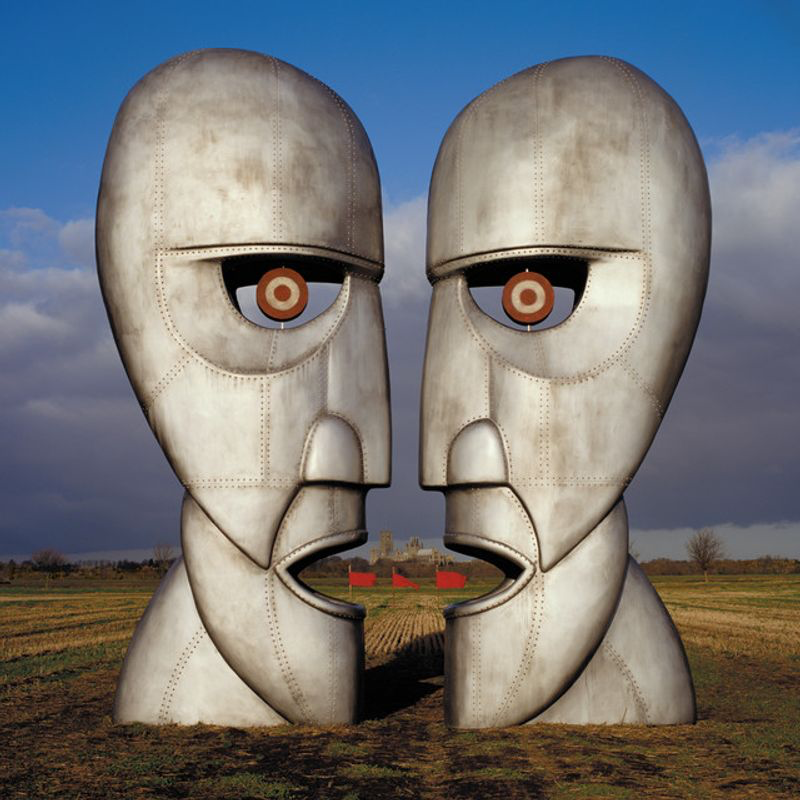
For clarification, about a year post-”The Final Cut”, Roger left Pink Floyd, tried to dissolve the band (unsuccessful), tried to prevent them from using the name Pink Floyd (unsuccessful), and made an overall fool of himself. And with no bossman there to tell him no, Richard returned to the keyboard. The remaining members debuted their new lineup with their 13th studio album, “A Momentary Lapse In Reason.” And I can only describe it as just that, a momentary lapse in reason, hence why we aren’t talking about it.
Seven years later they were ready to record again, and we got “The Division Bell.” Now I get the impression that most people find this record a little boring, and they don’t think it comes anywhere close to 70’s Floyd, but honestly, I couldn’t disagree more. The production sounds great, David’s voice is majestic as always, his then-fiancée, now wife, Polly Samson contributed some great lyrics, and we’ve got Dick Parry back on the saxophone here after a few albums without him. So while I can see the complaints (it’s a lot of soloing, and it doesn’t sound exactly like glory days Pink Floyd), I still really appreciate it for what it is, and I hope this review will convince you to give it a chance. (if you haven’t already)
We open with an instrumental, “Cluster One”, which not gonna lie, was giving me traumatic flashbacks to “A New Machine, Pts. 1-2”, from “A Momentary Lapse In Reason.” I must admit, I’m not a huge fan of this track at least as an opener. It starts off really quiet and fuzzy, and that’s purposeful, but it caused a whole lot of people to wonder if their physical copy of the album was faulty, and whether or not they should be having a very stern conversation with their local record shop. There’s not too much to say about this track, mostly because it has none of what makes this album interesting, and all of what makes it boring. There comes a point where quiet soloing over a quieter instrumental gets to be pretty uninteresting.
Next is a fairly big hit for this album, “What Do You Want From Me.” This being the first song to have some lyrics, it gets into the general lyrical concept for the record, that being “personal relationships.” I know, a pretty drastic shift away from lyrical creativity after just having looked at “The Wall.” That being said though, this album did have a few lyrically strong moments. The concept for “What Do You Want From Me” came from an argument between David and Polly, but in the end it fired more shots at Roger than anyone else. I like this song, I like its funky blues feel, but it’s definitely not my favorite of these tracks.
My favorite of these tracks would have to be the third, “Poles Apart.” I love everything about this song, I think it’s perfect. It’s again, firing shots at Roger, but of course you won’t find too many Floyd albums without at least vague references to Syd, even here, without Roger as a lyricist. And on a similar note, I really enjoy the instrumental break at about 2:11 that seems to be mimicking the vibe of “The Piper at the Gates of Dawn”, kind of like that first two minutes and change of “Time” were.
Track 4, “Marooned” is the only Pink Floyd song to have won a Grammy, so I should probably talk about it. It’s completely instrumental, and probably the best of David’s guitar work here. It’s very “heavenly” sounding and it’s got that island feel with all those seagull and crashing wave effects. This song sounds a lot like the majority of Floyd’s real final work, “The Endless River”, released in 2014. And that’s probably because most of “The Endless River” is literally the freezer-burnt leftovers of “The Division Bell.” But I think this style works 100 times better like this, in small doses, than it does consuming 90% of an hour long record. So yeah, I really like this track, and I’m happy that Pink Floyd was honored at the Grammys. But this being the only time that ever happened will always confuse me, because this isn’t even close to their best work.
Track 5, “A Great Day For Freedom” is absolutely nothing special, and it comes as no surprise that it’s the least streamed as far as Spotify numbers go. It’s trying very hard to be political, maybe even trying to get that Roger feeling back, but it’s very forgettable instrumentally, and the lyrics also fail to be all that head-turning.
Track 6 however is definitely a comeback, I really like this one. “Wearing the Inside Out” is entirely sung by Richard Wright, his first lead vocal credit since “Time.” It’s a bit of a lyrical mystery, the real answer isn’t really out there as far as I can tell. It’s been speculated to be Syd-inspired, about Richard’s struggle with depression, maybe about isolation in general, much like “The Wall.” But whatever it’s really about, I think it sounds lovely, and I’ll say it again, Richard should’ve been given the chance to sing more often. He’s the Ringo Starr of Pink Floyd.
Moving onto track 7, it’s another one of my favorites, “Take It Back.” People often compare the vibes of this one to U2, which I think is funny considering that those groups occupy two totally different parts of my brain. Despite this being Pink Floyd’s 4th highest charting single, I’m sort only hearing bad things about it in the reviews I’m reading. And I suppose that makes sense when I look at their criticisms, their main complaint being how “dated” it sounds, but I literally could not agree less. As the #1 hater of cheesy 80’s pop, which is what these reviews are claiming “Take It Back” sounds like, I don’t think that’s what this is at all. It’s got a great vocal performance, its lyrics aren’t too shabby, and while I’ll admit its riff is rather “edge-like”, I don’t think that’s a bad thing at all. And something I don’t think I’ve said about any of the previous 6 tracks, I absolutely love its drum beat. Nick Mason is honestly so overlooked when it comes to drummers for popular rock bands.
I don’t think the next few tracks are worth going to great detail about, so I won’t. They just don’t really stick out to me, they sound like the rest of the album. I mean, maybe with the exception of that “Keep Talking” intro that samples Steven Hawking? Anyway, go take a listen if you want, but I’m just gonna skip over them for now.
The album closes with its biggest hit streaming wise, “High Hopes.” You know it’s Floyd because it’s 8 and a half minutes long, but I think it’s got enough going on here to justify that. It has a strong chorus, Richard’s piano is shining, and it’s got another great guitar solo. But more than anything, I can’t help but have a soft spot for its lyrics. I don’t really think of “The Endless River” as a real Pink Floyd album, heck, I don’t even think David Gilmour thinks of it as a real Pink Floyd album, so this will always be the final Floyd song for me. And what better way to end a 27 year discography than to reminisce about your youth. It feels poetic to spend your last song singing about all the fun you had with the friends, turned bandmates, you don’t see anymore, and the mutual hometown of all three of your band’s … frontmen? Can you even call them all frontmen? I’m not really here to talk about music videos, but if you haven’t seen this one, I strongly encourage you to check it out. I think it serves as the perfect, albeit strange, visual for this song. As the track fades out you can very clearly hear the album’s namesake, “The Division Bell”, which actually appears to be the bell heard on one of my favorite Floyd songs, “Fat Old Sun.”
Highlights:
Poles Apart
Take It Back
High Hopes
Final Score: 7.5/10 (Pretty Good)
Finally! This review took me so long, I hope you all enjoyed. Catch me back here in a few days to hear my thoughts on a band that appears to have developed a significant rivalry with someone called … “Foo?”
-
The guitar solos in Comfortably Numb give me chills, they hit so hard, every time.
-
This one is pink: https://en.wikipedia.org/wiki/Pink_(singer)
Hope that helps. :)
I think "The Wall" is my favorite of the Pink Floyd albums. Nice write-up!
I have been struggling with foo lately, so I am hopeful you can find someone to help me with it.
-
↳ In reply to Joanna
Actually, this is pink: https://en.wikipedia.org/wiki/Pink_Anderson
And boy, whoever this "foo" guy is, he seems pretty dangerous. If only I had me some fighters to scare him off.
-
I have a hard time wrapping my head around that your in high school ! I grew up in the 60’s and listened to this music and never thought about the dynamics of how it was made! Elenore! You have opened up my eyes!
-
↳ In reply to Barbara
To me, the people involved in making the music and the stories behind it are just as, if not more, important as the music itself. I find this stuff so endlessly interesting, and I'm so glad I've found people that are willing to indulge me in that.
-
I think I learned more about Pink Floyd's history in your two posts about them than I ever bothered to learn on my own over all these decades.
Great write ups!
Add a comment: