The Wonderful Wizard of Floyd
Seeing as though we’re currently celebrating the 50th anniversary of a glory days Pink Floyd album, “Wish You Were Here”, I thought it would be fitting to discuss them next. I’m hoping this entry won’t take me as long as the previous one, but my hopes aren’t high.
A video came across my side of the internet the other day called something along the lines of “bands if they were foods.” It was a continuation of a previous video in which the creator had assigned foods to a few different classic bands, and in the comments of that previous video, viewers were arguing about what food Pink Floyd would be.
There were several ideas passed around, but the common theme seemed to be that they were a little bit of everything. They were a charcuterie board, they were tapas, but whatever they were, they were always a collection of something.
And I absolutely agree with that sentiment, which is exactly why I think they’d be interesting to talk about today. So I won’t waste any more time on an intro, let’s discuss.
Edit: Okay so I wrote that whole “hope this entry won’t take as long” thing as a younger, more naive, four days ago me. It did take me as long, and it’s actually taking me longer. Which is why I’m splitting this review in two, so this is the first part. Enjoy. 🤘🙂
Part 1: “The Piper At the Gates of Dawn” (1967)

If I had a nickel for every popular 70’s rock band that was formed in the 60’s, but went through a drastic change in style/genre when they lost their frontman to likely drug-induced schizophrenia, I’d only have two nickels, but it’s weird that it happened twice, no? Well we’re not going to talk about Fleetwood Mac just yet, like I said, we’re doing Pink Floyd right now.
“Piper At the Gates of Dawn” sounds absolutely nothing like the Pink Floyd you’re probably used to. And that’s without a doubt because it’s led by psychedelic rock legend, Syd Barrett. We’ll never know what a Syd-led Floyd in the 70’s could’ve sounded like, but I’m willing to bet that they wouldn’t have the reputation they do today had they continued like this.
When Chappell Roan blew up just a few years ago, her slogan “she’s your favorite artist’s favorite artist”, was making the rounds. And I don’t think I find much truth in that personally, because it’s very clear to me that Syd Barrett was my favorite artist’s favorite artist.
This man is just so beloved among music legends, kind of like the way Kurt Cobain is beloved. We lost them young, they never had a chance to make a bad album, have a bad take, god forbid commit a bad crime, etc. Of course, Syd is a bit different because he actually lived to 60. But anyone who’s done even the slightest bit of research on schizophrenia will know that it’s a horrible disease, and a pre-1967 Syd Barrett just isn’t the same as a post-1967 Syd Barrett.
But regardless, any rockstar will happily tell you about how much they adore(d) Syd and his music. The “Influenced” section of his Wikipedia page might as well be the Rock N’ Roll Hall of Fame. You’ve got Marc Bolan, Jimmy Page, The Sex Pistols, David Bowie, Pete Townshend, Paul McCartney, the list goes on and on.
And speaking of that last one there, what I find crazy about this album, or maybe just this time in general, is that if you had exited the recording space while the band was in the process of making this album, walked just a few feet down the hallway, and opened the next door you saw, you would’ve walked right in on The Beatles making Sgt. Pepper’s. And while the concepts and general genre descriptions of these two albums are sort of similar, they just couldn’t be more different.
Pink Floyd’s then producer, Norman Smith, described the “Piper At the Gates of Dawn” sessions as being full of tension, citing Syd as the main difficulty. Norman had some pretty traditional ideas, musically that is, and to the shock of absolutely no one, that didn’t mix too well with Syd’s psychedelic vision. Syd wanted long, sprawling, and eerie songs, which Norman did his very best to discourage.
One listen to the final product will tell you that Norman didn’t have too much luck with his discouraging. The songs can indeed get pretty long, the longest of them coming in at just under 10 minutes. And they’re nothing if not eerie, they’ve all got this weird energy to them. They’re like those old-school fairytales, the creepy ones that haven’t been adapted for Disney movies yet.
The album begins with “Astronomy Domine”, which I think is the perfect opener to give you a taste of what you’re about to hear. This is what I imagine space would sound like if it had a soundtrack. (this, or maybe one of those instrumental albums by Brian Eno) If you’re not at least a little bit into “Astronomy Domine”, I can’t imagine you’d get much out of the remainder of the record. This track has every defining feature of the album all in one. We have Syd’s spooky vocals, mysterious lyrics, and guitar tones that could make a small child cry, Roger Waters’ heavy bass, Nick Mason’s crashing drums, and Richard Wright’s organ that was really the only constant throughout the Floyd discography. (well … mostly, but we’ll get to that later) If you’re looking for a single track to sum up Pink Floyd in their early state, it’s “Astronomy Domine”
The record continues with the more … approachable track, but just as delightfully quirky, “Lucifer Sam.” This is probably my favorite of Syd’s guitar riffs, although there are a few more contenders. David Gilmour is obviously the iconic Floyd guitarist, but this is the only album on which he isn’t featured, because he hadn’t been hired yet. I think there’s this misconception that David was hired to completely replace Syd and this makes them some sort of rivals, that’s not true at all, they were friends from college, never rivals, and David was hired to try and get working material out of Syd, as well as cover for him when live performances inevitably went south. If they had really been rivals, I’m not too sure you would’ve been able to find David on so much of Syd’s solo work post-Floyd. (which you should totally check out if you’re curious, it was some of the first classic rock I listened to on my own) Regardless, I think this leads to a lot of trying to compare them, and most dismissing any of the work with guitars that Syd did. And that’s ridiculous, because there’s some genuinely pretty cool stuff going on here, like “Lucifer Sam.”
Somewhere in the middle of this record comes “Pow R. Toc H.” And wow is that intro offputting. This is the first of many times we’ll hear Roger’s terrifying dolphin scream across Pink Floyd’s 15 studio albums. I’ve really never heard anything like that sound, and it’s so hard to describe. You can hear it again in “Careful With That Axe Eugene” and “Run Like Hell”, but its most famous use would probably be in the first few seconds of “Another Brick In the Wall, Pt. 2.” Apparently, “Pow R. Toc H.” was crafted after the band sat in on The Beatles recording their song “Lovely Rita.” Man, this is why I love classic rock. Everything is always connected in one weird way or another. Anyway, this and the following track “Take Up Thy Stethoscope and Walk” are probably my least favorite of the album. They’re certainly some of the most experimental, and again, just really offputting at times.
The next track that sticks out to me, and another possible pick for favorite riff is “Interstellar Overdrive.” Are you seeing the space theme yet? This would be the longest song I was mentioning earlier, coming in at about 10 minutes, but it honestly feels longer because it’s entirely instrumental. Wikipedia tells me this riff originated from then manager, Peter Jenner, trying to hum fellow 60’s psych-rock group Love’s, “My Little Red Book.” There was some video I watched somewhere of a guy talking about this song and how he’d like to do a punk-rock cover of it, which I think would work well if he ever wanted to try, the riff does feel a little punk-ish. Wikipedia also tells me that a bass riff from this song inspired a later Floyd song, “Let There Be More Light” which has to be one of my favorites, if not my favorite, of the early songs.
The b-side of this album takes a bit of a different direction than the a-side. While the a-side is spacey and more traditionally psychedelic, the b-side is more of that creepy fairytale vibe I was talking about. These songs are sort of hit or miss for a lot of people, but I personally really like them. They’re kind of silly, but that’s part of their charm. My parents will know better than anyone that I quote these songs endlessly, even if literally no one understands what the hell I’m talking about. But how can I not quote you when you give me lyrics like “I want to tell you a story about a little man, if I can, a gnome named Grimble Gromble”, or “I know a mouse, and he hasn’t got a house, I don’t know why I call him Gerald.” Like if that’s not genius, I really don’t know what is, you feel me?
The closing track “Bike”, I find especially amusing, if only for the eerily quiet moment at the end of the chorus and the way it’s so rudely interrupted with the loudest drum fill I’ve literally ever heard come from Nick Mason’s kit, before Syd launches into the next absurd verse. If you haven’t already taken a listen to this song, I really encourage you to do so, it’s just so god damn funny. It’s very rare that I put a song on the everyday playlist just because I think it’s funny, but I really like this one.
So that about wraps up “The Piper At the Gates of Dawn”, Pink Floyd’s wacky whimsical debut. This album is far from perfect. It’s rough around the edges, and I’d be lying if I said some of its lengthy experimental psychedelic freak-outs aren’t just a bit too long for my personal taste. But it’s endearingly weird, and for that I’ll always love it. I mean how many albums can include things like “wind-up toys”, “temple blocks”, “tubular bells”, “bowed bass”, and “screams”, in their credits. There’s just not anything else even remotely like this album, not even another album made by Pink Floyd themselves, that has to mean it’s special.
I’m well aware that a Syd-led Pink Floyd is not to everyone’s tastes, and that’s okay. But at the very least you should be thankful that he was ever there in the first place, because if not for him, it’s totally possible that Pink Floyd could’ve been called “The Megadeaths”, forever. And wow, that would have been a real tragedy.
Final Score: 7/10 (Pretty Good)
Highlights:
Lucifer Sam
Bike
Astronomy Domine
Part 2: “The Dark Side of the Moon” (1973)
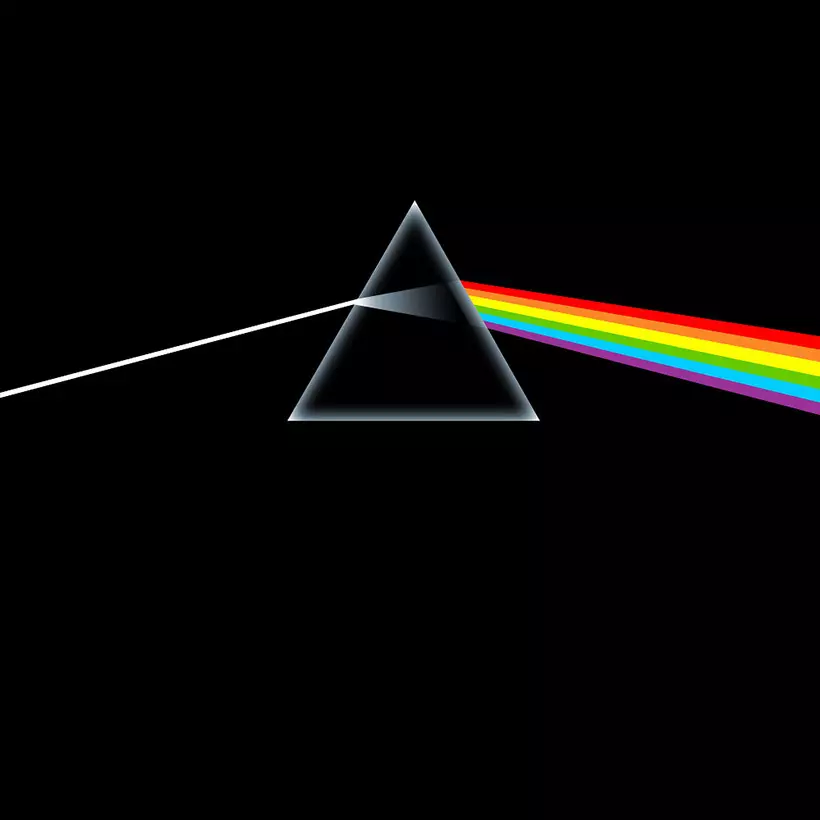
Okay, it’s the moment you’ve all been waiting for, cool rainbow cover time. Let’s talk about, arguably, the most famous of Pink Floyd’s records, “The Dark Side of the Moon.”
Any music nerd who says they don’t like this album is just trying to be contrarian. Okay, that might be a bit of stretch, but I genuinely don’t see any reason to hate this record, it’s just so good.
When talking about albums with reputations and legacies like Dark Side’s, I get nervous, because what more could I possibly have to add? I’m just some teenager, I wasn’t even around to see this album’s release. But I’m going to review it anyway, just for some fun, so let’s discuss.
Although it’s not as clear as a record like “The Wall”, this too is a concept album, the concept being “lunacy”, and what makes people go mad. (not so subtly inspired by their mysterious estranged ex-bandmate, who didn’t end up sticking around for too long after The Piper) Its themes include, Aging, Death, Money, War, and Mental Illness, which is of course what got Syd in the end.
The album’s first “real” track, although they all kind of bleed into each other at some point, is “Breathe (In the Air).” I’d like to think of this as Dark Side’s “Astronomy Domine”, because it’s introducing all the defining features of the album in just one song. The gang’s all here, the overly reverb-y guitars, Roger’s pretentious but often thought-provoking lyrics, and that damn organ that really shouldn’t have any place in music like this, but somehow works perfectly.
The first time I played “Breathe (In the Air)” in the car with my parents, the ending totally shocked them, because there wasn’t one. They assumed that I had messed with it and skipped to the next song, I hadn’t of course, songs off Dark Side just aren’t really meant to be experienced by themselves, you’re meant to hear the full album.
The next notable song would be “Time.” We already know that Pink Floyd are suckers for a good off-putting intro, and boy does this track have one. But once you get past the chorus of alarm clocks, yeah it’s pretty good. Although I do find some charm in this monster of an intro, because it sounds a little to me like the Pink Floyd that made “The Piper At the Gates of Dawn.” But considering this intro is supposed to be mimicking insanity, that might be saying something about that first album. “Time” is the first we hear of Richard Wright’s vocals, on this album that is. I think he’s probably the most overlooked of the Floyd vocalists, mostly because he just didn’t sing a whole lot. But the songs he did sing are pretty much all phenomenal, including this one of course. He shares the lead vocals credit with David Gilmour here, who sings the verses. The lyrics are again Roger Waters originals, after Syd left, Roger became the primary lyricist for all Pink Floyd songs,“The Dark Side of the Moon” included. I don’t really think about that much because he’s not always singing said lyrics, but in hindsight it’s incredibly obvious. I think Roger’s lyrics reflect who he is as a person, they’re strange, at points brilliant, and incredibly ostentatious.
“Time” has a pretty sick guitar solo, although I must admit, I don’t think it’s his best. That being said though, it’s one heck of a solo nonetheless. After that comes one more verse from David before it’s back to Richard to sort of close the song. And his delivery of the final line, “The time is gone, the song is over, thought I’d something more to say”, is so haunting. At points Richard as a vocalist sort of sounds like a combination of David and Syd, but in that line especially he sounds like his own person, and I think it’s wonderful.
The end of “Time” isn’t really a part of “Time” at all, it’s a reprise of “Breathe (In the Air)”, of course sung by David Gilmour. It’s just as lovely as its counterpart, I have nothing more to say on that.
“Time” segues into the next track “The Great Gig In the Sky.” Surprise surprise, I love this track just like everybody else does, so I won’t spend too much time here. We’ve got the wildly skilled session singer, Clare Tory, showing off her incredible vocals alongside a pretty cool piano part from Richard Wright. I used to call this my favorite Pink Floyd song, and though I don’t think it holds that title anymore, it’s still one I come back to.
That leads us to the big hit from Dark Side featuring everyone’s favorite bass line, it’s “Money.” Although David Gilmour is singing lead, this song is really Roger Waters’ masterpiece, as he wrote not only the lyrics, but the music as well, including that aforementioned 7/4 bass line. I liked reading about Roger’s process for writing these particular lyrics.
“Well, this is it. And I have to decide whether I’m really a socialist or not.” (Roger Waters, The Observer, 1993)
There’s no reason this song shouldn’t have been the hit. It’s incredibly catchy, it’s well crafted, it’s got a cash register, what’s there not to love? It’s also got that awesome saxophone solo performed by session musician Dick Parry, the first of two on this record. He actually came back to do “Shine On You Crazy Diamond” a few years down the line, also a great sax solo for what it’s worth.
When I say “Money” is well crafted, I’m specifically talking about how it feels pretty average in length, but it actually comes in at around six and a half minutes. That’s always a sign of a quality song.
For Pink Floyd, the outro here is pretty modest. And once you learn that those voices you hear are the product of Roger playing interviewer for a day in the studio, you can enjoy it on a whole new level. I guess Wings was recording that day and fell victim to Roger’s questioning. Paul McCartney had answered, but his clip wasn’t included, although you can hear guitarist Henry McCulloch saying “I don’t know, I was really drunk at the time.”
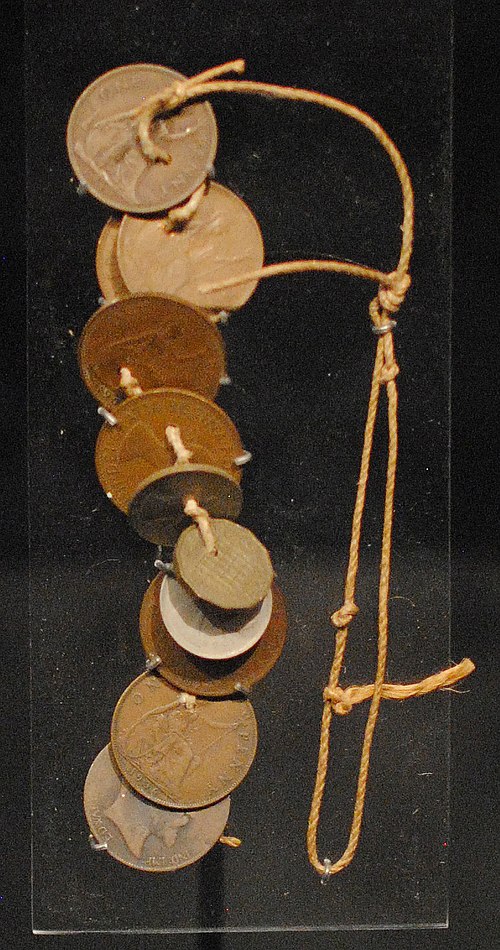
Before I stop yapping about “Money” though, I thought I’d show you all the picture of the coin string Nick Mason made to record the intro, which I found for the first time while writing this and thought was pretty cool.
Okay, we’re getting to the end here, let’s talk about “Us and Them.” So I guess this song was originally written by Richard Wright for the movie “Zabriskie Point” in 1969, but the director Michelangelo Antonioni really didn’t like it, so he used “Careful With That Axe, Eugene” instead. And I can’t really blame him for liking “Careful With That Axe, Eugene”, because that’s one of my favorite Floyd songs, and possibly my favorite song title of all time. But I will say he was totally missing out by rejecting this one, because it’s absolutely beautiful.
I think most people are under the assumption that this song is entirely about war, and yeah, that’s what the first part is about, but my research tells me it’s also about a lot of other things, which was interesting to read. This track features the second of Dick Parry’s sax solos on Dark Side, I think I might prefer this one over the “Money” solo. I always say I hate those cheesy 80’s sax solos, but I don’t think this is the same thing at all. This feels tasteful, not too in your face if you know what I mean. And it’s not paired with that plastic-y production I can’t stand, so that helps too.
“Any Colour You Like” is the prog-ish instrumental that bridges the gap between “Us and Them” and the two part album closer. I’ve always liked this one, but streaming numbers tell me it’s the least popular track aside from the interludes “Speak to Me” and “On the Run.” I think the synthesizers are pretty cool, and it’s nothing like the other 9 tracks. I don’t know, maybe I’m just a sucker for anything that puts the spotlight on Richard Wright.
Anyway, after “Any Colour You Like” comes said two part album closer, “Brain Damage” followed by “Eclipse.” These are technically two individual songs, but they merge together so seamlessly, and they both feature Roger Waters on lead vocals, so everyone essentially treats them as one. “Brain Damage” calls back to the original concept of lunacy, speaking about mental health and insanity far more obviously than the previous tracks. Its message and who it’s intended for is by no means subtle.
“And if the band you’re in starts playing different tunes, I’ll see you on the dark side of the moon.”
It’s then time for the “official” closer, “Eclipse.” It’s only two minutes and some change, and that’s including the half a minute of almost complete silence interrupted every so often by Nick Mason’s makeshift heartbeat effect. It’s a simple song, but one of the most effective endings to an album I’ve heard. The record officially closes first with a quote from the then-doorman at Abbey Road studios, then with a faint orchestral performance of “Ticket to Ride”, by The Beatles.
“There is no dark side of the moon, really. Matter of fact, it’s all dark.” -Gerry O’Driscoll (Doorman, Abbey Road Studios, 1973)
Final Score: 10/10 (Perfect)
Highlights:
Time
Money
Brain Damage
Okay, catch me back here sometime in the next few days for the second half of this review where we’ll (hopefully) discuss “The Wall” and “The Division Bell.”
-
It's hilariously appropriate a review of Pink Floyd albums turns out to be too long to put in one newsletter entry ;-)
-
I like how you put all the music in context with other albums that were coming out at the same time. One has to appreciate the cross-influence, even if it isn't explicit. Your remark about how Syd Barrett's influencer notes on Wikipedia belongs in the Rock and Roll Hall of Fame is hilarious.
I think maybe it's the writer in me that doesn't connect super well with a lot of Pink Floyd's music. I can appreciate the artistry and I vibe with some of of their pieces, but I like lyrics. A lot of their work is too meandering for my tastes. I get why they are beloved, though.
-
↳ In reply to Joanna
For what it's worth, while I do understand your point of view here, the lyrics are sort of what makes Pink Floyd Pink Floyd for me. Like whether they're Syd's weird ones, or Roger's deep ones, or David's...uh...his...ones, they're a huge part of the music, and I don't think I'd like the band as much as I do without them.
-
For me, Pink Floyd has always pretty much fallen into the "Radio Band" for me. That means I will listen to a song of theirs that gets played on the radio but have zero interest in owning anything by the band.
I just have never been able to connect with any of their music that wasn't what you would call a "hit" single or radio airplay track.
But I love the way you do the write-ups on the two albums featured in this part of the article. It makes the albums far more interesting to me than if I tried to force myself to sit down and listen to them.
-
↳ In reply to Jay
I get why this isn't everyone's cup of tea, but I sure hope that I can make yapping about it interesting enough for most people to enjoy.
-
I haven't had the time to read the full review yet, but you'll get a demerit for: “Take Up Thy Telescope and Walk” because it's: "Take Up Thy Stethoscope and Walk" :)
I'll also note that David didn't just show up on Syd's solo albums, but he was the producer for many songs on at least two of the solo albums.
-
↳ In reply to GaranceD
So sorry that you appear to be beefing with autocorrect here, it’s been fixed. And by “showed up on” I did mean both played on and produced. I too check the “personnel” section. :)
Add a comment: