Albums 1-40' Revisited
I recently (ish) promised a reader that I had a Dylan entry in my future, so here it is. He’s the only musician ever to have won the Nobel prize in literature; he must be pretty damn good.
It’s my goal to one day have listened through all 40 of Bob Dylan’s studio albums; he really is one of my favorite artists. But God, are there really 40? There’s no way you really have that much to say; you have to cap it at some point. So it’s safe to say I can’t possibly cover every era of Dylan with this review (you won’t be hearing my thoughts on “Born-Again Christian Dylan”), but I’ll cover my favorites.
Part 1: “The Freewheelin’ Bob Dylan” (1963)
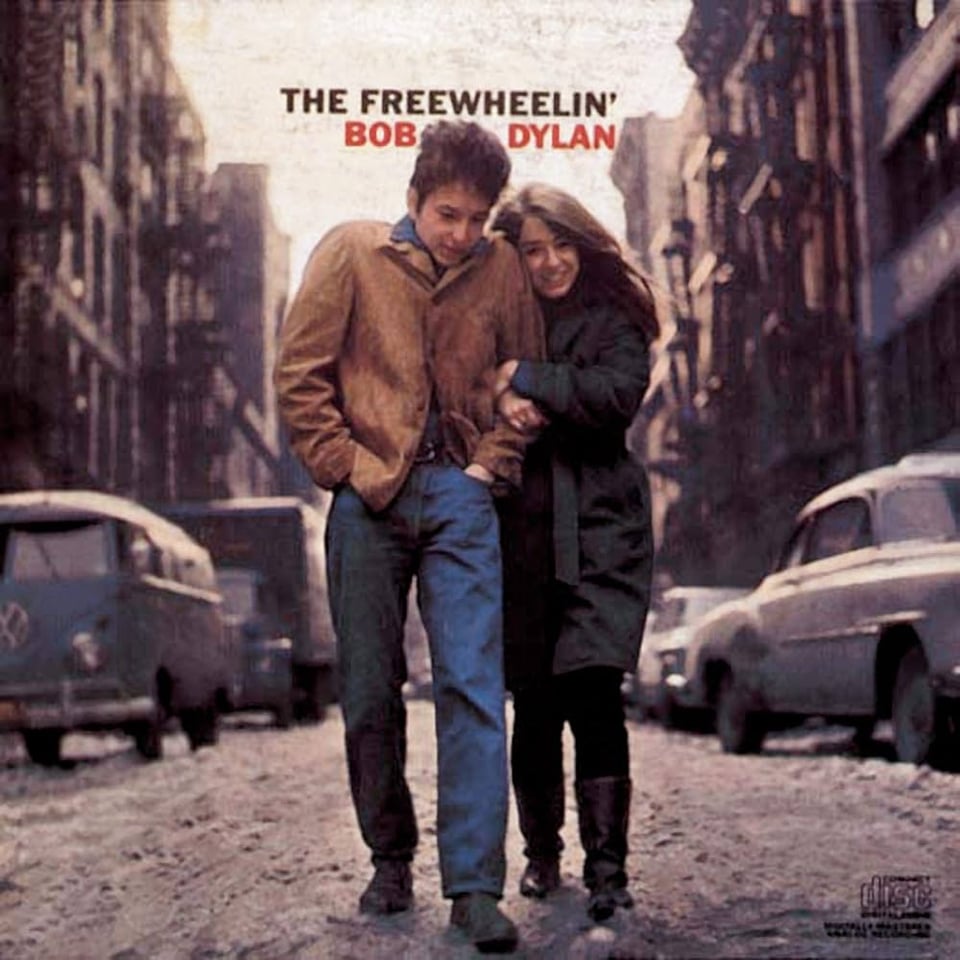
What better place to start than with the record that shot him to number one? Well, in the UK that is. This is a very simple album. Much like an early Foo Fighters record; these credits aren’t too crowded. There are a total of 5 additional musicians; all of whom play solely on track 11, “Corina, Corina.” But as simple as it may be, this is quite possibly the most notable folk album ever to be recorded. I say quite possibly because you could make an argument for plenty of other albums, but it wouldn’t be unreasonable to insist it’s this one.
He begins with an all time classic, it’s “Blowin’ In the Wind.” Like a decent chunk of his early work; this is a protest song. Joan Baez can say that Dylan is a performative activist all she wants, and maybe she does have a point, but there’s no denying that this song reaching the audience it did meant something. It’s a beautiful song. It may be a basic choice, but it’s a favorite of mine.
“Girl from the North Country” is another one of my favorites. It bears an undeniable resemblance to “Scarborough Fair”, but it’s an excellent re-purposing of that melody. He sort of re-purposed it a second time about a year down the line for “Boots of Spanish Leather”; which I might even like more than “Girl From the North Country.”
I’d like to talk about track 3, “Masters of War” next. Much like “Blowin’ In the Wind”; this too is protest music. But if you ask me, it’s far clearer in its message. It’s honestly beyond protest music; this is a diss track. Before Kendrick Lamar’s “They Not Like Us”, there was Bob Dylan’s “Masters of War.” It’s vicious, and I absolutely love it. “You ain’t worth the blood that runs in your veins” might just be my favorite lyric, like, period. Your blood, your veins, just being alive, they’re your most fundamental rights. To be told you aren’t worth even those is just cold. I can immediately picture these men that Dylan is trying to describe.
Tracks 4 and 5, “Down the Highway” and “Bob Dylan’s Blues” respectively are definitely weak points. “Down the Highway” has this … hillbilly? feel to it; I’m just not a fan. I’m not sure why I can’t get into “Bob Dylan’s Blues”, I just can’t.
I am however into track 6, “A Hard Rain’s A-Gonna Fall.” It pulls from the traditional English ballad “Lord Randall.” I absolutely love its imagery. It’s long, just about 7 minutes, which is pretty rare for early Dylan. I don’t mind though; I’ll sit through this one anytime. There’s not much else to say here; I have no notes.
This next one’s a doozy, it’s track 7, “Don’t Think Twice, It’s Alright.” I’ll make a bold claim here and say that just about anyone willing to pardon Dylan’s voice will enjoy this song. It’s just impossible to hate; it’s a perfect song. It might just be Dylan’s best work as far as instrumentals go, and it’s surely one of his best lyrically. I’ll have you know the youths have found this one; they’re fans of course.
Tracks 8 (“Bob Dylan’s Dream”) through 12 (“Honey, Just Allow Me One More Chance”) aren’t really anything to obsess over if you ask me. They’re good, but they’ve just never wowed me or anything.
He closes with “I Shall Be Free”; it’s sort of a silly song. It’s the perfect amount of silly for me personally; I actually really like this one. Is it a little weird to think that this is what closes a record containing songs as profound as “Masters of War” and “Don’t Think Twice, It’s Alright”? Yes, yes it is a little weird. But regardless, you don’t need to take this song too seriously; it can just be fun.
So that’s it; Bob Dylan’s second studio album that shook the world. I’ll just say that it was absolutely for good reason. It’s not perfect, not even close, but it’s a real gem. If you haven’t taken a listen by now; what are you doing? I’ve put many-a folk music skeptic on to this album before; they’ve all loved it.
Highlights:
Masters of War
Don’t Think Twice, It’s Alright
Blowin’ In the Wind
Final Score: 7.5/10 (Pretty Good)
Part 2: “Highway 61 Revisited” (1965)

Bob Dylan playing an electric guitar? The world must surely be ending. I kid of course; I actually prefer electric Dylan to acoustic Dylan. It’s kind of close though; maybe I’ll change my mind one day.
Anyway, the year is 1965. Dylan has just returned from his grand tour of England, and he’s feeling a bit drained. But he wrote a song about it, and he got the spark back. Well that song quickly turned into an album, and in late August of that year we got his sixth studio album, “Highway 61 Revisited.”
We open with arguably the most iconic Dylan song; although it’s not his most streamed; it’s “Like a Rolling Stone.” As classic as it is; it looks like it took a little while to get there. This would be the song written freshly post-tour, and I guess Dylan’s filter must have been gone because the first draft (which didn't include a chorus) was a whopping 20 pages long. But of course that isn’t the version we hear, he got it to a reasonable length eventually. Well, reasonable-ish, 6 minutes and 11 seconds is still pretty long, especially for a single.
“Like a Rolling Stone” has what I personally think is what makes electric Dylan so cool: an organ. And we have the legendary Al Kooper to thank for that. I call him legendary because he played just about every iconic organ part you know. “Free Bird”, “You Can’t Always Get What You Want”, lots of Dylan of course, I could go on really. But his part here was completely improvised which I find really impressive.
I don’t hear a lot about Track 3, “It Takes a Lot to Laugh, It Takes a Train to Cry.” I’m not sure why; it’s one of my personal favorites. I love the melody, and it’s very bluesy. I’m just a sucker for the blues; what can I say? This song was one of the first they recorded, after “Like a Rolling Stone” of course. That session was dedicated to “It Takes a Lot to Laugh…”, “Tombstone Blues”, and “Positively 4th Street”, the single meant to follow “Like a Rolling Stone.” I mention this only so I can gush about “Positively 4th Street”; it’s by far my favorite Dylan song. Go check that one out if you haven’t heard it.
If there were to be only one song you recognize from this album aside from “Like a Rolling Stone”, it would probably be track 5, “Ballad of a Thin Man.” Is this my second favorite of the record? No, but it’s really good. It’s very mysterious; I think part of Dylan’s charm is that he always sounds like he knows more than you. He sounds wise, and you can really hear that in this record, and especially in “Ballad of a Thin Man.” Also that piano goes unbelievably hard; it’s not that often you get to hear Bob Dylan on the piano. But when you do; he sounds pretty damn good.
Side 2 begins with “Queen Jane Approximately”, which serves as an interesting parallel to Side 1’s “Like a Rolling Stone.” It’s lyrics are essentially meaningless, but you can tell that they’re meant to be joyful, which feels refreshing.
And finally, we close with my personal favorite. It’s “Desolation Row”, which in my humble opinion has earned its place in the final tracks hall of fame. I just adore this song, I feel like I’m gonna struggle to convey just how great it is, but I’ll try anyway. “Desolation Row” comes in at just under 11 and a half minutes; it’s without question a little hard to sit through. But I promise it’s worth it, for its beautiful melodic guitar, and its story, and dare I say its vocals? Again, I recognize that Dylan isn’t the most technically proficient singer, but I genuinely think this is one of his better performances. You don’t necessarily need a Freddie Mercury range to sound good. So I know 11 minutes of Bob Dylan isn’t everyone’s cup of tea, but if you haven’t heard this song, I’d encourage you to give it a shot anyway. It was truly the perfect way to end this record.
And that’s all I’ve got on “Highway 61 Revisited”, the second of Bob Dylan’s albums to fundamentally alter the way the world saw folk music. But like, what does that even mean, folk music? I’ve listened to my fair share of “folk music”, but it’s beginning to feel more like a mindset than a genre. At the end of the day; I guess it doesn’t matter too much. If this really is folk; I think I’m a fan.
Highlights:
Desolation Row
Like a Rolling Stone
It Takes a Lot to Laugh, It Takes a Train to Cry
Final Score: 9.5/10 (Amazing)
So I took a little bit of a break; sorry about that. Life just gets in the way sometimes. I’m still not 100% happy with how this one turned out, but I hope you enjoyed regardless. Maybe I’ll revisit Dylan one day; I definitely have thoughts on his other projects. Anyway, catch me back here … eventually, for my (probably) not so hot takes on Metallica.
-
I wouldn't say Dylan's vocals on Desolation Row are my cup of tea, but WOW the lyrics on it are spectacular. It's just a fun song to listen to, and it takes a lot for me to say that about 11 minutes of Bob Dylan singing ;-)
-
I think that, when it comes to appreciating Dylan's singing, it really helps to have taken a shot at singing with any seriousness. I've been singing in one way or another for a bunch of years, and I've studied voice with some seriousness for 8 or 9 years, and I can tell you that, from my perspective, Dylan is one of the all-time greats. Emotional nuance, storytelling, character, attitude, humor... it's all there.
-
Also: https://i.redd.it/xrczdq7ktwz81.jpg
-
Oh how I wish I had any real sense of appreciation for Bob Dylan. While acknowledging the long and legendary aspect of his career, I have just never really gotten into his music in any measurable way.
I will say this though. If you like Al Kooper's contributions, you should check out his solo album 'Black Coffee', it's freaking great. I did a review of that one back when it came out originally and was shocked to have loved it so much.
-
I really enjoy 60s Dylan; he had so many nadsers! Maybe it's because I come to music with a writer's brain but I love pieces that have interesting words, and Dylan's got some of the best.
Someday you should do a newsletter about the importance of the organ to rock n' roll. :)
-
Do you think Janis Ian had any influence on Bob Dylan?
-
↳ In reply to Robin
I know that they met at least once in 1972, and that Janis Ian liked Dylan quite a bit, but I'm not sure if she had any impact on him. I'd like to think that she did, but I'll also acknowledge that the men of 60's music were always a little hesitant to admit when they appreciated a woman's work.
-
Dylan cannot sing. This does not matter. This is a great album. Style, skill, new takes on old ideas. Drive. Desire. Ambition. All that stuff. It was very of its time, but holds up. The Nobel prize thing on the other hand... Um, yeah, okay. Leonard Cohen was still alive at the time, but hey! Go with Dylan, cuz of reasons. Whatevs.
-
↳ In reply to Amanda
I'm no expert in the Nobel Prize category, so I'll leave all the debating to those who are.
-
↳ In reply to Amanda
If you believe Dylan cannot sing, take a listen to a song that never made it onto one of his albums: "Red River Shore". Time out of Mind outtakes. The instrumentals are terrific. https://youtu.be/RRbwThkhRxg?si=VKXoIDIJ5dBkpzh3
-
I've heard the "Dylan can't sing" thing for decades, and yeah, we can all see why. That being said, his lyrics are spectacular, and he more than does them justice when he sings his own work. It's taken me a long time to realize that there are many ways a voice can be good, and Dylan's is: it does exactly what he wants it to do. A side-by-side (so to speak) listening to "It Ain't Me, Babe" by Dylan and also the Turtles' cover of it shows this. Yes, the Turtles' version is lovely, but that kind of hinders it, imho. It's melodic and silken and lovely. Dylan's take on it is raw and aching and emotional. He does with the lyrics what a conventionally pretty voice can't.
-
↳ In reply to Tilia K. Jacobs
Personally, I think his stuff does benefit from a voice with more character singing it, I just wish that voice was Tracy Chapman ;-)
-
↳ In reply to Tilia K. Jacobs
Just about everyone and their mother has covered "It Ain't Me, Babe", but I have to say that no version will ever top the one Dylan did live with Joan Baez. There are very few live performances I'd consider better than the studio recording, but that's definitely one of them.
Add a comment: