
Artefact 263
The (small p) politics of (big p) place
Earlier this year, I shared the stage with Andy Burnham, then Mayor of Greater Manchester, and now (very likely) our next Prime Minister here in the UK.

Now, let’s be honest; ‘sharing the stage’ is one of those deceptively stretchable phrases people use when they basically mean ‘we happened to be in the same building, during the same eight hour stretch, each doing a thing for a particular event’.
I’m pretty sure Andy Burnham was there only for part of it - being a Mayor seems a full-on thing - so he may have missed my little piece on how starting out by rewilding one garden can grow into a bigger thing (and why housing developers should think about that when designing estates).
But I remember being very impressed at the time by his presentation of, over the course of his Mayoral term, what it has meant to bring the principles of Wilding Gardens to bear across a city, and in a region, and reaffirming Manchester’s commitment to becoming one of the greenest cities in the UK.
From an individual garden, to a sprawling metropolis, everything is about the entanglements; learning to see together what’s there, and what you might try to make change.
This newsletter then, despite surface appearances, isn’t about Sussex, Manchester, nor the UK political system.
It is an invitation for you to think differently about action, wherever you are from and wherever you call home.
Let’s crack on.
Small-p politics
Much has been made this past week on Burnham’s focus on ‘the politics of place’. In his speech in Manchester yesterday morning there were some really good indications as to what that might mean, including things like regional mayors centring universities at the heart of economic delivery.
The phrase “Good growth in every postcode” - which I think we will hear a lot more of - feels like the right operational level to be thinking at too.
Fun facts time; there are 124 postcodes in the UK - it’s the first letter (e.g. M for Central Manchester). The average size of a postcode area is 776 square miles, and the average population of a postcode is 533,000.
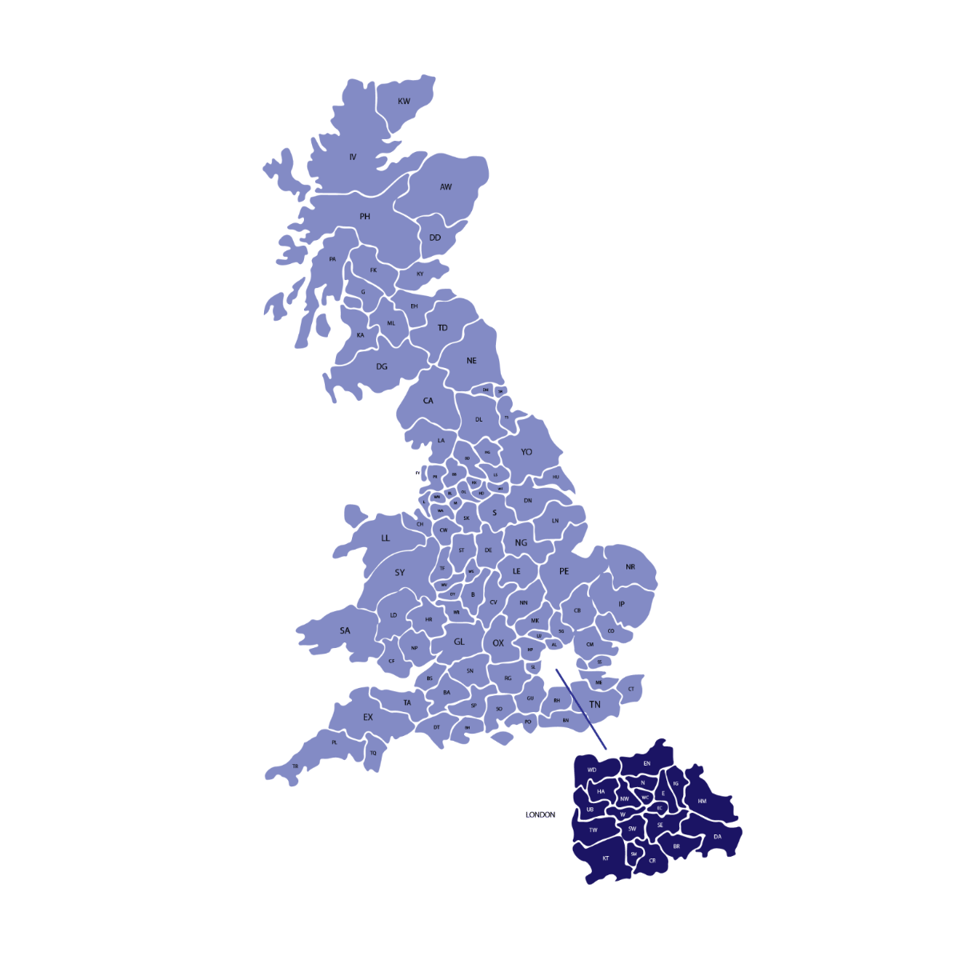
So whilst postcodes are larger than constituencies, they are smaller than regions or counties.
I think it’s a really interesting way of thinking about what growth would feel like ‘around here’. Not abstract national targets that only matter to the central figures in Westminster, nor very precise stats that matter to a specific MP and their constituencies.
How does it feel around here, now? And what does that mean for our future?
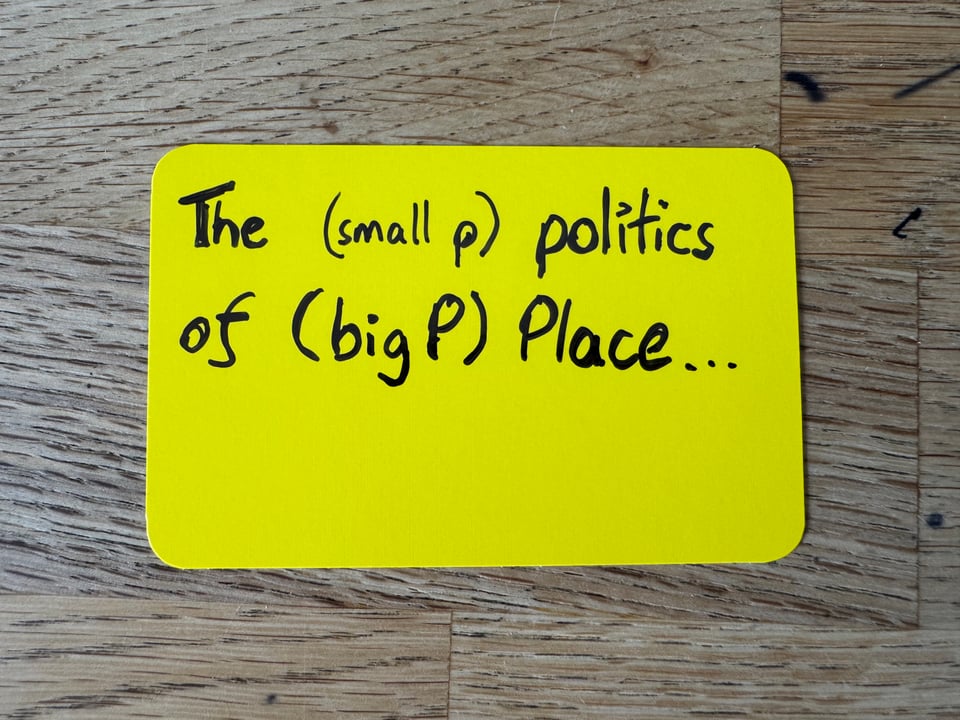
In this spirit, I noted down this at the weekend:
The things that a group of us, the nascent Sussex Futures Network, have been doing around Sussex in the run-up to the Sussex Mayoral elections have not been aligned to any political party, nor specific policies.
The network was first convened by Richard Freeman of Always Possible, when he spotted last summer that there were a few folk interested in this.
He had just started the Sussex and the City podcast, too. This week saw the release of the 50th episode with Polly Mackenzie, where she makes a great case for what this new kind of place-based focus might achieve:
“When you think about problems in a place, you end up dealing with silos in radically different ways. And I think its the way that we rebuild state capacity”
- Polly Mackenzie
Meet-ups, blog posts, podcasts, newsletters, Connecting people from different places just to chat about what a place means to them, and how they’d like to see a different future for it.
It is small-p politics. And it is early days.
The Sussex Futures Network is still learning and exploring - and it’s an open network too, for others across the region to join in to try something new, or link activities they are already doing.
By running a series of experiments, conversations, games and the like, this work invites people to find a version of politics through which they can see themselves, speak to others, and help communities around them.
There are small everyday things that might engage people again in a process that they may have thought was lost to them.
In 2006, Jeffrey Goldfarb (Inspired by Hannah Arendt) called this sort of work The Politics of Small Things:
The people around the kitchen table, in the bookstore, and at the salon constituted freedom in their interac-tions, as they distinguished factual and philosophical truth. They created a free politics of small things.
This dimension of politics and culture must be understood as an ongoing activity, in process. It is not inevitable or a working out of well-conceived philosophical positions. It is actively constituted.
- Jeffrey Goldfarb, The Politics of Small Things
Goldfarb’s title is a riff on Arundhati Roy’s novel The God of Small Things. The characters may live in a world where the ‘big things’ appear to dominate (colonialism, racism, nationalism, capitalism, culture production, etc) but key moments of hope are defined by the characters interactions with each other.
I noticed Oli Whittington from Our House pointing out something adjacent to this spirit when he introduced the Charter building game (more on this later). Oli highlighted that research shows that whilst we have been losing faith in all of the big forces in our lives, the one thing people still have faith in is other people.
Given the emphasis on devolution in the UK that it feels like we’re about to see, what we need is more people thinking about what they might do to support new ideas of citizenship.
In our case, Sussex is a huge place, geographically and culturally. Even Henry II in the 12th Century thought the county was too large to govern as one area, and so split it into East and West Sussex. It will be brought together for the first time in over 800 years under the Sussex Mayor.
To do this successfully will require not just a few big policies laid out in a manifesto by a winning candidate. It needs, as Goldfarb describes, ongoing activity to be actively constituted.
Small-p politics is for all of us.
We do things differently here
“But I don’t know anything about this” you might say. “Or where to start. Or…”
Yes, OK, I get it. But let me tell you about something I remembered this week.
As the events around the Makerfield by-election unfolded last week, and all the talk of Manchesterism, a dormant phrase in my head sprung to life again - “this is Manchester, we do things differently here”.
I’d forgotten all about Tony Wilson, founder of Factory Records, radio and television presenter, nightclub manager and ‘impresario’.
‘Mr Manchester’ as he was known.
Except… I was actually remembering Steve Coogan playing Tony Wilson, in the film 24 Hour Party People.
But it led me to this video of Wilson himself discussing aspects of the film.
(language warning)
All of it is entertaining, and insightful, but the key part for me is around doing the thing. And not having some big grand theory on why you are doing it.
“That is praxis… in doing it, you find out why you did it.”
My friend Rob Poynton first introduced me to the word praxis.
You can go and read all about it here, OR instead just soak into this bit from the Wikipedia entry, because really it’s all you need:
Praxis can be viewed as a progression of cognitive and physical actions:
Taking the action
Considering the impacts of the action
Analysing the results of the action by reflecting upon it
Altering and revising conceptions and planning following reflection
Implementing these plans in further actions
So even if you feel that you have no great plan or concrete theory about doing something, that’s ok.
It’s probably better. Just do something, with others, and see what happens.
It doesn’t have to be huge. It doesn’t have to be with many people. But like Tony Wilson says, keep hold of the awe and the privilege afforded by performing the sacred acts of the everyday.
We Wunt Be Druv
It was in this spirit of praxis that a small gang of us found ourselves in Bull House in Lewes on the 16th June for Sussex Day, running our Sussex version (We Wunt Be Druv) of the Our House Charter game for the first time.


You can read more about what unfolded, and the charter that we wrote together, over here.
But I think it is really important to highlight the work of Leanne O’Boyle here. Leanne was formerly the Executive Director at the Sussex Archaeological Society, who were the custodians of Thames Paine’s house in Lewes.

Thomas Paine was the 18th century social and democratic reformer, active in Sussex before shipping off to the British American Colonies in 1774, and writing a pamphlet called Common Sense that framed the Patriot argument for independence from Great Britain. Leanne has a book out this summer covering much more about this.
Paine’s former home in Lewes had been used by the Sussex Archaeological Society as various things since coming into their ownership; office, store room, filing facility and more.
Leanne thought it could be much more than this though. She has set up a CIC (Community Interest Company) called Thomas Paine Legacy which runs Bull House, using history to empower present and future citizens.
I think it is a terrific piece of reimagining what a historical asset could and should be for. Not simply a conservation act to tell us what was important in the past, but a concrete reminder that, through the politics of small acts, we are all allowed to demand changes in how the world works.
We’ll be back down in Lewes this weekend, exhibiting the We Wunt Be Druv game for the Lewes Festival of Democracy on the 4th July.
Again, it feels like the right thing to do, without any great plan. Do the thing, then find out why we did it.
(Local) Futures Through Design
Finally, I was back in Lewes again to meet up with Rob Phillips to discuss the next three-day Futures Through Design course at the Royal College of Art (21st-23rd September), which we teach with the awesome Gem Barton.
We’re not ones for paying too much attention to the post-course scoring - you can tell in the room when a course is working for people - but all of us and the Exec Ed team were delighted when the average rating for the course came back at 5.00 (out of 5).
So you would think the sensible thing to do would just be to run it in exactly the same way.
Except…
Given the shifts in the landscapes, the kinds of place-based work that are feeling ever more important, and the feedback from previous cohorts on how the course made them want to get involved at both work and in the places they lived, we’re changing it up again.
Day three of the course will know focus on practical application for life, work, communities, places.
And just encourage people to get on and do things.
Two years ago, I was invited to give an online talk to the UK Government futures community. I called it Participatory Futures: The Punk to Foresight’s Prog, drawing a clear contrast between what came before and how the summer of 1976, exactly fifty years ago, changed music forever.
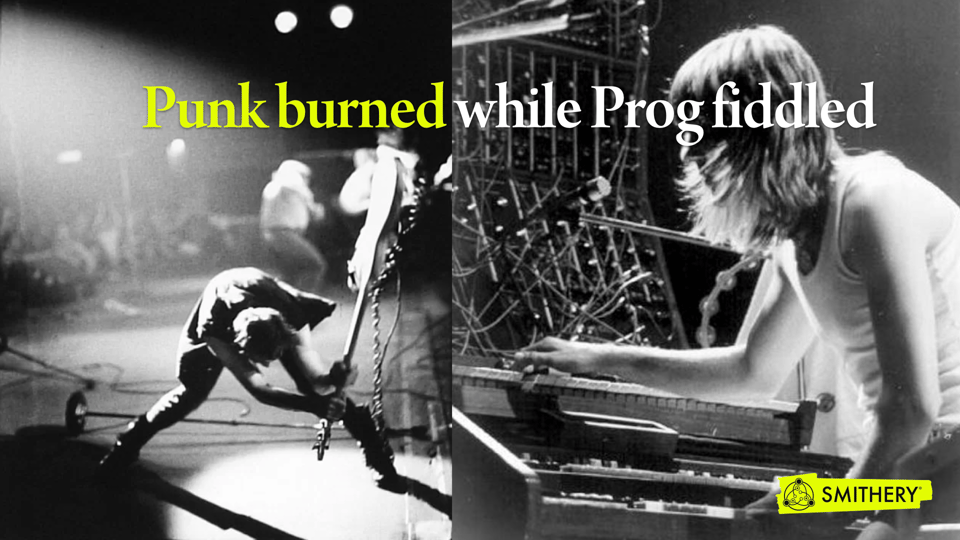
Of course, these events also feature in 24 Hour Party People, as Tony Wilson introduces us to the characters in the room for The Sex Pistols’ first Manchester show at the Lesser Free Trade Hall on June 4th that year:
Being able to create moments like these, where people can see and talk to other likeminded spirits, is massively important for participative futures. People who work together, live beside each other, below to the same club or group, or share experiences together.
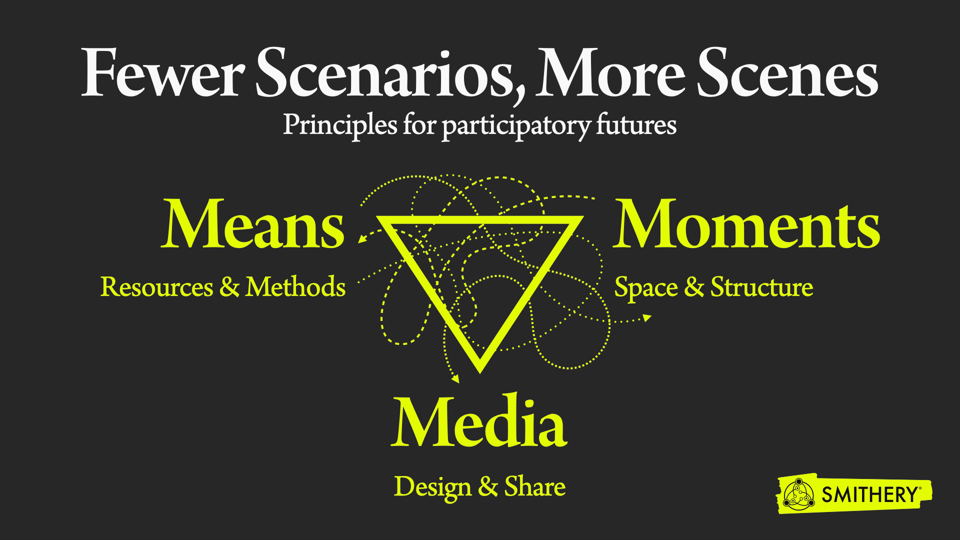
Giving people the tools and methods to imagine different worlds, realised in the places around them, has probably always been at the heart of Futures Through Design. We just want to make it even more specific now. Join us if you can.
Making another world visible
That’s all a lot, I know.
But I hope that it sends you off to think about your own place, where you work or live, and imagine what you might do to practice the politics of small things.
Or send it on to a friend, with the invitation to try something out together?
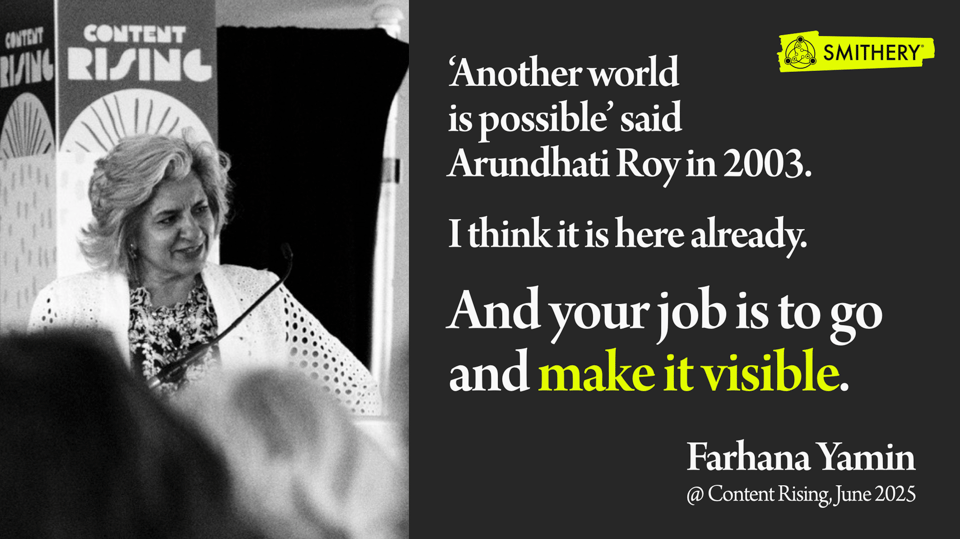
To wrap it all up, I’d like to return to the words that Farhana Yamin used last summer at Wakehurst Place in Sussex during her Content Rising talk.
“Another world is possible said Arundhati Roy in 2003. I think it is here already. And it is your job to make it visible”
John V Willshire
30th June 2026