Artefact 259
A brief bonus newsletter on apple varieties, and their similarities to technology communities.

Apple Operating System
No, not that one; my views on Liquid Glass likely aren’t publishable at this point, not for a family audience such as this one.
INSTEAD; This is a short, bonus Sunday evening newsletter about actual apples, prompted by a conversation I had with Alistair on LinkedIn the other day.
Basically, it is few things I’ve found out in the last year of helping out with a local community orchard group. When I tell these things to people who knew as little about apples as I did last year, a lot of it really surprises them.
Yes John, but is it about communities, futures, technologies, or any of the usual things?
Well, bless you for thinking this newsletter is themed in some way. But yes, there are parallels, and we might get to them. Though, saying that, maybe it will just mostly be about apples.
Some things are just worth knowing.
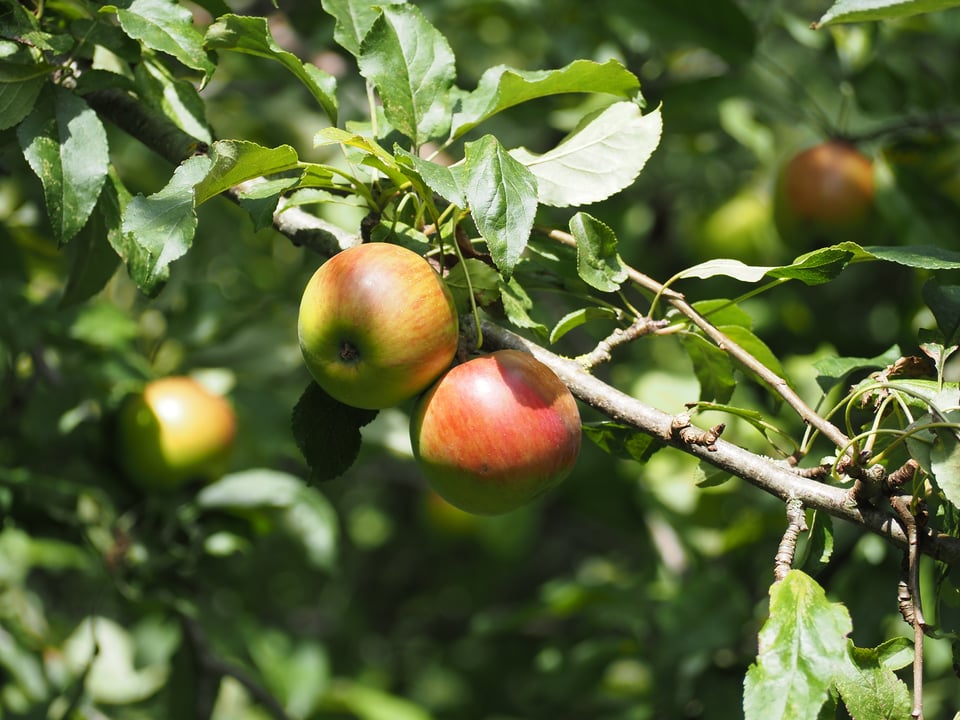
What happens if you plant an apple pip?
…is the question I usually start with as conversations veer into apple territory.
Imagine you have just eaten a tasty Egremont Russet apple, and you are left with the core.
If you plant one of the pips from that apple, would you get a tree that grows the same variety of Egremont Russet apples..?
I dunno, this sounds like a trick question. I might have said yes… but maybe, then, I’ll say… no?
Correct, my friend. You do not get the same apple tree.
In fact, if you planted every pip in that single apple, you’re likely going to end up with a different type of apple each time. And the same would be true for every pip from every apple on that tree.
This is because of - science alert - extreme heterozygosity. Rather than mixing the DNA of the two parents of an apple tree to produce something resembling one or both, a new apple seedling will take this genetic information and create something really quite different.
It’s a neat survival trick, genetically, but it doesn’t do much for consistency. Often, this means that the resulting apple tree will be a small, bitter apple (called a ‘pippin’) which might only be good for cider.
But every so often, you will get a new apple that’s not just edible, but tasty enough to name and grow more of.
Commercial growers reckons it takes you between five and ten thousand trees from seed to get to a new apple good enough though. You’d need a big garden, and about five years to spare.
Given all that, how do we keep growing and eating consistent, identifiable and named apples?
The craft of the graft
We chose to plant an Egremont Russet tree in our garden ten years ago. It’s a really tasty, nutty apple; it is particularly good with a ploughman’s lunch, or blue cheese.
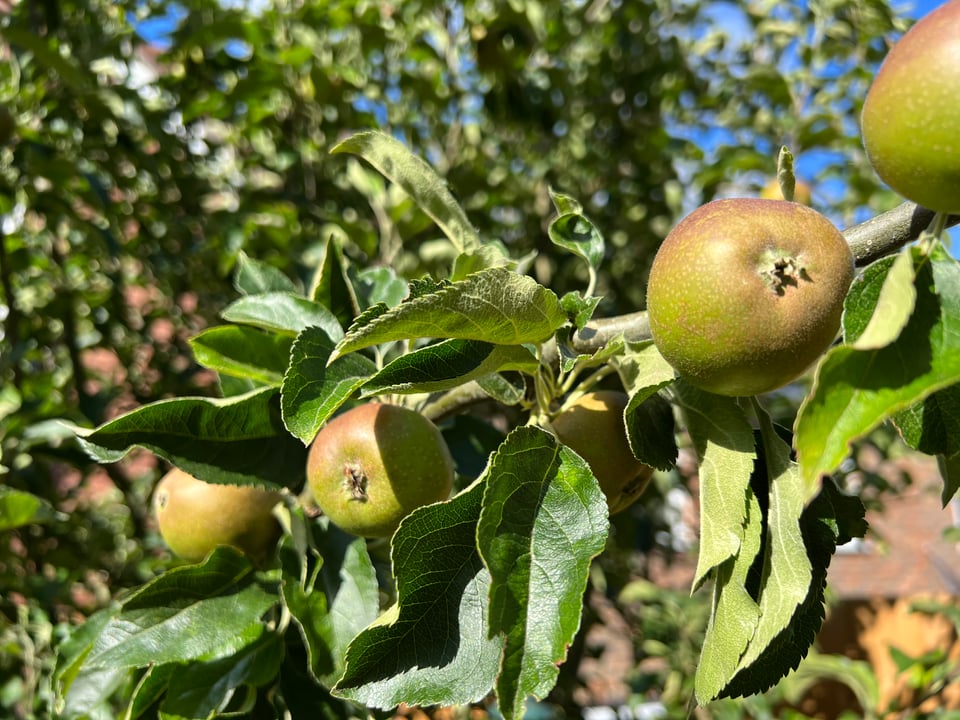
It is said that the first Egremont Russet was grown by the Earl of Egremont at Petworth House in Sussex and first recorded in 1872. Whether he did it himself… well, I’ll let you speculate on that one.
But our tree is a direct descendent of the Earl’s tree, because generation afternoon generation of these trees have been grafted.
To graft an apple tree, you select a few one year old branches (or ‘scion’) from the tree you’d like to copy, prune them off in the tree’s dormant period in January, then store them in a bag in the fridge.
Then you buy and plant some apple rootstocks, and when the weather warms up in March, you can graft the scion onto the rootstock.
This picture is an example of a saddle graft:
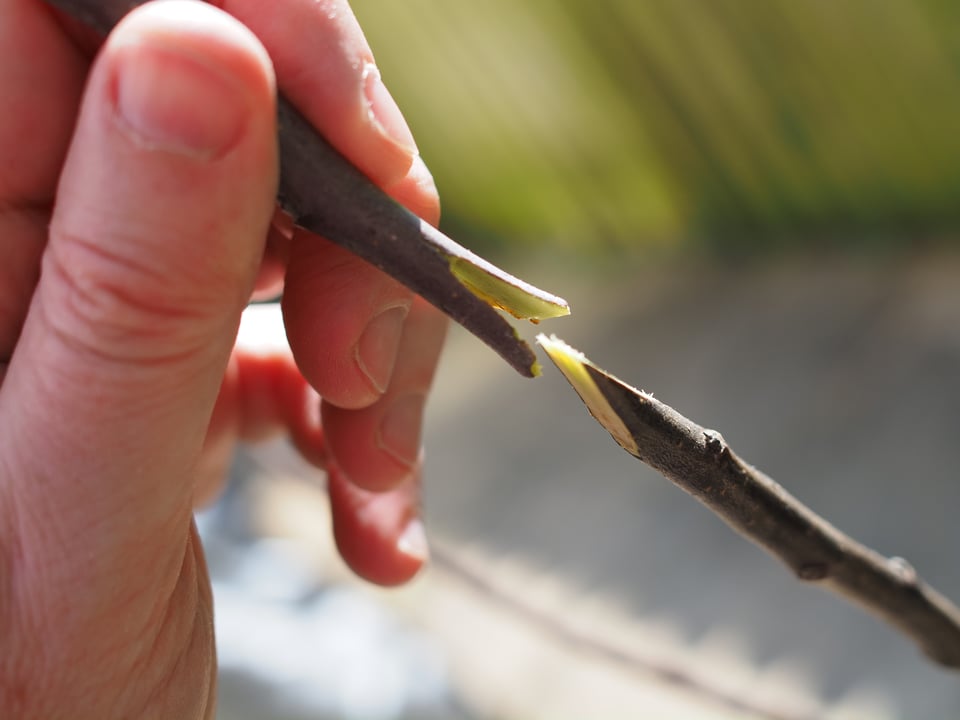
Then you bind the graft with tape, so that the cut can heal and the rootstock starts sending nutrients up through the tree into the scion.
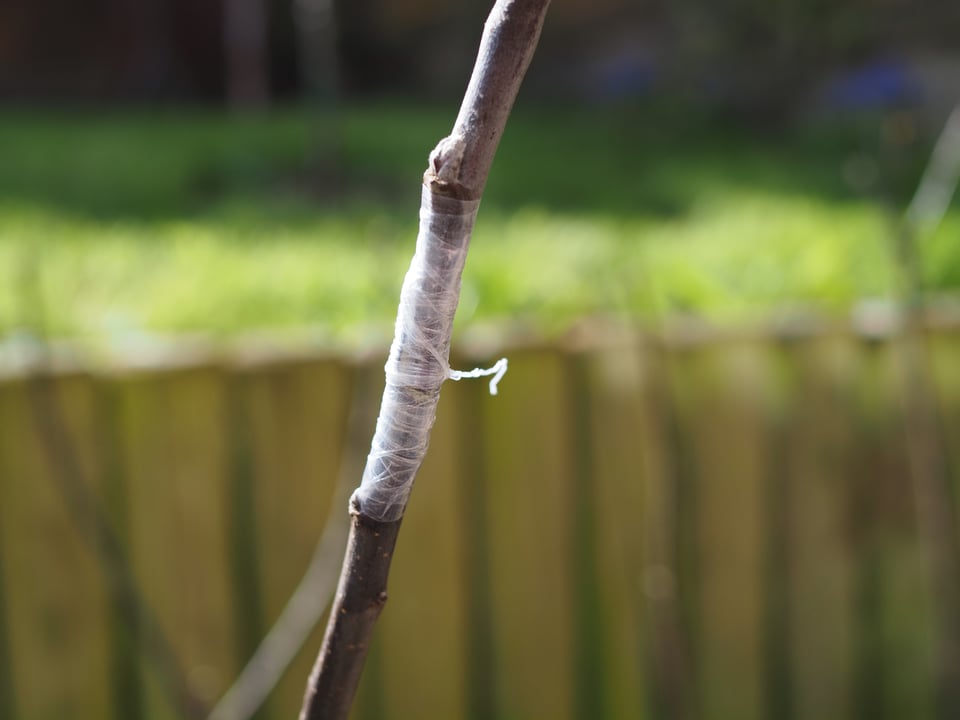
These pictures are from my first attempt last month.
I bought five apple rootstocks online, and decided to try and save a tree that had come down in the community orchard, as well as growing more Egremont Russet apple trees.
It is a finicky business to begin with, trying to cut two equally proportioned V-shapes that will form a decent joint. But as always, when you’re doing something intensely manual like this, my mind was free to drift to other places.
One of which was how what I was doing was a little like working within a GitHub-ish technology community; people all around the community experiment with growing apple trees. They find a good one, and now they can make it available (should they wish) for others to copy.
In grafting an Egremont Russet, I was really just doing the small, easy end of things. Generations before me had gone about selecting, naming and sharing specific apple ‘code’ so that people like me could benefit from the outcomes that code would create.
If that’s true of the individual apple varieties, it is even more true of the rootstocks.
The root of the issue
The East Malling Research Station was established as an experimental fruit centre in 1913. Ronald Hatton was soon appointed director, and one of the things he was concerned with was the classification, testing and standardisation of apple tree rootstocks.
Up until that point, there was a lot of confusion about the rootstocks used across Europe, but they knew one thing for sure; the rootstocks you used had implications for the size, spread and therefore yield of the tree you would grow.
The East Malling team set about scientifically measuring the growth and implications of different rootstocks.
(Pictures from applesandpeople.org.uk)
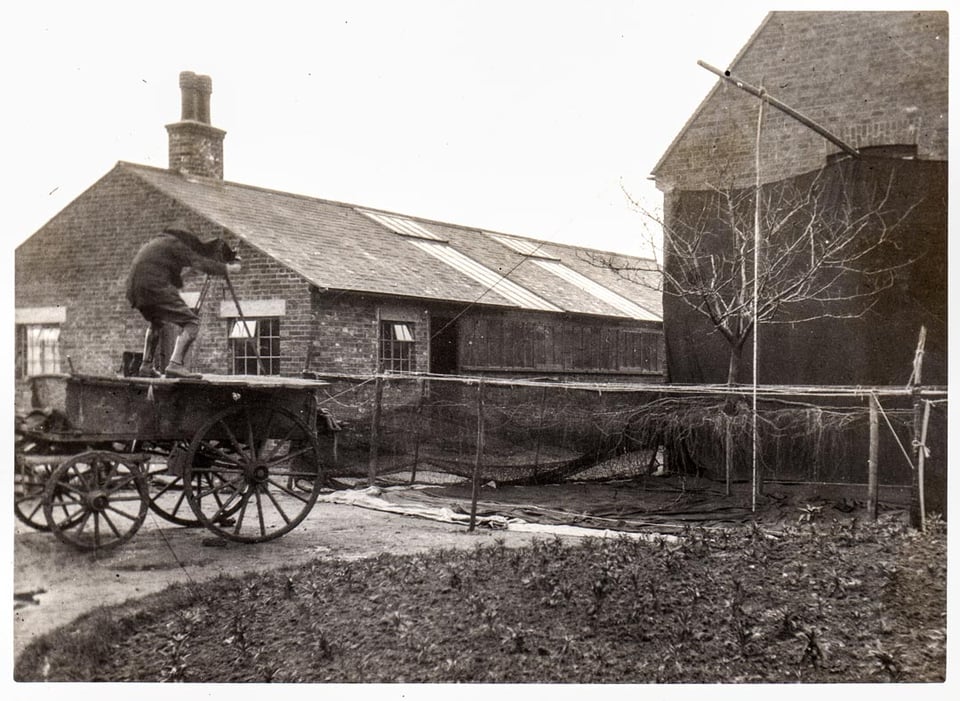
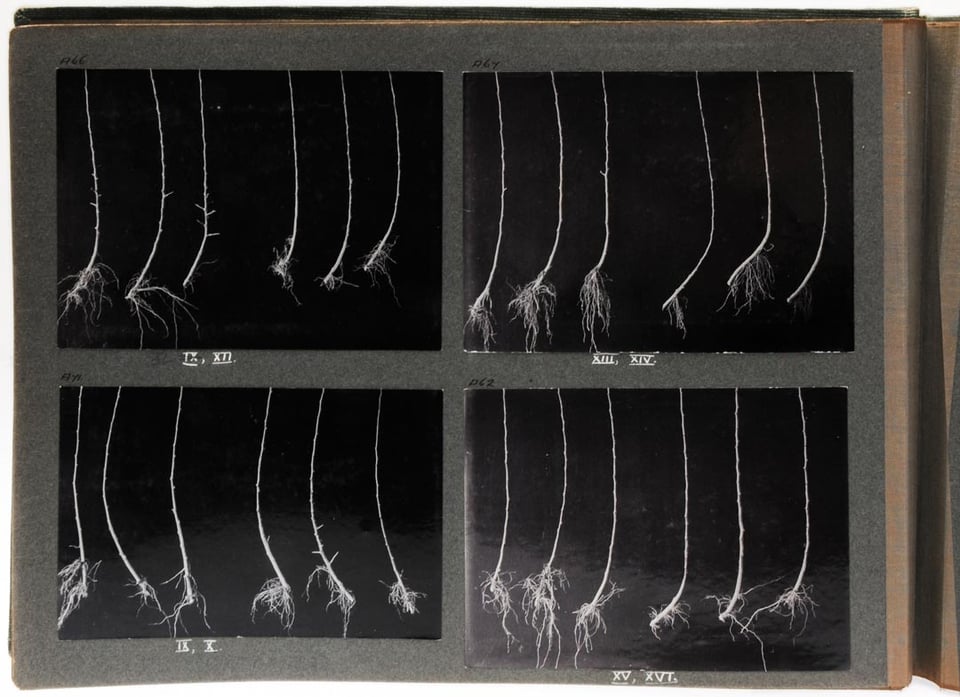
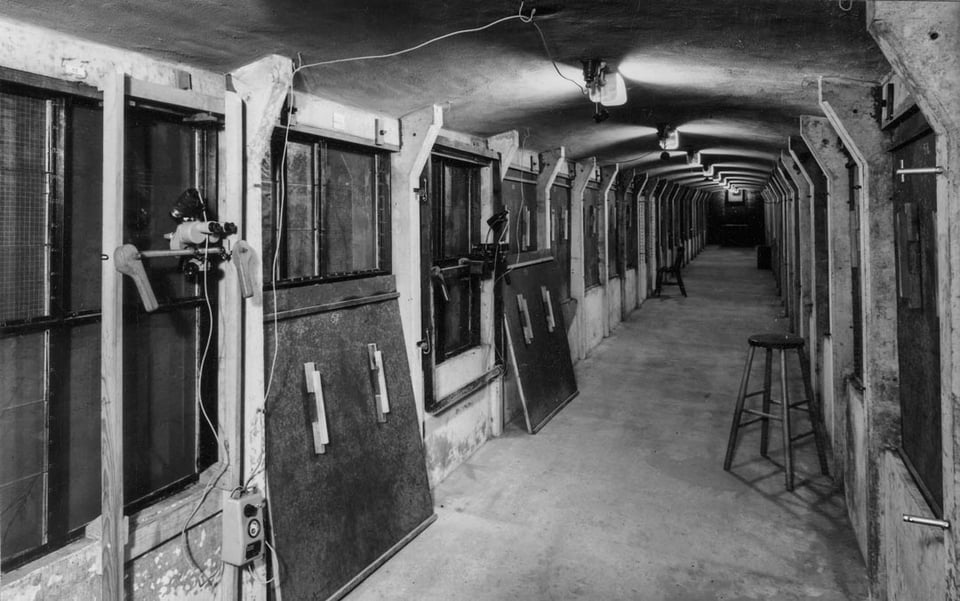
Through their work created the Malling Series, a set of specific genetic rootstocks that would guarantee what size your tree would be.
So for instance, I bought five M26 semi-dwarfing rootstocks to graft with. It means I know it will grow to around 3 meters high when mature. So when we plant them in the community orchard, or on the estate we live on, we can plan where they will work best.
What East Malling Research Station gave the apple growers of the world was an operating system.
The rootstocks are the basic instructions for the way in which the apples will grow, and the scions you graft are the programs or apps, specifically creating outcomes according to your design.
What’s also interesting is that these rootstocks are in the public domain; they are a public good from which everyone from commercial growers to backyard experimenters can benefit.
Apples as technology transfer
Apples may not be the most obvious example of a technology to learn from. But I can’t help but think we can think about the implications of how we go about creating and sharing knowledge differently when we look to previous different events.
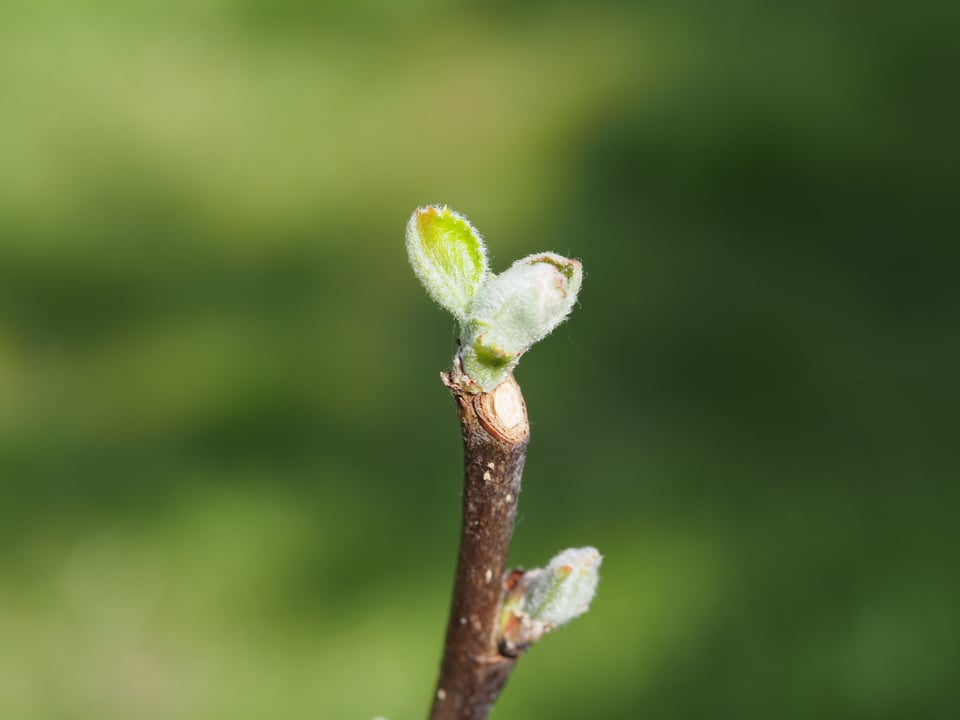
As the first leaves appeared on the first grafted apple tree to bloom in my back garden, I think back to all of the people (known and unknown) involved in getting me to this point, and feel pleased that in some way, I can continue the work.
John V Willshire, 26.4.26