This episode is a little different.
Hello Friends,
I'm writing this on a day when the United States and Israel continue to bomb Iran.
Iran's carpet weavers have been at looms for two and a half thousand years. The Safavid court manufactories of Isfahan produced some of the most extraordinary textiles humans have ever made. UNESCO recognized Persian carpet weaving as Intangible Cultural Heritage in 2010. Last week, airstrikes damaged the Chehel Sotoun Palace and the Ali Qapu Palace in Isfahan, both part of the Naqsh-e-Jahan Square, a UNESCO World Heritage Site, the historic centre of that weaving tradition. The Art Newspaper and PBS have confirmed the damage.
I don't know what to do with that except tell you I’m worried about those artists and craftspeople.
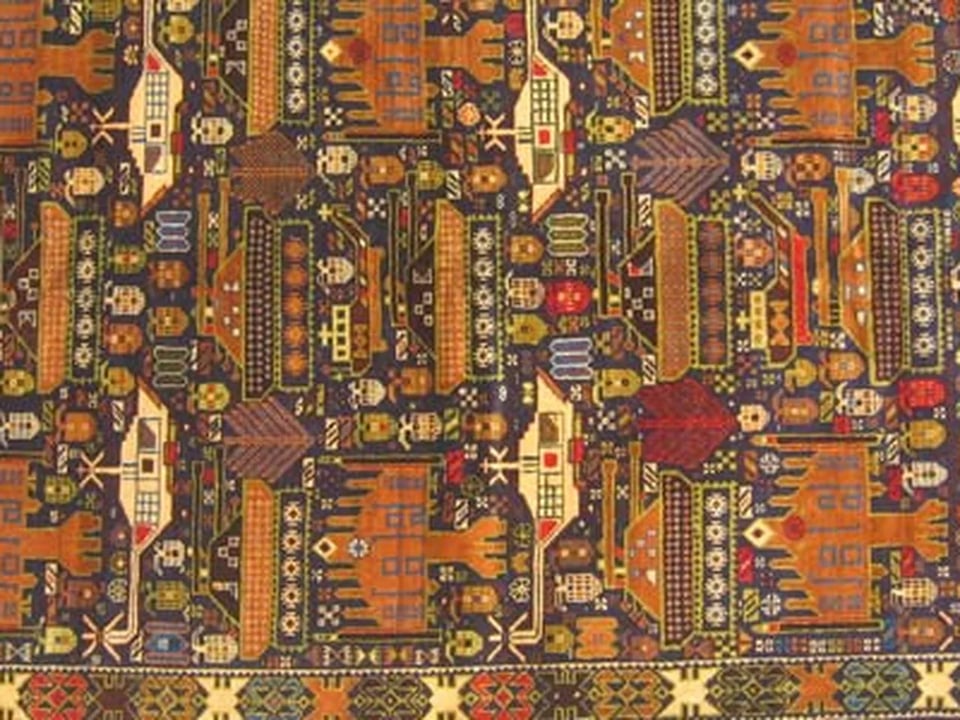
War shapes craft. When the Soviets invaded Afghanistan in 1979, Afghan weavers started knotting tanks and helicopters into their carpets where birds and flowers used to be. Hand grenades appeared beside the boteh, what we know in the West as the paisley shape. The rugs kept evolving through every conflict since, all the way to drones and the fall of Kabul. The tradition didn't stop because of the war. The war became part of the textile tradition.
And Iranian women know as well.For the women of Iran, defiance included wearing bright colours, removing headscarves, wearing loose shawls, or using fashion to signify political agency. During the Woman, Life, Freedom uprising in 2022, women burned their hijabs in the streets. A piece of fabric the regime forced them to wear became the thing they used to reject the regime entirely.
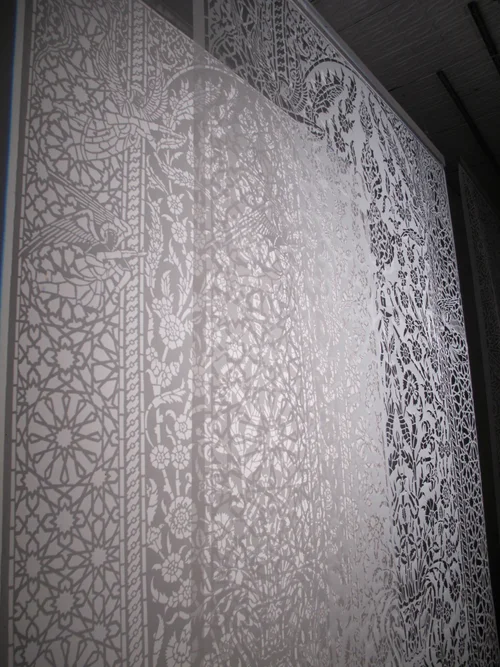
Afruz Amighi, an Iranian sculptor in Brooklyn, took that further. Her piece "Angels in Combat" looks like a traditional Persian carpet pattern, but it's cut from the polyethylene the UN uses for refugee tents. Backlit, it casts shadows on the wall. Look closer and the angels are holding rifles. The women who led those protests, over 7,000 of whom were killed before the bombs even started falling, understood something the weavers in this episode understood too: textiles carry power, and that power runs in both directions.
Amidst all of this, Art Against Empire’s Episode 9 is out, and it’s connected everything thats happening today...albeit in a historical sense.
Today’s episode is called "The Loom and the Empire," and it covers seven hundred years of what happens when empires decide they need to control, destroy, or replace the people who make things with their hands.
It's the first of a three-part documentary special. I think it's one of the best docs we've made so far.
This is the episode where Shawn steps in front of the microphone. Most of you know him as the co-creator and editor of the show. He's also my husband and pretty much the reason the show exists. For the next three episodes, he narrates the history. He also scored the entire episode with period music, matching each century to its own sound. Medieval lute for the Flemish weavers. Baroque for the Calico Wars. Beethoven's Funeral March under the Luddite executions at York. Hearing him read those passages over music he'd chosen with that kind of care, I had to stop a few times and just appreciate how much I've enjoyed making this podcast with him.
We also had a cast of voices reading primary sources aloud for the first time. Some are professional actors, some are friends from the Quilty Nook who raised their hands when we asked. Barrie Kealoha, a Kānaka Maoli professional actor who played Queen Liliuokalani and went well beyond the script, helping us with pronunciation, cultural context, and how to approach the queen's story with the respect it requires. That changed the episode. Mahalo, Barrie.
The episode ends in 1813, at the Jacquard loom, the machine whose punched cards would eventually become computation.
Part 3 of this series, "The Algorithm and the Hand," follows that thread all the way to the present. I'll say this now: when we recorded those interviews about AI and automation last year, we didn't know the US military would be using AI-generated target lists to decide what to bomb. A target list that, according to the Washington Post, may have misidentified a girls' school as a military site. We made an episode about what happens when machines make decisions that used to belong to people.
The episode runs from 1302 to 1898, and there is so much more to dig into, so make sure to visit artagainstempire.net for the full show page with every primary source linked.
Next up is Part 2: "1900-1945: Live Working or Die Fighting." The title is a nod to the Lyonnais Silk Weavers Revolt.
Talk soon, Ian
P.S. You might notice the newsletter looks a little different. We moved to a privacy-focused provider called Buttondown. More on why that matters in Episode 11.