
Ask the Texts: What do early Christians think of martyrdom?
Each answer provided by Ask the Texts is built by searching directly through Appian Way Press's translations and revisions of early Christian writings.
What do early Christians think of martyrdom?
Early Christians viewed martyrdom as a profound and glorious act of faith, a powerful witness to Christ, and a path to spiritual perfection. Cyprian of Carthage, in Exhortation to Martyrdom, Addressed to Fortunatus, states that martyrs "who witness as God’s children in suffering are no longer counted as having any earthly father but God." He emphasizes the "shining, powerful proofs of faith" given by martyrs, noting that even extreme torture, such as a martyr having his tongue pulled out and cut off, "only made the martyr’s witness more glorious." He further suggests that tearing off a martyr's head was "an attack on God and Christ themselves," highlighting the deep connection between the martyr and the divine.
Martyrdom was seen as an ultimate confession and an example for future generations. Cyprian, in To the People of Thibaris, Encouraging Them to Martyrdom, points to figures like Daniel, who "boldly declared the honor of his God," and the Maccabees, whose "cruel tortures" and "many sufferings" showed "great courage and faith, encouraging us through their suffering to triumph in martyrdom." He also notes that prophets and apostles "were killed for righteousness’ sake," thereby teaching "us to die." Even infants killed at Christ's birth are considered martyrs, proving "ready for the crown" and demonstrating that "no one is safe from persecution, since even these achieved martyrdom." In another instance of Exhortation to Martyrdom, Addressed to Fortunatus, Cyprian reiterates that "Many martyrdoms of the righteous have been recorded, providing examples of faith and virtue for future generations," citing the three youths Ananias, Azarias, and Misael, who declared they "obey only God, know only Him, and worship only Him."
A significant aspect of early Christian thought on martyrdom is its equivalence to baptism. Saint Augustine, in A TREATISE ON THE SOUL AND ITS ORIGIN, explains that "no one becomes a member of Christ except by baptism into Christ, or by dying for Christ." He notes that Saint Cyprian "counts him [the thief on the cross] among the martyrs who are baptized in their own blood," especially for "many unbaptized people in times of fierce persecution." The thief's "confession of the crucified Lord is given such weight" that it is "as if he had been crucified for the Lord himself," demonstrating a faith that was "strong when the disciples’ faith failed."
The suffering endured by martyrs was often described in graphic detail, emphasizing their courage and divine grace. Eusebius of Caesarea, in The History of the Church, recounts the tortures faced by martyrs in Asia, describing how "they were struck down by those surrounding them and were seen being tortured with whips, even to the innermost veins and arteries being cut." He highlights the "very brave Germanicus, who, with divine grace, overcame the natural fear of death," and "eagerly draw upon himself the punishment." Theodoret, in Ecclesiastical History, Dialogues, and Letters, mentions illustrious figures like Ignatius, who "gained the crown of martyrdom," and Irenæus, Hippolytus, and Methodius, all recognized as "bishops and martyrs."
Despite the high regard for martyrdom, there was also a sense of humility among those undergoing persecution. Eusebius, in The History of the Church, records that some "would be greatly displeased" if called martyrs in a letter or speech, preferring to give "the title of martyr to Christ, the faithful and true witness, the firstborn of the dead, and the leader of the life of god." They considered themselves "humble and moderate confessors" and "refused the title of martyr among the brothers, being filled with fear of god," while still demonstrating "great boldness before all the nations" and making their "nobility clear through patience, fearlessness, and courage."
Ultimately, martyrdom was deeply connected to the resurrection of Christ and the hope of eternal life. Saint Augustine, in The City of God, asserts that the hearts of martyrs were filled with "faith in Christ, for whom Stephen had shed his blood," and that their miracles prove "the faith that proclaims Christ risen in the flesh and ascended into heaven in that same flesh." He concludes that martyrs "died for this faith and now can ask for these blessings from the Lord in whose name they were killed," linking their power directly to the resurrection: "If the resurrection of the body to eternal life had not happened in Christ, and was not promised to His people as Christ and the prophets foretold, why would the martyrs who died for this faith have such power?" Hippolytus of Rome, in Doctrinal and Historical Works, reinforces this by referring to Christ as the "'first fruits' of those who have fallen asleep, as the 'firstborn of the dead,'" providing hope for "all who have believed might have hope in the one who was raised and hold the resurrection as a guarantee."
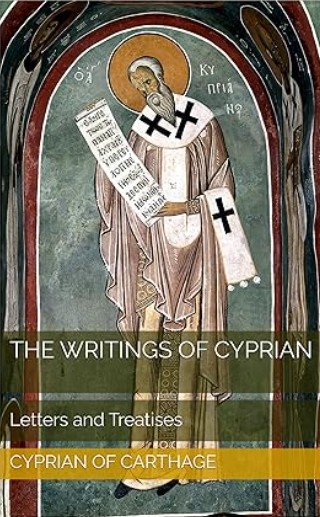 |
Cyprian of Carthage, The Writings of Cyprian: Letters and Treatises
Cyprian of Carthage (d. 258) served as bishop during sustained imperial persecution and internal ecclesial crisis.
|
 |
Saint Augustine, Anti-Pelagian Writings, Volume Two: Grace, Free Will, and Predestination
By the time these works were written, the Pelagian controversy had moved beyond its earliest debates.
|
 |
Eusebius of Caesarea, The History of the Church: Historia Ecclesiastica
Eusebius of Caesarea’s History of the Church (Historia Ecclesiastica) is the earliest surviving account of Christianity’s growth from a persecuted sect to an empire-wide faith.
|
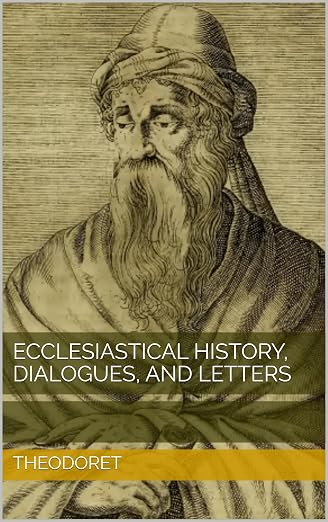 |
Theodoret, Ecclesiastical History, Dialogues, and Letters
This modernized edition of Theodoret of Cyrus’s writings offers an invaluable window into the theological controversies and ecclesiastical life of the fourth and fifth centuries.
|
 |
Hippolytus of Rome, Doctrinal and Historical Works: Dogmatica et Historica
This volume presents the doctrinal and historical works of Hippolytus of Rome in clear English translation.
|
 |
Saint Augustine, The City of God, Volume One: The Refutation of Pagan Religion (Books 1–10)
Written in the aftermath of Rome’s fall, Augustine’s City of God confronts the charge that Christianity was responsible for the empire’s decline and exposes the theological emptiness of pagan religion.
|
Enjoying Ask the Texts? Subscribe to get new issues by email.
This answer was generated on September 26, 2026 using a retrieval-augmented generation (RAG) system built on Appian Way Press's own translations and revisions of early Christian writings, with the gemini-2.5-flash language model producing the final answer text from the retrieved passages.
Copyright © 2026 Rick Brannan
