
Ask the Texts: What did Jerome think of translating the Old Testament from the Hebrew rather than the Septuagint?
Each answer provided by Ask the Texts is built by searching directly through Appian Way Press's translations and revisions of early Christian writings.
What did Jerome think of translating the Old Testament from the Hebrew rather than the Septuagint?
Jerome strongly advocated for translating the Old Testament directly from the Hebrew, a practice he often referred to as returning to the "Hebraica Veritas." His conviction developed from comparing various Greek versions of the Septuagint (LXX) and other Greek translations, such as those presented in Origen's Hexapla. He concluded that the only way to resolve discrepancies among these versions was to consult the original Hebrew text. In On Illustrious Men, Jerome explicitly stated his method: "I have restored the New Testament according to the Greek original; the Old Testament, I have translated according to the Hebrew."
Jerome's translation work evolved over three stages. Initially, during his time in Rome from A.D. 382 to 385, he translated the Psalms from the Septuagint. However, after settling in Bethlehem, he began to revise his Septuagint-based translations by marking passages that differed from the Hebrew with obeli and asterisks. By A.D. 390 to 404, he was "translating directly from the Hebrew" for the entire Old Testament.
Practical reasons also motivated Jerome's approach. His friend Sophronius, for instance, urged him to translate the Psalms directly from Hebrew because Jews would challenge Septuagint quotes by saying, "It does not say that in the Hebrew." Jerome's goal, as noted in a preface to Tobit and Judith, was "to provide you with a revised edition of the Canonical Scriptures, focusing my Latin on what is certain rather than on what is doubtful," implying the Septuagint could be uncertain. He even enlisted the help of a skilled speaker of Chaldean and Hebrew for books like Tobit, and he was aware that the Council of Nicæa included Judith in the Canon of Scripture, "unlike the Hebrew tradition." He also mentioned his plan to translate his new Latin version of the Psalms back into Greek, indicating the value he placed on the Hebrew-based translation.
This approach was controversial. Jerome faced criticism from "the Pharisees" and others who saw his work "as an insult to the Septuagint, which was then regarded as nearly inspired." For the Western Church, Jerome's return to the Hebrew original was "almost a new discovery." Educated men like Augustine, who held "deep respect for the LXX" and believed it was given "by the special guidance of the Holy Spirit," were "somewhat shocked by Jerome’s bold rejection of its traditional but inaccurate translations." Augustine even argued that if the Septuagint had such authority, "then knowing Hebrew becomes almost unnecessary," and he defended its translation mistakes, treating its wording as authoritative even when it differed from the original text. Similarly, Hilary of Poitiers, who was not a Hebrew scholar, considered the Septuagint to be Scripture for the Old Testament and "had little respect for versions competing with the Septuagint or for the Latin translation of the Old Testament." Despite this opposition, Jerome maintained his independent judgment, prioritizing the Hebrew original for accuracy.
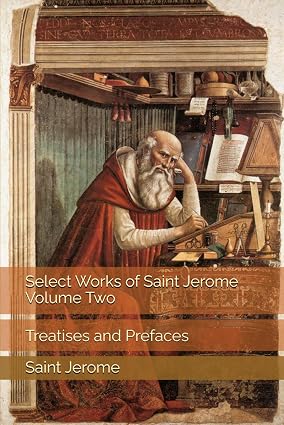 |
Jerome, Select Works of Saint Jerome, Volume Two: Treatises and Prefaces
Saint Jerome, one of the early Church’s most learned biblical scholars, profoundly influenced Christian scholarship through his mastery of Latin, Greek, and Hebrew, enabling him to engage deeply with the biblical text.
|
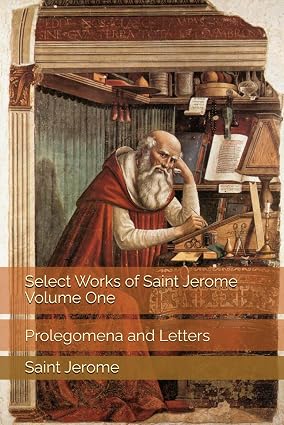 |
Jerome, Select Works of Saint Jerome, Volume One: Prolegomena and Letters
The Letters of Saint Jerome present a comprehensive collection of correspondence from one of the early Church’s most influential biblical scholars, offering a vivid glimpse into his life, work, and theological thought.
|
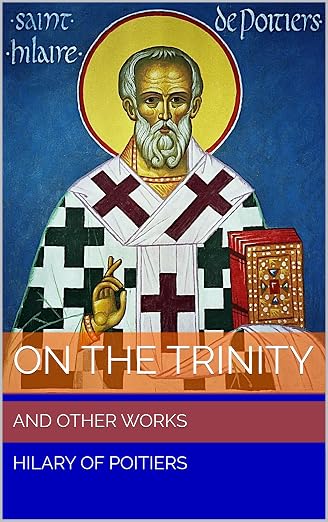 |
Hilary of Poitiers, On the Trinity and Other Works
St. Hilary of Poitiers, a pivotal fourth-century bishop and theologian, ardently defended Nicene Christianity during a time of intense doctrinal conflict, particularly against Arianism.
|
Enjoying Ask the Texts? Subscribe to get new issues by email.
This answer was generated on October 18, 2026 using a retrieval-augmented generation (RAG) system built on Appian Way Press's own translations and revisions of early Christian writings, with the gemini-2.5-flash language model producing the final answer text from the retrieved passages.
Copyright © 2026 Rick Brannan
