
Ask the Texts: What did Gregory of Nyssa think of universal salvation (apokatastasis)?
Each answer provided by Ask the Texts is built by searching directly through Appian Way Press's translations and revisions of early Christian writings.
What did Gregory of Nyssa think of universal salvation (apokatastasis)?
Gregory of Nyssa held complex views regarding universal salvation, or ἀποκατάστασις τῶν πάντων (apokatastasis tōn pantōn, the restoration of all things), which appear to align with certain aspects of Origen's thought while also presenting seemingly contradictory statements. According to Select Works of Gregory of Nyssa, Volume One: Against Euonimus, The Life and Writings of Gregory of Nyssa, Gregory "shared" Origen's view that evil would cease to exist, believing that "the non-existent cannot exist forever." This perspective stems from the understanding that evil is a στέρησις (stérēsis, deprivation) and "was not created by God, nor does it exist independently," thus it "must eventually disappear." The text notes that the idea of *apokatastasis tōn pantōn* "follows directly from the view of evil that he shares with Origen."
In the next world, Gregory believed that "the ἀποκατάστασις τῶν πάντων must be accomplished." He described a purifying process involving a fire he repeatedly called ἀκοίμητος, αἰώνιος (akoimetos, aionios—unceasing, eternal), which would do its work after the Resurrection. In De Animâ et Resurr., he stated, "‘The avenging flame will burn more fiercely the more it has to consume’." Ultimately, he envisioned that "‘But in the end, evil will be destroyed, and the wicked will be saved through their closeness to the good’," leading to a "universal thanksgiving" from all creation. Furthermore, in On the Soul and the Resurrection and Note on the Treatise “On the Making of Man”, the Resurrection is defined as "the restoration of humanity to its original state" or "the restoration of our nature to its original form." In this restored state, humanity would be free from the weaknesses and afflictions that came with evil, returning to a "state of passionless blessedness" where "all their visible consequences" are abandoned, as "man’s Restoration... follows from the finite nature of evil."
However, despite these indications of a universal restoration, the Revised Preface to Select Works of Gregory of Nyssa, Volume One: Against Euonimus states that "it is difficult to claim that he supports the doctrine of “Eternal Hope” in a universal sense." This difficulty arises from passages in his writings that "use the language of Scripture about future punishment without any softening or hint of universal salvation." For instance, in De Pauperibus Amandis, Gregory speaks of the last judgment where God will give "eternal rest to those who have shown mercy and lived holy lives, but eternal punishment by fire for the cruel and unmerciful." He directly challenged the rich, asking, "‘Who will put out the flames ready to devour and engulf you?’" These statements, alongside his reflections on "the painful and purifying processes of Purgatory" and a Last Judgment that follows Resurrection and Purgatory, present a nuanced picture that complicates a straightforward interpretation of his views on universal salvation.
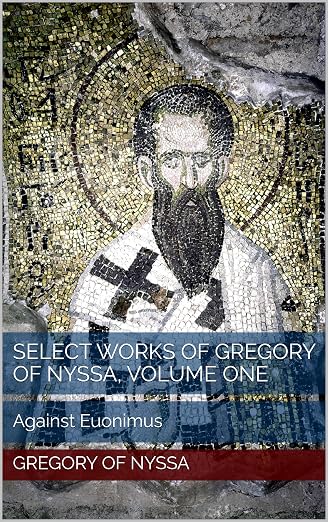 |
Gregory of Nyssa, Select Works of Gregory of Nyssa, Volume One: Against Euonimus
This volume presents Gregory of Nyssa’s monumental theological response to Eunomius, who challenged Nicene orthodoxy by claiming that God's nature could be fully comprehended by human reason and that the Son was unlike the Father in essence.
|
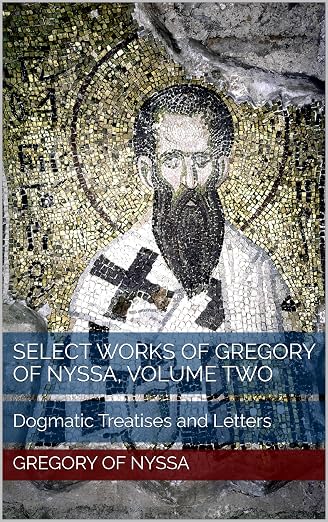 |
Gregory of Nyssa, Select Works of Gregory of Nyssa, Volume Two: Dogmatic Treatises and Letters
This volume presents the theological masterpieces of Gregory of Nyssa, one of the Cappadocian Fathers and a pivotal figure in fourth-century Christianity, whose writings significantly shaped orthodox doctrine.
|
Enjoying Ask the Texts? Subscribe to get new issues by email.
This answer was generated on October 3, 2026 using a retrieval-augmented generation (RAG) system built on Appian Way Press's own translations and revisions of early Christian writings, with the gemini-2.5-flash language model producing the final answer text from the retrieved passages.
Copyright © 2026 Rick Brannan
