
Ask the Texts: What did Basil think of the Holy Spirit's divinity?
Each answer provided by Ask the Texts is built by searching directly through Appian Way Press's translations and revisions of early Christian writings.
What did Basil think of the Holy Spirit's divinity?
Saint Basil firmly believed in the full divinity of the Holy Spirit, affirming the Spirit's consubstantiality and equality with the Father and the Son.
Basil, in Select Works and Letters of Saint Basil, states, "What I said about the Son—that we must acknowledge His true Person—I must also say about the Holy Spirit." He clarifies that the Spirit is a distinct Person, not the same as the Father, citing Scripture that says, "God is a Spirit." Nor is the Spirit the same Person as the Son, as indicated by the passage, "If anyone does not have the Spirit of Christ, he does not belong to Him.… Christ is in you." Basil explains that this passage demonstrates "their close relationship in nature, not a confusion of Persons." He further describes the Spirit as "full and complete, not a part of another, but whole and perfect in Himself."
Basil's commitment to this doctrine is highlighted in Select Works and Letters of Saint Basil, where it is noted that he felt "compelled to speak on this subject" (the Holy Spirit) with "careful thoroughness," repeating "what I have received" as teaching. He urged his audience "not to focus on hearing what pleases you, but on what pleases the Lord, what agrees with Scripture, and what does not contradict the Fathers."
In Select Works and Letters of Saint Basil, Basil explicitly advises believers to "avoid arguing over the doctrine of the Father, Son, and Holy Spirit, but instead believe in and confess the uncreated and consubstantial Trinity." He considered it "necessary to include a clear explanation of the true faith about the Father, the Son, and the Holy Spirit."
Gregory Nazianzen, in his Funeral Oration on the Great St. Basil, corroborates Basil's view, stating that Basil recognized "one glory of the Father, the equality of the Only-begotten, and one glory of the Son, that of the Spirit." Gregory further explains Basil's position: "We believe that to subordinate any one of the Three is to destroy the whole. We worship and acknowledge them as Three in their distinct properties but One in their divine nature."
Hermias Sozomen, in A History of the Church in Nine Books, directly confirms Basil's stance, noting that during a period of intense debate over "whether the Holy Spirit is consubstantial with the Father and the Son or not," Basil, along with Apollinarius and Athanasius, "strongly supported" the teaching that the Holy Spirit is consubstantial with the Father and the Son. The fact that Basil's "orthodoxy regarding the Deity of the Holy Spirit" was challenged, as mentioned in Gregory Nazianzen's Ep. LVIII To Basil, further underscores his prominent and firm defense of the Spirit's divinity.
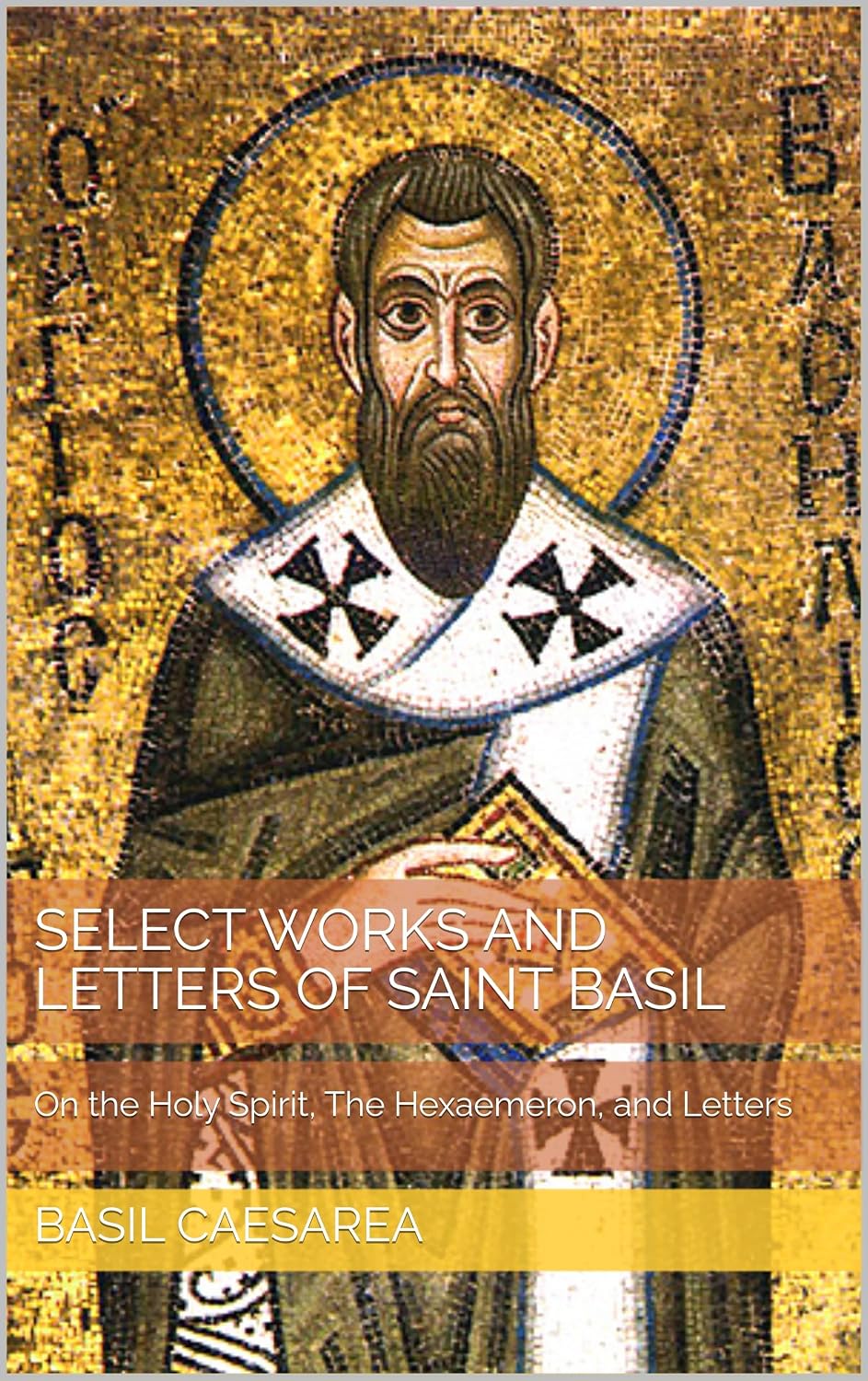 |
Saint Basil, Select Works and Letters of Saint Basil
Saint Basil of Caesarea, a key figure in fourth-century Christianity, was a theologian, bishop, and pastor whose writings profoundly influenced Nicene theology and the Christian understanding of the Trinity.
|
 |
Gregory Nazianzen, Select Letters and Orations of Gregory Nazianzen
Select Letters and Orations of Gregory Nazianzen offers an insightful glimpse into the theological, ecclesiastical, and pastoral challenges facing the fourth-century Church during a time of intense doctrinal development and controversy.
|
 |
Hermias Sozomen, A History of the Church in Nine Books: Historia Ecclesiastica
Hermias Sozomen’s *Historia Ecclesiastica*, written in the fifth century, offers a vital and detailed account of the Christian Church’s transformation during the fourth century, spanning the reigns of Constantine to Theodosius I.
|
Enjoying Ask the Texts? Subscribe to get new issues by email.
This answer was generated on October 11, 2026 using a retrieval-augmented generation (RAG) system built on Appian Way Press's own translations and revisions of early Christian writings, with the gemini-2.5-flash language model producing the final answer text from the retrieved passages.
Copyright © 2026 Rick Brannan
