
Ask the Texts: How does Athenagoras answer the charges of atheism, cannibalism, and incest brought against Christians?
Each answer provided by Ask the Texts is built by searching directly through Appian Way Press's translations and revisions of early Christian writings.
How does Athenagoras answer the charges of atheism, cannibalism, and incest brought against Christians?
Athenagoras of Athens, in his work A Plea for the Christians, directly addresses the three crimes charged against Christians: atheism, "Thyestean feasts" (cannibalism), and "incest like Oedipus." He challenges his accusers, stating, "But if these things are true, spare no one’s family; bring out the wrongdoings." He argues that such accusations are "fabrications and empty slanders" and urges his audience to "examine our life, our beliefs, our eagerness and obedience" to discern the truth.
Regarding the charge of atheism, Athenagoras points out the inconsistency of the accusation given the wide variety of worship practices tolerated within the empire. He notes that different peoples and nations "bring sacrifices and mysteries as men wish," citing examples such as the Egyptians who "consider cats, crocodiles, snakes, shields, and dogs to be gods." He observes that while it is considered "impious and irreverent not to regard any god at all," the laws permit individuals to "use whatever each one wishes as gods." By implication, Christians, who worship their own God, should not be singled out as atheists when such diverse forms of worship are allowed.
For the charges of cannibalism (referred to as "Thyestean feasts") and incest (likened to Oedipus), Athenagoras argues that such acts are contrary to natural reason and even below the behavior of animals. He asserts that "even beasts do not touch their own kind, and by the law of nature, and only for a time of reproduction, they do not mate without permission." He suggests that if Christians were "wilder than the beasts" by committing such atrocities, they would indeed deserve punishment. However, he maintains that "none of these things have been done wrong," presenting these accusations as baseless slanders.
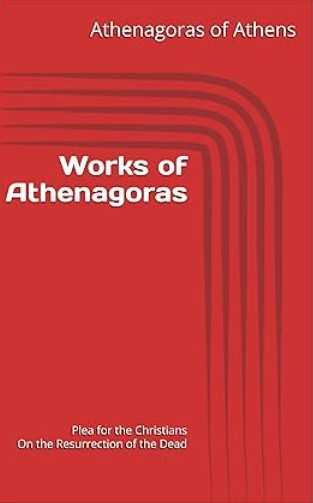 |
Athenagoras of Athens, Works of Athenagoras: Plea for the Christians and On the Resurrection of the Dead
Athenagoras of Athens, an early Christian apologist writing in the mid-2nd century, is known for his two surviving works: a defense of Christianity addressed to the Roman emperor Marcus Aurelius and a treatise on the resurrection of the dead.
|
Enjoying Ask the Texts? Subscribe to get new issues by email.
This answer was generated on October 18, 2026 using a retrieval-augmented generation (RAG) system built on Appian Way Press's own translations and revisions of early Christian writings, with the gemini-2.5-flash language model producing the final answer text from the retrieved passages.
Copyright © 2026 Rick Brannan
