On failure.
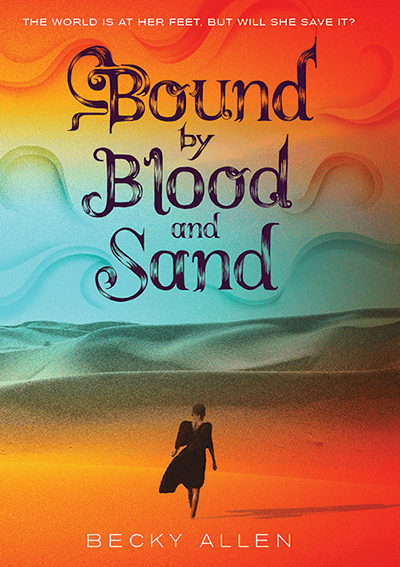
It's the tenth anniversary of Bound by Blood and Sand being published… and I think enough time has passed to talk about how it flopped.
Hi friends,
It’s October of 2026. That means it is now the tenth anniversary of Bound by Blood and Sand being published… and I think enough time has passed to talk about one of the big things in publishing (and, I guess, life) that people really don’t enjoy discussing: failure.
Because oh boy, did the book flop. And fun fact, if the first book in a series flops, then the second book flops even harder because no one picks up the sequel to a book they haven’t read. Over the last ten years, Bound by Blood and Sand has sold somewhere shy of 1500 copies. Freed by Flame and Storm has sold fewer than 500. So, to put it mildly, they did not meet publisher expectations.
And I haven’t sold anything since.
So sit back and grimace with me as I walk through how it feels to fail at your dream, the aftermath, and what comes next.
Note: this is not some juicy tell-all. There isn’t much to tell. No one behaved badly; there was no real drama. Just a quiet lack of anything actually happening. Sigh.
Money and Marketing
The polite way of describing what happened is that my books “never found their audience.” There is a whole lot contained in that little statement.
Let’s start by talking about the advance. For non-publishing friends, an advance refers to “advance against royalties” and is the amount the publisher pays you up front. Your contract also specifies how much you earn per book sale — but initially you don’t receive anything per sale at all. When the amount that you would receive equals the amount the publisher paid you in advance, then you start receiving royalties on each sale. If you never reach that amount, however, the advance remains yours — it’s a gamble on the part of the publisher, based on expectations of how much your book will sell.
The amount of an advance varies wildly from genre to genre, publisher to publisher, and book to book. It’s really hard to quantify what an average advance is. From what I can tell, mine was above average, which meant they had pretty solid expectations for what it would sell… but it also wasn’t so high that it was a priority title (ie the ones they spend a lot of money on and you hear about everywhere you go because they got a ton of market).
Listen: I’m not going to complain that I got a good advance. The money I made on those books went into savings and was a large part of why I was eventually able to buy my apartment. That rules and I’m glad and grateful. However, my books utterly failed to meet those slightly-above-average expectations, which means I now officially have a Bad Sales Track Record, which… well, we’ll get there.
The key thing to focus on here is what I said: the expectations were at least average, but the investment in marketing the books was not. Which meant, ultimately, my books had very, very little chance of earning back that advance, so I was probably doomed to a bad sales track record from the start.
To talk about marketing a little bit… oy. I think many authors like me feel very burned by this. There are a growing number of indie authors who will tell you this is a huge reason why they wanted to self-publish instead of going through traditional publishing — because one of the big things traditional publishers should bring to the table is marketing, but for many titles they don’t seem to. So what’s the advantage of going the traditional route, then?
I’d like to clarify that, though. I don’t believe publishers do zero marketing for any title, even if it isn’t a priority title that gets a lot of big-budget, splashy marketing. Basic things the publisher always does give books much more reach than most authors could get on their own. My publisher had the books in their catalog, which got them into at least some bookstores. They also got the books reviewed by trade reviewers, something I couldn’t have done on my own, which for YA means the books got looked at by librarians — the gateway to teenage readers. (And by the way, those trade reviewers universally praised the books! They got great reviews! But not starred reviews which are what gets books picked up more widely.) And that’s on top of the other things traditional publishers do for each book (editing, cover and interior design, etc).
That said, did they do anything else for marketing? Well, I don’t know. That is one thing I look back on and frown about: if there was a marketing plan, I was never shown it. I don’t know who worked on it (so couldn’t even thank them for what they did). I was kept entirely out of that loop. I suspect that’s because the marketing budget for my books was tiny, so that was easier than trying to tell me, an anxious debut author, that my book wasn’t a priority. Which on some level, I get. My job involves handling clients across different organizations; they can’t all be my highest priority, either. But also, it sucks. I’m an adult and can, in fact, handle the truth.
(And if that’s not the case and they were doing more than that? Then hey, I wish they’d told me what they were doing.)
It doesn’t help that as a debut, I didn’t even know what to ask. I wish I had been more proactive about checking in with my agent, and getting her involved in these questions — but I didn’t even really know enough to do that. Getting blurbs is the clearest example that comes to mind. I knew that many books have blurbs from other writers, did not know the process for obtaining those, and assumed someone would, at some point, tell me. No one did. My books had no blurbs. Should I have asked about it? Yeah. Should someone have told me? Also yeah. Would blurbs have made a difference? Probably not, but I’ll never know.
The other thing I can look back on and realize is, much as I hate to say it, I don’t think my books had great market and genre fit.
Described at a very high level, they did fit right in with the YA fantasy boom at the time: an oppressed teenage girl discovers not just magic, but that she’s the most special and most magical, and she leads a big revolution alongside a dreamy boy, and saves the world. Hooray! Sorry if that sounds reductive of the genre, I describe it all with affection, it’s a genre I love and that’s why I wrote it. That’s also a very standard storyline for the genre at that time.
But my books were not focused on the things that were actually staples of the genre. They were much more about worldbuilding (while trying to keep up the breakneck YA pace), and about the structures of power and the social and political ramifications of toppling a government. Also, there was barely any romance at all, and yes, romance is something the genre readers want. (There are individual people who don’t, I know because I want to throw my books at them when they ask for recs, but they are few and far between compared to most of the genre’s readers.) They also dealt with sexual assault and trauma in a way that was pretty heavy.
I love my books and I think they are very good. I can also now, with ten years of distance, look back and say that while they definitely are young adult fantasy novels, they don’t fit well with what the market for young adult fantasy novels actually wanted. The readers who found them generally liked them, but they were probably never going to have mass appeal. Even so, I’m glad I wrote them as I did. I wrote a story I wanted to tell, in a way that felt right; lightening up the tone or playing up the romance would not have fit with the subjects I was writing about.
I’m okay with the fact that the books weren’t for everyone. Do I wish they’d gotten way more publisher support and had been wildly successful? Yeah, of course. But one thing I’ve reached a fair amount of zen about is this: the books didn’t sell poorly because they were bad — they weren’t! They are good! But sometimes good books don’t sell, for a whole slew of reasons.
I also want to say, this story is not unique. I’ve read other stories just like it through the years, including before my books came out. (Heck, here’s one from this week.) You see articles like this, you hope it won’t become your story, but you don’t really know until things do, or don’t, start to happen with your publisher. Obviously I hoped it wouldn’t happen to me. Yet here I am, ten years later.
Deep breaths.
Aftermath
At no point was there a phone call or an email or anything that told me, officially, my books had failed. Instead there was just… nothing.
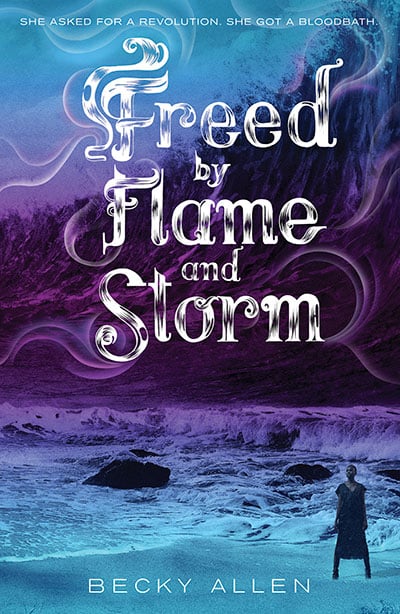
I should note, as I talk about depression and burnout and grief, my books failing were only part of all of that. They sold to the publisher back in 2014, about six months after my mom died of cancer. The first book came out less than a month before Trump was elected the first time. The second book came out two weeks before my father died. I had an anxiety disorder. The world was on fire. Things were bad, is what I’m saying. My books flopping did not help, but it’s not like they came out into a landscape where everything else was perfect.
What actually came next was writing a proposal for my option book. (For non-publishing friends: my publisher had a clause in my contract that meant they got the right of first refusal — the option — for my next YA novel.) Because they’d already published me once, instead of writing the whole book I wrote sample chapters and an outline. I had what I felt was a great idea, one I still love, and we submitted it to my editor.
My editor rejected it.
I suspect this was equal parts that my bad sales track record was becoming evident, and also that the chapters were fine but the overall outline and proposal were a bit muddled.
Since my editor had waived their right to get it first, my agent suggested I go ahead and draft the whole novel, as that meant we could shop it around to other publishers (who’d want to see the whole thing, not just a proposal). So I wrote it.
As I said: it’s an idea I still love. It was also a mess. And not the kind of mess you can clean up in revision — it was at least three different books in one, and I couldn’t find a way to fix that. I still reread it every few years, hoping something will occur to me and that now I can find a way to make it work, and I still can’t. So I stuck it in a drawer, where it still sits today.
My agent’s next round of advice was to try something different, including jumping from YA to adult. That was fine with me. I love YA but ultimately in my heart of hearts I want to write old-school doorstopper epic fantasy, and YA does not really do those. (Readers age out of it before a series can be completed, and it’s often slower paced than the YA market allows for.) She said I might have to consider using a penname; that was fine with me, though not necessarily what I wanted.
So I started writing another new project.
But by this point things were really not great. I’d written Freed by Flame and Storm under contract, in under a year (and because of my terrible process actually wrote it twice), followed by dashing through my trunked option novel. I was exhausted and burnt out, and depressed after my father’s death, and yet I felt like I had to keep going, so I did. Barely.
By this point we’re in 2018, and because I keep pretty detailed notes of all of my writing sessions I know that my output that year tanked. I struggled through a non-viable draft, too short to be a real novel but too long to be a novella, something that was maybe a set up for a series but not doing a very good job. Decent ideas, bad execution, my brain was fried.
I went back to the drawing board with it and rewrote it from scratch again in 2019. That version was better but still not good. I started rewriting it again, got halfway through, and then realized I was not making real progress because it shouldn’t have been the beginning of a series, it should have been a standalone, and everything I had was a first act, not a first book. (Here, have a post from the archive about that.)
So I started it again. And I had some real momentum at the end of 2019, going into 2020.
And then it was 2020.
Yeah.
Okay, speeding along: I spent the next couple of years on this project, revising and revising and revising. I wrote and deleted hundreds of thousands of words during this process. In late 2022 I sent it to my agent with the hopes we’d get it out on submission, finally, in 2023. I also did NaNoWriMo to start playing with a new idea I had. I thought things were looking up.
Except my agent didn’t want the book. Actually, my agent was cutting back her list, and our tastes seemed to have grown apart, so it was probably time to part ways.
Ouch.
To be clear, this was all fully professional. I think being dropped by an agent and changing agents generally is pretty common, but another of those things in publishing that simply doesn’t get talked about much. (Honestly, I think it’s talked about even less than books flopping.) But it does hurt to have the person who championed your work and made you feel good about your writing tell you they don’t want it anymore. There’s no way around that pain, even when you know, intellectually, that it isn’t about the quality of your writing.
It would have been more devastating, but at this point I was finally clawing my way out of the pit I’d been in and I was pretty sure the zero draft I’d spat out during NaNoWriMo had the potential to really be something. So my agent and I parted ways, which meant I had to find a new agent. So I put my final polish on the project I’d spent five years working on and sent it out the door.
I got crickets in response.
That was, honestly, what I expected. I can’t look back at that project objectively. It feels terrible to me, though I don’t think the actual manuscript was terrible. There were too many bad times and bad emotions that went into it. So I didn’t send it out that extensively and wasn’t shocked that I got no bites.
Oh, and there’s that market fit thing again. I was querying during the rise of the romantasy craze, when that was what every agent had listed as the #1 genre they wanted. My protagonist was asexual and aromantic. Womp womp.
Not to mention, this time I was querying with a bad sales track as an albatross around my neck. I don’t know how much that really matters. I’d like to think not at all. But it’s harder for an agent to sell a book from an author who’s got an established bad sales track than no track at all, so it definitely didn’t help.
I stuffed that project in the same drawer pretty quickly. It was fine, though, because I had my eggs in a new basket. I found a new process, thankfully, and the new project was better. It was still not exactly on-trend but it was much closer. (One could even describe it as enemies-to-lovers, which is probably the biggest trope in fantasy currently.) I’ve tried to describe the difference between it and previous projects and all I can say is, I knew from the jump, this one was book-shaped in a way previously trunked projects hadn’t been.
I finished it up and started querying it last year. I did a ton of work to give this manuscript the best chance I could. And let me tell you, it got heartbreakingly close. As in, several agents telling me they loved it and loved my writing, but weren’t sure if they could sell it or how they’d position it in the market. (I swear, this one was a better market fit. Which I guess still doesn’t mean ideal fit, but it was closer. Lol. Sob.) I got some feedback on passes that makes sense, all things I’ll keep in mind for future projects, but none that would have made sense for me to go back and rework the whole manuscript around.
It’s so frustrating. I’m so close. And yet. Sigh.
I haven’t quite shut this one in the drawer yet — there are still people out there looking at it. You never know. (And if you happen to know any literary agents or editors who light up at the phrase “lesbian gladiators”, please send them my way.) But at this point I’m moving on, even though I don’t wanna (whine, foot stomp).
Which, as always, is made easier by the fact that I’m writing something else now, which I think will be great. Will it have any kind of market fit? Umm, I choose not to think about that. Maybe my real problem is me, being cursed with interests that are adjacent to, but always slightly sideways from, what most readers actually want. The problem there is, if I were to try to chase trends and write stuff I don’t care that much about, I think that would come through in the writing. So instead of being great for a limited number of people, it would ultimately be hollow and not connect with anyone at all. So market fit or no, I’m going to write what I love with the hope that there are other people out there who will connect with it and love it, too.
So here I am now, not even back to square one. I’m somewhere behind square one — no literary agent, a bad sales track record, and three-ish novels in a drawer.
More deep breaths.
Unpacking All That
Alright, alright, that was a borderline self-indulgent look at the events of what happened. And yeah, as was probably clear in that, I was pretty burnt out for quite awhile, and pretty depressed, but the emotion I really want to talk about is grief.
As was mentioned up there: both of my parents have passed away. Within that same time span, actually, so did several other family members. My 30s were a decade full of grief.
And when I look back at my publishing career, the grief is honestly really similar.
My father was significantly older than my mother; we all assumed, but never actually discussed aloud, that he’d probably pass away first, while I was relatively young, but then I’d have lots more time with my mom. But that’s not how it worked. I lost them both before I was 35. I grieve them and miss them, and I grieve that life I didn’t get to have — the one where my mom got to retire and we got to travel together and she got to see me become a published author and maybe that would have inspired her to actually finish one of the dozen books she’d started writing.
Okay, grieving a publishing career is nothing compared to that. But a lot of the emotions are the same. Like many authors, I wanted to write from the time I learned to read. I have always written. It was my weird hobby through middle school and high school. I wrote my first real attempt at a book during my senior year of college. By my mid-20s I was taking it extremely seriously, going to conferences, actively shaping my life around it. It was still my hobby but I treated it as a job because I was dead serious about it.
I wanted to be able to write full time, but even at my most day-dreamy-y I was too pragmatic to actually think I’d get to do that. I didn’t even really daydream about being a best seller — I wanted to be a midlist writer from the get-go, someone who would put out a book every year or two, have them sell well enough that publishers would keep buying them, and build a solid if not flashy career. That is shockingly modest as publishing dreams go.
But… it didn’t happen. Instead, I got my chance, and I flopped. I had an idea of what my life could be, and I worked my ass off to try to make it real, and I failed. I’m sad and frustrated and angry and it’s unfair and I can’t change what happened no matter how much I cry or stomp my feet or scream into the void.
So yeah, that’s grief.
I try not to play what if — what if I had focused on the option book that got rejected and found a way to make it work? What if I had cut my losses on the epic fantasy I sunk five years into, quit it sooner and tried something else, would I have managed to write something my agent loved? What if my interests and instincts were just slightly more commercial? What if—
Well, I didn’t, I didn’t, and I suspect they’re not. Like I said, I’m very pragmatic. Wishing I’d done things differently, or that I was a different kind of writer, doesn’t do me any good. So I do take all the deep breaths I keep inserting into this letter, and remind myself to have empathy for myself.
I did the best I could. I wrote books I’m still proud of. I can’t control the market. I couldn’t control my publisher’s decisions around how much to invest in the series. I learned at least a little from failure.
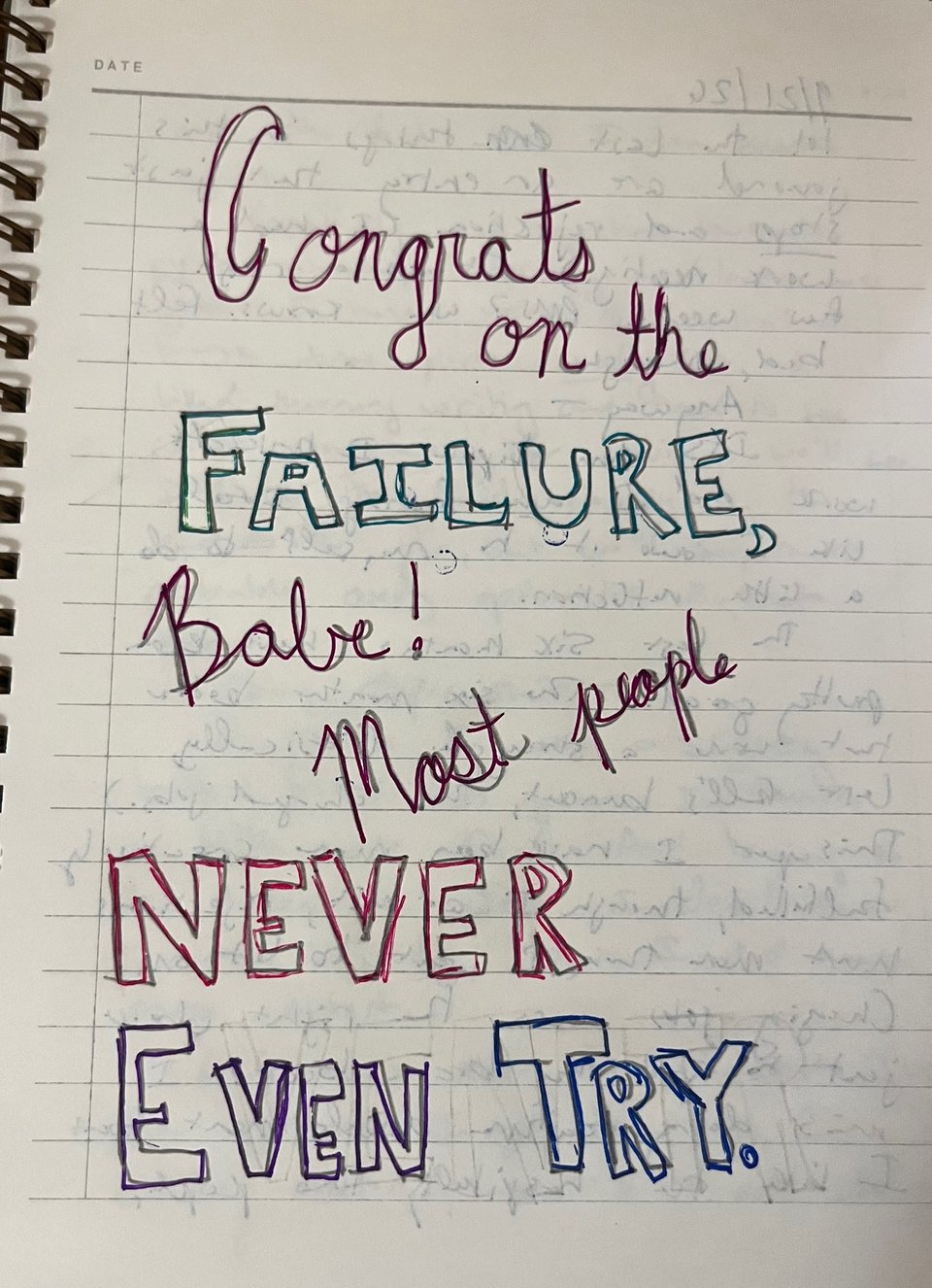
So I self-soothe and it goes like this, a phrase I ran across on tumblr of all places. I don’t remember the full post, but the upshot is this: Congrats on the failure, most people never even try.
Because most of my friends are also writers, I forget sometimes how actually incredible it is to simply write a whole damn book, let alone to have gotten published at all. At this point I have an easy patter when it comes up in the outside world — “Oh yeah, I wrote a couple of fantasy novels about a decade ago! Haha, you wouldn’t have heard of them, though, they sold really badly. But I’m still always writing something new!” And then a subject change as quickly as possible, because dwelling on it is awkward and I don’t want to explain that for all I’m always writing something new, there’s a real chance I’ll never sell anything again.
But the thing is, when people hear about what feels, to me, like this massive, epic failure? They’re usually impressed because oh, right, I wrote two! whole! books! And a major publisher put them out! Wow!
The grief is real, and painful, and it sucks. But the fact is, even if I never sell another book, I should also let myself look back and be proud of this neat thing I did once, that even most people who want to be writers never get to.
I really did do that.
What Next?
Would you believe me if I told you I am somehow still an incurable optimist? I get that from my mom. Also, I’m the most stubborn person you’ll ever meet. I get that from Dad.
So ten years later, here I am.
I had dinner with some of my cousins a few weeks ago and was discussing all of this, and one of the things I said was, “Publishing is weird because you get so much rejection, but there isn’t actually anyone out there who can force you to stop trying.”
I said it up there somewhere: I’m handling the heartbreak of being so close with one project by writing the next one. In a year or two, it’ll be this project’s turn to make the rounds and I’m sure by then I’ll be working on whatever comes next. Hopefully there’ll be some success somewhere in there, but even if there isn’t, there’s no one who can make me stop trying. Let’s be real, I love writing and would be writing anyway, so I might as well keep trying to get something new published.
I am sure there are a few people reading at this point who’d like to suggest self-publishing. And I have thought seriously about that, but at the end of the day, it just isn’t pragmatic for me. Self-publishing well is actually still pretty expensive, and since I know that marketing is not my strong point, it would most likely be throwing money in a pit. Like I said way up top, even when a traditional publisher does “no marketing” their reach is much greater than I have on my own. So yes, traditional publishing is the route that I want to go, still, even if that means I’m likely to face more heartache and failure.
But I’m not saying absolutely no to any kind of self publishing. And I do have the rights to my books back now — they’ve been functionally out of print for years, so after months of waiting and sending nudges to the publisher, the rights were reverted to me. (Many thanks to my former agent, who chased that down for me.)
So what really comes next? How about a sneak peak:
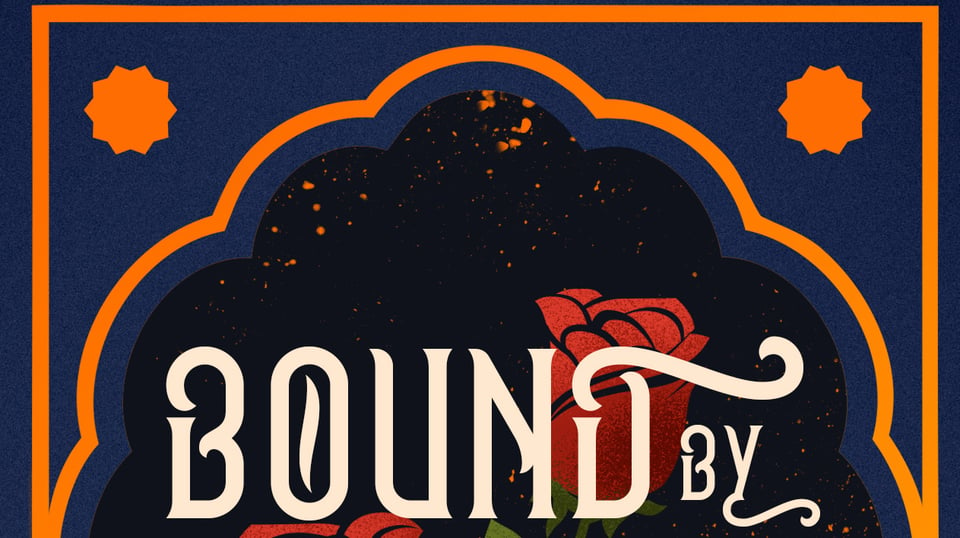
Please note, I have absolutely no time frame for this most mysterious of projects that involves having my rights back and also suddenly having a lot of thoughts on the expenses that go into self publishing. But maybe you’ll hear more about it someday.
And in the meantime, I will keep writing.
—Becky