a remotely busy week
work
My work this week was pretty similar to last week. I'm still in San Diego, but I've managed to keep myself busy everyday. The main things have been prepping a paper for CCS submission and course planning. The first is mostly mechanical; though, we decided to make some last-minute edits to the paper. I just need to clean it up more and make sure the format and submission goes smoothly. The second has been a mix of many things, though.
This week, it became official that Prof. Antonio Nicolosi will teach his over version of CS 579 alongside my own course! This is big news, because my class is fully booked, so now those on the waitlist have the class available to them. And some students in my class can move (hopefully to balance the grading load between us). Looking forward to getting his advice while I go through the class. The more time-consuming task this week was writing up lecture notes and course materials, like problems sets and slides, though. I have drafts of about the first half of my course plan (mostly thanks to David), but I'd like to finish outlining the other lectures before the course starts.
Either way, I'm getting anxious and exited to teach my first class! Good or bad, I know that I'll learn a lot.
non-work
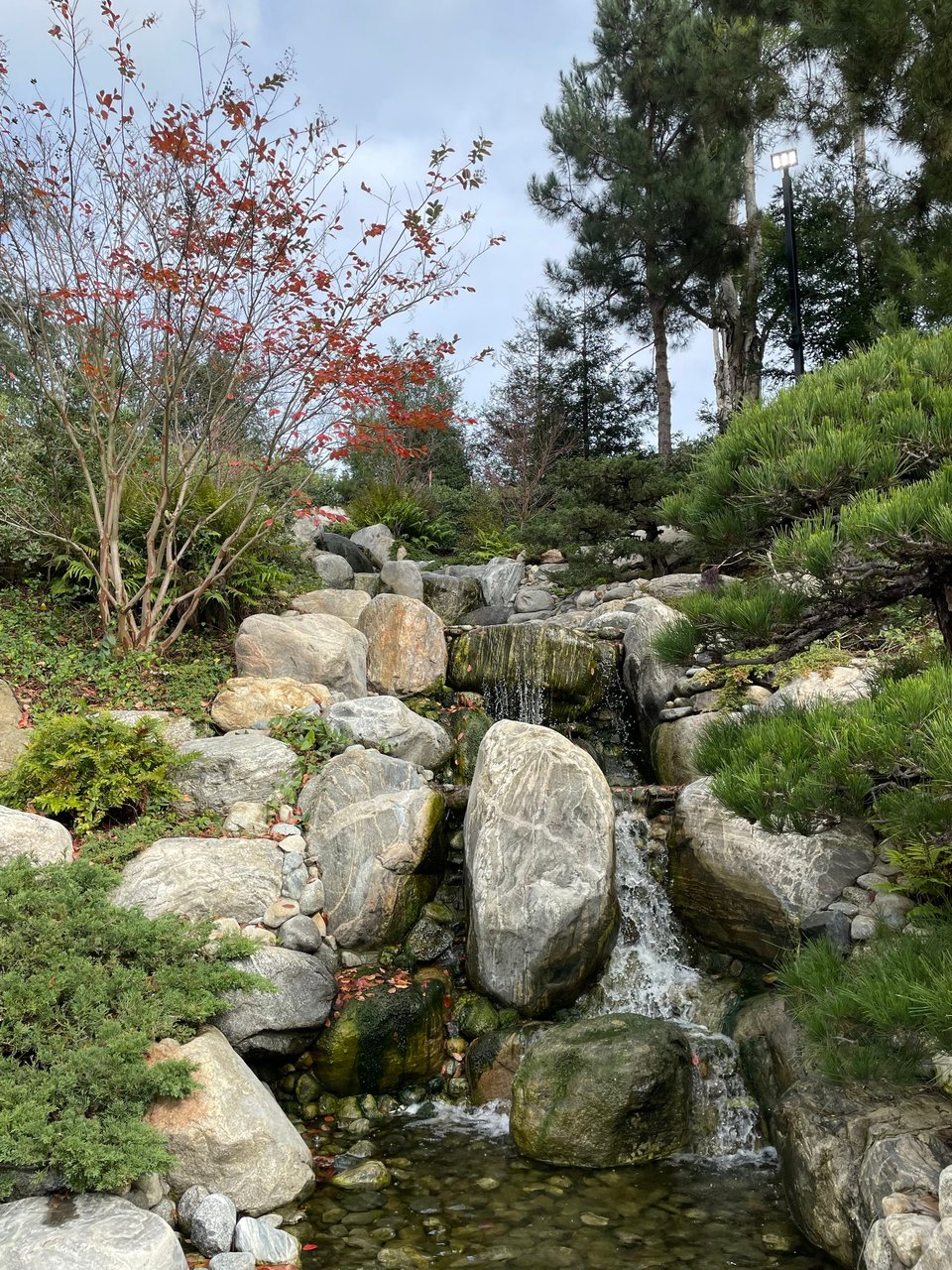
Life outside of work was also really fun this week! This past weekend, my partner and I went to a bunch of places in Balboa park, which is a little touristy but still really fun. Our favorite place was the Japanese Friendship Garden, which is just a super relaxing hillside to walk around and had a bunch of cool Bonsai trees too.
Aside from exploring, I was able to meet a couple of my partner's colleagues, who were extremely kind. We went to get ice cream (a perk of San Diego in January vs Hoboken) with one and learn more about her recent trips and the area. And another other colleague went out of his way to drop off a whole desktop and monitor that he's not using at the moment! This was a big deal for me, because I keep in touch with a lot of people through video games and have been starved of that for a couple weeks now.
Using the loaned PC, I was actually able to play Hades 2 for the first time in three weeks and actually beat the downstairs route on 32 fear (!!). There's still so much more to do in the game, but it was just a nice confidence boost to get that big one out of the way. I also got to run Baldur's Gate 3 at many more fps than last week, but still managed to trigger about three different traps on myself and my friends.
IF that week wasn't full enough, I finally finished Katabasis! Overall, it's a good book. I have a handful of criticisms, especially toward the end, where I felt a lot of threads fell flat. I also think there were some issues in the world-building but recognize that wasn't really the point of the book. The central narrative holds up and definitely highlights some difficulties that are specific to academia (and maybe even specific to philosophy or the social sciences).
Now I'm on to Isles of the Emberdark for running and Who Owns This Sentence? for nighttime reading. So far, they're both great.
questions
- Is the assumption used in a recent PRC paper not just equivalent to a PRC?
- The main assumption is that a noisy, permuted error-correcting code is indistinguishable from a uniformly random string. Is this not already implied from the existence of a PRC though?
- I still need to read it more in-depth, but it seems a little strange.
- Is building a big enough quantum computer guaranteed to teach us something about physics?
- I know it's possible that if quantum computing fails at some scale, then we could learn more about the collapse of the wave function.
- I guess what's the "least interesting" outcome for a large-scale quantum computer physics-wise? Just that it works?
- What are the "complete" or "universal" functions for different classes of size-hiding MPC?
- It's known that Oblivious Transfer (or actually any non-trivial function) enables MPC for any functions (when revealing input sizes).
- It's also known that not all functions can be computed in a size-hiding matter.
- How much have people explored timing attacks in MPC?
- This I haven't even looked into at all, so it might be easy to answer,
- Are there time-invariant implementations of MPC?
Thanks for reading to the end! Here are some fun photos I took while in Balboa Park: