We Need to Talk About Where AI Hype Is Coming From
It’s definitely about “the future,” but it’s definitely not about yours.
It’s definitely about “the future,” but it’s definitely not about yours.
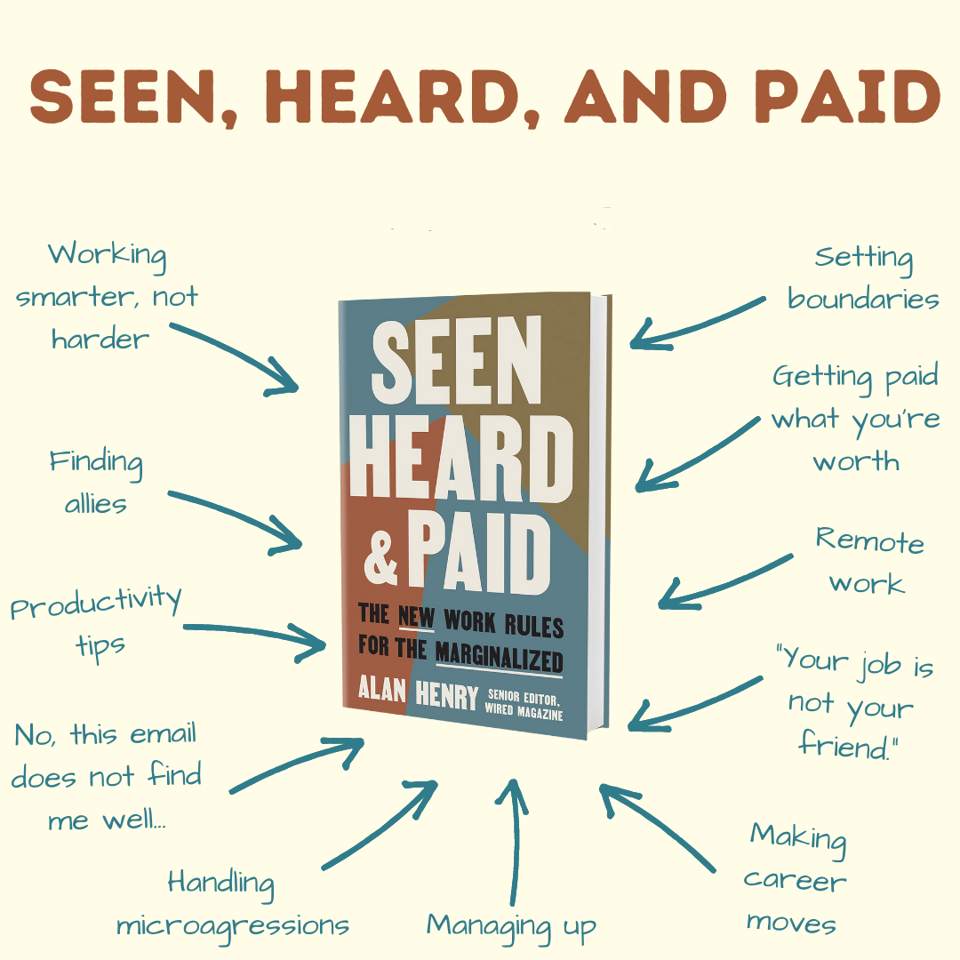
Hi, hello! Welcome back to Productivity, Without Privilege! I’m still Alan Henry, author of Seen, Heard, and Paid: The New Work Rules for the Marginalized, and it’s Black History Month, which means you have to buy a copy of my book. Sorry, I don’t make the rules. Seriously, though, it’s always appreciated. If you prefer, send me a tip on Ko-Fi here, or subscribe to my Patreon for early access to this newsletter, VODs from my Twitch streams, and other perks.
***
So I think the tide may be turning against AI, in a good way. The companies that have been pushing it have started to realize that people just don’t want these tools, and the people who do use them use the one that started the fuss (that is, either ChatGPT because it’s the one they’ve heard of, or, in some cases, Gemini because it’s Google and being shoehorned into all of the company’s products). They have no desire to experiment or switch services, despite how much tech media (of which I’m a part, so doctor, heal thyself) covers the race among major AI companies and LLM providers the way it used to cover web browser market share in the 2000s and 2010s.
Beyond user sentiment, and beyond the fact that we all knew that AI is bad not only for the environment, but for human cognition, people are also starting to wake up to the fact that the costs and sheer amounts of money changing hands (and then changing back, sometimes several times over) sure do look like an economic bubble that’s getting ready to burst, and the people tasked with protecting us all from the fallout are very, very asleep at the wheel. And that’s intentional.
Let’s dive into why, and why it’s important that you know, if only so you can engage with this topic with both eyes open, whether it’s from an alarming news story to your IT department cheerfully demanding you use it for all of your work.
***
Here’s the thing about AI, AI boosterism, and why the people with billions of dollars are putting those billions of dollars and their entire industries into it: They all want to be part of the next big thing. But it’s not that simple: it’s not “the next big thing” the way you or I usually think about it. They’re thinking on the level of “the next internet,” as in “the next tool that’s ubiquitous, global, and indispensable to workers everywhere.”
Here’s what I mean: When you think about the current information ecosystem, most players are trying to compete in it (see: Microsoft) or maintain a lead if they have one (see: Google). If you're really farsighted, you think about things to bolt onto the existing ecosystem that no one else has done or that you can optimize in a way that makes you indispensable (see: Salesforce).
But the real money is at a higher altitude. If you want to truly transform the current media and information ecosystem, you have to acknowledge its current, messy, polluted state. A state that’s packed with misinformation, too many uncontrolled voices, and revenue that’s spread out in too many directions for the tastes of the biggest companies looking to keep their revenue numbers going up and to the right. So you need something to drop into it that won't just compete, but transform the entire ecosystem into something that also subsumes the current one, and ideally in a way that you can control and monetize.
If you’re old enough, think back to the way the internet subsumed libraries, databases, and entire datasets. Think back to when Google gave computing equipment to universities and research institutions to support their research. I’m old enough to remember when people seriously asked themselves if the internet and Google were going to kill libraries, and while libraries everywhere are still woefully underfunded and underresourced, at least we’re not talking about Google Books making libraries obsolete anymore (although bookstores…that’s another conversation). And that’s not to Google’s credit. If anything, it’s thanks to the efforts of library scientists, communities, and educational institutions that fought to protect public access to information, despite the pressures of companies like Google, which were more than happy to soak up the world’s information first and monetize it later.
While both academic and commercial interests pulled all that information together into tools anyone could access online, the project we now call the internet largely began for military, academic, and research purposes, with corporate interests entering later to gobble up space and peel off funding from government agencies that were happy to contract Silicon Valley firms instead of building the tech in-house. It made a lot of people very, very wealthy, and convinced them that, of course, this was the right approach to making themselves rich, famous, and, of course, “thought leaders.” Their only failing, they thought, was that they didn’t invent the thing before anyone else, because obviously they would have done it better. (see: Mark Zuckerberg.)
This time, they want to build the next big thing with their own interests at heart from the outset, so they can shape it, monetize it, and, of course, control it as they see fit. So how do you build the next internet that doesn't sacrifice the current one, but makes everyone use the new one and accept its limitations in the name of convenience, the way we always have?
The answer, of course, is generative AI. And the goal is to hook users and make it commercial from the outset, so people are used to it and rely on it. Sure, it can make mistakes. Sure, it can be objectively bad at what it promises to do, and sure, it can be biased. It can get worse as its owners devise new ways to commercialize it, long after you're stuck with it and it's all there is, unless you want to go find a library with both a microfiche reader to dig up the information you need, I guess.
***
And that brings us back to the present. The AI marching order isn't just to build the next thing that will become indispensable to our daily lives, but to control it completely and make us pay for it, unifying the information ecosystem under its corporate, self-interested owners rather than any party more concerned with truth and accuracy than profitability. And certainly not you, me, or anyone else of a marginalized group or even of the working class. In the end, as the saying goes, the rich get richer, and the poor get poorer.
My analogy here is to think of what the world would be like if the internet had been entirely brought to you by a single company (see: OpenAI), powered by one other company (see: Nvidia), with just enough splintering to, for now, try and compete for the top spot (see: Microsoft, Google, and everyone else with an LLM they want you to use, which is why they’re all both investing in each other, Nvidia, and OpenAI), and you and everyone else as a customer had limited say in the experience, accuracy, and social utility it had.
Imagine an internet that never had the wealth of creative, open-source, and other indie platforms, services, and tools we have today. That's what they want AI to be, and why companies are going all in on AI, even cutting off their dedicated users and customers to spite them and build clunky AI tools instead (see: Adobe).
I could be way off about this though, so if any of this resonated with you, or if you thought to yourself “nah, he’s misunderstanding this part of things,” just hit reply to let me know.

Those Who Try to Erase History Will Fail, by Clint Smith: It’s Black History Month here in the US (more on that in a moment), and over at The Atlantic, Clint Smith explains that despite this administration and its supporters trying their best to rewrite American history to erase the contributions, struggles, and achievements of Black Americans. We’ve seen monuments stripped of plaques explaining the history of slavery and entire websites deleted or agencies scrubbed of any mention of any figure not white and male. Smith argues that, as always, this kind of information suppression never works in the long term and only serves to impose ignorance on the general public, but he doesn’t minimize the harm that results. However, he does offer some hope that things won’t always be this way.
Black Women Turn to One Another as Their Career Paths Suddenly Recede, by Jordyn Holman: I’m actually impressed that The Times published this excellent piece that, at first blush, could be mistakenly read as evidence that the crackdown on “DEI” has successfully rooted out “diversity hires.” In reality (and beyond the headline that doesn’t disclose why those career paths have receded), it describes how Black people in America, especially Black women, have suffered the most from said crackdown because the presence of Black women in the workplace is somehow seen as lacking merit by racists. The story speaks to a number of Black women about their experiences and how their careers were sacrificed to sate right-wing ideology. My only lingering distaste is that the piece is largely framed as “these women are going to thrive despite your hate” as opposed to loudly pointing the finger at the perpetrators of that hate and injustice. But honestly, I don’t know if it could have been published any other way.
Bernice King Says Her Father’s Legacy Has Been Softened—And That’s Dangerous, by Jasmine Browley: Every year, a lot of people rightfully stand up to call out people who would have spat on Dr. Martin Luther King and then go on to try to claim his message for their own interests and egos. It’s honest work, but I’m glad to see Bernice King’s commentary published somewhere I can refer to it. Our culture has done a lot to soften Dr. King’s messaging around the edges, making it more palatable to the status quo and those who defend it, and that does him and all of us a disservice. Never forget that Dr. King was so radical that he was killed for his beliefs, and those beliefs would still make current politicians in power, many of whom were alive and in power when he was marching, shake in their boots at the prospect of social change.

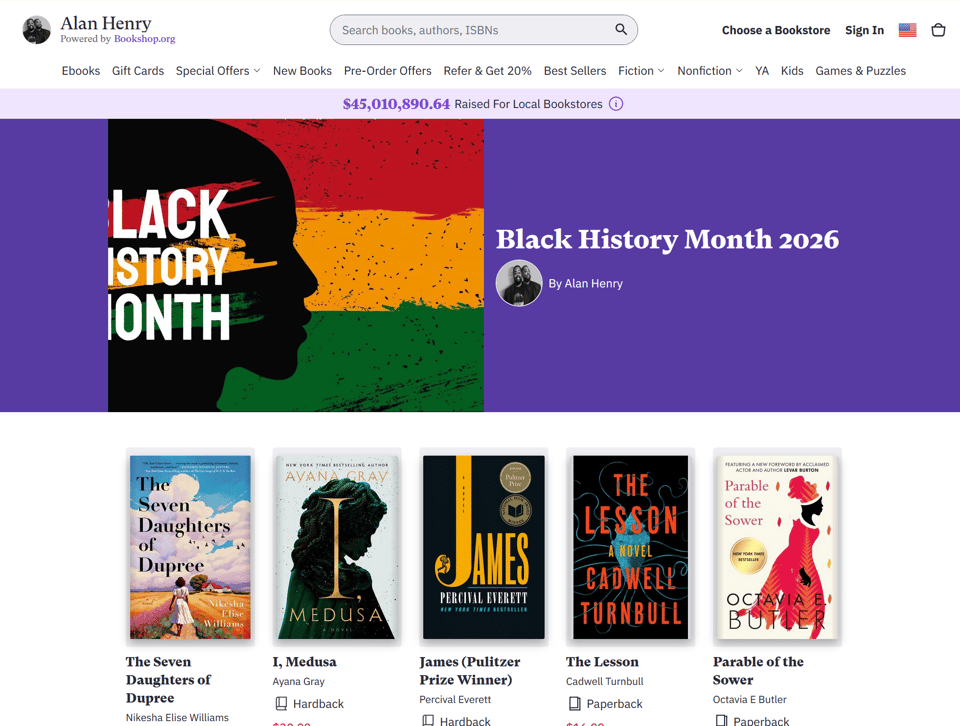
So it’s Black History Month, like I mentioned at the top of the newsletter, which means it’s an excellent time to read some excellent books from Black authors, myself included. Now, if you’re reading this, odds are you’ve already read my book, so thank you, but if you’re more of a fiction reader and you’re interested in your next great nonfiction book, historical fiction read, fantasy world to get lost in, or anything else, head over to this Black History Month book list at my Bookshop.
The list is packed with incredible titles, like the 30th anniversary edition of Walter Mosley’s Devil in a Blue Dress and Addie Citchens’ Dominion. Nnedi Okorafor’s brilliant (and Nebula Award-winning) speculative fiction book, Binti, is also on the list, as is Octavia Butler’s Lilith’s Brood. Check it out and look through the list. I’m absolutely sure you’ll find something incredible and eye-opening to read.
Oh, and full disclosure: I added my own book to the end of the list; the full list was curated by Bookshop, and if you buy anything from it, I get a little chunk of your purchase. Also, Bookshop is an excellent way to support your own local bookstores, since before you buy, you can select a local bookstore in your area to fill your order, and your Bookshop purchase is essentially the same as purchasing the book directly from them.
***
That’s all for this edition of Productivity, Without Privilege. As always, if you enjoyed the newsletter, consider supporting me by dropping me a tip or subscribing to my Patreon for early access to this newsletter and other treats.
Stay warm out there, and look out for each other.


