Framing Matters: What Editors Think About When Headlining and Titling Stories
Sure, it’s about making sure the story has the widest appeal, but often it's about minimizing its impact.

Sure, it’s about making sure the story has the widest appeal, but often it's about minimizing its impact.
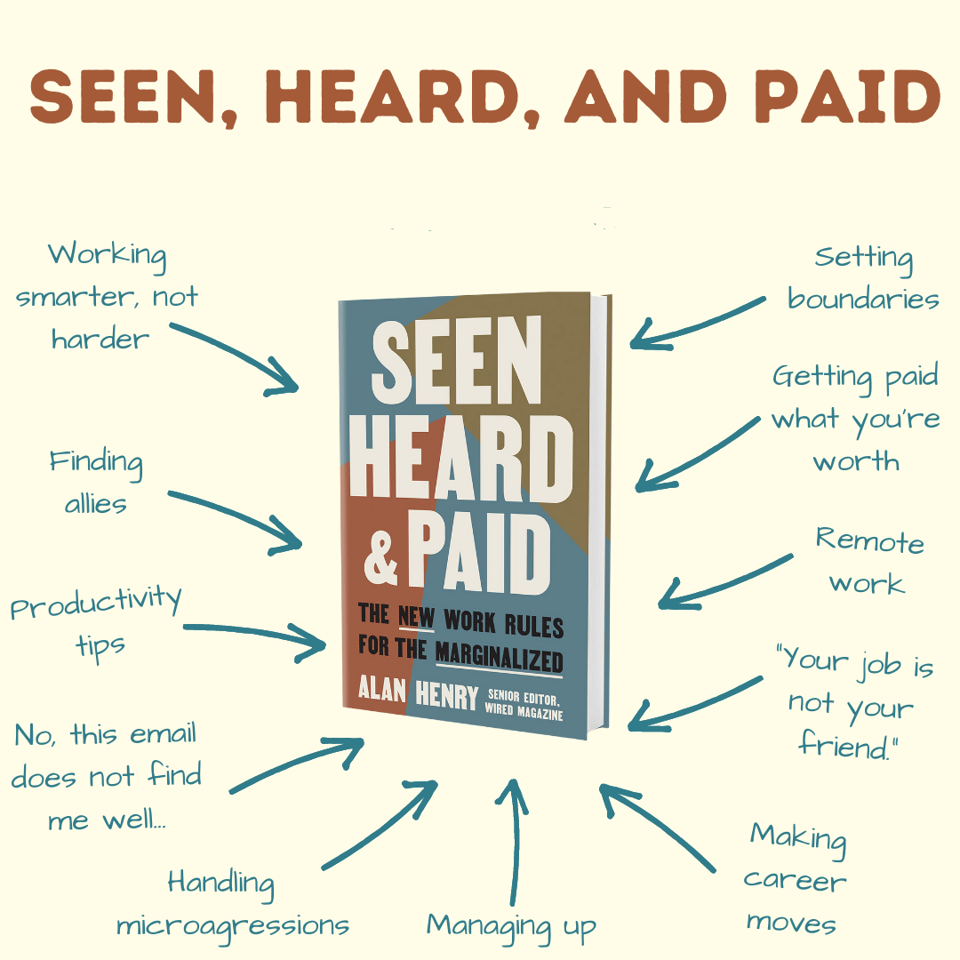
Welcome back to Productivity, Without Privilege, folks! I’m still Alan Henry, author of Seen, Heard, and Paid: The New Work Rules for the Marginalized, which you’ve undoubtedly heard of by now, right? If not, you should buy a copy; it’s great. I should know, I wrote it. Meanwhile, consider tossing a coin to your newsletter writers by either sending me a tip or subscribing to my Patreon. I’ve been posting more insider goodies to Patreon lately, so if you’re interested in all of my projects, that’s the place to be.
So before we begin this time, I want you to look at this Reuters story from last year. It’s not a particularly special story; it’s just another example of how the current administration is gutting consumer protections and ditching a plan to force airlines to reimburse travelers for delayed or disrupted flights. But me even saying it that way frames the story in a particular context, even though everything I just said is factually correct. But let’s look at the headline and opening text of the story:
***
US drops Biden plan to require airlines to pay compensation for disrupted flights
President Donald Trump's administration said on Thursday it would drop a plan by his predecessor to require airlines to pay passengers cash compensation when U.S. flight disruptions are caused by carriers, in a setback for aviation consumer advocates.
In December, the U.S. Department of Transportation under then-President Joe Biden sought public comment on the rulemaking process about whether airlines should be required to pay $200 to $300 for domestic delays of at least three hours and up to $775 for longer delays. U.S. airlines sharply criticized the proposal first made by Biden in May 2023.
***
To a casual reader of the headline, and indeed even the lede of this story, what I said isn’t the important part. Instead, the article is framed as yet another example of the Trump administration undoing actions taken by the Biden administration. Even the second paragraph of the story focuses more on the details of federal agency rulemaking, and elevates the concerns that airlines had (by giving readers the context that they “sharply criticized” the proposal). The lede, which in turn has more prominent positioning, dilutes the consumer impact of the move by calling it “a setback for aviation consumer advocates,” a jumble of words that leaves the reader unsure exactly who those people are (spoiler: they’re you and me).
If you can’t tell, I’m disappointed in Reuters here. I think the way this story is framed turns a very relevant real-world story about your rights while flying and how airlines treat their customers into a mealy-mouthed, says-a-lot-without-saying-anything-at-all policy piece. It’s the same kind of story that treats real-world issues and their impact like political horse racing, doing all readers a disservice. The story is reduced to winners and losers. Trump undid this thing that Biden did. Advocates are angry, businesses are happy. Actual passengers aren’t mentioned whatsoever until the third graf, and even that just says that airlines have to refund passengers for canceled flights, but not delayed ones, under current rules.
The story’s not wrong or even bad, I’m not claiming that. And I’m not even sure the writer involved has any particular feelings either way on the issue (which is very likely intentional, considering the outlet), but what I can tell you is that the story was either written with the knowledge that an editor wanted it this way, or it was edited to be this way: In the end, the story ends up reporting some news without giving it any context or impact whatsoever.
It’s an article about rules and numbers, this team versus that team, and the opinions of those teams, far removed from the audience, and ideally the human beings who should read the story and understand their impact: you, me, or anyone else who may have to step on an aircraft in the near future. And choosing to write and publish the article this way is what we call framing and packaging, something that’s at the heart of every editor’s job, and personally, something I think I’m very good at doing (scratch that, I know I’m good at doing, because the only people who don’t like the way I do it are people who hate the fact that I’m so good at it.)
Most of framing is all about making sure that your story appeals to the widest possible audience you can reach, so when it’s promoted to those readers, either on your own website or some other platform, they actually want to click on it, read it, share it, or otherwise engage with it. That’s a balancing act though, because another big part of framing is making sure that you package a story (packaging being the way you headline it, the way the intro and lede are written) in a way that accurately reflects the content and the topic of the story in as concise, yet interesting, way as possible, without writing checks that your story can’t cash (that, my friends, is the real definition of clickbait.)
That all sounds fair, right? After all, if you’re a writer looking to get articles published anywhere, paying attention to how that outlet frames its stories is important. Editors usually frame stories to make sure that they appeal to the publication’s core audience, if they specifically have one (So at a tech site, of course any story is going to highlight the tech angle. At a car site, a story’s framing will appeal to drivers and car enthusiasts. Make sense?) but they’ll also try to frame their stories in a way that will help them look interesting to readers on social media and other passers-by that they may be able to convince to read their site. They also try to look good to search engines, especially Google (and newsfeed services like Google Discover or Apple News). So when editors tell writers and freelancers to read the site and familiarize themselves with what they cover and how they cover it before pitching or submitting a story, that’s partially why, and it’s incredibly important.
Of course, framing serves another purpose, too: one that I discussed briefly when I talked about media literacy and why it’s important: framing serves to position a story within the publication’s ideological perspective. And make no mistake, every publication has an ideological perspective, even if that perspective is “the objectivity fallacy,” which serves no one except the status quo and its current form of institutional power. So in the case of this Reuters story, there’s a distinct reason that it, as well as almost all political news from major media outlets, is reduced to “this team did this, and that team did that.”
To add any actual context, any detail on how politics impacts real people and real communities, to explain to the reader how the actions, opinions, and policy positions of their leaders translate into real-world impact on the ground, would potentially risk characterizing those policies as “good” or “bad” in a way that many media outlets simply can’t allow themselves to do, especially when it comes to state-sanctioned actions or the effects of decisions by institutional power.
So instead we get things like “Trump admin reverses Biden-era policy,” instead of the arguably more clickable, factual, and impactful “Trump admin kills rule to force airlines to reimburse passengers for delayed flights.” That’s framing, baby.
So when you’re reading the news, writing the news, or pitching stories to news outlets, pay close attention to how those stories are framed. I don’t consider this a partisan issue, or even a political issue; it’s a readability and accessibility issue. If we, and by we I mean journalists, want the public to trust us, pay us for our work, and engage with what we write, we need to be intellectually honest and transparent about not just what we cover, but what it means to the people who read it. Anything less is a disservice to them, a disservice to our society at large, and a disservice to the profession.

Reporter’s Guide to Detecting AI-Generated Content, by Henk van Ess: One thing that keeps coming up in my conversations with other editors at myriad publications is how difficult it’s getting to determine if anything is real anymore, especially if you see it shared on social media. That’s a common complaint, I know, but the thing that makes it even worse is that when you do post real things, people are primed to jump right in and accuse it of being fake, or AI-generated, and it forces humans to go out of their way to engage to prove that their work is not AI, and is indeed produced by a real person. It’s a poisonous information ecosystem, and while some people will just claim anything they disagree with is AI, a lot of people just refuse to believe anything anymore, choosing instead to pick and choose their reality, which defeats the entire purpose of media, especially journalism.
This guide, produced by the Global Investigative Journalism Network, is a great primer not just for reporters and other journalists who need to examine what they see and hear on social media for potential stories, but also for anyone eager to hone their critical thinking and discernment skills. It’s a very comprehensive guide, complete with tips to identify everything from flawed perspectives in images to the kinds of scammy language and inflammatory statements that scammers use to draw attention to their work (and draw out your eyeballs, clicks, and money). Bookmark it, I promise you’ll find it useful.
For Too Long, Colonial Language Has Dominated Space Exploration. There Is a Better Way, by Art Cotterell and William Grant: This one’s near and dear to my heart, and I think it’s especially timely given the historic mission and safe return of NASA’s Artemis II mission. For many people, especially in the halls of corporate spaceflight, space is a resource to be explored, studied, and to some extent, potentially mined, exploited, and controlled. Even in the common language of our favorite science fiction and speculative fiction stories, we “colonize” space the same ways European powers “colonized” the new world: setting up small, scrappy outposts that eventually become self-sustaining spaces where the people who live there can make their own way. In a lot of ways, it’s an extension of not just the American mythology, but of the global rush to empire that’s afflicted societies large and small across the globe.
But what if we didn’t think of space as a resource to be obtained and utilized? What if we thought about it as this sacred place in which we all lived, a thing of which we are an integral part, that can tell us so much about not just who we are and how we came to be, but how everything came to be? What if that approach doesn’t necessarily mean we can’t find and use resources to help us build better lives, but disconnected us from the notion of dominion, of conquest, and of ownership? That’s what this piece at The Conversation asks, and it posits some interesting answers that I’ll leave you to read, now that I have hopefully set up the question so well.
The Media Is Largely Ignoring the Trauma of Millions. Here’s Why. by Margaret Sullivan: I’m breaking my “avoid linking to Substacks” rule here a bit because one, it’s Margaret Sullivan, a legendary journalist whom I wish I had the luck of working with at The New York Times, although I never had the opportunity. She was the paper’s last public editor, and as she continues her media criticism and commentary, she’s a prime example of why her role was so necessary at the paper, and her work is evidence of why they needed to get rid of her. In this dispatch from her newsletter, she tackles the real reason why we keep hearing from Trump supporters and why the media is enamored with talking to them about their beliefs, even when they never seem to reveal anything new about the people they’re talking to.
Meanwhile, major media outlets are ignoring the lived trauma of the millions of people sick from Covid, losing their jobs and health care, losing their federal benefits, facing rising costs of living, and in the worst cases, seeing their families abducted from their jobs, their homes, their schools, or even the courtrooms where they’re showing up to do everything right in order to stay. And Sullivan puts a fine point on why: it’s partially because media is terrified of even the appearance of defying Trump, but also afraid of even appearing to sympathize with people who do by including them in the conversation.


Having fun isn’t hard when you have a library card!
A good friend of mine reminded me that even when I don’t have time to get to my local library (which is literally two blocks from me, so there’s really no excuse) as long as I have Libby installed I can check out e-books and audiobooks right on my phone, which is often where I wind up reading anyway, much to the chagrin of the growing pile of books on my nightstand.
So if you don’t have it installed on your mobile device (it’s available for Android and for iOS), in this edition, I happily recommend you remedy that as soon as possible. Best of all, once you have the app installed, it’ll walk you through finding your closest library branch and signing up for a library card online so you can use the app right away. So even if you don’t have a library card yet, you'll have one after signing up!
It’s not like I have a shortage of things to read, but it is nice to have the option to grab some audiobooks and check out some of the titles my friends are reading to see if I vibe with them without spending a dime, and with the side benefit of supporting my local library.
So if you haven’t tried it yet (and sure, your mileage my vary depending on your local library system and how connected they are) I wholeheartedly recommend giving it a try. And don’t forget: audiobooks count as reading, okay? I don’t want to hear anything about that.
***
That’ll do it for this Productivity, Without Privilege. If you enjoyed the newsletter, consider supporting me by dropping me a tip here, or by subscribing to my Patreon here for early access to this newsletter, as well as some other treats. I’ll see you back here soon.


