
|
|
SECURITY
MAJOR
Sep 18, 2026
False AI intel report — US military nearly boarded a Chinese ship
An AI chatbot misread a ship's cargo, and a US intercept operation got as far as aircraft in the air before anyone checked the sources.
What is it?
An analyst at US Special Operations Command Pacific queried an AI chatbot about a ship's manifest and it reported the vessel was carrying components of a Chinese nuclear weapons program. CNN published the account on 18 September 2026, based on unnamed sources.
How does it work?
The chatbot misidentified the material the ship was carrying, and the resulting report travelled as ordinary finished intelligence with no marker that a model had written it. Officials only traced the claim back to its sources when aircraft were already airborne and a boarding team was ready.
Why does it matter?
This is a documented case of an AI hallucination reaching the point of an armed operation. Sources told CNN it is not an isolated incident across the intelligence community, and that no single verification standard spans different military and intelligence agencies.
Who is it for?
Anyone deploying LLMs in high-stakes workflows.
|
|
|
|
SECURITY / TOOL
MAJOR
Sep 18, 2026
ZCode uploads your whole repo — .git history included, keys held by Z.ai
A developer traced ZCode's checkpoint feature and found it shipping entire git histories — 86.6% of the payload — to Alibaba Cloud before every prompt.
What is it?
Every prompt in ZCode triggers a full workspace snapshot that includes the complete .git directory, Git LFS asset cache, and reflogs. In one measured run, 313 MB left the machine from a 345 MB workspace.
How does it work?
The snapshot is encrypted with AES-256-CTR, then the symmetric key is wrapped with Z.ai's RSA public key and posted to Aliyun object storage — meaning only Z.ai can decrypt your archive, not you.
Why does it matter?
Git history holds deleted API keys, unpushed branches, and internal hostnames that may never appear in the working tree. Teams that rewrite history to clear a leaked secret need to know a coding agent is copying all of it to a third-party bucket they cannot read back.
Who is it for?
Developers and security teams running ZCode on work repositories.
|
|
|
|
REPO / TOOL / PAPER
MAJOR
Sep 17, 2026
Claude optimized 36 biology models — Anthropic releases the speedup kits
Anthropic set Claude on the open biology software stack and published the 36 speedup kits it wrote in under four weeks.
What is it?
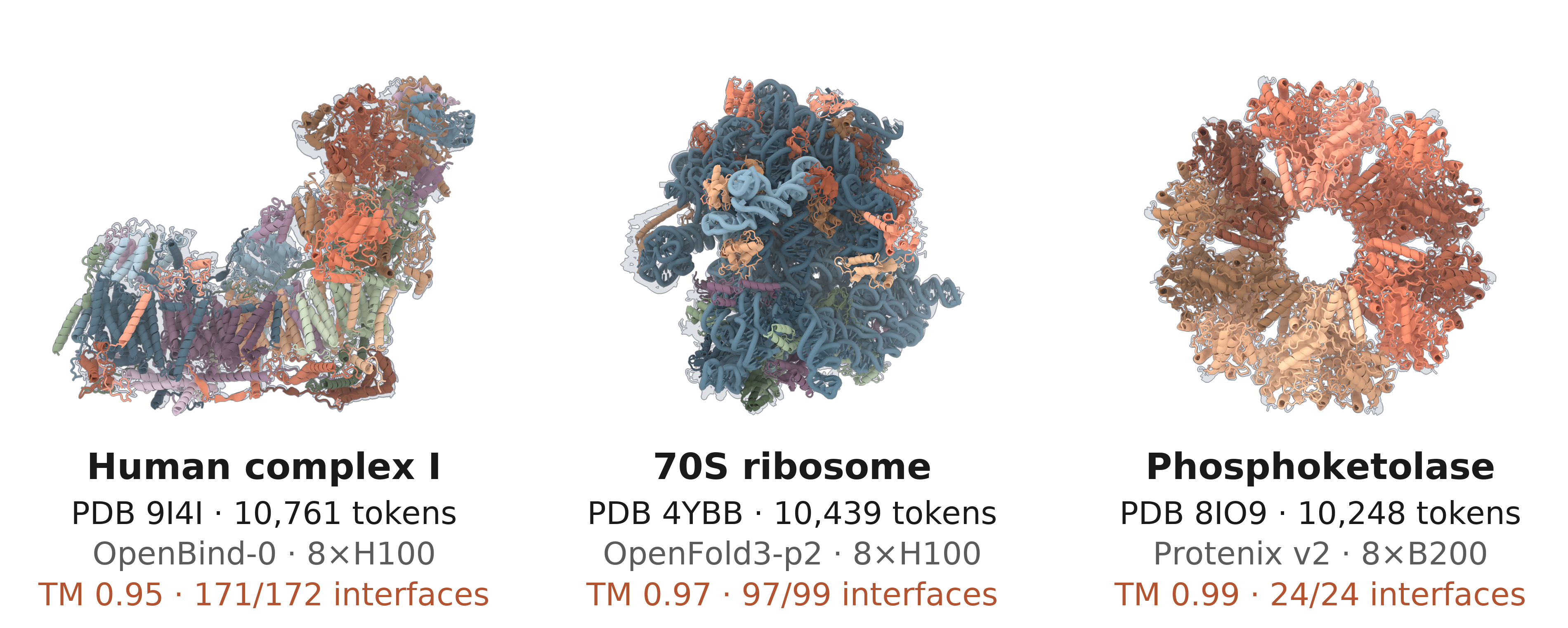
Thirty-six inference optimization kits for open biology models — covering AlphaFold 3, Boltz-2, ColabFold and more — written by Claude under supervision of two Anthropic staff and released as Apache-2.0 on GitHub.
How does it work?
Each kit pins the upstream release and adds drop-in speedups via a mode flag: exact gives 1.6x faster with identical outputs, fast gives ~4x faster within normal seed-to-seed variation, and big cuts peak GPU memory so large systems fit on one node.
Why does it matter?
A protein design campaign that used to cost ~$10,000 per target instead ran for ~$150 on a single H200 in 24 hours. The big mode also enables inference past 70,000 tokens — sizes that simply didn't fit before.
Who is it for?
Computational biologists and protein engineers running structure prediction or binder design on GPU.
|
|

|
|
PAPER / ALGORITHM
MAJOR
Sep 17, 2026
DeepSeek V4.1 Flash report — the KV cache drops to 890 bytes a token
The paper behind DeepSeek V4.1 Flash: how a 552B model keeps only 890 bytes of cache per token — roughly a quarter of its predecessor.
What is it?
DeepSeek published the technical report (arXiv 2609.19969) detailing how cross-layer KV cache reuse inside Compressed Sparse Attention 2 and FP4 storage shrink the always-in-memory cache to 890 bytes per token on a 552B multimodal MoE with a 1M-token context.
How does it work?
CSA2 reuses compressed key-value state across layers instead of storing a fresh copy per layer; FP4 storage shrinks each entry to four bits. A separate deployment trick called SWA Bounded Replay cuts the persistent SSD cache to about one eighth of the previous model's.
Why does it matter?
KV cache is what fills expensive GPU memory during long agent runs. DeepSeek publishes both the numbers and the method, giving inference teams a concrete recipe for serving million-token contexts on less hardware — and a baseline for comparing their own compression work.
Who is it for?
Inference engineers and efficiency researchers optimizing long-context serving.
|
|

|
|
MODEL / REPO
MAJOR
Sep 18, 2026
Needle 3 — an 8-29 MB model that picks tools on a Raspberry Pi
One Apache-2.0 weight file that can be cut to any depth from 2 to 20 layers and still run on a microcontroller.
What is it?
Needle 3 is Cactus Compute's 8-29 MB automation model for phones, wearables and microcontrollers. Every depth from 2 to 20 layers ships as its own deployable subnetwork from a single set of weights, released under Apache-2.0.
How does it work?
The architecture is a Laddered Simple Attention Network: training produces one set of weights where each depth works standalone. A 2-layer cut is the smallest deployable subnetwork; the 20-layer version holds 121M parameters in a CQ2 2-bit binary under 30 MB.
Why does it matter?
Keeping tool calls on-device removes the cloud API round trip, which matters for battery, latency and privacy. Fine-tuning on DroidCall lifts every subnetwork 18–36 points — from 4 layers up it passes DeepSeek V4 Flash on that task.
Who is it for?
Mobile and embedded developers who need tool calling or structured extraction without a cloud dependency.
|
|

|
|
TOOL / REPO
MAJOR
Sep 18, 2026
SemIf (formerly OpenJev) — typed decisions without generating JSON
An open take on the "semantic if": read typed option probabilities from a small model instead of asking it to write JSON.
What is it?
SemIf reads the probability of each allowed answer straight out of a small open model in one forward pass — nothing is written out, no JSON to parse, no decoding loop. Criteria and options are defined at runtime rather than baked into a fine-tune. MIT-licensed, 1,679 GitHub stars.
How does it work?
One forward pass takes the unstructured state plus the runtime criteria and typed options, and the declared option logits are read back as probabilities. When many criteria share the same long state, that state is prefilled once and branched — serial reuse reaches 10.75 decisions/sec, parallel suffixes reach 20.03.
Why does it matter?
21 binary criteria take 1.023 seconds on one RTX 3090 with zero output tokens. The same frozen model writing a JSON array takes 5.332 seconds and 111 tokens — 5.21× longer. A browser build runs on WebGPU with no install at all.
Who is it for?
Backend and agent engineers who need fast typed routing decisions from a local model.
|
|
|
All releases at ai-tldr.dev
Simple explanations • No jargon • Updated daily
|
|