|
|
ECOSYSTEM
RUMOR
2026-09-14
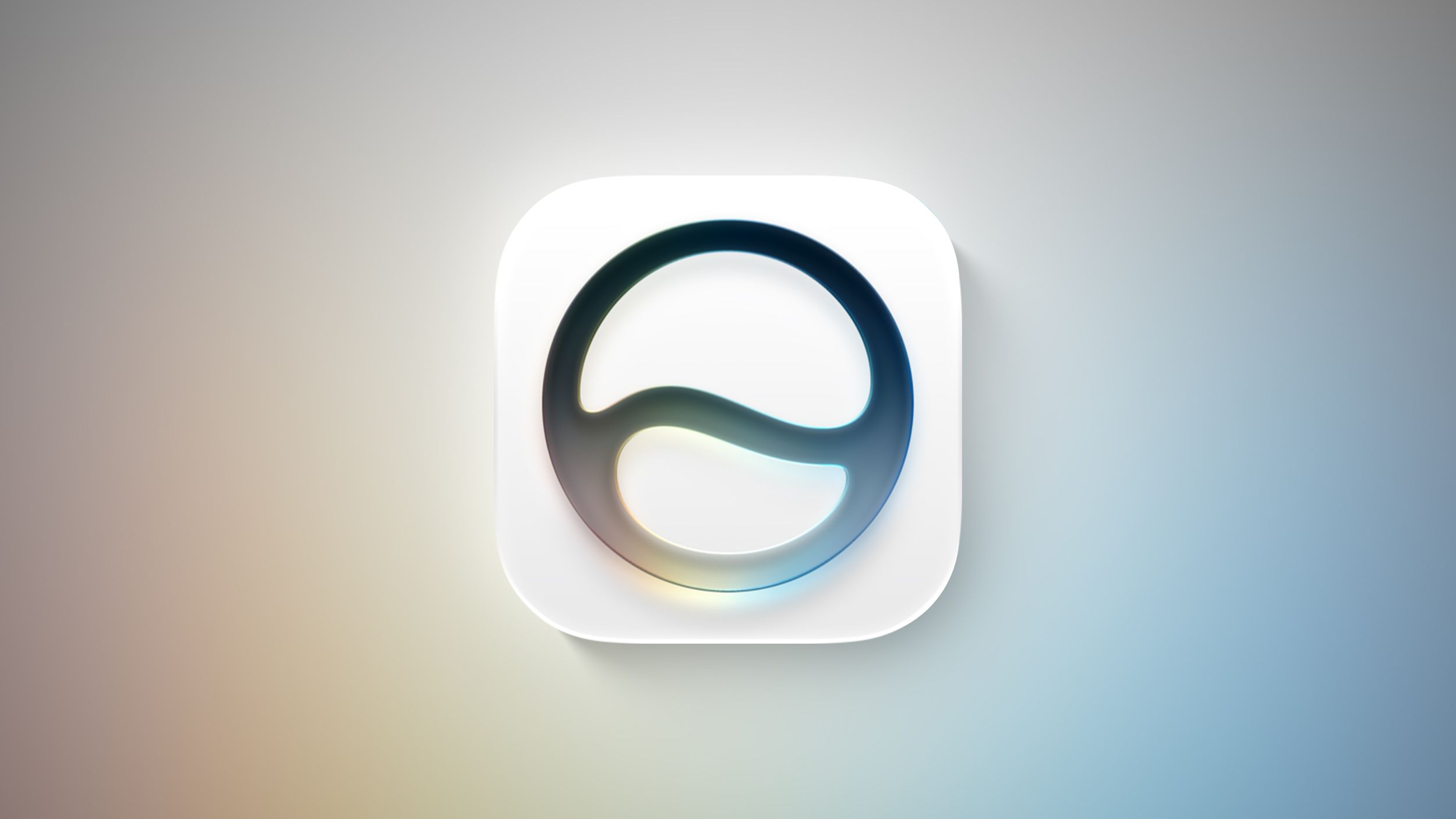
Siri's AI can be replaced — iOS 27 code has hooks for Claude and ChatGPT
Two private mechanisms in the shipping macOS 27 release candidate show Apple built Siri so another company's model can answer for it.
What is it?
Model Delegation is a mechanism found in the private frameworks of iOS 27 and the macOS 27 Golden Gate release candidate that lets a model such as Claude appear as a Siri extension. A second Inference Provider protocol goes further and replaces Apple's own server-side Siri model entirely.
How does it work?
Under the Inference Provider protocol an outside model receives Siri's planner prompt and its tool definitions, can request system actions and reach personal data, and returns results Siri presents in its own interface. 9to5Mac confirms the path exists but is switched off, with the picker currently offering only ChatGPT.
Why does it matter?
Siri handles roughly a billion devices, so an open assistant slot would be one of the largest distribution channels an AI lab could plug into. Nothing is shippable yet — Apple has not granted the entitlement to third parties — but 9to5Mac notes the feature could land in the EU first, following Apple's pattern with regulator-driven changes.
Who is it for?
iOS developers and AI assistant builders watching for new distribution channels.
|
|
|
|
BENCHMARK
MAJOR
2026-09-12
Real-SWE — coding agents tested on private company codebases
A coding-agent benchmark whose tasks come from real companies' private codebases, not from open-source repos — and the best score is 38.8%.
What is it?
Real-SWE scores coding agents on work engineers were actually paid to do inside private companies. Specific Labs (YC F25) licensed production codebases — including a consumer fintech platform processing 100,000+ bank statements and a top-100 App Store app — and every task is lifted from a real ticket.
How does it work?
Each task hands the agent a full repository plus the context a staff engineer would have had, then an injected verifier checks whether the finished change actually behaves correctly. Models run in their native harness — Claude Code, Codex CLI, Gemini CLI, Grok Build — averaged over eight runs per task.
Why does it matter?
The gap is the point: the leading agent (Fable 5.1 in Claude Code) resolves only 38.8% of tasks, and six of the ten analysed tasks sit under 15% — well below what agents post on public benchmarks built from memorisable open-source code. The failure breakdown shows missed requirements dominate, not time budget.
Who is it for?
Engineering leads evaluating coding agents for real production work.
|
|

|
|
SECURITY
MAJOR
2026-09-13
OpenMAIC 1.0.2 — three advisories close a DNS-rebinding SSRF
A security release that pins OpenMAIC's media proxy to the addresses its own guard already approved — upgrade now if you're self-hosting on a cloud VM.
What is it?
OpenMAIC 1.0.2 publishes three security advisories and ships their fixes in the same tag. Two are ways around the outbound URL guard on the /api/proxy-media route; the third let any caller overwrite an existing classroom file. OpenMAIC is an open-source multi-agent classroom that turns a topic into an agent-taught lesson with slides, quizzes and narration.
How does it work?
One fix blocks IP literals like the Alibaba Cloud metadata address (100.100.100.200) before the local-network branch runs. The second stops DNS rebinding: a shared pinned dispatcher now connects only to addresses the guard validated at check time, not whatever DNS resolves to at connect time. The classroom bug is fixed by generating IDs server-side and returning 409 on collision.
Why does it matter?
Reaching a cloud metadata service from an unauthenticated request is the standard path to stealing instance credentials, so anyone self-hosting on a cloud VM has a reason to upgrade today. Breaking change: POST /api/classroom no longer honours a client-supplied stage.id.
Who is it for?
Teams self-hosting OpenMAIC — especially on cloud VMs where metadata endpoints are reachable.
|
|

|
|
REPO
MAJOR
2026-09-13
Colibri v1.11.0 — DeepSeek V4.1 Flash runs on a CPU box from SSD
Colibri v1.11.0 adds a DeepSeek V4.1 Flash engine that reads the released 552B checkpoint straight off an SSD — no conversion, no GPU required.
What is it?
DeepSeek V4.1 Flash becomes the ninth model family Colibri can run, and the first it reads with no conversion step. The 552B checkpoint (about 510 GB on disk) streams experts from an SSD on a plain CPU box. Colibri is a pure-C local inference engine with 29,662 GitHub stars.
How does it work?
Batched expert reads (tunable via V41_READ_DEPTH, 8 is the measured knee) hide I/O behind matmuls. Attention matrices read once per block of positions rather than per token, and DSpark speculative decoding in three stages with blocks of five speeds generation without model changes.
Why does it matter?
A 552B open model that normally wants a datacenter now answers on a CPU machine with a big SSD — roughly three times faster than when this release cycle started: 78.7 seconds per turn fell to 25.1 seconds, and five-turn chat holds 1.14–1.58 tok/s. An opt-in Metal path also arrives for GLM-5.3-Flash experts on Apple Silicon.
Who is it for?
Local-inference tinkerers and developers without a GPU rig who want to run large open models.
|
|

|
|
REPO
NOTABLE
2026-09-13
CUDA for AMD on Windows — ZLUDA and ROCm wired up by one script
A scripted Windows setup that lets CUDA-built apps run on an AMD Radeon card through ZLUDA and the HIP SDK — validated on an RX 9060 XT.
What is it?
CUDA-for-AMD-Windows packages the ZLUDA-on-ROCm route into an installer you can actually follow. ZLUDA catches the CUDA calls an application makes and sends them to AMD's HIP/ROCm runtime instead, so the CUDA binary runs unchanged and never learns it is on an AMD GPU. The repo pins ZLUDA v6-preview.69 and targets the Windows HIP SDK 6.4.
How does it work?
install.ps1 builds the runtime from three pieces: the AMD GPU driver and Windows HIP SDK, an official ZLUDA release, and an optional LibTorch 2.3.0+cu118. Helper scripts cover detection (gpu-scan.ps1), diagnostics (doctor.ps1), and compatibility testing (test-runtime.ps1).
Why does it matter?
Windows has been the weak spot for AMD compute: ROCm's Linux story is far ahead, so CUDA-only tools have typically meant buying an Nvidia card. This repo gives a concrete, reproducible path — with limits written down rather than promised away. The CUDA driver API, cuBLAS, cuBLASLt, cuSPARSE and cuFFT resolve; cuDNN/MIOpen, NCCL, TensorRT and custom CUDA extensions do not.
Who is it for?
AMD GPU owners on Windows who want to run CUDA-only AI tools without switching hardware.
|
|

|
|
VIDEO
NOTABLE
2026-09-14
Sam Witteveen — "The OpenSource Managed Agents"
Sam Witteveen's follow-up to his managed-agents episode: the open-source harness you run yourself, installed on camera — TrueForge (MIT) by TrueFoundry.
What is it?
A walkthrough of TrueForge, the agent harness TrueFoundry publishes under MIT at github.com/truefoundry/trueforge. A harness is the runtime layer around a model — it runs the agent loop, executes tools, keeps context, and persists a session. Witteveen's angle is that TrueForge does that job without the forced model choice that a hosted managed-agent product brings.
How does it work?
The video is part explanation and part live install — architecture at 4:47, benchmarks at 5:29, then a full demo: installing TrueForge, picking a model, wiring connectors, choosing a sandbox provider, and driving the whole thing from Python at 17:33.
Why does it matter?
Agent harnesses are where the model choice gets locked in, because a hosted one usually ships with the vendor's own model. Watching someone install a self-hosted harness and swap the model in the UI shows what that choice actually costs in setup time.
Who is it for?
Engineers building agents who want to run their own harness and avoid vendor lock-in.
|
|

|
|
TOOL
NOTABLE
2026-09-11
Lema AI Governance — third-party AI found, assessed and monitored
Lema AI Governance finds the AI a vendor added after you approved it, scores the exposure it creates, and watches it for drift.
What is it?
AI Governance is a new capability in Lema AI's third-party risk management platform. It identifies and classifies AI across third parties and their products — model providers, AI-native applications, and ordinary products with AI features embedded in them. Unsanctioned tools employees adopt on their own are treated as shadow AI: unvetted sub-vendors that never went through review.
How does it work?
Assessment is forensic rather than questionnaire-based: Lema cross-checks a vendor's claims against submitted artifacts, looks for contradictions, then compares both with what Lema can observe independently through connected systems. Exposure is judged by what the AI can actually do — agent behaviour, code execution, web search, and MCP server connections — and by which model providers sit behind a vendor.
Why does it matter?
Vendor approval is a snapshot, and AI moves after it. Continuous monitoring surfaces AI-specific risks — data used for model training, excessive retention, fourth-party data sharing, and scope drift when a vendor's real footprint grows past the approved state — inside the third-party workflows a team already runs.
Who is it for?
TPRM, GRC and security teams reviewing vendor AI exposure across their supply chain.
|
|
|
All releases at ai-tldr.dev
Simple explanations • No jargon • Updated daily
|
|