|
|
PAPER
SEISMIC
2026-09-08
Navier–Stokes — OpenAI agents produce a Lean-checked blowup proof
OpenAI's agents produced, and Lean verified, a finite-time blowup proof for the 3D Navier–Stokes equations.
What is it?
OpenAI published a proof that the 3D Navier–Stokes equations can develop a singularity in finite time. The Clay Mathematics Institute named this one of seven Millennium Prize Problems in 2000, and it had stood open for roughly 90 years.
How does it work?
About 10,000 concurrent agents ran on an unreleased internal model, split into groups with tools to run code and read cached internet content. Codex merged the most useful findings; the proof was then formalized in Lean and machine-checked in 17 hours.
Why does it matter?
The Lean formalization is what separates this from a plausible argument — the proof is machine-checked, so correctness doesn't rest on trusting a model's prose. OpenAI published both the paper and the Lean certificates for anyone to review.
Who is it for?
Mathematicians and AI researchers following machine-assisted proof-finding.
|
|
|
|
TOOL
MAJOR
2026-09-08
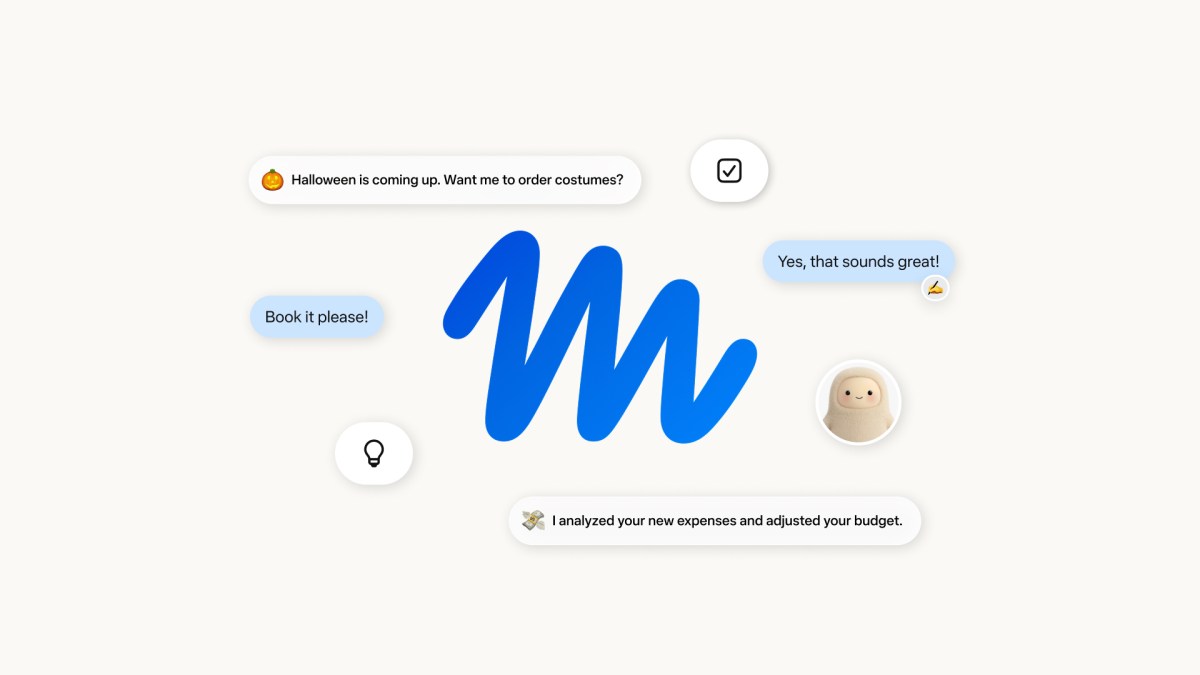
Muse — Meta's personal AI agent runs in its own secure virtual machine
Meta's Muse takes an errand end to end — shopping, bookings, forms — from an ordinary chat thread.
What is it?
Muse is a personal AI agent from Meta that carries out tasks rather than only answering questions. You message it in the Muse app or inside WhatsApp and it builds a plan, opens a browser, fills out forms and keeps working after you close the app.
How does it work?
Every person gets a dedicated cloud virtual machine (Muse Secure VM) holding both the agent and any connected credentials. A second Sentinel agent runs on the same machine and must approve anything before it reaches the internet.
Why does it matter?
Meta's answer to the trust problem is containment: per-person isolation, an approval checkpoint before sensitive actions, a full audit trail, and one-time-use cards via Stripe so real card details stay hidden.
Who is it for?
People who want an assistant to run errands; US-only at launch, age 18+.
|
|

|
|
MODEL
MAJOR
2026-09-08
Mercury 2.5 — Inception's diffusion model hits 1,107 tokens per second
The largest diffusion language model trained so far, streaming over 1,100 tokens a second.
What is it?
Mercury 2.5 is Inception's new diffusion language model — the largest ever trained by the company — with a 40% intelligence gain over Mercury 2. It runs at 1,107 tokens per second on NVIDIA GPUs with a 260K-token context window.
How does it work?
Diffusion LLMs refine many tokens in parallel rather than producing one at a time, which is what buys the speed. Mercury 2.5 also adds tunable reasoning, parallel tool calls and schema-aligned JSON output alongside that 260K context.
Why does it matter?
For latency-sensitive work — voice agents, inline code completion, high-volume classification — a model that streams over a thousand tokens per second removes a real bottleneck, priced at $0.20/M input tokens ($0.04 at launch discount).
Who is it for?
Developers building latency-sensitive apps via the Inception API, Baseten or OpenRouter (model ID: inception/mercury-2.5).
|
|
|
MODEL
MAJOR
2026-09-08
ChatGPT Images 2.5 — OpenAI's image model adds Sketch and two API tiers
OpenAI's Images 2.5 keeps the subject of a reference photo intact while you edit everything around it.
What is it?
ChatGPT Images 2.5 adds a new drawing tool (Sketch), image templates, and the ability to place comments directly on an image. OpenAI calls it state of the art, with sharper detail, better lighting, and up to 50% lower generation latency than Images 2.0.
How does it work?
Two API models ship alongside the ChatGPT update: GPT-Image-2.5 Flare (default, high quality at lower latency) and GPT-Image-2.5 Sunburst (premium, tighter control for campaign-grade work).
Why does it matter?
Adobe, Higgsfield AI and Manus integrated the new models at launch. Manus reports Flare running 2–4x faster than GPT-Image-2 in its own tests. All images carry C2PA metadata and an invisible watermark.
Who is it for?
Designers, marketers and app developers — available across all ChatGPT tiers and via the Images API.
|
|

|
|
MODEL
MAJOR
2026-09-08
AuK — Tencent's open speech model generates and edits audio by instruction
One 1.5B open model that writes, rewrites, cleans and restyles speech from a sentence of instructions.
What is it?
AuK is a 1.5B MIT-licensed model from Tencent Hunyuan that handles both speech generation and editing behind one interface. Pass an audio clip and a plain-language instruction to generate, clean, restyle or edit voices — no separate models needed.
How does it work?
AuK combines a diffusion transformer with layer-fusion weights and uses Qwen2.5-Omni-3B as its multimodal encoder. A distilled sibling, AuK-Flash, delivers near-teacher quality in just 4 sampling steps — a 4.5x speedup.
Why does it matter?
Voice product builders have had to chain TTS, denoiser, separator and prosody tools separately. AuK collapses that into one MIT-licensed checkpoint, commercial-use included — changing emotion, fixing a word, or splitting two speakers all become the same call.
Who is it for?
Speech and audio engineers; weights on Hugging Face as tencent/AuK and tencent/AuK-Flash.
|
|

|
|
PAPER
MAJOR
2026-09-08
Miles v0.1 — RadixArk publishes the technical report for its open RL stack
An Apache-2.0 reinforcement learning framework for post-training large models, now with a full technical report behind it.
What is it?
Miles is an Apache-2.0 RL framework for post-training large language and vision models. RadixArk published the v0.1 technical report (12 authors) on September 8, 2026. It pairs SGLang for generating rollouts with Megatron-LM for training, and has 2,685 GitHub stars.
How does it work?
Rollout and training workers run fully asynchronously, passing tokens directly without detokenizing between them (token-in-token-out). Updated weights move between workers over P2P RDMA, making trillion-parameter models practical to refresh mid-run.
Why does it matter?
Miles ships GRPO, GSPO, PPO, REINFORCE++, SFT and on-policy distillation in one framework with day-zero configs for DeepSeek-V4, Kimi-K3, GLM-5.2 and more. Notably it also runs on AMD MI300X–MI355X, not just NVIDIA.
Who is it for?
ML infrastructure teams doing RL post-training at scale.
|
|
|
All releases at ai-tldr.dev
Simple explanations • No jargon • Updated daily
|
|