|
|
MODEL
MAJOR
2026-10-24
Nanbeige4.3-33B — open 33B agent model leads its class on Terminal-Bench
A 33B open-weight model tuned for coding agents and office-style agent tasks, with a 512K context.
What is it?
Nanbeige4.3-33B is the first model from Kanzhun's Nanbeige LLM Lab. It targets two jobs: agentic coding and professional cowork tasks like office workflows, and is designed as the teacher model for smaller distilled versions to come.
How does it work?
Thinking mode is on by default and can be switched off. A preserve_thinking option carries reasoning across turns, which the team recommends for tool use and code agents. XML-formatted tool calls are recommended; temperature 1.0 for agents, 0.6 for reasoning.
Why does it matter?
The model fits on a single multi-GPU server under a permissive Apache-2.0 license. On Nanbeige's own table it scores 80.9 on Terminal-Bench 2.1 versus 73.0 for Qwen3.8-27B — the strongest open result at this size class.
Who is it for?
Teams self-hosting coding agents who want a frontier-capable model without sending data to a closed API.
|
|
|
|
ARTICLE
NOTABLE
2026-10-24
Drew Breunig — the state of context engineering in 2026
Context engineering is the choice of when to be deterministic and when to be probabilistic.
What is it?
Drew Breunig's write-up of his AGNTCon talk traces how the long-context promise of 2024 failed in practice, showing why 1M-to-10M token windows didn't replace retrieval and agent design.
How does it work?
The essay names four failure modes from long context (poisoning, distraction, confusion, clash) and six practical fixes — augmentation, tool loadout, quarantine, pruning, offloading and summarisation — all fitting a DSPy agent in about 16 lines of changes.
Why does it matter?
The piece frames prompt engineering (2023), context engineering (2025) and harness engineering (2026) as one line of work, with more context moving into plain code each year. Planned forgetting emerges as the key open problem for long-running personal agents.
Who is it for?
Developers building agent harnesses who want a clear mental model of where the field has been and where it's going.
|
|

|
|
ARTICLE
NOTABLE
2026-10-25
Max Woolf — why OpenAI and Anthropic cut LLM prices by up to 80%
Frontier API prices fell fast in 2026, and Max Woolf says competition from open-weight models is the main reason.
What is it?
Max Woolf's essay charts every price change from June to September 2026, covering GPT-5.6 Luna cut by 80% and Opus 5.5 launching at 40–60% less than Opus 5.
How does it work?
The analysis focuses on cache reads, which Woolf estimates make up 96–99% of token spend in agentic coding. A 75% cut to the cache-read price drops the real cost of a coding agent by roughly 70–75%, even when headline prices don't move.
Why does it matter?
Vercel AI Gateway data shows cost per token at 43.3% of its April 2026 level. Woolf expects prices to keep falling — not rise — even as both labs prepare for IPOs, as models become easier to swap via tools like OpenRouter.
Who is it for?
Developers and teams budgeting LLM API spend who want to understand the real drivers of the price war.
|
|
|
|
BENCHMARK
NOTABLE
2026-10-25
Old CNN beats frontier LLMs at skin cancer diagnosis — Lynch Lab test
A decade-old image classifier made fewer misses than two frontier LLMs on hard, biopsy-proven skin lesions.
What is it?
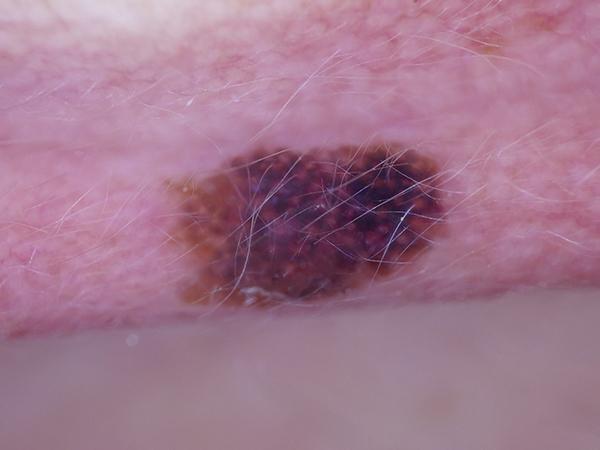
Magnus Lynch, a consultant dermatologist at Guy's Hospital, tested GPT-6 Astra, Claude Fable 5.1 and a fine-tuned Inception v3 CNN on 200 biopsy-proven skin lesions from the MILK10k dataset. The CNN scored 62% first-choice accuracy; both LLMs scored 42%.
How does it work?
Each model chose from six diagnoses per case. The CNN was fine-tuned on 68,011 ISIC Archive images; the LLMs ran once each at default settings. Cases, prompts, every LLM reply and the scoring code are all in a public download.
Why does it matter?
The general-purpose LLMs played it safe: almost nothing was sent home, but few specific diagnoses were named. Lynch flags clear limits — only 30 melanomas, single runs, and the CNN is a baseline rather than state of the art.
Who is it for?
Clinical AI researchers and dermatologists evaluating where general-purpose multimodal models actually stand against narrow specialist models.
|
|

|
|
TOOL
NOTABLE
2026-10-23
Claude Code 2.1.310 — Monitor tool comes to Bedrock, Vertex and Foundry
Claude Code 2.1.310 brings the Monitor tool to cloud providers and fixes gateway and compaction failures.
What is it?
The Monitor tool and plugin monitors now work in Claude Code on Bedrock, Vertex and Foundry, and also when telemetry or nonessential traffic is disabled. Long foreground sleeps are blocked in those setups too.
How does it work?
When a gateway rejects the effort-2025-11-24 beta value or mid-conversation system messages, Claude Code now retries without them. After a "Prompt is too long" error, compaction no longer keeps excessive dense text (base64, SVG) that would cause the next request to fail again.
Why does it matter?
Teams reaching Claude through cloud providers get features that previously only worked on the direct API. The release also fixes a Windows hook bypass and adds Enterprise custom-role controls for cloud sessions.
Who is it for?
Claude Code users on Bedrock, Vertex, Foundry or behind a gateway who were missing Monitor and hitting compaction failures.
|
|

|
|
DATASET
NOTABLE
2026-10-22
Forest Typology 2020 — DeepMind maps six forest types at 10 m worldwide
An open map that tells primary forest apart from plantations, for every 10 m patch of land on Earth.
What is it?
Forest Typology 2020 (ForTy) is Google DeepMind's open global map classifying every patch of land into six types: primary forest, naturally regenerating forest, planted forest, plantation, tree crops/agroforestry, and other. A 2017–2025 time series is also published.
How does it work?
The model classifies satellite imagery at 10-metre resolution, trained on ~1.7 million labelled locations and validated against 9,000+ randomly chosen sites. It correctly identifies forest type 90% of the time and separates forest from non-forest 95% of the time.
Why does it matter?
Most global maps show tree cover but can't distinguish old-growth forest from a palm oil plantation. DeepMind calls the 2020 map a key baseline for the EU deforestation regulation, which bans products grown on land that was forest in 2020.
Who is it for?
Supply-chain auditors, conservation organisations and remote-sensing researchers who need a free, high-resolution reference to verify forest claims.
|
|
|
All releases at ai-tldr.dev
Simple explanations • No jargon • Updated daily
|
|