|
|
MODEL
MAJOR
2026-10-05
Beam — Reflection's 501B open-weight MoE for coding and agents
Reflection AI's first open-weight model: a 501B MoE built for coding, reasoning and agent workloads.
What is it?
Beam is Reflection AI's first open-weight language model — a sparse Mixture-of-Experts with 501B total and 23B active parameters, aimed at coding, reasoning and agentic tasks. Weights arrive under Apache 2.0 later this month; early access is open by waitlist.
How does it work?
Trained on 23.8T tokens in under four weeks on 6,144 NVIDIA GB300 NVL72 GPUs, followed by a four-week RL stage with over 100 million rollouts. Only 23B parameters activate per token, keeping inference cheaper than a dense model of the same size.
Why does it matter?
A large Apache-2.0 model from a US lab gives companies an open alternative to leading Chinese open-weight models. Reflection claims it matches GLM-5.2-class coding performance using one-third to one-quarter of the hardware.
Who is it for?
Teams that self-host open models for coding agents and enterprises evaluating open-weight alternatives to frontier APIs.
|
|

|
|
ECOSYSTEM
MAJOR
2026-10-05
OpenAI textGrain — invisible text watermarks for the EU AI Act
OpenAI starts marking AI-written text in the EU and lets any API customer turn the same watermark on.
What is it?
textGrain is OpenAI's new invisible watermark for model-written text. From 5 October 2026, API customers worldwide can opt in for select models; eligible ChatGPT and Codex text generated in the EU gets it over coming weeks, on all plans.
How does it work?
A statistical signal is hidden in the model's word choices, tied to keyed randomness. At a 1% false-positive target, the detector reports ~80% detection on 200-token passages and ~95% on 400-token passages — though replacing 25% of words with synonyms drops detection to 17%.
Why does it matter?
EU AI Act Article 50 requires AI-generated content to be machine-detectable, effective August 2026. API developers serving EU users now have a provider-side compliance switch — and OpenAI plans to open-source the technology.
Who is it for?
API developers serving EU users, compliance teams, and researchers studying AI-text detection.
|
|

|
|
TOOL
MAJOR
2026-10-05
Claude Code 2.1.290 — WebFetch reads past 100K characters, /loop survives compaction
Claude Code stops losing long web pages and scheduled tasks, and gives mods more to read.
What is it?
WebFetch in Claude Code 2.1.290 no longer silently cuts a page at 100,000 characters — it now reports how much text was unread and accepts an offset to read the rest. Scheduled /loop tasks also keep firing after conversation compaction.
How does it work?
The interactive session's WebSearch budget now refills at 100 calls per hour (configurable via CLAUDE_CODE_WEB_SEARCH_REFILLS_PER_HOUR). Plugin authors gain a turn.step hook listing the API's own tool calls, and claude attach / claude logs now accept partial session names.
Why does it matter?
Agents researching long docs or changelogs were quietly working from truncated copies; this makes the gap visible and paginatable. Several Bash permission checks for wildcard-expanding read-only commands like rg and git grep now ask before running instead of auto-approving.
Who is it for?
Claude Code users, plugin and mod authors, and admins of managed machines.
|
|

|
|
TOOL
MAJOR
2026-10-04
Strata v0.1.39 — Qwen3.8-Flash-Next 125B on a 12 GB gaming GPU
A one-click engine that splits a 125B open model across your GPU, RAM, CPU and SSD so it runs on a normal gaming PC.
What is it?
Strata v0.1.39 runs Qwen3.8-Flash-Next, a 125B Mixture-of-Experts model, on consumer hardware with a 12 GB+ GPU. This release adds parallel requests, the OpenAI Responses API (for Codex CLI), and experimental support for older NVIDIA, AMD and Intel Arc cards.
How does it work?
Strata keeps the most-used experts on the GPU, all experts in RAM (CPU covers misses), and a lookup table on the SSD. A small helper model guesses ahead and the big model verifies in one pass, hitting 94 tok/s on an RTX 5070 at Q2_0.
Why does it matter?
A 125B model at 60–94 tokens per second on a 12–16 GB card means private, local coding without a server GPU or API bill. The new Responses API and parallel requests make it a direct backend for agents like Codex CLI.
Who is it for?
Local-LLM users and developers running coding agents on their own PC who want a frontier-class model without cloud costs.
|
|

|
|
MODEL
NOTABLE
2026-10-04
Kandinsky 6.0 Video — open MIT models make video with synced speech and sound
An open video model family that generates picture and sound together, with lip-sync, under the MIT license.
What is it?
Kandinsky 6.0 Video Lite (3B) and Pro (29B) generate 5-second clips with 44 kHz audio, including lip-synced speech, from text or image plus text. A separate 1.4B VSR model upscales output to Full HD (1920×1080).
How does it work?
A dual-stream CrossDiT joins a pretrained video stream and a newly trained audio stream via bidirectional cross-attention so picture and sound align in time. Training started with audio-only pre-training, then paired audio-video data, then RL post-training and distillation.
Why does it matter?
Open audio-video generation is rare; this release ships code, model checkpoints and a diffusers integration under the permissive MIT license. Human evaluations favour the Pro model over Kandinsky 5.0 Video Pro, especially on speech quality.
Who is it for?
Video-generation researchers, open-model practitioners, and ComfyUI users wanting synced audio without a commercial API.
|
|

|
|
PAPER
NOTABLE
2026-10-05
Dust — Q Labs pretrains transformers without backpropagation
A search-based way to train transformers that gets close to backprop without computing a single backward pass.
What is it?
Dust is Q Labs' zeroth-order training method — described as the first such method competitive with backpropagation at pretraining transformer language models, tested at 2M–243M parameters on FineWeb. MIT-licensed code is on GitHub.
How does it work?
Instead of perturbing weights, Dust adds Gaussian noise to the outputs of linear layers at every token position. Each token acts as a virtual population member, so one forward pass evaluates many perturbations in parallel; reward-weighted noise is averaged into a gradient estimate.
Why does it matter?
At 10M tokens, Dust's test loss tracks backprop's closely, and the authors report it is 1,000–10,000× more efficient than prior evolution-strategies methods. The authors frame it as a foundation for search-based credit assignment, not a backprop replacement today.
Who is it for?
ML optimization researchers interested in alternatives to gradient-based training.
|
|
|
|
SHOWCASE
NOTABLE
2026-10-04
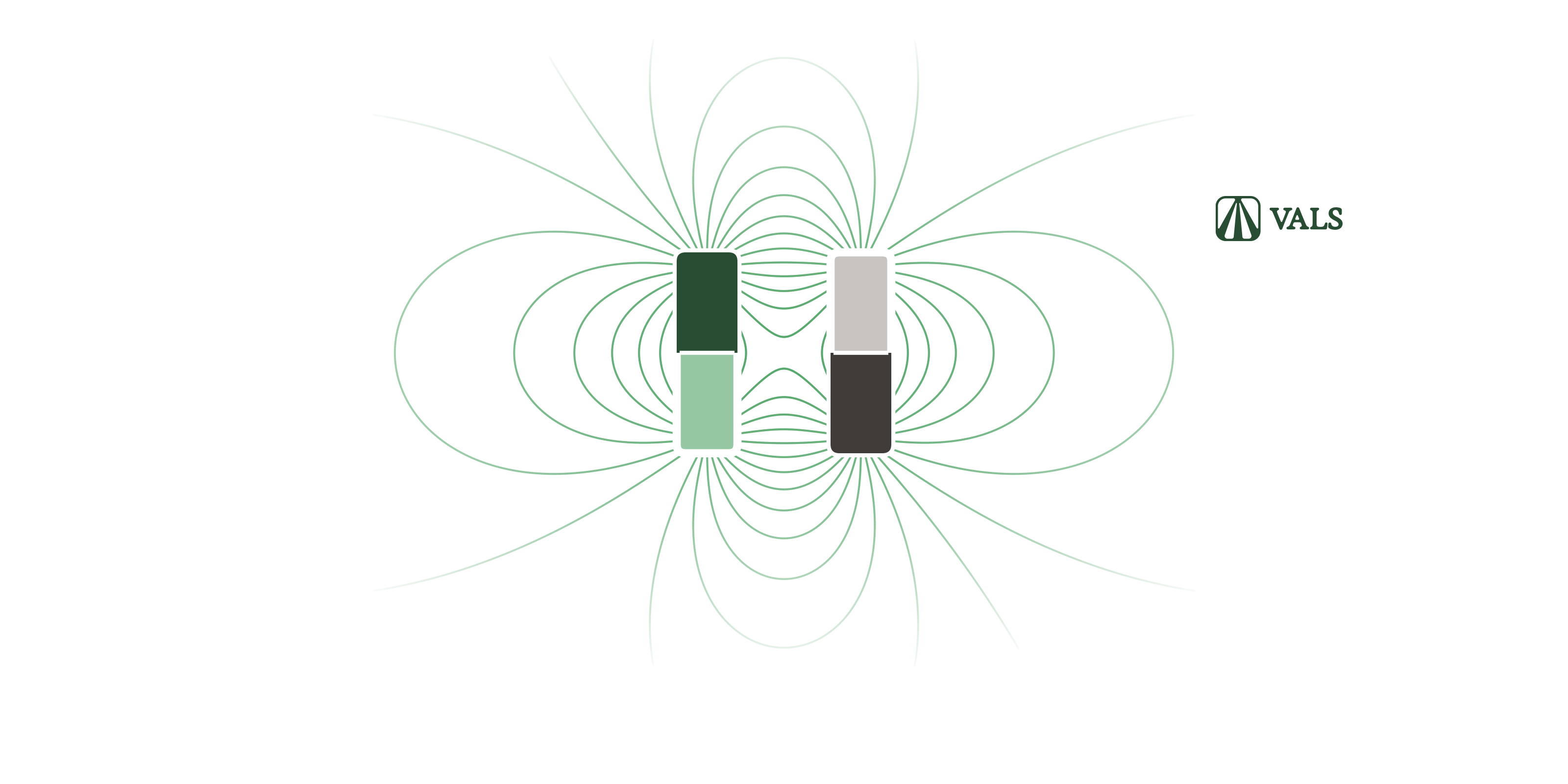
Claude Opus 5.5 agents find two room-temperature magnetic semiconductors
Claude Opus 5.5 agents ran quantum simulations and found two candidate materials for faster, low-interference memory.
What is it?
A team of Claude Opus 5.5 agents, working with Geby Jaff at Vals AI, ran density functional theory simulations and proposed two candidate magnetic semiconductors: YBaMnFeO5 (designed with agents) and KV[Cr(CN)6] (found in 1999 literature). Inputs, outputs and analysis code are public.
How does it work?
Agents ran two DFT passes — a faster PBE+U and a slower HSE06 — on candidate structures. These 'Luttinger compensated' materials have zero net magnetism but still sort electrons by spin energy; predictions put YBaMnFeO5 at a 2.35 eV band gap, stable up to ~420 K.
Why does it matter?
Spintronic memory built from such materials could switch ~1,000× faster than ferromagnetic memory with less interference to nearby components. The work is computational only — the next step is synthesising KV[Cr(CN)6] and testing it experimentally.
Who is it for?
Materials scientists and anyone tracking AI-for-science agents working on real research problems.
|
|
|
All releases at ai-tldr.dev
Simple explanations • No jargon • Updated daily
|
|