
|
|
TOOL
MAJOR
2026-05-13
Anthropic Claude for Small Business — 15 Agentic Workflows and Skills Plug Claude Cowork Into QuickBooks, PayPal, HubSpot, Canva, DocuSign, Google Workspace, and Microsoft 365
Anthropic turns Claude Cowork into a small-business stack with ready-made finance, ops, marketing, HR, and customer-service skills.
What is it?
Claude for Small Business is a one-click Claude Cowork plugin that bundles 15 agentic workflows and 15 skills shaped around how an SMB actually runs: payroll planning, month-end close, business pulse reports, campaign management, invoice chasing, margin analysis, tax organization, contract review, lead triage, and content strategy. It ships through Team and Enterprise plans with no separate SKU.
How does it work?
From inside Claude Cowork, owners install the bundle via a single plugin toggle. Skills are repeatable task recipes Claude runs against connected SaaS — connectors are live for Intuit QuickBooks, PayPal, HubSpot, Canva, DocuSign, Google Workspace, and Microsoft 365 — so Claude can reconcile books, run a campaign, or onboard a hire end to end.
Why does it matter?
Small businesses are 44% of U.S. GDP but trail enterprises on AI adoption — Anthropic's own survey says 50% of SMB owners flag data security as their biggest hesitation. This is a frontier lab going directly at that gap with a packaged product, launch customers (Purity Coffee, Simple Modern, MidCentral Energy), and a ten-city free training tour starting May 14 in Chicago.
Who is it for?
Small business owners, operations leads, and managed-service partners deploying Claude in finance, ops, sales, marketing, HR, and customer service.
|
|
|
|
TOOL
MAJOR
2026-05-13
Notion 3.5 Developer Platform — Workers Runtime, External Agent API for Claude Code, Codex, Cursor, and Decagon, Plus Notion CLI and Agent SDK
Notion 3.5 makes the workspace an orchestration layer where outside agents read, write, and run code alongside humans.
What is it?
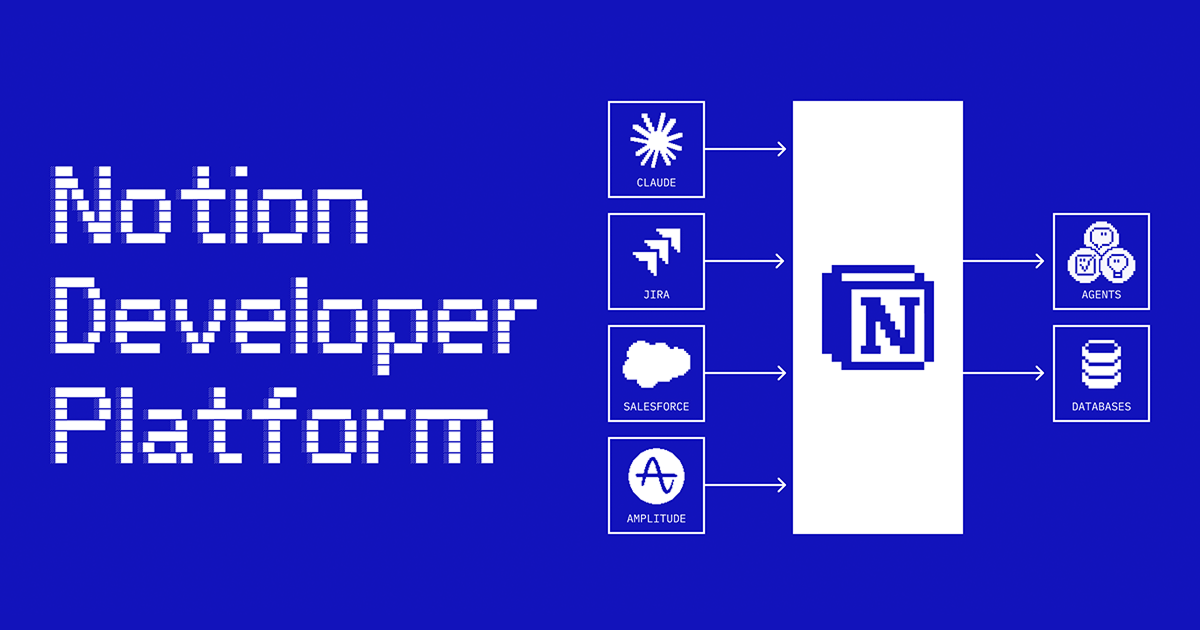
Notion's biggest developer-platform push to date, wrapping Workers, External Agents, Database Sync, Custom Agent Tools, Webhook Triggers, the Notion CLI, and a new Agent SDK into a single 3.5 launch announced May 13. The pitch is "any data, any tool, any agent" inside one Notion workspace.
How does it work?
Workers is a hosted runtime for custom code used by Database Sync to mirror APIs like Salesforce, Zendesk, and Postgres into Notion databases. External Agents API (alpha) lets users chat with Claude Code, Codex, Cursor, or Decagon as if they were a Notion agent, while the Agent SDK lets developers embed a Notion agent into their own apps.
Why does it matter?
Notion is moving from a productivity surface to agent infrastructure. The same launch that ships an SDK to embed Notion agents elsewhere also accepts agents from rival vendors — betting workspace pages become the shared-state layer for humans and third-party agents alike. Workers are free through August 2026.
Who is it for?
Internal tooling teams, agent-platform builders, and Notion power users running cross-app workflows.
|
|

|
|
TOOL
MAJOR
2026-05-13
Amazon Alexa for Shopping — Agentic AI Assistant Folds Rufus Into Alexa+, Adds Buy-for-Me, Year-Long Price History, and Cross-Device Memory in Amazon's Search Bar
Alexa+ swallows Rufus and moves into Amazon's main search bar as an agentic shopping assistant that can buy off-site.
What is it?
Alexa for Shopping is a unified AI assistant that combines Alexa+ with Rufus, Amazon's 2024 shopping chatbot. It lives directly in the Amazon search bar, the Shopping app, and Echo Show devices — replacing the standalone Rufus experience — and rolls out free across the US over the next week.
How does it work?
Queries in Amazon's search bar are routed to the assistant, which pulls a year of price history, prior orders, and conversational context that follows users across devices. The "Buy for Me" agent handles end-to-end checkout on third-party retailers using the customer's saved Amazon address and card via Shop Direct.
Why does it matter?
Amazon is collapsing two separate AI surfaces into one personalized agent that owns the search bar — the highest-traffic surface in e-commerce. Buy for Me reframes that bar as an action surface rather than a query surface, and pushes agentic commerce outside Amazon's own catalogue.
Who is it for?
US Amazon shoppers, and retail/commerce teams tracking the rise of agentic checkout.
|
|
|
|
TOOL
MAJOR
2026-05-13
Meta Incognito Chat for WhatsApp Meta AI — Private Processing Keeps Conversations Out of Meta's Reach, Powered by Muse Spark
WhatsApp adds an incognito tab to Meta AI: chats are processed in WhatsApp's Private Processing enclave and vanish on session close.
What is it?
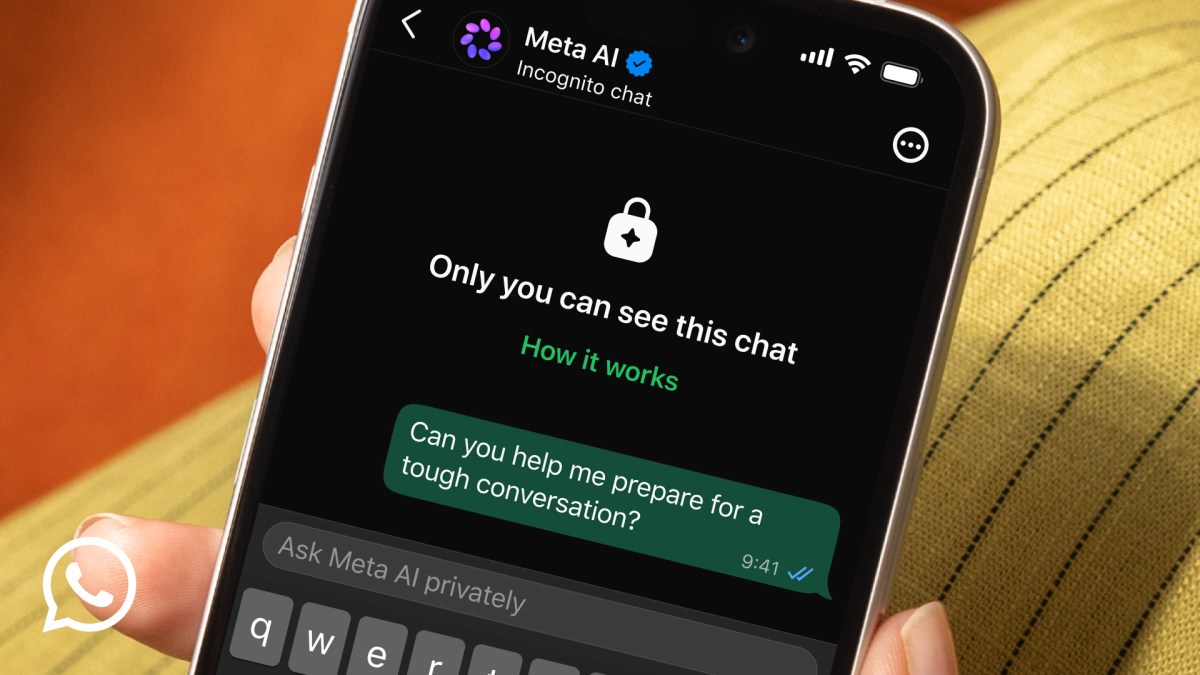
Incognito Chat is a privacy-scoped mode for one-on-one chats with Meta AI inside WhatsApp and the standalone Meta AI app. Messages are not stored, are erased when the user closes the chat or locks the phone, and are processed without Meta or any third party reading them.
How does it work?
The incognito session runs on Meta's Private Processing infrastructure — the same confidential-compute environment Meta built for WhatsApp's AI summaries — extended to run the larger Muse Spark model. Because state isn't persisted, the assistant has no memory between sessions. A follow-on feature called Sidechat will let users invoke it inline within group threads.
Why does it matter?
Meta is chasing the same privacy posture that ChatGPT Temporary Chat and Claude's incognito mode already offer, but it's pinning the guarantee to confidential-compute hardware rather than a no-log policy — a stronger technical claim for the two-billion-plus WhatsApp users who treat the app as their default messenger.
Who is it for?
WhatsApp users, and privacy and confidential-compute engineers.
|
|
|
|
RESOURCE
MAJOR
2026-05-13
Anthropic Surpasses OpenAI in Business Adoption for the First Time — Ramp AI Index Shows 34.4% vs 32.3% in April 2026
Ramp's monthly index of corporate-card spend shows Anthropic edging past OpenAI in B2B paid adoption for the first time.
What is it?
The Ramp AI Index is a monthly read on which AI vendors paying businesses are actually swiping cards for. The May 2026 edition covers April spending across more than 50,000 Ramp-using companies — Anthropic landed at 34.4% adoption versus OpenAI's 32.3%, the first crossover the index has recorded. Overall AI adoption ticked up to 50.6%.
How does it work?
Ramp counts a company as "adopting" a vendor if it pays the vendor via Ramp corporate card or invoiced billing in the period. Year over year, Anthropic climbed from 9% to 34.4%; April alone saw Anthropic +3.8 points and OpenAI -2.9 points.
Why does it matter?
Business-card spend is the closest public proxy for which model providers show up on real expense reports — and the Anthropic vs. OpenAI gap had been the durable talking point for two years. The report's author flags three headwinds that could erase the lead: Anthropic's incentive to push pricier tiers, recent service degradation, and pricing changes that tripled image-prompt token costs.
Who is it for?
AI vendor strategists, investors, and enterprise buyers benchmarking peer adoption.
|
|

|
|
TOOL
MAJOR
2026-05-12
Microsoft MDASH — Multi-Model Agentic Scanning Harness Finds 16 Windows Flaws Including Four Critical RCEs, Tops CyberGym at 88.45%
Microsoft's new agentic vulnerability discovery system orchestrates 100+ AI agents across frontier and distilled models, and just topped CyberGym.
What is it?
MDASH (multi-model agentic scanning harness) uses bespoke agents for different vulnerability classes to autonomously discover, validate, and prove exploitable defects in complex codebases like Windows. On its first production run it surfaced 16 previously unknown Windows vulnerabilities — including four critical remote code execution flaws in the kernel TCP/IP stack and IKEv2 service — all shipped in May's Patch Tuesday.
How does it work?
The harness pipelines five sequential stages — Prepare, Scan, Validate, Dedup, and Prove — across more than 100 specialized agents drawn from an ensemble of frontier and distilled models. Auditor agents flag candidate bugs; debater agents argue findings for or against; a Prove stage constructs and executes triggering inputs before anything reaches a human engineer.
Why does it matter?
MDASH scores 88.45% on CyberGym — roughly five points ahead of the next-best published system — and achieves 96–100% recall on five years of historical MSRC cases, meaning it can rediscover bugs that took human teams years to chase. Microsoft has telegraphed AI-assisted discovery will keep inflating Patch Tuesday counts; May 2026's wave is already 138 CVEs, the largest of the year.
Who is it for?
Security engineers, vulnerability researchers, and blue teams.
|
|
|
|
TOOL
MAJOR
2026-05-11
Cursor Cloud Agents Land in Microsoft Teams — Mention @Cursor in Any Channel to Dispatch a Coding Agent and Open a Pull Request
Cursor's cloud coding agent is now a Teams bot you can @-mention to fix bugs, investigate, and ship PRs without leaving the chat.
What is it?
Cursor in Microsoft Teams is an official integration that exposes Cursor Cloud Agents as a Teams app. Mention @Cursor in any channel, group chat, or DM with a request like "fix the login bug in my-repo" — the agent picks the repo, runs the task autonomously, opens a pull request, and posts updates back to the thread.
How does it work?
Cursor automatically selects the right repository and model based on the prompt and recent agent activity. The Cloud Agent runs in Cursor's hosted environment, executes work autonomously, and reports progress in-thread. Replies in the thread steer the agent or chain follow-up tasks, so a single thread can shepherd an agent from investigate → fix → PR review.
Why does it matter?
Microsoft Teams is the dominant chat surface inside large enterprises that have standardized on Microsoft 365. Cursor already had Slack and GitHub chatops; Teams was the last big gap. For shops where engineers, PMs, and managers all live in Teams, this turns "ask the bot to fix it" into a workflow that doesn't require leaving the platform IT has already approved.
Who is it for?
Engineering teams on Microsoft Teams that want coding-agent dispatch from chat.
|
|
|
All releases at ai-tldr.dev
Simple explanations • No jargon • Updated daily
|
|