|
|
TOOL
MAJOR
2026-05-11
OpenAI Daybreak — Cyber Defense Suite Pairs GPT-5.5, Codex Security, and GPT-5.5-Cyber Across Cloudflare, Cisco, CrowdStrike, and Palo Alto Networks
OpenAI's cyber-defense initiative wraps GPT-5.5 plus a security-tuned Codex agent into a vendor ecosystem aimed at automating code review and patch validation.
What is it?
Daybreak is OpenAI's first product-shaped cybersecurity initiative, announced May 11 by Greg Brockman. It bundles three model tiers — standard GPT-5.5, a Trusted Access tier for defensive work, and the gated GPT-5.5-Cyber for red-team use — behind a Codex Security agent that automates code review and patch validation across 20+ partner vendors.
How does it work?
Codex Security ingests a repository, builds threat models, identifies exploitable flaws in isolated sandboxes, proposes patches, and revalidates them — with access gated through OpenAI sales or partner request.
Why does it matter?
With Anthropic's Project Glasswing already in market, Daybreak makes OpenAI the second frontier lab to formalize AI-driven vulnerability hunting into a partner ecosystem, with Cloudflare, Cisco, CrowdStrike, and Palo Alto Networks among 20+ lined up.
Who is it for?
Enterprise security teams and SOC tooling vendors.
|
|

|
|
MODEL
MAJOR
2026-05-11
Thinking Machines TML-Interaction-Small — 276B-A12B Native Interaction Model Listens, Talks, and Watches Concurrently at 0.40s Turn-Taking Latency
A 276B mixture-of-experts that holds a real-time conversation while a separate background model does the slow reasoning.
What is it?
TML-Interaction-Small is a 276B MoE model (12B active parameters) from Mira Murati's lab trained to handle voice, video, and text as one continuous stream — paired with a background model for tool calls, web search, and complex reasoning that streams results into the live conversation.
How does it work?
The model fuses audio and video tokens in encoder-free 200ms microturns with no separate voice-activity detector, enabling concurrent speaking, listening, and watching — including barge-in and silence handling — at 0.40s turn-taking latency.
Why does it matter?
It collapses the ASR + LLM + TTS stack into a single native interaction model, hitting human-phone-call-quality latency and directly competing with OpenAI's Realtime API and Google's Gemini Flash Live.
Who is it for?
Voice and agent product teams; limited research preview via [email protected].
|
|

|
|
TOOL
MAJOR
2026-05-11
Anthropic Launches Claude Platform on AWS — Full Native Claude API, Skills, Managed Agents, and MCP Through AWS IAM and Marketplace Billing
Anthropic's full native developer stack — Skills, Managed Agents, MCP — billed through your AWS account, not Bedrock.
What is it?
Claude Platform on AWS is Anthropic's first-party Claude API — including Skills, Managed Agents (beta), Files, MCP connector, code execution, and prompt caching — offered through AWS with same-day feature parity with api.anthropic.com.
How does it work?
Customers authenticate with AWS IAM credentials or an API key, call standard Claude Messages API endpoints, and see usage on an AWS Marketplace invoice that retires against existing AWS commit spend.
Why does it matter?
It collapses two procurement paths for AWS-anchored enterprises that want the full Claude feature set without waiting for Bedrock, and confirms Bedrock is no longer Anthropic's only route to AWS customers.
Who is it for?
AWS-anchored enterprises adopting Claude, and developers who already commit spend to AWS Marketplace.
|
|

|
|
SECURITY
MAJOR
2026-05-11
Google GTIG: First In-the-Wild Zero-Day Built With an AI — Cybercrime Crew Used an LLM to Weaponize a 2FA Bypass Intended for Mass Exploitation
Google's threat-intel team says it has "high confidence" an LLM wrote a 2FA-bypass zero-day for a popular open-source admin tool — caught before deployment.
What is it?
GTIG documented the first observed AI-developed zero-day exploit used by a financially motivated threat actor — a Python 2FA-bypass script targeting a popular open-source admin platform, caught by Google and disclosed to the vendor before the mass-exploitation campaign launched.
How does it work?
GTIG identified AI involvement through code artifacts: abundant educational docstrings, a hallucinated CVSS score in comments, and textbook-clean Python structure typical of LLM output — the underlying bug was a semantic logic flaw in authentication enforcement, exactly the class LLMs now excel at finding.
Why does it matter?
This is the first real-world, code-backed evidence of an attacker using AI to develop an exploit, moving LLM-assisted offense from CTF benchmarks to an operational data point. The same report also documents APT27 using Gemini for network-relay tooling and an Android backdoor running a Gemini API loop on-device.
Who is it for?
Defenders, CISO offices, threat-intel teams, and security policy researchers calibrating AI-in-the-attacker-toolkit risk.
|
|
|
|
TOOL
MAJOR
2026-05-11
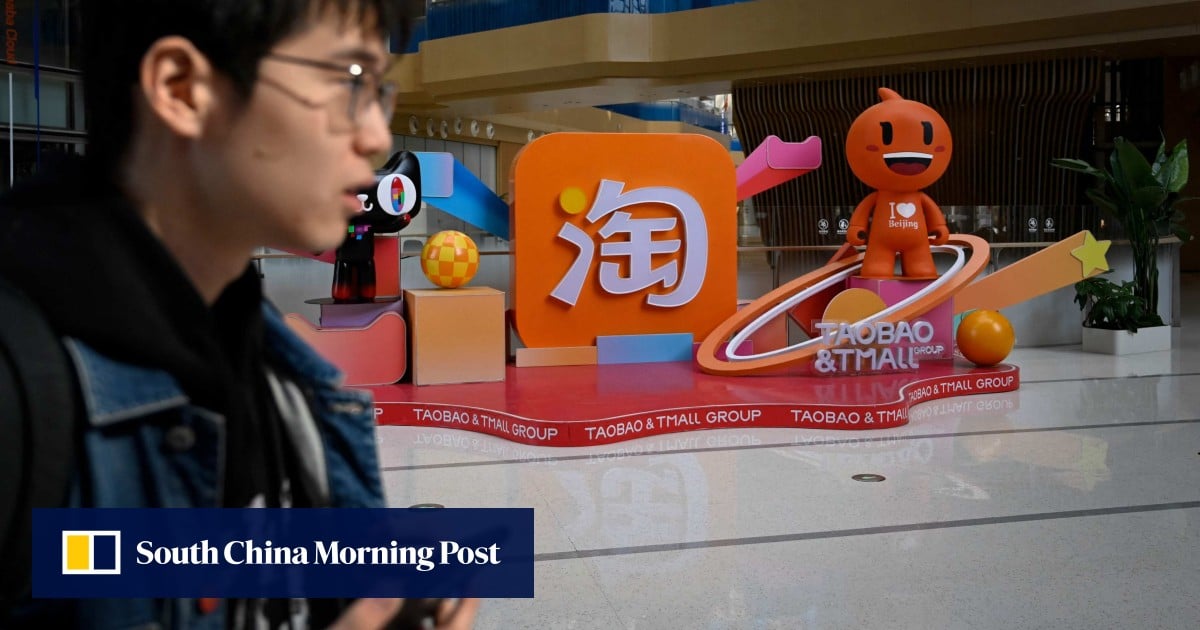
Alibaba Opens All of Taobao to Qwen — Agentic Shopping Across 4B+ Products With Virtual Try-Ons, 30-Day Price Tracking, and Alipay Checkout
Alibaba wires Qwen straight into Taobao and Tmall — chat to browse 4B+ products, try them on virtually, and check out through Alipay.
What is it?
The Qwen consumer app can now search, compare, and place orders across the entire Taobao and Tmall catalog of 4B+ products, while Taobao itself gains a Qwen-powered in-app assistant for virtual try-ons, coupon hunting, and 30-day price monitoring.
How does it work?
Qwen's skills library is wired into Alibaba's commerce backend — product search, comparison, order placement, logistics tracking, and returns are all callable as tools, with a multimodal try-on model and Alipay handling the final payment step.
Why does it matter?
This is the largest agentic-commerce launch from any platform yet — putting the full transactional loop, from discovery to returns, behind a single chat surface for Qwen's 300M monthly active users across two flagship marketplaces at once.
Who is it for?
Chinese consumers and agentic-commerce product teams watching the leading edge of what AI-native shopping looks like at scale.
|
|

|
|
ECOSYSTEM
MAJOR
2026-05-11
OpenAI Deployment Company — $4B Joint Venture With TPG, Bain Capital, Brookfield Embeds Forward-Deployed Engineers in Enterprises; Acquires Tomoro for 150 FDEs Day One
OpenAI is opening a services arm with private equity and the Big Three consultancies to install model deployment teams inside Fortune 500s.
What is it?
OpenAI launched the OpenAI Deployment Company, a majority-owned joint venture with 19 partners including TPG, Bain Capital, Brookfield, McKinsey, Goldman Sachs, and SoftBank, to embed Forward Deployed Engineers inside enterprise customers. Day-one staffing comes from the simultaneous acquisition of UK consultancy Tomoro (~150 FDEs).
How does it work?
The venture pools $4B+ in capital and a consulting network, with Tomoro's existing enterprise relationships at Tesco, Red Bull, and Virgin Atlantic as the initial deployment base — partners contribute capital, customer access, and delivery scale; OpenAI retains majority control.
Why does it matter?
Following Anthropic's own enterprise services arm announced on May 4, both frontier labs have now formalized the Palantir-style playbook: sell tokens plus the team that wires them in. The frontier-lab race is no longer purely about models.
Who is it for?
Enterprise AI buyers, OpenAI partners, and services-industry watchers tracking AI deployment consolidation.
|
|
|
|
SECURITY
MAJOR
2026-05-11
Mini Shai-Hulud Worm Hits @mistralai and @tanstack npm Packages — 84 Malicious Versions Published in Six Minutes With Valid SLSA Provenance
A second wave of the self-spreading npm worm published 84 backdoored versions across @tanstack, @mistralai, and 160+ scopes in six minutes — the first npm worm whose malicious tarballs carry valid SLSA provenance.
What is it?
A self-propagating supply-chain attack that published 84 backdoored package versions across @tanstack/router, @mistralai/mistralai (and Azure/GCP variants), @uipath, and 160+ other npm scopes in a six-minute window on May 11.
How does it work?
The worm targets GitHub Actions runners, harvests the short-lived OIDC JWT used in npm's trusted-publisher binding, then republishes payload-laden tarballs through that authenticated channel — meaning the malicious packages carry valid SLSA provenance, defeating provenance-only defenses.
Why does it matter?
Any team that ran a CI build referencing @mistralai/mistralai 2.2.2–2.2.4 or affected @tanstack versions in the last 48 hours should rotate every secret accessible from that pipeline immediately. TanStack's react-router alone has ~12M weekly downloads.
Who is it for?
Anyone shipping npm packages via GitHub Actions, plus teams running Mistral or TanStack SDKs in production pipelines.
|
|
|
All releases at ai-tldr.dev
Simple explanations • No jargon • Updated daily
|
|