
|
|
SECURITY
MAJOR
2026-05-04
Chrome Silently Installs 4 GB Gemini Nano on Idle Profiles — 14 Min, No Consent, ePrivacy Article 5(3) Cited
Chrome quietly fetches Gemini Nano weights to disk on eligible machines, with no UI to refuse and a re-download if you delete it.
What is it?
Privacy researcher Alexander Hanff documented Chrome's automatic, silent download of Gemini Nano model weights — a 4 GB file written to the OptGuideOnDeviceModel directory on a freshly created profile that received zero human interaction, completing in just 14 minutes 28 seconds.
How does it work?
Two Chrome flags gate the install — but the download begins before the settings UI even shows a toggle to the user. If you delete weights.bin, Chrome restores it; if flags are disabled, they reset on the next Chrome update.
Why does it matter?
This reframes on-device AI from "good for privacy" to a regulatory consent question. Hanff argues it violates ePrivacy Directive Article 5(3) and GDPR's transparency principles — estimated CO2 impact: ~30,000 tonnes across 500M devices. The post hit HN's front page with 204 points and 213 comments.
Who is it for?
Browser-platform engineers, privacy and compliance teams, and EU data-protection authorities watching on-device AI rollouts.
|
|

|
|
ECOSYSTEM
MAJOR
2026-05-04
OpenAI Closes 'The Deployment Company' — $10B PE-Backed JV With TPG, Brookfield, Bain to Embed GPT-5.5 in 2,000+ Portfolio Companies
OpenAI just turned its enterprise GTM into a private-equity yield instrument with $4B of TPG and Brookfield money on top.
What is it?
The Deployment Company (DeployCo) is a new OpenAI-controlled joint venture that embeds forward-deployed engineers inside the operating businesses of large PE firms — turning ChatGPT and GPT-5.5 into installed software, not just an API call. 19 investors participated, including TPG, Brookfield, Advent, Bain, SoftBank, and Dragoneer, raising $4B+.
How does it work?
OpenAI puts in $500M at close (with an option for another $1B) and keeps super-voting shares for strategic control. PE backers receive a guaranteed 17.5% annual return over five years. The JV piggybacks on existing OpenAI partnerships with BCG, McKinsey, Accenture, and Capgemini to staff implementations across 2,000+ portfolio companies.
Why does it matter?
This is the Palantir forward-deployed playbook pointed at the largest pool of PE-owned mid-market businesses on Earth. The 17.5% guaranteed return converts OpenAI's growth into a fixed-yield instrument PE LPs can underwrite. Rival Anthropic announced a parallel $1.5B JV with Blackstone the same morning.
Who is it for?
Enterprise buyers in PE portfolios, integrators competing with BCG and McKinsey, and analysts watching how OpenAI funds growth pre-IPO.
|
|

|
|
ECOSYSTEM
MAJOR
2026-05-04
Anthropic Officially Launches Enterprise AI Services Company With Blackstone, Hellman & Friedman, Goldman Sachs
Anthropic's rumored Wall Street JV is now official: a $1.5B forward-deployed Claude consultancy aimed at PE-owned mid-market businesses.
What is it?
Anthropic's new enterprise AI services company targets community banks, regional health systems, and mid-market manufacturers that lack in-house engineering to deploy frontier models. Co-founders include Blackstone, Hellman & Friedman, and Goldman Sachs, with Apollo, General Atlantic, GIC, Leonard Green, and Sequoia also participating.
How does it work?
Anthropic, Blackstone, and Hellman & Friedman each commit $300M; Goldman adds $150M to reach $1.5B total. Applied AI engineers from Anthropic embed inside client engineering teams — explicitly modeled on Palantir's forward-deployed-engineer pattern — to build customized Claude integrations.
Why does it matter?
Anthropic's CFO said enterprise demand for Claude "is significantly outpacing any single delivery model." This is the channel layer to capture mid-market customers ahead of an expected late-2026 IPO — and it landed the same day as OpenAI's parallel $10B DeployCo announcement.
Who is it for?
Anthropic watchers, PE operators, mid-market CIOs, and enterprise sales teams competing with Microsoft Copilot and OpenAI's DeployCo.
|
|

|
|
ECOSYSTEM
MAJOR
2026-05-04
Cerebras Launches IPO Roadshow at $26.6B — 28M Shares at $115–125, $3.5B Raise to Fund AI Wafer-Scale Buildout
Cerebras refiles for IPO at $26.6B — banks are already fielding ~$10B in orders for $3.5B on offer.
What is it?
Cerebras makes wafer-scale AI accelerators — chips the size of a dinner plate that pack hundreds of thousands of cores onto a single piece of silicon. The company filed an updated S-1 on May 4 and opened the formal roadshow for a Nasdaq listing under ticker CBRS, targeting a mid-May 2026 trade date.
How does it work?
28 million Class A shares priced at $115–$125, raising about $3.5B. The S-1 discloses ~$510M in 2025 revenue and a ~$1B loan from OpenAI secured by warrants on 33M Cerebras shares — making OpenAI both the largest customer and a debt holder. The offering is reportedly 3x oversubscribed, which typically pulls final pricing toward or above the top of the range.
Why does it matter?
This is the largest tech IPO of 2026 so far and a clear test of public-market appetite for AI infrastructure not named NVIDIA. A successful trade gives a public comparable for inference-only chip vendors like Groq, Tenstorrent, and Etched.
Who is it for?
Infra investors, AI-chip watchers, and OpenAI ecosystem analysts tracking the frontier lab's financing of its own silicon supply.
|
|

|
|
ECOSYSTEM
MAJOR
2026-05-04
Sierra Raises $950M at $15B+ Valuation — Tiger Global, GV Lead Round for Bret Taylor's Enterprise Agent Platform
Sierra closes a $950M Series E at $15B+, putting Bret Taylor's enterprise customer-experience agent platform on a $1B+ war chest.
What is it?
Sierra builds AI agents that run end-to-end customer interactions for large enterprises — handling mortgage refinancing, insurance claims, order returns, and similar voice/chat workflows. Co-founders Bret Taylor (OpenAI chair) and Clay Bavor announced the round led by Tiger Global and Google Ventures, with Benchmark, Sequoia, and Greenoaks participating.
How does it work?
Sierra ships persistent agents that integrate into a company's CRM, support, and back-office systems and answer customers across phone, chat, and email. The company highlights deployment speed as its differentiator — Nordstrom in 5 weeks, Cigna in 8 weeks, Singtel in 10 weeks — versus a traditional services rollout.
Why does it matter?
Sierra's $15B+ valuation makes it one of the best-funded AI startups outside the frontier labs. ARR was ~$150M as of early February 2026. Bret Taylor told CNBC an IPO is "definitely in our future," keeping Sierra private for now with $1B+ in cash to scale.
Who is it for?
Enterprise CX teams, AI-agent platform watchers, and investors tracking the race to own vertical AI deployment at scale.
|
|
|
|
ARTICLE
MAJOR
2026-05-03
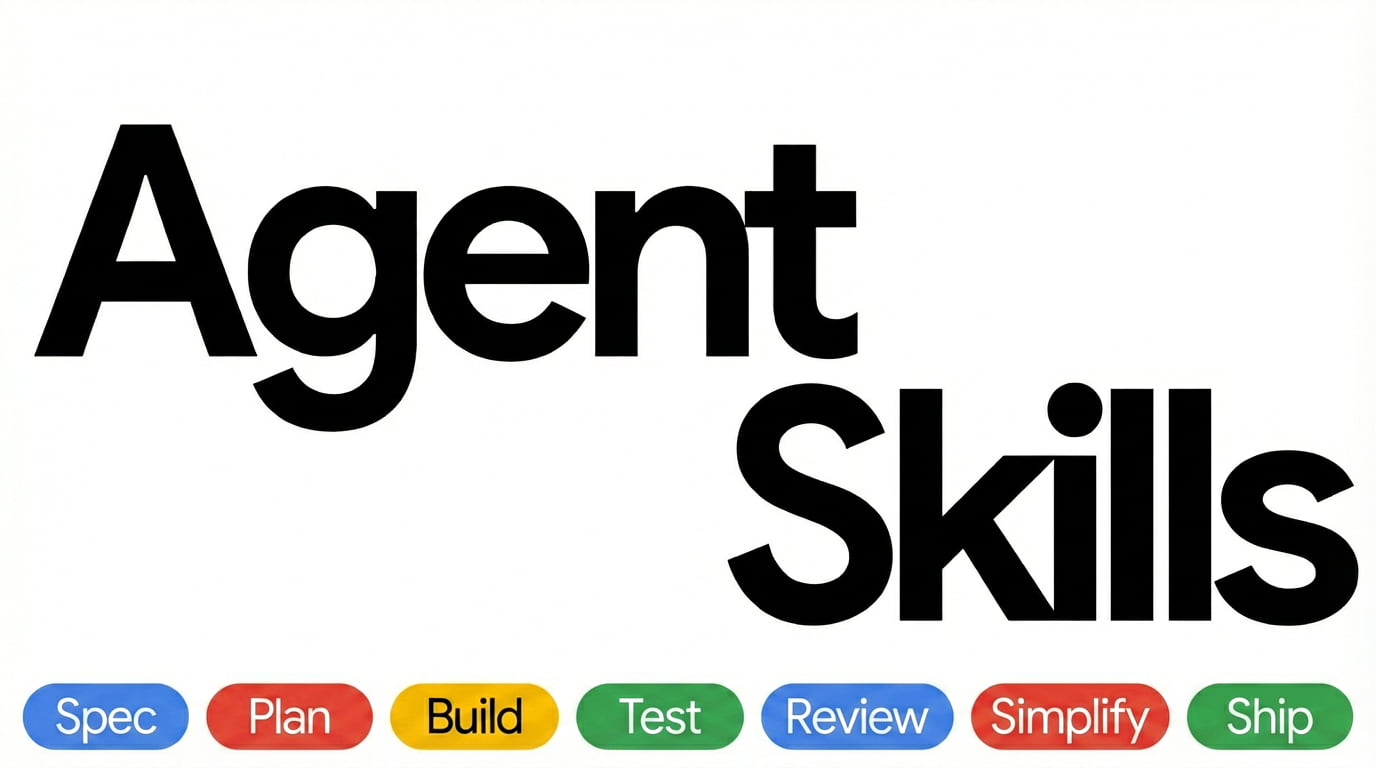
Addy Osmani's Agent Skills — Senior-Engineering Workflow Scaffolding for AI Coding Agents
20 opinionated skills that force coding agents through spec, plan, build, test, review and ship phases.
What is it?
An MIT-licensed pack of 20 skills and 7 slash commands (/spec, /plan, /build, /test, /review, /code-simplify, /ship) that wraps a coding agent in senior-engineering workflow scaffolding. Drops into Claude Code, Cursor, Gemini CLI, Windsurf, and other agents that read the Anthropic skills format.
How does it work?
Each skill is a markdown file with a defined process, an anti-rationalization table calling out shortcuts agents try to take, and verification requirements. Slash commands chain skills across six phases — Define, Plan, Build, Verify, Review, Ship — so an agent can't mark a task done without producing the required artefacts.
Why does it matter?
Coding agents default to taking the shortest path to a passing test, which is how production incidents ship. Forcing the invisible parts of senior engineering work — scope discipline, written specs, test plans, review notes — into the agent's loop raises the floor on agent-written code cheaply. The repo hit 28k+ stars with 207 HN points.
Who is it for?
Teams shipping agent-written code into real codebases who want guard-rails without rebuilding their entire workflow.
|
|

|
|
REPO
MAJOR
2026-05-03
DeepClaude — Run Claude Code's Agent Loop on DeepSeek V4 Pro for 17x Cheaper Tokens
Point Claude Code at DeepSeek V4 Pro and pay $0.87 per million output tokens instead of $15 — same agent loop, same tools, different brain.
What is it?
An MIT-licensed shell wrapper that intercepts Claude Code's outbound API calls and routes them to any Anthropic-compatible backend. Out of the box it ships configs for DeepSeek V4 Pro, OpenRouter, and Fireworks AI, but anything that speaks the Anthropic Messages format works.
How does it work?
The wrapper sets ANTHROPIC_BASE_URL and ANTHROPIC_API_KEY before invoking the upstream claude CLI, so file reads, edits, bash execution, subagent spawning, and autonomous multi-step loops all run unchanged. A --backend flag swaps providers per session.
Why does it matter?
Claude Code's token bill is the main reason teams hit usage caps. DeepSeek V4 Pro hits 96.4% on LiveCodeBench at roughly 1/17 the per-token price, so for routine refactors and code edits the savings compound quickly. The repo hit HN's front page top 5 within hours of being created.
Who is it for?
Indie devs, small teams burning through Claude Code credits, and anyone running long agent loops on a budget.
|
|
|
All releases at ai-tldr.dev
Simple explanations • No jargon • Updated daily
|
|