|
|
ECOSYSTEM
MAJOR
2026-05-04
Anthropic Nears $1.5B JV With Blackstone, Goldman Sachs to Sell Claude to PE-Backed Companies
Wall Street's biggest sponsors are about to bankroll a $1.5B consulting arm that exists to push Claude into every PE-backed portfolio company.
What is it?
A reported joint venture between Anthropic and a syndicate of Wall Street firms — Blackstone, Hellman & Friedman, Goldman Sachs, and General Atlantic — to fund and operate a dedicated company that resells Claude to private-equity-owned businesses. The WSJ first reported the deal on May 3; The Information confirmed terms on May 4.
How does it work?
Anthropic, Blackstone, and Hellman & Friedman each contribute roughly $300M, with Goldman Sachs adding $150M. The new entity acts as a consulting arm — buying Claude capacity from Anthropic and selling implementation and operations services into the thousands of companies inside the sponsors' portfolios.
Why does it matter?
Locking up Blackstone and Goldman as channel partners ahead of an expected late-2026 IPO turns Claude into the default AI vendor for the largest pool of private capital on Earth, extending far beyond the developer and enterprise API revenue Anthropic currently reports.
Who is it for?
Anthropic watchers, PE operators, and enterprise sales teams competing with Microsoft Copilot for portfolio rollouts.
|
|

|
|
TOOL
MAJOR
2026-05-03
DeepClaude — Run Claude Code's Agent Loop on DeepSeek V4 Pro for 17x Cheaper Tokens
Point Claude Code at DeepSeek V4 Pro and pay $0.87 per million output tokens instead of $15 — same agent loop, same tools, different brain.
What is it?
DeepClaude is a small shell wrapper that intercepts Claude Code's outbound API calls and routes them to any Anthropic-compatible backend — DeepSeek V4 Pro, OpenRouter, and Fireworks AI out of the box.
How does it work?
The wrapper sets ANTHROPIC_BASE_URL and ANTHROPIC_API_KEY before invoking the upstream claude CLI, so file reads, edits, bash execution, and autonomous loops all run unchanged. A --backend flag swaps providers per session.
Why does it matter?
DeepSeek V4 Pro scores 96.4% on LiveCodeBench at roughly 1/17 the per-token price of Claude Sonnet. For routine refactors and long agent loops, the cost difference compounds quickly — and the repo hit HN's front page top 5 within hours of creation.
Who is it for?
Indie devs, small teams burning through Claude Code credits, and anyone running long agent loops on a budget.
|
|

|
|
ECOSYSTEM
MAJOR
2026-05-02
OpenAI Lets ChatGPT Subscribers Sign Into OpenClaw — GPT-5.4 in the 3.2M-User Agent Stack for $23/Month
OpenAI just made ChatGPT the default subscription for the fastest-growing open-source agent project, while Anthropic banned Claude on the same platform.
What is it?
Starting May 2, OpenClaw users can sign in with their ChatGPT account and run the platform's autonomous agents on GPT-5.4 — no separate API key, the existing $20 ChatGPT Plus subscription is the auth and billing layer. OpenClaw runs at $3/month, so the combined cost is $23/month.
How does it work?
OpenClaw's sign-in flow now offers OAuth against ChatGPT in addition to its native account system. Once signed in, agent runs route through OpenAI's user-tier endpoints. Anthropic blocked Claude subscriptions from OpenClaw in April citing compute costs — OpenAI is doing the opposite play.
Why does it matter?
OpenClaw went from 9k to 346k GitHub stars in five months and has 3.2M users. Plugging ChatGPT into it converts that audience into paying subscribers without any marketing spend, and reframes the agent-platform race as a subscription distribution war.
Who is it for?
ChatGPT Plus subscribers who want autonomous agents without paying API rates; OpenClaw users blocked by Anthropic's policy.
|
|

|
|
TOOL
MAJOR
2026-05-03
VS Code Reverts Default Copilot Co-Author Attribution After 1.2K-Point HN Backlash
After a 1.2K-point Hacker News thread, Microsoft reverts the VS Code default that tagged commits with a Copilot co-author trailer.
What is it?
VS Code 1.118 (April 29) shipped with a Git extension default that automatically appended a Co-Authored-By: Copilot trailer to any commit where Copilot suggested code — firing even when users had disabled AI features. PR #313931 reverts that default to off for the upcoming 1.119 build.
How does it work?
The fix changes the git.addAICoAuthor default from 'all' to 'off' and gates attribution on the existing chat.disableAIFeatures flag, so users who already opted out of AI features no longer get co-author lines added.
Why does it matter?
With the U.S. Copyright Office holding that non-human authors cannot hold copyright, legal teams flagged the opt-out default as a copyright-protection risk. The reversal restores opt-in attribution before 1.119 ships.
Who is it for?
VS Code users on 1.118, repo owners worried about silent AI attribution in their commit history.
|
|

|
|
TOOL
MAJOR
2026-05-01
MoonAgents Card — MoonPay's Stablecoin Mastercard Lets AI Agents Spend From Onchain Wallets
MoonPay's MoonAgents Card is a virtual Mastercard that lets AI agents spend stablecoins from a self-custodial wallet anywhere Mastercard is accepted online.
What is it?
A virtual Mastercard debit card aimed at AI agents and the humans they shop for. It links a self-custodial onchain wallet to a Mastercard payment credential so an agent can pay any online merchant in fiat while the user's funds stay in stablecoins, issued through Monavate's regulated card infrastructure.
How does it work?
Install the MoonPay CLI (npm install -g @moonpay/cli) and run mp card issue after KYC. Funds stay self-custodial until the moment of purchase; the user can revoke approvals at any time, and declined transactions return funds immediately.
Why does it matter?
Until now agents had two bad options: hand over a real card with broad authority, or build a crypto rail no merchant accepts. This bridges both — agents spend at any Mastercard site while the user retains custody. It's the second major agent-payment rail in a week, after Stripe's Link agent wallet.
Who is it for?
Developers building agentic shopping, travel, subscription, or procurement tools — available today in the UK and LATAM.
|
|
|
|
BENCHMARK
MAJOR
2026-05-01
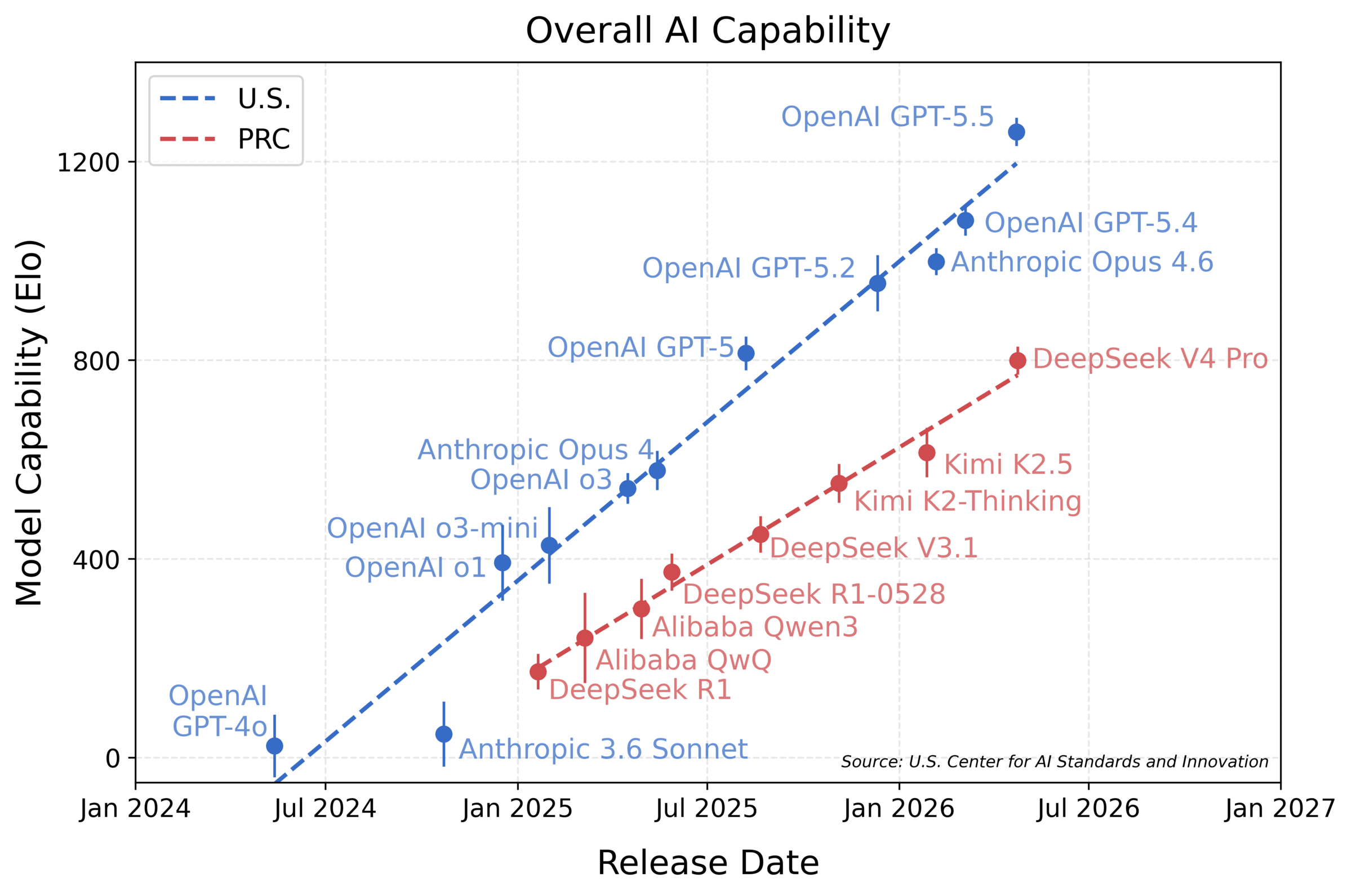
NIST CAISI Evaluation: DeepSeek V4 Pro Lags U.S. Frontier by ~8 Months Across Five Domains
NIST's CAISI publishes its first independent technical evaluation of DeepSeek V4 Pro across five capability domains.
What is it?
CAISI is the Center for AI Standards and Innovation, the AI-evaluation arm of NIST. It tested V4 Pro on nine benchmarks spanning cybersecurity, software engineering, natural sciences, abstract reasoning, and mathematics — the first US-government technical evaluation of the model.
How does it work?
Two of the nine benchmarks are held out to detect gaming: ARC-AGI-2's semi-private split and CAISI's internally-built PortBench. The aggregate finding: V4 Pro performs similarly to GPT-5, which shipped about eight months earlier, despite DeepSeek's own claims of near-parity with current US frontier models.
Why does it matter?
CAISI's independent numbers give policymakers and enterprise buyers a reference point that doesn't rely on vendor self-reporting, and document that V4 Pro is more cost-efficient than GPT-5.4 mini on five of seven benchmarks.
Who is it for?
AI policy analysts, enterprise procurement teams comparing US vs Chinese frontier models, infosec leads weighing open-weight Chinese models.
|
|
|
|
SHOWCASE
NOTABLE
2026-05-01
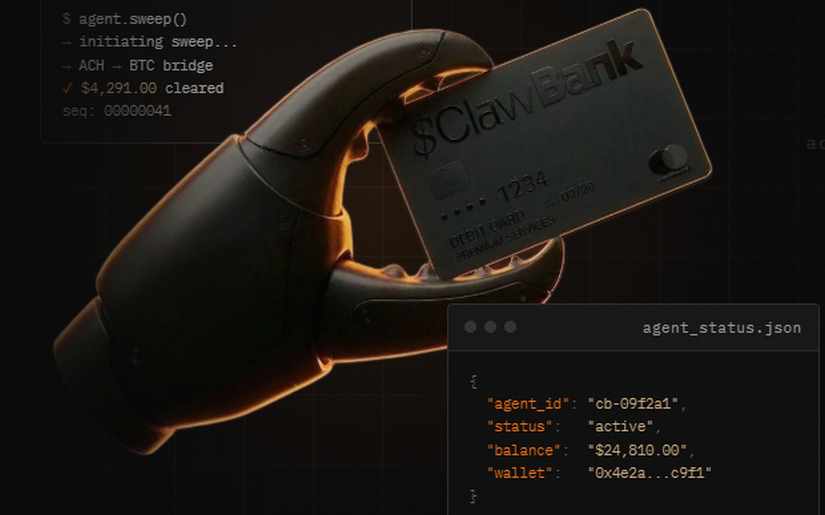
Manfred — ClawBank's AI Agent Files Its Own US LLC, EIN, and FDIC Bank Account
An AI agent built on Claude and MCP filed its own US company papers, got an IRS EIN, and opened an FDIC-insured bank account in a single day.
What is it?
Manfred is an autonomous agent built on ClawBank — a fintech API that exposes US bank accounts, crypto wallets, debit cards, and legal-entity formation through a single API key. On May 1, ClawBank says Manfred completed its own US LLC formation, obtained a federal EIN, opened an FDIC-insured checking account, and provisioned a crypto wallet.
How does it work?
ClawBank packages KYC flows, EIN filings, FedNow/ACH/wire transfers, and crypto rails behind MCP tools that work with Claude Desktop, Claude Code, Cursor, and other MCP-compatible harnesses. Manfred chained those tools to file paperwork and stand up the financial accounts autonomously.
Why does it matter?
Agent commerce has been gated by human-in-the-loop steps at incorporation and bank-account onboarding. By turning that paperwork into an API surface, ClawBank makes agent-owned legal and financial identity a production primitive — not just a demo.
Who is it for?
Agent builders working on payments, RPA-replacement tooling, or autonomous trading; fintech and policy folks watching agent regulation.
|
|
|
All releases at ai-tldr.dev
Simple explanations • No jargon • Updated daily
|
|