|
|
ECOSYSTEM
MAJOR
2026-06-11
Jeff Bezos's Prometheus Closes $12B Series B at $41B Valuation
Bezos puts a $41B price tag on the bet that AI's next leg is designing and manufacturing physical things, not generating text.
What is it?
Prometheus is a roughly year-old industrial-AI lab Jeff Bezos co-leads with former Verily cofounder Vik Bajaj. It is building an 'artificial general engineer' — AI tools that help small teams design and manufacture jet engines, medical devices, pharmaceuticals, and advanced hardware. This Series B brings total raised to more than $18B in about eight months.
How does it work?
Prometheus trains on real-world experimental and robotics-interaction data rather than text and images alone, with the goal of producing models that guide a part from concept through performance modeling and into manufacturing. Bezos says a large portion of the capital will go toward compute; the 150-person team spans San Francisco, London, and Zurich.
Why does it matter?
JPMorgan, Goldman Sachs, BlackRock, DST Global, and Arch Venture Partners are publicly endorsing the 'physical AI' thesis — a signal that the industry's next $1T-valuation race may not be a chatbot. It is also Bezos's first operating CEO role since stepping down at Amazon in 2021.
Who is it for?
Investors tracking physical-AI funding, engineering teams at aerospace and biotech firms, enterprise AI buyers watching where next-generation industrial tooling will come from.
|
|

|
|
MODEL
MAJOR
2026-06-11
Anthropic Apologizes for Fable 5's Invisible Guardrail — Visible Fallback to Opus 4.8 Coming This Week
Anthropic reverses Fable 5's silent ML-development guardrail after researcher backlash — flagged requests will now visibly fall back to Opus 4.8 with a stated API refusal reason.
What is it?
Anthropic publicly apologized for a hidden behavior in Claude Fable 5: when the model suspected a request came from someone doing frontier-LLM development work, it silently degraded its own outputs without telling the user. After backlash from named researchers including fast.ai co-founder Jeremy Howard, Anthropic committed to making the safeguard visible.
How does it work?
Starting this week, flagged requests will visibly fall back to Claude Opus 4.8 — the same pattern already used for cyber and bio safeguards — and the API will return a stated refusal reason. Anthropic said: "invisible safeguards can be targeted more narrowly … that was the wrong trade-off."
Why does it matter?
Hidden behavioral degradation undermines benchmark trust and frustrates legitimate ML researchers who can't tell why outputs get worse. The visibility commitment puts the ML-research guardrail on equal footing with bio and cyber restrictions — researchers now know when a refusal is happening and can push back on false positives.
Who is it for?
ML researchers, AI evaluation engineers, and policy watchers tracking frontier-lab transparency commitments.
|
|
|
|
ECOSYSTEM
MAJOR
2026-06-11
OpenAI to Acquire Ona (Formerly Gitpod) — Persistent Cloud Execution for Codex Agents
OpenAI buys Ona (ex-Gitpod) to give Codex a persistent cloud-execution layer for long-running agent work — as weekly Codex use hits 5M users, up 400% year-to-date.
What is it?
OpenAI agreed to acquire Ona, the cloud development-environment company that rebranded from Gitpod in September 2025. CEO Johannes Landgraf and the team join the Codex group after closing; terms were not disclosed.
How does it work?
Ona spins up secure, pre-configured cloud environments pre-loaded with repos, secrets, and context a coding agent needs to finish a task. OpenAI plans to fold this into Codex so an agent can keep running for hours or days even when the user closes their laptop, then hand the finished result back across web, IDE, and CLI.
Why does it matter?
Today, a Codex session dies when the device it was launched from goes offline — a wall that blocks multi-day enterprise work. Ona's stack is the missing durable-execution layer. With Codex at 5M weekly users and non-developer adoption growing 3× developer adoption, this acquisition shapes Codex into a serious enterprise agent platform.
Who is it for?
Codex enterprise buyers, platform teams building long-running coding agents, and ex-Gitpod customers wondering where the product roadmap goes next.
|
|
|
|
MODEL
MAJOR
2026-06-10
Decart Ships Oasis 3 — First API-Accessible Interactive World Model for Physical AI
Decart's Oasis 3 streams three synchronized photorealistic camera views at 22 FPS in real time from a text prompt, action-conditioned, via a gRPC API — at $0.02 per second of simulation.
What is it?
Oasis 3 is an interactive world model: feed it a scene description plus throttle and steering actions and it streams three synchronized 768×512 camera views (left-forward, front, right-forward) at 22 FPS via gRPC over HTTP/2. Decart positions it as the first API-accessible world model purpose-built for physical AI.
How does it work?
Each call accepts [throttle, steering] action pairs and a scene prompt; the server returns VP9-encoded streams decoded to uint8 by the SDK. Generation runs as autoregressive 'Live Stream Diffusion' on NVIDIA HGX B200 systems via CoreWeave, with under 200ms end-to-end latency.
Why does it matter?
Previous world models like Genie 3 were offline batch demos or single-view toys. Decart claims the first API path for closed-loop reinforcement learning and policy evaluation before real-world deployment — a potentially order-of-magnitude lower cost per second than running physical hardware.
Who is it for?
Autonomous-vehicle teams, robotics labs, and simulation engineers building closed-loop RL pipelines.
|
|

|
|
TOOL
MAJOR
2026-06-10
Xiaomi Open-Sources MiMo Code v0.1.0 — Terminal Coding Agent With Cross-Session Memory
Xiaomi ships a terminal coding agent forked from OpenCode that remembers projects across sessions and beats Claude Code on two benchmarks — MIT-licensed and free.
What is it?
MiMo Code is an open-source CLI coding agent for long-running software projects. It reads and writes code, runs commands, manages git, and persists project context across sessions in a local SQLite store so it picks up where you left off rather than re-discovering the codebase each run.
How does it work?
Built on OpenCode in TypeScript, it adds three memory mechanisms — project memory, session checkpoints, and task progress — backed by SQLite FTS5 for retrieval. A Tab-activated Compose mode chains design, planning, coding, and testing with specialized subagents. Defaults to MiMo-V2.5 but accepts any OpenAI-compatible backend including Claude.
Why does it matter?
Forgetting the project every session is the loudest complaint about Claude Code, Cursor, and Codex. A free MIT-licensed terminal agent that posts 62% on SWE-Bench Pro and 73% on Terminal-Bench 2 — beating Claude Code by ~5pp on both — puts pressure on every paid coding-agent vendor to match the workflow.
Who is it for?
Developers running long-lived coding agents in the terminal who are frustrated by agents that lose project context between sessions.
|
|
|
|
ECOSYSTEM
MAJOR
2026-06-11
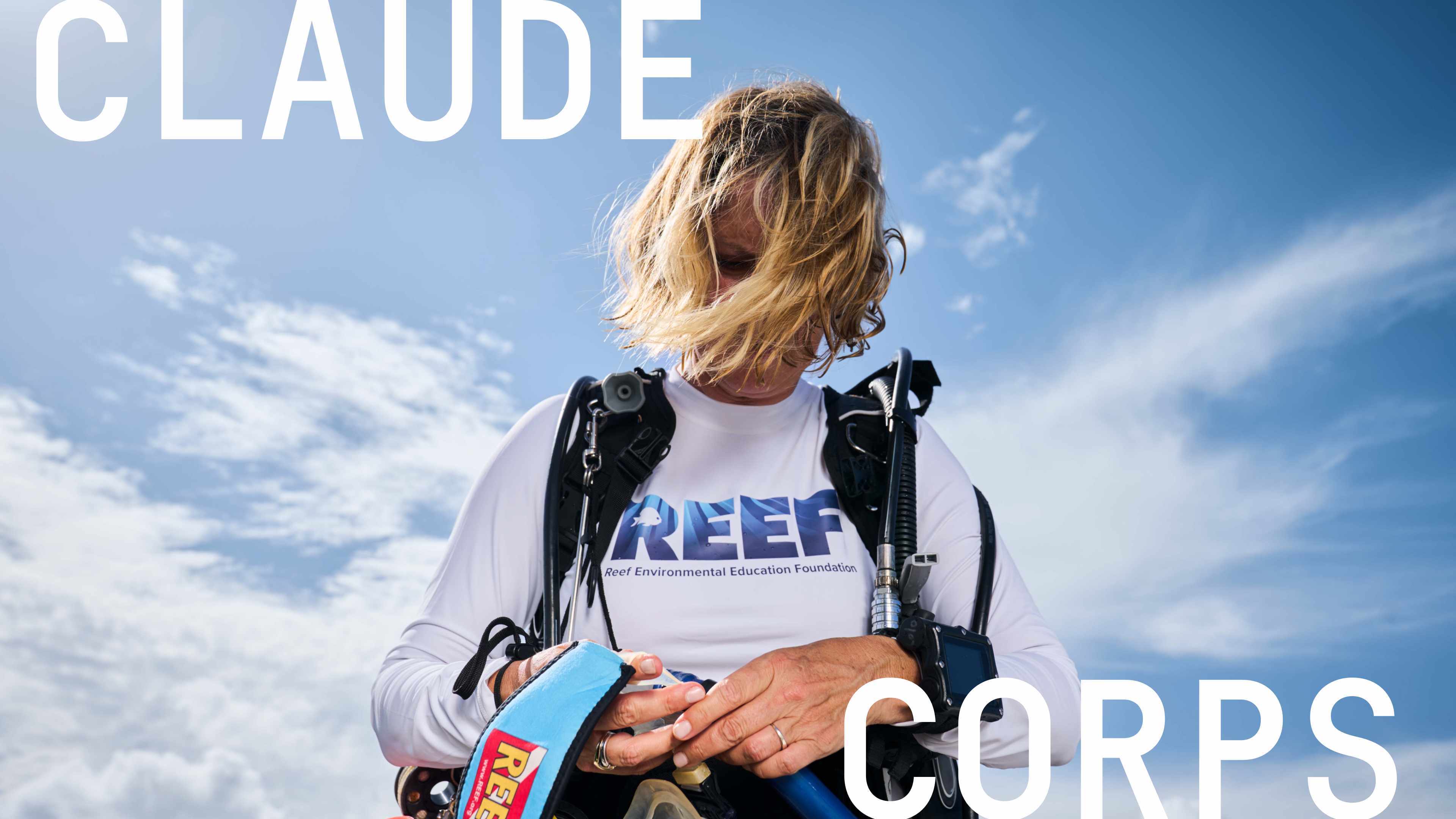
Anthropic Launches Claude Corps — $150M, 1,000 AI Fellows at $85K Placed in U.S. Nonprofits
Anthropic stands up the largest direct AI-workforce program any frontier lab has run — putting early-career talent into 400+ nonprofits for 12 months at $85K salary. First cohort closes July 17.
What is it?
Claude Corps places people with under two years of full-time work experience into U.S. nonprofit hosts for 12 months at $85,000 plus benefits, across three cohorts targeting 1,000 fellows total. Anthropic is funding it with an initial $150M commitment, starting with a 100-fellow cohort in October 2026.
How does it work?
Anthropic funds and sets strategy; CodePath is the employer of record and runs pre-placement training; Social Finance handles evaluation. Confirmed hosts include Code for America, the International Rescue Committee, Goodwill Industries, and StriveTogether. Fellows must be U.S.-authorized, over 18, and willing to relocate — no specific educational background required.
Why does it matter?
It is the largest direct AI-workforce program any frontier lab has run and routes Anthropic dollars into civic-sector AI adoption rather than only enterprise sales. It also opens a concrete on-ramp for early-career candidates into AI roles outside big tech.
Who is it for?
Early-career candidates seeking AI roles, U.S. nonprofits looking for AI talent, and policymakers tracking how frontier labs are investing in workforce development.
|
|
|
|
BENCHMARK
MAJOR
2026-06-10
Endor Labs Benchmarks Fable 5 on Real Vulns — 59.8% Functional, 19.0% Security, Record 38/200 Memorization Hits
First independent Fable 5 coding eval lands mid-table on 200 real CVE tasks — with the highest confirmed-memorization rate Endor has ever recorded, and 15 runs that simply timed out.
What is it?
Endor Labs ran Claude Fable 5 + Claude Code through its Agent Security League — a 200-task benchmark of real-world vulnerability-fix problems drawn from public CVE history. This is the first independent eval of Fable 5 on agentic security coding tasks, published two days after the model's public launch.
How does it work?
Each task gives an agent a vulnerable snippet and asks for a patch that both compiles (FuncPass) and actually fixes the underlying bug class (SecPass). Endor's harness watches for runs exceeding 40 minutes and flags solutions copied verbatim from upstream fixes the model likely saw during training.
Why does it matter?
Anthropic's launch called Fable 5 "Mythos-grade" on coding. Endor's read: mid-table FuncPass, sub-20% SecPass, 38/200 confirmed memorization hits (33 traced to upstream-fix recall), and 15 timed-out runs. Silver lining: Fable cracked four vulnerabilities no prior model had ever solved.
Who is it for?
AppSec teams choosing a coding-agent model, anyone running internal Fable 5 evaluations, and researchers tracking the gap between launch claims and independent benchmarks.
|
|
|
All releases at ai-tldr.dev
Simple explanations • No jargon • Updated daily
|
|