|
|
TOOL
MAJOR
Jul 22, 2026
Cursor Router — automatic model picker chooses frontier or Grok 4.5 per request
Cursor's new Router picks a frontier model or the cheap Grok 4.5 for every prompt so users stop guessing which model to run.
What is it?
Cursor Router is a built-in model picker inside the Cursor coding agent. Instead of choosing GPT, Claude, Gemini, or Grok by hand for each chat, the user picks a mode — Intelligence, Balance, or Cost — and Router sends each request to the model that best fits.
How does it work?
Each prompt goes through a per-request classifier that tags task type and complexity. Intelligence mode picks a frontier model, Balance picks a strong daily-driver, and Cost mode leans on Grok 4.5 — billing at the routed model's own rate.
Why does it matter?
Cursor users had to guess which model was worth its price for each task, wasting time and money. Cursor Router turns that guess into a policy — and Enterprise admins can allow or block any underlying model and cap which modes teams can use.
Who is it for?
Cursor Teams and Enterprise users tired of hand-picking between GPT, Claude, Gemini, and Grok for every prompt.
|
|
|
|
TOOL
MAJOR
Jul 22, 2026
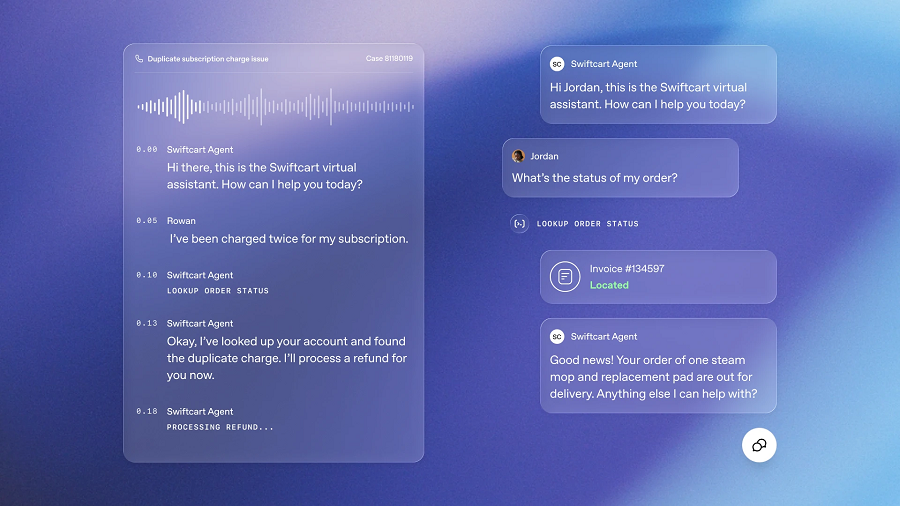
OpenAI Presence — enterprise platform to build, guard, and improve AI agents
OpenAI Presence is a managed platform for putting voice and chat agents in front of real customers, with guardrails, evaluations, and a Codex-powered improvement loop.
What is it?
OpenAI Presence is a deployed enterprise product for running trusted AI agents across voice and chat. It bundles policies, guardrails, approved actions, simulations, evaluations, and a Codex-powered improvement loop into one managed platform — with launch customers BBVA Mexico, SoftBank Corp., and IAG.
How does it work?
Each deployment starts with an agent scoped to a single job, connected to company knowledge and systems, with every action gated behind stated policies. Simulations and graders test the agent before it ships; after launch, Codex watches production sessions and proposes updates a human then approves.
Why does it matter?
Presence is OpenAI's direct move into the CX stack held by Salesforce, ServiceNow, and Zendesk. On OpenAI's own phone line, it resolves 75% of inbound calls without a human, and its Codex feedback loop cut handoffs by 15 percentage points inside 10 days.
Who is it for?
Enterprise CX, support, and operations teams — available in limited GA through OpenAI's Forward Deployed Engineers.
|
|

|
|
REPO
MAJOR
Jul 21, 2026
GigaToken v0.9.0 — a Rust tokenizer that runs ~1000× faster than HuggingFace
GigaToken hits ~24.5 GB/s on a 144-core EPYC and drops straight into HuggingFace and tiktoken code paths.
What is it?
GigaToken is a Rust tokenization library from Stanford PhD student Marcel Rød that reads text at gigabytes per second while staying API-compatible with HuggingFace tokenizers and OpenAI's tiktoken. Version 0.9.0 hit PyPI on July 21 with an MIT-licensed source release on GitHub — 1,011 stars on launch day.
How does it work?
SIMD-optimized Rust with per-tokenizer fast paths and intelligent caching. On an AMD EPYC 9565 it reports 24.53 GB/s on GPT-2 encoding versus 24.8 MB/s from HuggingFace — roughly 1000× faster. Install with pip install gigatoken and swap in gigatoken.Tokenizer for existing HF or tiktoken calls.
Why does it matter?
Tokenization is a real bottleneck when preparing hundreds of GB of pretraining data. Cutting that step from hours to minutes changes what a single laptop or CI job can turn around, and the drop-in HF/tiktoken shims mean teams adopt it without rewriting pipelines.
Who is it for?
ML engineers building pretraining pipelines, data-engineering teams processing large text corpora, and researchers running high-throughput evaluation loops.
|
|

|
|
MODEL
MAJOR
Jul 22, 2026
Solar Open 2 — Upstage's 250B/15B open-weight MoE built for agentic use
Korea's Upstage ships a 250B/15B open-weight MoE with 1M context and a hybrid-attention stack, aimed at agentic work.
What is it?
Solar Open 2 is Upstage's new open-weight flagship: a 250B-parameter Mixture-of-Experts model that only activates about 15B parameters per token. Weights, a technical report, and a hosted playground all shipped together on July 22 under the Upstage Solar License (commercial use permitted).
How does it work?
Solar Open 2 interleaves three linear-attention layers with one softmax GQA layer and routes 8 of 320 experts per token. A Korean-tuned tokenizer cuts per-sentence tokens by 50–80% versus general models, giving it 1M-token context at inference cost closer to a mid-size dense model.
Why does it matter?
Every major frontier release this month has been closed API or Chinese-only. Solar Open 2 gives developers a commercially-usable open-weight model in the 250B class with an agent-first pitch — hitting 92.4 on LiveCodeBench and 70.4 on SWE-Bench Verified.
Who is it for?
Enterprises building agentic workflows in Korean or English who want an open-weight alternative to closed frontier models.
|
|
|
|
MODEL
MAJOR
Jul 21, 2026
Poolside Laguna S 2.1 — 118B open-weight coding MoE with 8B active
Poolside ships the West's answer to DeepSeek — a 118B/8B-active open-weight coding MoE with 1M-token context at $0.10/$0.20 per million tokens.
What is it?
Laguna S 2.1 is Poolside's open-weight coding foundation model, released July 21 with weights on Hugging Face under the OpenMDW-1.1 license. It targets long-horizon software engineering work and ships with BF16, FP8, INT4, and GGUF checkpoints plus a DFlash draft model for speculative decoding.
How does it work?
118B total parameters with 8B active per token via 256 routed experts (top-10 router), a 1M-token context, and a 1:3 ratio of global to sliding-window attention. Trained end-to-end in under 9 weeks on ~4,000 NVIDIA H200 GPUs — the sparse activation lets the full model fit on a single NVIDIA DGX Spark.
Why does it matter?
Chinese labs have owned the open-weight coding tier for over a year. Laguna S 2.1 hits 70.2% on Terminal-Bench 2.1 and 59.4% on SWE-Bench Pro — matching or beating DeepSeek-V4-Flash and NVIDIA's Nemotron 3 Ultra at roughly an order of magnitude below closed frontier API prices.
Who is it for?
Engineers who want a self-hostable, permissively-licensed coding model; enterprises that cannot send proprietary code to a closed API.
|
|

|
|
TOOL
MAJOR
Jul 21, 2026
Buzz — Block's open workspace where humans and AI agents share channels
Block's Apache-2.0 workspace where humans and AI agents share the same channels, code review, and workflows on a Nostr relay — free and self-hostable.
What is it?
Buzz is a self-hostable team workspace from Block (Jack Dorsey's company) that treats humans and AI agents as equal participants in the same channels, threads, code reviews, and CI workflows. Every action — a message, a review, a merged patch, a workflow step — is a signed event on a Nostr relay the team runs itself.
How does it work?
Each user and each agent has its own Nostr keypair; agents also carry a second signature tied back to their human owner, creating a verifiable chain of custody for every action. Feature branches become channels where patches, CI results, reviews, and merges coexist as one searchable log.
Why does it matter?
Buzz is the first mainstream workspace designed around AI agents having identity and permissions from day one, rather than bolted-on bots. Apache-2.0 with a self-host option removes the vendor lock-in that Slack and Notion carry for teams running Claude Code, Codex, or Cursor agents alongside employees.
Who is it for?
Engineering teams running AI coding agents alongside employees; anyone who wants Slack + GitHub + CI in one auditable, self-hostable log.
|
|

|
|
ECOSYSTEM
MAJOR
Jul 20, 2026
Anthropic $1.5B books settlement approved — $3,000 per work to about 500,000 authors
The largest copyright payout on record — Anthropic pays $1.5B to authors whose books it downloaded from pirate sites to train Claude.
What is it?
The Bartz v. Anthropic settlement is a $1.5 billion class-action resolution approved by US District Judge Araceli Martinez-Olguin on July 20, 2026. It compensates roughly 500,000 authors whose books Anthropic obtained from pirate sites like Library Genesis to train the Claude family of models.
How does it work?
Every eligible work draws about $3,000 from the $1.5B fund — roughly 91% of authors and publishers had already filed claims before the hearing. Because Anthropic settled rather than appealed, Judge Alsup's earlier ruling that training on lawfully obtained books can be fair use stays intact; only the piracy claim is now closed.
Why does it matter?
Bartz is the first billion-dollar-plus payout in the AI-copyright wave and draws a sharp line: how you obtained training data matters, even if training itself is fair use. Every foundation-model lab now has a concrete benchmark — $3,000 per work × book count — to price its own training-data risk.
Who is it for?
AI labs sourcing training data; authors, publishers, and copyright counsel; anyone tracking structural risk across the AI industry.
|
|
|
All releases at ai-tldr.dev
Simple explanations • No jargon • Updated daily
|
|