|
|
TOOL
MAJOR
2026-07-16
Grok Automations — scheduled and email-triggered jobs land in Grok apps
Grok can now run a saved prompt on a timer or fire it off the moment a matching email lands in your inbox.
What is it?
Grok Automations save any prompt as a job that runs on its own — on a repeating schedule you pick, or when an incoming email matches a filter you set. xAI launched the feature on July 16, 2026 across grok.com and the mobile apps.
How does it work?
Describe the work once, choose a schedule (once, daily, weekdays, weekly, monthly, or yearly) or an email filter by sender/recipient/subject, then pick how Grok notifies you when the run finishes. Every run creates a fresh conversation and drops it into run history.
Why does it matter?
Grok moves from a chat tool you open on demand into a background worker — a recurring research digest can arrive before you wake up, a customer email summarized the second it hits your inbox. Scheduled runs are free on every tier.
Who is it for?
Grok users who want recurring or event-driven jobs done without babysitting a chat. Email triggers require SuperGrok.
|
|

|
|
TOOL
MAJOR
2026-07-16
Roblox Build — mobile AI turns a text prompt into a playable game
A text prompt on your phone now compiles into a playable Roblox game — public alpha starts July 28 in New Zealand.
What is it?
Build is a new AI creation mode inside the Roblox mobile app. Type a plain-English description of the game you want and Build produces a first playable version you can then edit, test, and share.
How does it work?
Prompts route through Roblox's Cube 3D foundation model, Procedural Models for parametric assets, and third-party models for gameplay logic, art style, and sound. Build shares its back end with desktop Roblox Studio so a mobile creator can jump to full Studio later without losing state.
Why does it matter?
With ~380 million monthly active users, Roblox drops the barrier from "learn Studio on a laptop" to "type a sentence on your phone." AI-made games still compete on retention-based ranking, so low-effort slop won't surface on the homepage.
Who is it for?
Roblox creators without a PC, and studios watching how a mainstream mobile-first text-to-game tool ships. Verified users aged 9+ to create; 16+ to publish globally.
|
|

|
|
ARTICLE
NOTABLE
2026-07-18
Anthropic makes Fable 5 permanent in Max and Team Premium
Simon Willison walks through Anthropic's July 18 reversal — Fable 5 stays in Max and Team Premium plans instead of moving to credits.
What is it?
Starting July 20, Claude Fable 5 is bundled into all Max and Team Premium subscriptions at 50% of each plan's weekly usage limits. Pro and Team Standard users lose bundled access but receive a one-time $100 credit.
How does it work?
Under Anthropic's original plan, Fable 5 was leaving paid subscriptions on July 19 and continuing only via prepaid usage credits at $10 input / $50 output per million tokens. Competitive pressure from GPT-5.6 Sol and Kimi K3 reversed the decision.
Why does it matter?
For Max and Team Premium subscribers, Fable 5 stops being a usage-credit purchase and goes back to being part of the plan they already pay for. Willison flags the trade-off: keeping Fable 5 in front of paying users at 50% of limits chews up GPU capacity meant for training.
Who is it for?
Claude Max and Team Premium subscribers, and anyone tracking how frontier-lab pricing responds to open-weight competition.
|
|
|
|
MODEL
MAJOR
2026-07-15
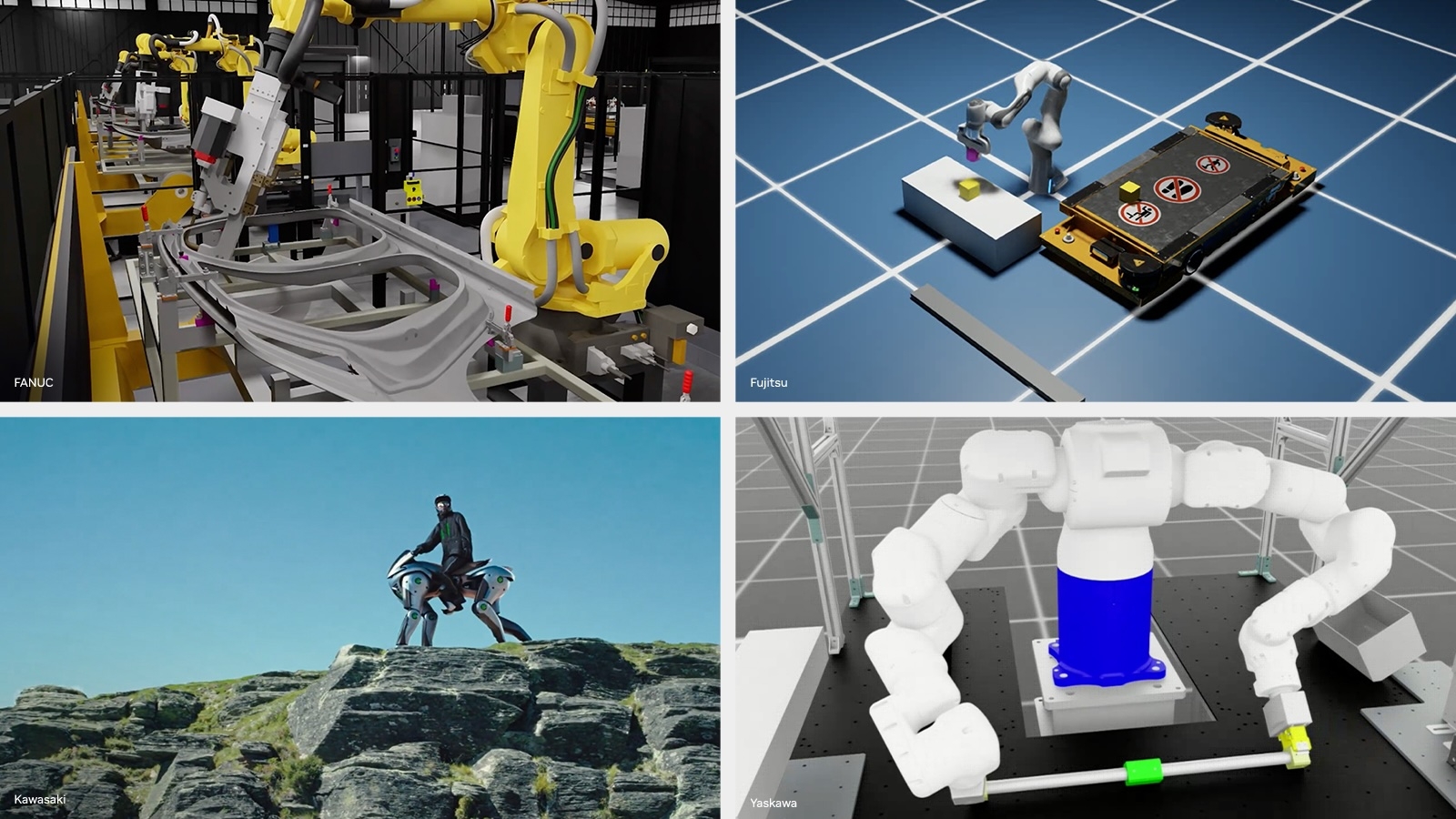
NVIDIA Cosmos 3 Edge — 4B world model that runs physical AI on Jetson
NVIDIA's Cosmos family gets a small, on-device sibling built for real-time robotics.
What is it?
Cosmos 3 Edge is a 4-billion-parameter world model built on the Nemotron backbone that runs directly on robots, cameras, and vehicles instead of a data-center GPU.
How does it work?
The model takes video and sensor input, updates its internal world model on-device, and outputs action policies for the robot in real time. Teams can fine-tune it to a specific robot, vehicle, or sensor setup in about a day, targeting Jetson T2000/T3000, RTX GPUs, and DGX systems.
Why does it matter?
At 4B parameters, the world model lives on-device with real-time latency — no cloud round-trip needed to get the next action. The Tokyo launch added FANUC, Fujitsu, Honda R&D, Sony, and Yaskawa Electric to the Cosmos Coalition.
Who is it for?
Robotics and physical-AI teams deploying factory arms, delivery vehicles, or real-time inspection systems.
|
|
|
|
SECURITY
MAJOR
2026-07-15
Microsoft July Patch Tuesday — record 570 fixes as AI-driven bug hunting spikes
Microsoft ships its biggest-ever monthly patch and says AI is why it can find so many bugs at once.
What is it?
The July 2026 Patch Tuesday closes 570 vulnerabilities across Windows, Office, Azure, and Copilot — nearly triple last month and about four times last July's total. Three are zero-days; two are already being exploited in the wild.
How does it work?
Microsoft is running AI-assisted vulnerability discovery across its codebase, scanning legacy code for latent bugs faster than a human red team. EVP Pavan Davuluri credits AI for the spike in discovery rate.
Why does it matter?
CVE-2026-48561 is a 9.6-CVSS remote code execution in Copilot itself; CVE-2026-56164 is an already-exploited SharePoint privilege escalation. This is also one of the first concrete data points showing AI's impact on defensive security at hyperscale.
Who is it for?
Windows and enterprise admins — apply the July 2026 cumulative update immediately, especially if running SharePoint or Copilot.
|
|

|
|
VIDEO
NOTABLE
2026-07-17
Fireship: 'OpenAI is being sued for stealing, again…'
Fireship recaps the Apple v. OpenAI lawsuit — Apple accuses OpenAI of systematically poaching engineers to steal unreleased-product secrets.
What is it?
Apple alleges OpenAI ran a hiring campaign targeting former Apple hardware and Vision Pro engineers, instructing them to bring proprietary information about unreleased products and coaching them on how to bypass Apple's exit-security checks.
How does it work?
Fireship's two-to-three minute format compresses the complaint, timeline, and context — the Apple suit lands the same month The New York Times filed a sanctions motion in the separate copyright case over allegedly hidden training-data evidence.
Why does it matter?
The Apple case is the first major trade-secrets action against OpenAI. A preliminary injunction could freeze OpenAI's hires or slow product work, and raises the question of whether frontier-lab job offers now carry legal risk for candidates.
Who is it for?
Developers and industry watchers tracking OpenAI's escalating legal exposure.
|
|

|
|
ARTICLE
NOTABLE
2026-07-16
Simon Willison — Kimi K3 and the pelican benchmark come apart
Simon Willison retires the pelican benchmark as a comparative metric — GLM-5.2 draws a better one than models that beat it everywhere else.
What is it?
Willison's July 16 post runs his "pelican riding a bicycle" SVG prompt against Kimi K3, Moonshot's new 2.8T MoE model. The SVG rendered cleanly but cost ~25 cents and consumed 13,241 reasoning tokens.
How does it work?
The pelican bundled three signals: capability check (can it produce valid SVG?), cost estimation (reasoning-token burn), and comparative ranking. The ranking breaks because GLM-5.2's pelican looks better than Kimi K3's, Fable 5's, and GPT-5.6 Sol's — despite losing on real benchmarks.
Why does it matter?
The pelican was probably the most-cited informal LLM benchmark on X. Willison keeps it as a reproducible "hello world" sanity check and cost signal, but retires it as a model leaderboard.
Who is it for?
ML practitioners and voices who track frontier-model evaluation and informal benchmarking.
|
|
|
All releases at ai-tldr.dev
Simple explanations • No jargon • Updated daily
|
|