|
|
TOOL / SECURITY
MAJOR
2026-07-13
Destructive Command Guard — Rust hook stops AI agents from rm -rf
A Rust hook that blocks AI coding agents from running commands like rm -rf ./src or git reset --hard.
What is it?
Destructive Command Guard adds a safety net between an AI coding agent and your shell. It runs as a PreToolUse hook: every command the agent wants to execute goes through DCG first, and DCG kills the ones that would destroy work. Version 0.6.6 shipped July 13, 2026 and the repo has ~4,000 stars.
How does it work?
A four-stage pipeline handles each command: JSON parse, normalize, SIMD-accelerated quick reject, and regex against 50+ 'packs' of dangerous patterns. Safe commands are approved in microseconds; dangerous ones are blocked with a human-readable reason.
Why does it matter?
AI coding agents run shell commands autonomously and sometimes get creative — a rename that becomes rm -rf, a merge that becomes git reset --hard. DCG is the seatbelt: cheap to install and it plugs into Claude Code, Codex CLI, Cursor, Gemini CLI, Aider, and more without changing how the agent works.
Who is it for?
Developers running autonomous AI coding agents in real repos — anyone who has ever winced watching an agent touch the wrong path.
|
|

|
|
MODEL / ECOSYSTEM
MAJOR
2026-07-12
OpenAI lifts GPT-5.6 Sol 5-hour cap — context cut from 372K to 272K
OpenAI removes the 5-hour usage cap on GPT-5.6 Sol after demand doubled, cutting context by 100K to fit 10% more requests per session.
What is it?
GPT-5.6 Sol drops its 5-hour rolling usage cap for ChatGPT Plus, Business, and Pro users on July 12. In the same update, OpenAI trimmed the model's maximum context from 372,000 tokens to 272,000 — a permanent trade to stretch each plan's weekly quota further.
How does it work?
Codex lead Tibo Sottiaux shipped three fixes at once: paused the 5-hour rolling cap, reset every account's current usage counter, and made Sol use less quota per prompt. Shrinking context by 100K tokens means more turns before the weekly ceiling trips.
Why does it matter?
GPT-5.6 Sol runs the heaviest agentic jobs in Codex and ChatGPT Work, and hitting a 5-hour cap mid-session broke long refactors. With the cap paused and quota efficiency up 10%, paid teams can finish long tasks on one plan — Sol now has 6 million active users and the fix is a direct response to that surge.
Who is it for?
ChatGPT Plus, Business, and Pro users running Codex or ChatGPT Work — the 5-hour bar is off until further notice.
|
|
|
|
ARTICLE
NOTABLE
2026-07-12
Nathan Lambert: '6 months to live for open models'
Nathan Lambert predicts an executive order could ban frontier open-weights models within six months.
What is it?
In his July 12 Interconnects post, Nathan Lambert warns that open models face their sharpest regulatory test yet. He points to reported White House discussions about a new executive order that could initially target Chinese-origin weights and government use.
How does it work?
The prediction is concrete: within six months, US regulators are likely to ban or indefinitely delay any open-weights release above the capability level of GPT 5.5, Claude Opus 4.8, or GLM-5.2. Lambert frames this as the moment the dominoes start to fall after months of trial-balloon policies.
Why does it matter?
The essay pushes US labs to ship a competitive open model before the window closes, and argues the parallel 'distillation panic' is largely a regulatory-capture campaign. Lambert also criticizes Anthropic directly for building policy pressure with minimal technical evidence.
Who is it for?
Open-source AI researchers, policy watchers, and anyone tracking the regulatory trajectory of frontier open-weights models.
|
|
|
|
ARTICLE
NOTABLE
2026-07-12
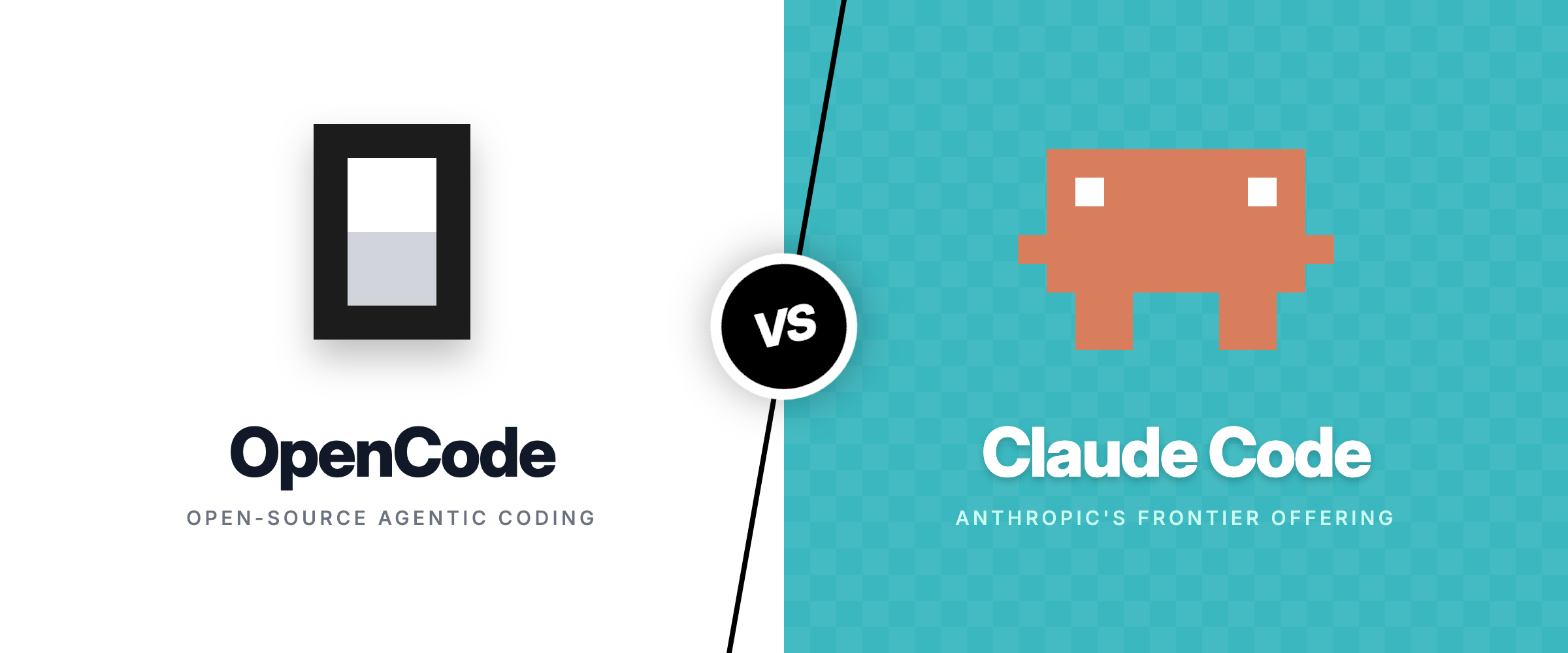
Systima — Claude Code sends 33k tokens before your prompt, OpenCode sends 7k
Systima's teardown finds Claude Code eats a 4.7x token surcharge before the user prompt even arrives, and its cache breaks mid-session.
What is it?
A side-by-side measurement of Claude Code and OpenCode on identical prompts. Systima, an EU AI Act compliance consultancy, published it on July 12 and it hit 362 points on Hacker News the same day.
How does it work?
The team asked each harness for a one-line reply on Sonnet 4.5 and counted tokens. Claude Code shipped ~33,000 tokens of system prompt and scaffolding before the user prompt; OpenCode shipped ~7,000. Claude Code also rewrote its prompt prefix mid-session, breaking the KV-cache and triggering up to 54x more cache-write tokens billed at premium rates.
Why does it matter?
Coding agents charge by the token, so a 4.7x overhead on Sonnet 4.5 is a real bill difference. Once production settings are added — instruction files and MCP servers push both harnesses up by 20k–25k tokens, and two subagents multiply consumption from 121k to 513k — the choice between Claude Code and OpenCode becomes a monthly-invoice question.
Who is it for?
Engineering leads picking between Claude Code and OpenCode for production coding-agent work, and anyone tracking the real cost of agentic AI at scale.
|
|

|
|
ARTICLE
NOTABLE
2026-07-12
I Love LLMs, I Hate Hype — Hotz says frontier labs won't capture AI value
George Hotz argues AI is the computer revolution continuing, not a singularity, and frontier labs cannot lock down what Moore's law is already delivering.
What is it?
A July 12 essay by George Hotz (tinygrad, tinycorp) where he opens by saying he just set up a Linux box with OpenCode on local GLM-5.2 and loves it — then rejects two flavors of hype: doom talk about the 'window closing' and jumps from 'fancy autocomplete' to 'flash of light in the sky' takeoff.
How does it work?
Hotz runs through concrete counter-examples: coding assistants compared to compilers and find/replace — real productivity but not new physics. A Linus Torvalds quote pegs agents at ~10x productivity vs. ~1000x for compilers. He calls Moore's law, not any single lab, the actual driver of the last three years of gains.
Why does it matter?
Hotz's central claim is not that AI creates little value, but that frontier labs 'won't capture it' — making trillion-dollar valuations a bet against commodification. The essay hit Hacker News front page with 399 points and 249 comments, a shareable rebuttal to both doomer and singularitarian framings.
Who is it for?
AI engineers weighing open-weight vs. frontier-lab bets, and readers tired of both doom and singularity hype.
|
|

|
|
VIDEO
NOTABLE
2026-07-14
Wes Roth: 'Claude Built the Ultimate Second Brain'
Wes Roth demos a Claude-powered second brain — a personal knowledge system where the model IS the index.
What is it?
Wes Roth's July 14 video, the third in his series on turning Claude into a personal knowledge base. It follows his earlier 'I Turned Claude Into the Ultimate Second Brain' walkthrough and a deep-dive explainer on every level of the setup.
How does it work?
The second-brain pattern hands raw notes, files, and daily inputs to Claude and lets the model act as a queryable memory layer instead of a separate note-taking app. Claude Code and Claude's projects serve as the wrapper that keeps context durable across sessions.
Why does it matter?
Roth's channel is a common first-look for non-engineers on how frontier models fit into everyday workflows. The second-brain framing offers a concrete personal-productivity use case that goes beyond code — relevant for anyone weighing whether an LLM subscription can replace their notes-and-search stack.
Who is it for?
Knowledge workers, note-takers, and Claude subscribers looking for a personal-productivity setup beyond just coding assistance.
|
|

|
|
VIDEO
NOTABLE
2026-07-13
1littlecoder: 'Fable 5 + Claude Code Workflows is AGENTS workforce!'
1littlecoder turns Fable 5 plus Claude Code workflows into a hands-off agent workforce.
What is it?
The July 13 video from 1littlecoder pairs Anthropic's Fable 5 coding model with Claude Code's Workflows feature. Fable 5 is the model that stays on task for hours; Workflows is the harness that lets one operator spawn many sub-agents from a single command.
How does it work?
Claude Code Workflows lets a top-level agent split a job into parallel sub-agents, hand each a scoped task, and gather the results — Fable 5 handles the planning and self-checking so the pool runs without a human in the middle of every turn.
Why does it matter?
1littlecoder's tutorials are a common first look for developers weighing coding-agent stacks. Framing Fable 5 plus Workflows as an 'agent workforce' shows the concrete pattern people are copying to point Claude at a whole backlog instead of one file at a time.
Who is it for?
Developers and indie builders trying out multi-agent Claude Code setups for the first time.
|
|
|
All releases at ai-tldr.dev
Simple explanations • No jargon • Updated daily
|
|