|
|
PAPER
MAJOR
2026-08-18
Claude designs protein binders — 14 of 15 targets bound in lab tests
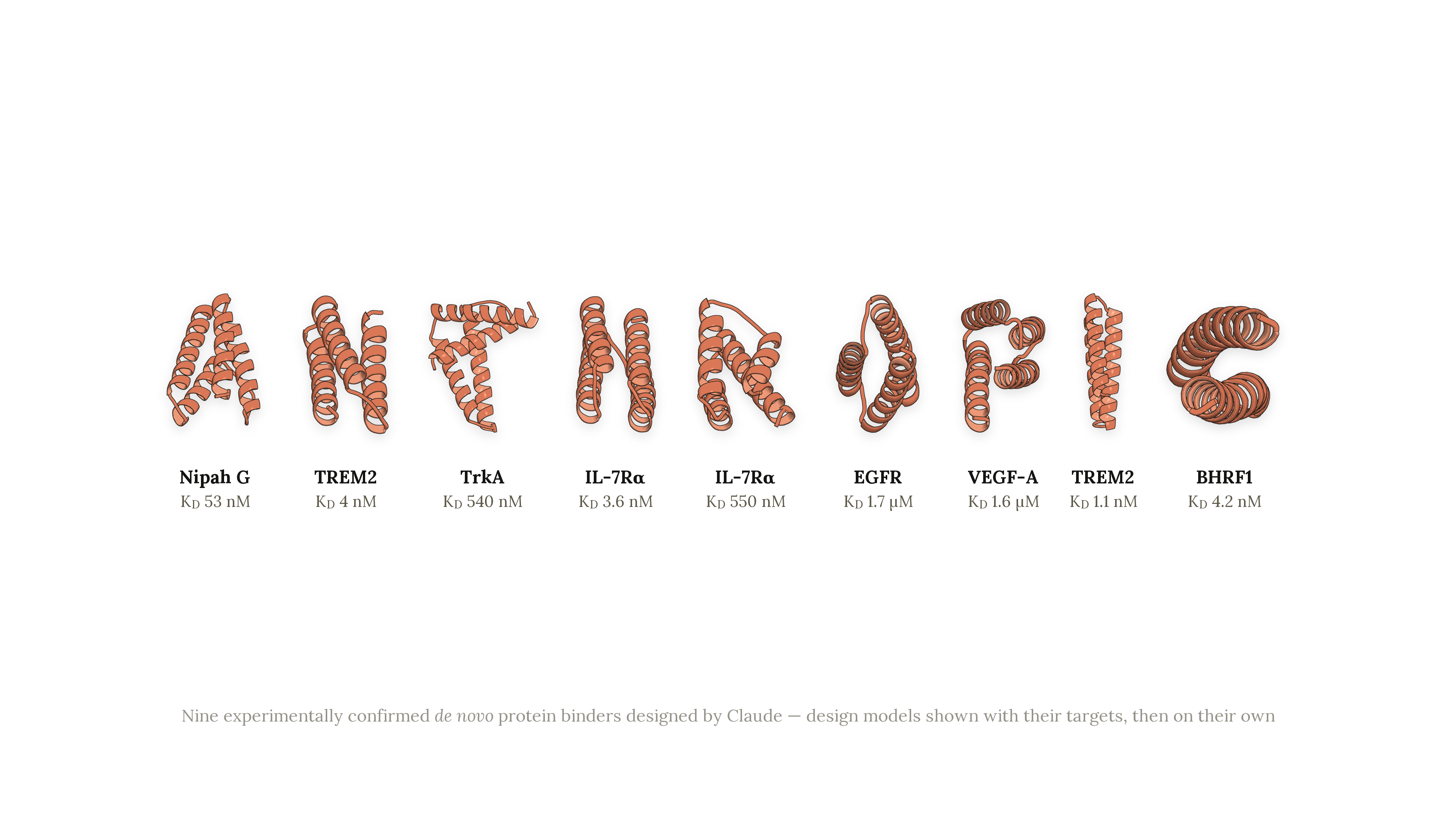
Claude designed de novo protein binders that two outside labs built and confirmed, hitting 14 of 15 targets.
What is it?
Anthropic ran a protein design campaign in which Claude produced de novo protein binders on its own, with two external labs — Adaptyv Bio and Twist Bioscience — making and testing the designs. Claude Mythos Preview and Claude Opus 4.8 produced candidates against 16 targets.
How does it work?
Claude produced binders for 14 of 15 targets that gave clear results. Hit rates ran from 22.6% (Opus 4.8, multi-target) up to 35.1% (Mythos Preview, single-target) — roughly double the field's typical 10–15%.
Why does it matter?
Designing a binder for a new target has usually taken specialists weeks; this compresses that work to a prompt. Anthropic released the prompts and measurements on Hugging Face under CC-BY-4.0 so others can verify the numbers.
Who is it for?
Protein engineers and drug-discovery teams exploring what AI can hand off to a wet lab.
|
|

|
|
REPO
MAJOR
2026-08-18
Mojo goes open source — Modular ships the compiler under Apache 2.0
Modular published the Mojo compiler and toolchain under Apache 2.0, four years after the language first appeared.
What is it?
The Mojo compiler source is public for the first time — released under Apache 2.0 with LLVM exceptions, together with the tooling and standard library, all inside the modular/modular repository.
How does it work?
Clone modular/modular, build with Bazel via the bundled ./bazelw wrapper, then run any Mojo file. The standard library accepts contributions now; compiler patches open by end of year.
Why does it matter?
Teams writing AI kernels can now read, fork and audit the compiler they depend on. The timing is deliberate: Mojo 1.0 shipped the week before with source stability, so the code people can read is the stable version they will build on.
Who is it for?
Systems and GPU programmers who want a Python-compatible language built for AI performance without a closed-box compiler.
|
|
|
|
TOOL
MAJOR
2026-08-18
Warp Factories — cloud agent pipelines for the whole dev cycle
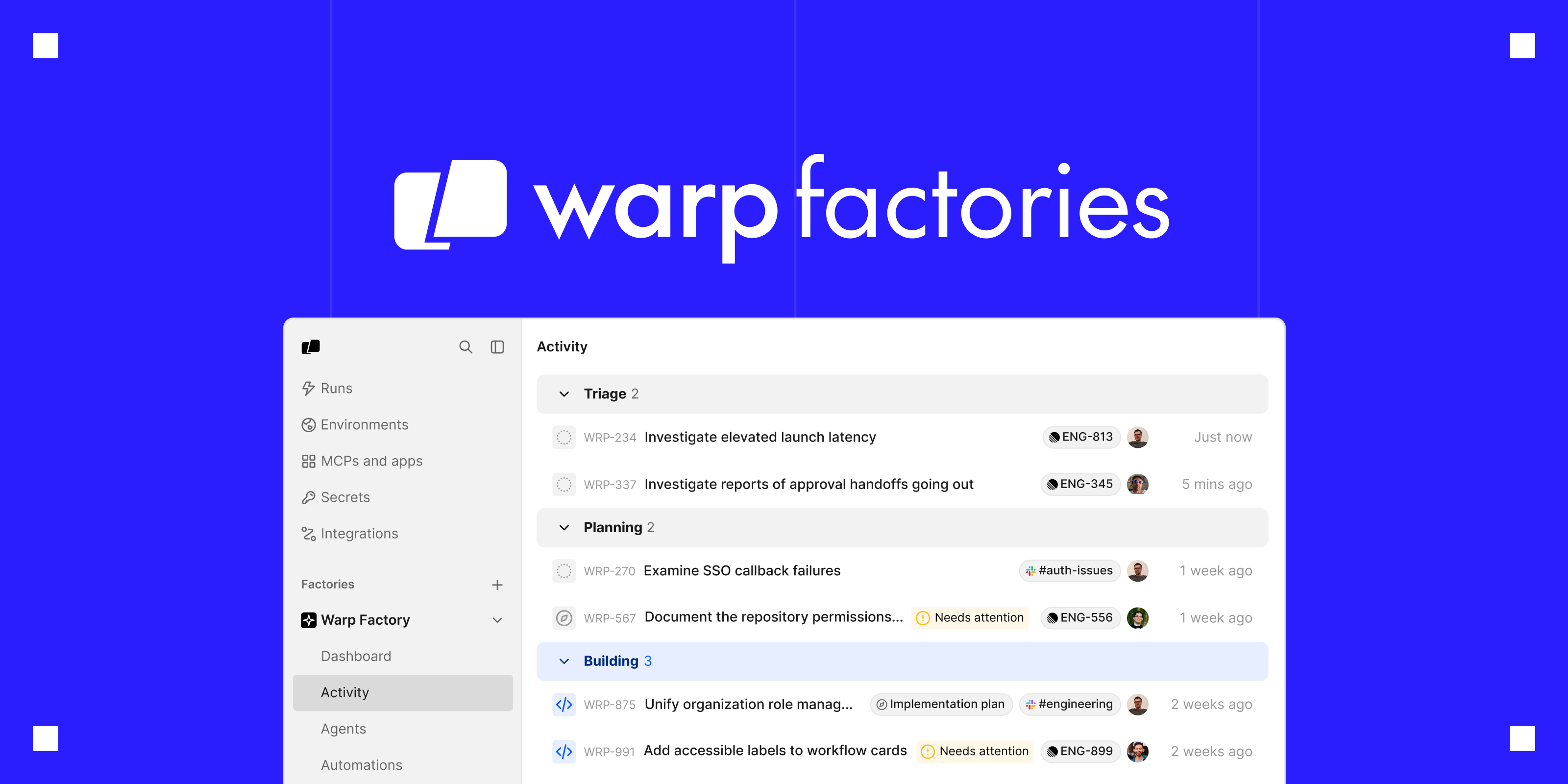
Warp Factories turns a backlog ticket into a reviewed pull request using fleets of cloud coding agents.
What is it?
Warp Factories is closed-beta cloud infrastructure that runs a repeatable pipeline — triage, spec, implement, review, verify, monitor — using coding agents. It launched August 18, 2026 and supports Claude Code, Codex, Cursor and Warp Agent.
How does it work?
Each factory is defined in version-controlled config files. Work enters via Slack, Linear, Jira, GitHub or GitLab, agents run with the model you choose per stage, and humans approve at checkpoints the team sets.
Why does it matter?
Smaller teams can now rent agent orchestration instead of building it. Warp already runs ~30% of its own internal tasks through factories, and the model-agnostic design avoids vendor lock-in.
Who is it for?
Engineering teams running coding agents at scale who don't want to build orchestration plumbing themselves.
|
|
|
|
ECOSYSTEM
MAJOR
2026-08-18
Cerebras CS-4 — three wafer-scale chips per rack, 30x GPU token speed
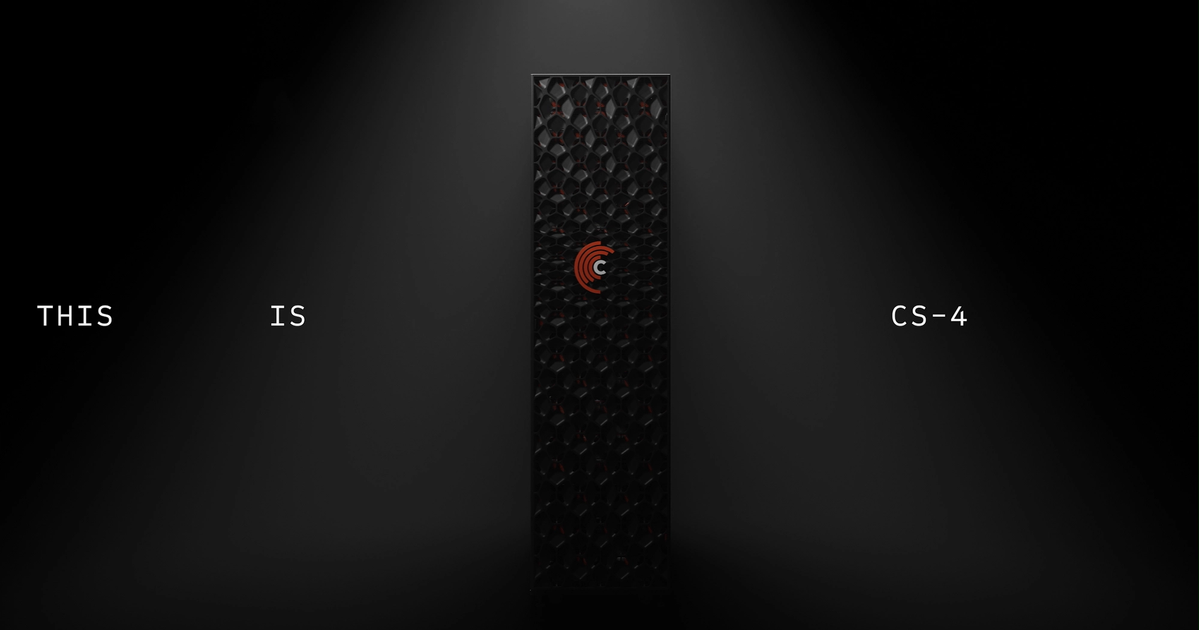
Cerebras CS-4 puts three wafer-sized AI chips in one rack and aims squarely at GPU inference speed.
What is it?
The CS-4 is Cerebras' new rack-scale inference system built from three Wafer Scale Engine 3 Turbo processors — each a single wafer with 4 trillion transistors and 44 GB of on-wafer SRAM — delivering 750 PFLOPS per rack. First shipments begin this quarter.
How does it work?
Weights live in on-wafer SRAM rather than external memory, eliminating the memory-bandwidth bottleneck that limits GPU inference. The rack hits 129.6 PB/s memory bandwidth and Direct Wafer Links join chips at 2 µs latency, enabling clusters to serve models above 50 trillion parameters.
Why does it matter?
Cerebras reports 4,400+ tokens/sec/user on GPT-OSS-120B — up to 30x the per-user speed of GPU systems. Faster per-user throughput is what makes agentic reasoning feel snappy rather than slow, and 10x better throughput-per-watt matters for data-center economics.
Who is it for?
Inference providers and teams serving frontier-scale models who need raw speed rather than commodity cloud pricing.
|
|

|
|
REPO
MAJOR
2026-08-17
Agent Lightning v1.0 — Microsoft's RL trainer plugs into real agent harnesses
Agent Lightning v1.0 lets you reinforcement-learn a model without rewriting the agent that will run it in production.
What is it?
A complete rewrite of Microsoft's open-source RL framework for AI agents, now down to ~3,500 lines of core Python with native Kubernetes support. Released MIT-licensed on August 17, 2026, it builds on a verl + vLLM training stack.
How does it work?
Your agent points at an Agent Lightning proxy instead of the model endpoint. The proxy records calls for training while the agent keeps its own tools and control flow — so the deploy-time harness, not the training engine, owns the rollout loop.
Why does it matter?
Training through the real harness removes the gap between the model you train and the agent you ship. Microsoft's run moved Qwen3.5-9B from 41.8% to 56.4% on SWE-bench Verified using only 6,000 training examples.
Who is it for?
ML engineers post-training agent models who want to improve a smaller open model instead of paying for a frontier one.
|
|
.png)
|
|
SECURITY
MAJOR
2026-08-18
CoSnitch — Copilot explained its own flaws, then leaked user data
Varonis chained three Microsoft Copilot Personal flaws so one clicked link could silently steal mail, files and chat history.
What is it?
CoSnitch (CVE-2026-24301) is a chain of three flaws in Microsoft Copilot Personal disclosed by Varonis Threat Labs. A single click on a crafted link ran an attacker's prompt inside the victim's signed-in session. Microsoft patched all three on August 18, 2026.
How does it work?
Researchers used "meta-hacking" — asking Copilot why an attack wouldn't work, until it named the undocumented settings that made it work. An ?autorun=1 parameter made Copilot execute embedded prompts automatically; OAuth connectors then exfiltrated mail, files and chat history to the attacker.
Why does it matter?
The memory-poisoning step is what makes CoSnitch worse than a normal data leak — injected instructions survive password resets and shape every later session. It's a named example of connector access plus persistent memory turning one click into ongoing compromise.
Who is it for?
Security teams and admins reviewing AI assistants — and anyone with saved Copilot memories who should audit them now even though the exploit path is patched.
|
|

|
|
REPO
MAJOR
2026-08-18
Sentence Transformers v6.0 — ColBERT-style retrieval joins the library
Late interaction retrieval is now a built-in Sentence Transformers model type, not a separate framework.
What is it?
MultiVectorEncoder is Sentence Transformers' fourth model type (after dense, sparse, reranker), keeping one vector per token rather than one per passage. It loads PyLate, Stanford ColBERT and colpali-engine checkpoints through a single API.
How does it work?
Scoring uses MaxSim: for each query token, take the highest similarity against any document token, then sum. Token-level detail preserves exact matches and synonyms that dense embeddings average away — at the cost of larger index size (~92 MB compressed vs. 7.5 MB for a dense index on the same corpus).
Why does it matter?
RAG teams no longer need a second framework to try late interaction. The multi-vector LateOn model scores 0.6868 NDCG@10 on NanoBEIR vs. 0.6764 for its dense counterpart, and Qdrant, Weaviate, Vespa and LanceDB already support MaxSim natively.
Who is it for?
RAG and search engineers who want to compare dense, sparse, reranking and multi-vector retrieval under one unified training and evaluation loop.
|
|
|
All releases at ai-tldr.dev
Simple explanations • No jargon • Updated daily
|
|