Pretty Lethal (2026)
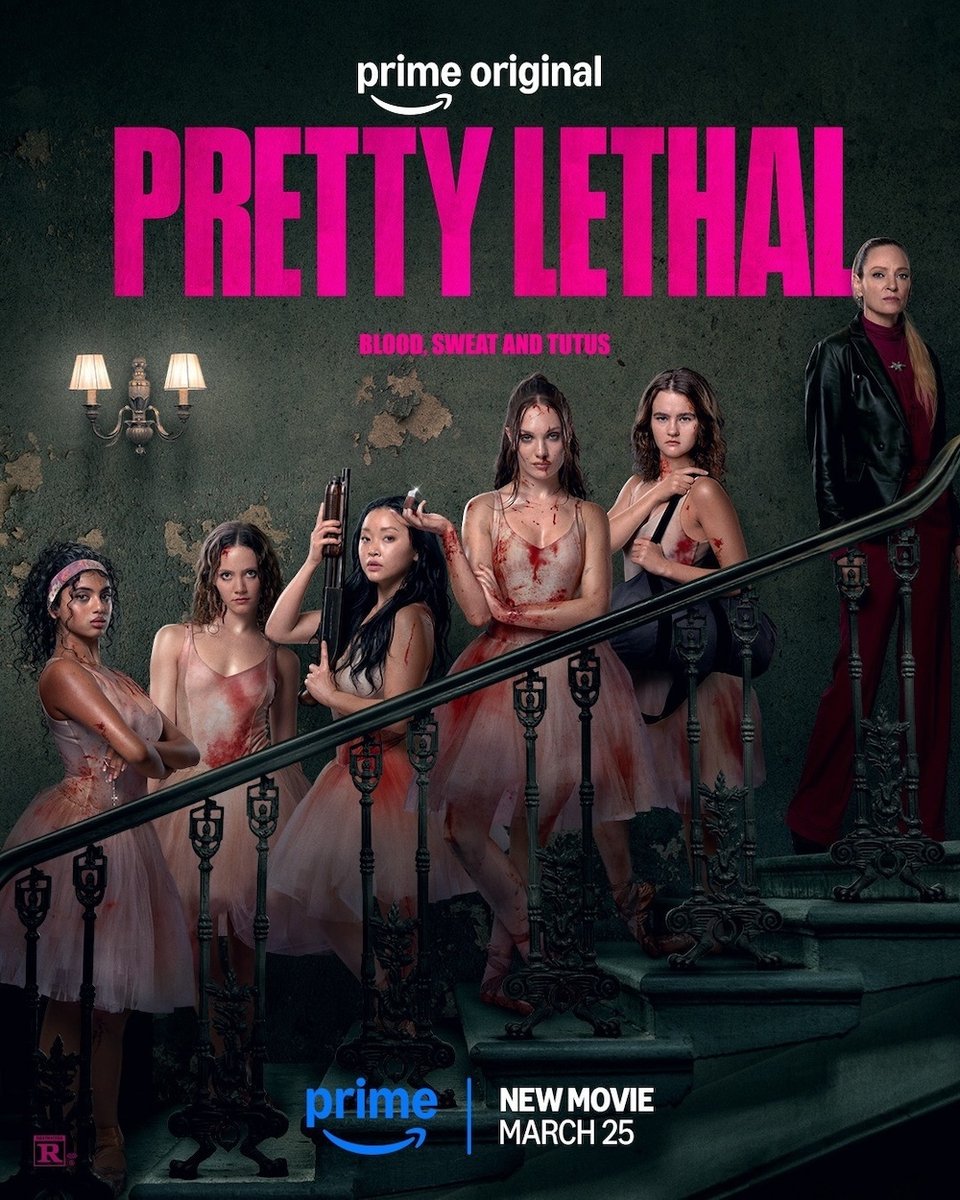
The working title of Vicky Jewson’s Pretty Lethal (2026) was Ballerina Overdrive, which, in my opinion, is a way better title. I suppose that the producers wanted some distance from Len Wiseman’s Ballerina (2025), a spin-off from Keanu Reeves’ John Wick franchise.
The movie premiered in March on Amazon Prime, and along with the aforementioned Ballerina, belongs in a niche exploitation movie subgenre of ballerina action movies (called “Killerinas” by TV Tropes), along with Francis Lawrence’s Red Sparrow (2018), Cate Shortland’s Black Widow (2021), and maybe Matt Bettinelli-Olpin and Tyler Gillett’s Abigail (2024).
As action heroes, ballerinas make a certain kind of movie sense: They are incredibly fit, glamorous, and dedicated to perfection in the same way as are fictional superspies or martial artists. Movies often rely on people with dance experience to realistically portray action on screen, where the point is not realism, but spectacularity. The physicality of dance and action movies is why Gene Kelly was the perfect choice to play D’Artagnan in George Sidney’s The Three Musketeers (1948) and why Jackie Chan’s prowess owes so much to Peking Opera.
Pretty Lethal diverges from the ballerinas trained as spies and assassins formula by plunging an ordinary United States dance troupe into a battle for their lives against the Hungarian mob in a remote mansion turned mob hangout when their bus breaks down.
Uma Thurman plays Devora, the owner/manager of the mob bar, and she’s a former ballerina herself, who, near the end of the movie, dons the makeup and tutu of the Sugar Plum Fairy to exact her long-awaited vengeance.
"These guys are drunk and out of shape, and we're prima fucking ballerinas." - Bones
When the ballerinas, Iris Apatow (Zoe), Lana Condor (Princess), Millicent Simmonds (Chloe), Avantika (Grace), and Maddie Ziegler (Bones) realize that they have to fight for their lives, they use carpenter tools and medieval weapons with ruthless, acrobatic efficiency, delivering the kind of outlandish, kinetic action/violence a movie like this needs to succeed. Lana Condor played the superhero Jubilee in Bryan Singer’s X-Men: Days of Future Past (2014). Millicent Simmonds is a deaf actor featured in John Krasinski’s A Quiet Place (2018) and A Quiet Place Part II (2020). As a child, Maddie Ziegler starred in a series of music videos by Sia.
Random thoughts:
There is at least one scene of shocking violence essential to kicking the film into gear, but disturbing nonetheless.
I hoped that Uma Thurman’s training in Quentin Tarantino’s Kill Bill (2003) would have opened up the possibility of a killer action scene, but Devora’s vengeance is more ballistic than balletic.
There’s a scene of impending, or actual, torture that wavers between horror, suspense, comedy, and revenge. It’s tense and terrible with a satisfying conclusion.
I love that Chloe’s deafness doesn’t prevent her from exploring her interest in boys, or reduce her to a character in need of saving. Her sister, Zoe, seeks to protect her, but she’s a capable woman in her own right. This is not to say that being deaf doesn’t disadvantage her during a fight: at one point, she almost realizes too late that she’s in danger. But she’s the only character in the movie to explore her sexuality.
The end of the movie, in which our ballerina-heroes take the stage in blood-stained tutus, is perfect. The dance isn’t about competition; it’s a celebration of survival and hard-earned artistry.
Obviously, I liked this movie. It’s not deep, or philosophical, or trying to impart any lessons: It’s just a straight-on fun little action flick, and if that’s your thing, you could do worse.