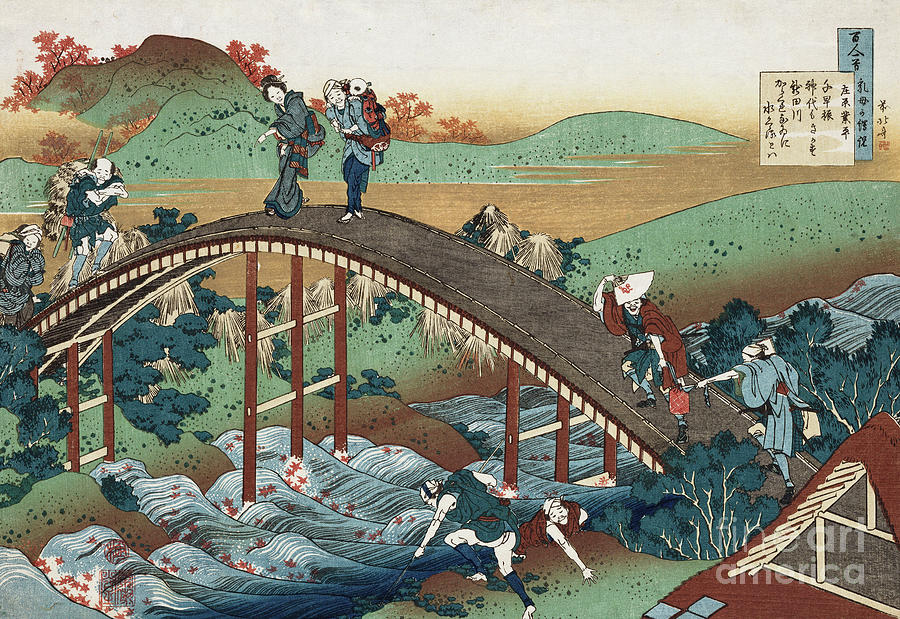
The Moon In The River
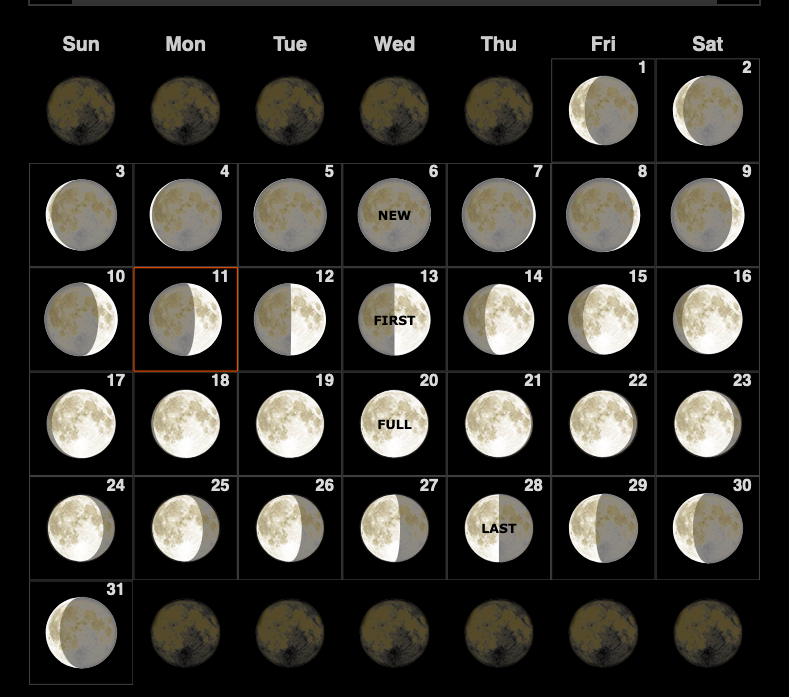
The Moon in The River
The Lunation report is coming in a bit later than usual this month. Hope no one is offended by this.
September was interspersed with a lot of the usual music practice and some very nice shows with friends in New York.
In my weekly shakuhachi lessons with Ralph and Yoko I've been working on details of Kinko Ryu Honkyoku and ensemble works by Matsura Kengyo.
Kinko Ryu Honkyoku (solo pieces) are more subdued and elegant than their counterparts in other shkauhachi schools which favor bombast and extreme contrast. The Kinko sound feels atmospheric and meandering. There is a lot of detail in how each note is connected and pacing - so it's been a month of going slowly phrase by phrase through some of the more involved pieces in this genre. Particular work was done on the piece Ho Sho Su which recalls the sound of the phoenix.

In my personal life, the idea of the phoenix dying in flames and being reborn from the ashes has special significance. I turned down work from a long time musical mentor of mine, La Monte Young, for the first time ever this month. It was a sort of painful sort of celebratory-liberating feeling since I've never turned this person down for anything they've asked of me. I really mean anything and I have a lot of stories about being asked too much and doing the things anyway in the course of my studies with this musical genius and his cadré. This time I had to take some of my own power back and I could actually feel it flowing back to me while I thought about the choice to work/not work. In LMY's school of thought the Guru is God and when you study with one you are expected to do everything they say no questions asked. I maintained this attitude for many years since I started study in 2013 and learned a lot about what sacrifice for an elder can give and take to/from a student. I'm happy to have been reborn a bit into my own musical freedom and I've found that a certain weight has been shifted in my mental state - now able to focus more on my own decisions.
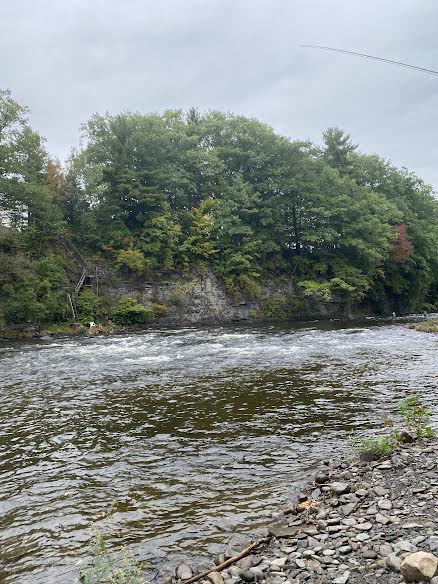
I spent some time on a river in upstate NY fishing with my Dad a few weeks ago and I had some time to think about my choice - I was able to draw some metaphors out of the experience. Music is like a river flowing underground and musicians draw from this shared flowing source. A good music teacher is like a guide on the river who knows the best spots with beautiful scenery and where the fish like to hang out. They can tell you what kind of instrument to use to draw what you are after out of the river and can refine your form so that you can have the experience you are after. I feel that the best musical mentors in my life have taken time studying how the river flows, where the waters twist and channel, and how the river has changed over the years in their practice. They go to that source every day. That's what pracitce is - going to the source and learning where to cast your line.
Veronza Bowers
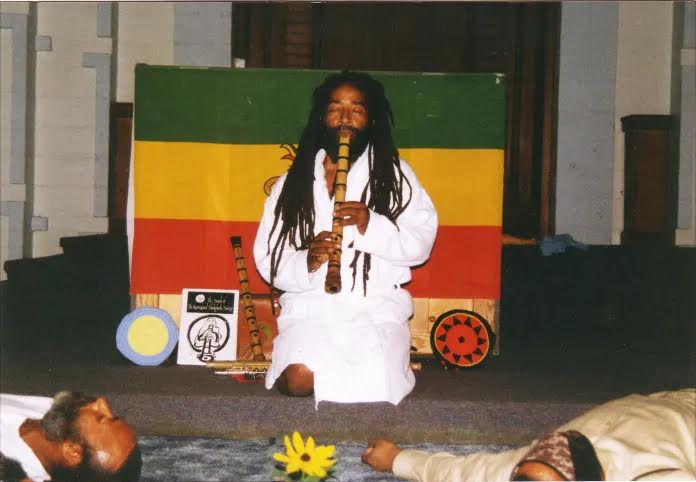
I want to mention a shakuhachi player to everyone reading this. His name is Veronza Bowers and he is an inmate at the Federal Medical Center in Butner, North Carolina. He is a former member of the Black Panther Party incarcerated in federal prison for over 46 years, making him one of the longest-held inmates in U.S. history. Im doing a little copy and paste from this website that was set up for him recently by shakuhachi elder Monty Levinson.
In 1973, Veronza was convicted in the murder of a U.S. Park Ranger on the word of two government informers, both of whom received reduced sentences for other crimes by the Federal prosecutor's office. There were no eye-witnesses and no evidence independent of these informants to link him to the crime. At his trial, Veronza offered alibi testimony which was not credited by the jury. Nor was testimony of two relatives of the informants who insisted that they were lying. The informants had all charges against them in this case dropped and one was given $10,000 by the government according to the prosecutor's post-sentencing report. Veronza has consistently proclaimed his innocence of the crime he never committed — even at the expense of having his appeals for parole denied — for which an admission of guilt and contrition is virtually required — he insists on maintaining his innocence.
Veronza plays the shakuhachi, and I'm going to paste a letter he wrote to the international shakuhachi community in 1998 to give greater insight into exactly why and how he is able to practice this discipline in his current situation.
27 yrs 313 days ADJ aka June 13, 1998
My warmest greetings to each and every one of you gathered here at the Festival to celebrate the ever-expanding world of shakuhachi - a world with no boundaries.
i can only dream of what it must feel like to be amongst so many people whose lives are touched in as many different ways by the powerful beauty that is of shakuhachi. i would love to be here in this moment of sharing. Unfortunately, i am in my 28th year of imprisonment as a political prisoner in a land where government officials claim that no political prisoners exist.
"I am an invisible man. . . . I am a man of substance, of flesh and bone, fiber and liquids - and I might even be said to possess a mind. I am invisible, understand, simply because people refuse to see me."
- Ralph Ellison, The Invisible Man
Well, i exist. Over 150 of us exist. And i still dream.
It is a great honor for me to be a part of the World Shakuhachi Festival. As in the Way of the Komuso, i am here with you without being here. If you are willing to listen to my utterings, I'd like to share these thoughts with you.
Life is full of contradictions. Nay, life itself is a contradiction, teetering as it does between itself and the ultimate fulfillment of itself, i.e. death. All contradictions are forever seeking resolution. Most of you probably have never heard of a recent bill passed by Congress and carried into effect by the Federal Bureau of Prisons. As a result of this new law, we federal prisoners are no longer allowed to purchase or own any personal musical instruments or electronic equipment, except a harmonica. (This is only one of many provisions in this draconian measure that affect us adversely in many other ways.) Those of us who have been in prison awhile, especially the musicians with personal instruments, raised a ruckus. The Bureau provided us with a "grandfather clause" which allows for ownership of personal instruments until broken or in need of repair at which time the instrument must be disposed of. Upon transfer to another institution, the new laws reads, "no instruments, except a harmonica, will be allowed."
After nearly 28 years in maximum security prisons, i was recently transferred to a medium security institution in Coleman, Florida. When i found out about the transfer, the thought of having to part with my three Tai Hei Shakuhachi was absolutely unthinkable! After all, how does one accept the forced removal of a loved one from one's life? How does one respond to another who tells you to inhale, but does not allow you to exhale? Blowing shakuhachi, like life itself, is a continuous inhale . . . exhale. Because of a little man sitting on Capitol Hill, completely divorced from the realities of life on this side of prison walls, it seemed that i would be made to wait indefinitely to exhale.
i am a firm believer in the time-tested proposition that "the solution to any problem (if there is a solution at all) lies within the problem itself. Here it was, time rapidly approaching, for me to be transferred to a lower level Federal Correctional Institution for the first time in all my years at maximum security penitentiaries. I was being moved to a better environment, closer to family and friends, with a better chance for parole. Things were finally looking up for me, yet I was feeling as if my very heart was being torn from my bosom. i meditated, pondered, analyzed and fretted, but no solution to my malady would come. There was no means to appeal as in this place: policy is policy is policy. Then I received a little postcard from my dear friend Monty Levenson. On the front of this card was a picture of two komuso with baskets on their heads, both blowing shakuhachi. On the reverse of the card were the words: "Two Komuso: Priest of Emptiness & Nothingness." i thumbtacked the picture of the two komuso to the small bulletin board on the wall of my cell.
One evening, about two weeks later, as I sat looking at the komuso, the solution struck into my consciousness like a bolt of lightening. "Emptiness & Nothingness!" i immediately mailed out most of my personal property: books, letters, clothes, etc. i stripped my personal property down to virtually nothing, so that when i reported to the authorities at "Receiving & Discharge" to turn over my belongings for shipping to my next destination, there would be nothing to disallow.
When my turn came to report to R&D for transfer, i had with me only a ceremonial medicine bundle wrapped in red cloth, five books on healing, two crowns ("baskets") that i wear to cover my long dreadlocks and . . . my three Tai Hei shakuhachi. "We don't know if they will allow you to keep those flutes when you get to where you're going, Bowers," i was told. "All i ask is to be allowed to take them with me and find out when i get there," i responded.
I arrived in Florida long before my "property". i spoke with one of the Associate Wardens and explained about my Tai Hei shakuhachi and that i hoped to start a meditation class in which they would be used. By chance, this warden remembered me from a previous meeting we had twenty years earlier and authorized me to have the flutes given to me on the spot and allow me to use them in forthcoming mediation sessions.
Now i spend as much time as possible outside my cell on the recreation yard. i had forgotten what it is like to be outside at night watching a moon so full and hanging so low i can reach up and almost touch her. i can't blow my shakuhachi in the building where I'm housed like i used to while at the maximum security prison in Terre Haute, Indiana. But, i take them out of their cases everyday and blow. In the beginning i was simply being careful not to make too much sound. Now my blowing is purposeful blowing with no sound except an occasional whisper of breath sliding across ebony and silver and bamboo. Each blow fills me so deeply in my soul. It is a feeling of the songs in my heart being sung to my very soul. It is the vibrations of Emptiness & Nothingness fulfilling its own self.
The lessons of shakuhachi are never-ending. i am thankful, honored and humbled at being invited to be a part of this Festival honoring all of you and all that is shakuhachi. In closing, i give honor to the spaces between the notes.
Veronza
I hope that some of you reading this will go to his website and make a donation to him. I would like to see this person out of Federal Prison.
Tea Features of The Month
From Chado: Sasaki Sanmi
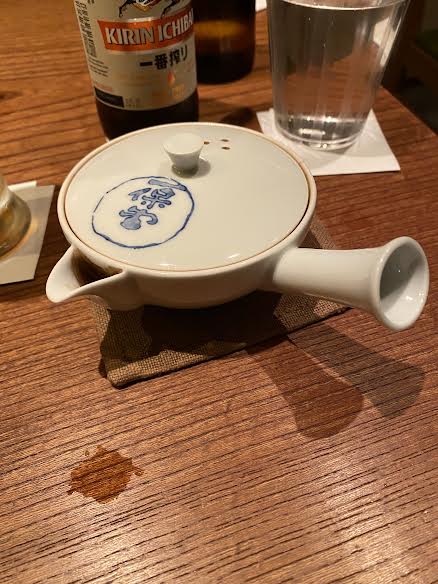
Sanmi says that "October is the easiest month to arrange for tea; it abounds in natural features of the season, and since the use of most of them cannot be extended beyond this month, it is not simple to decide which to choose: insects, fulling blocks, harvest time, hagi (bush clover), or dew."
For October the event that I like the most is called Basho-ki. It's October 12th and is the anniversary of the legendary haiku poet, Matsuo Basho. The old masters of Japanese arts share similar qualities. Tea in the traditional way and haiku by Basho share the same spirit and it's prudent as a tea lover to connect the two.
Aki no Yo is a seasonal phrase this month. Taking advantage of a long evening (yo) or midnight (yowa) you might hold hango no chaji (tea ceremony after a meal).
秋の夜を・書よみ居れば・離れ家に・茶を挽く音の・かそかに聞ゆ
Aki no yo o/ fumi yomi-oreba/ hanare-ya ni
cha o hiku oto no / kasokani kikoyu
While reading a book one autumn night, I hear faintly, tea being ground in an outbuilding.
(Shiki)
In closing here is a rendition of Sagari-ha no Kyoku I recorded on the fly in my living room yesterday. The title mans "The Song of Falling Leaves" - just a casual recording here. If you listen please enjoy.