
Keep your paths clear
Summary: Clear paths allow everyone to access your space.
Who it helps: People who use wheelchairs, walkers, crutches, and other mobility devices.
Additional benefits: Clear paths also help caregivers pushing strollers, anyone carrying or wheeling luggage or goods, seniors, and distracted walkers.
When you have many things, it might be tempting to place them in an unused hallway, space, or room. But those hallways and pathways need to remain clear. Why? So that people who use wheelchairs and other mobility devices can travel to and from a space. When these hallways are blocked with obstructions like boxes, furniture, or other items, people may be unable to go where they need to go.
Keep your hallways and pathways clear so that there is a path that is 36 inches/92 centimeters wide at all times. Avoid placing objects in these paths, because they can prevent people from entering or leaving a space.
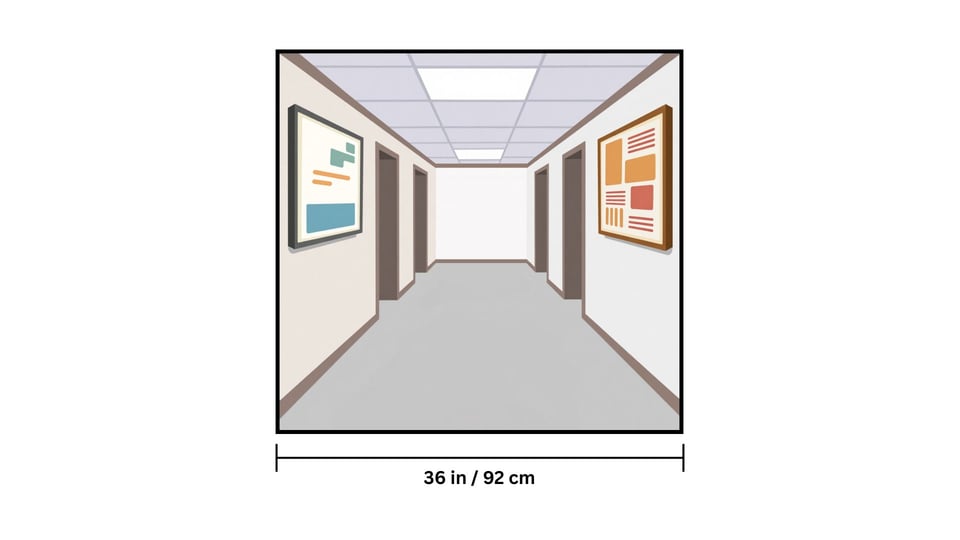
Here are a few things you can do to make sure your hallways and pathways are available for everyone to use.
Start at your entrance, and move through your space. Move any boxes, crates, carts, tables, chairs, etc. that are blocking pathways. Pay special attention to service counters, restrooms, and other areas people need to use.
Remove any items stored or placed in extra space near doors. Those spaces near doors allow wheelchair users to open or close the door. These spaces need to be clear for that purpose.
You can simulate the amount of space someone needs with a yardstick. Hold the stick level to the floor at waist level or lower and walk around. If you can keep it level and move to important locations without bumping the yardstick, you likely have wheelchair accessible pathways. While this is a bit of a simplification, it is a good first step to supporting wheelchair navigation.