Closed Form logo

Closed Form

Archives
Subscribe

Closed Form Closed Form

Archive

Propositions on social murder 3: social murder itself

This is the last part of my notes from Socialism Conference, based on my reading of a chapter in a volume that Nate contributed to (Nate! What's the citation? I will add it!) Apologies for the slow pace lately, just got a lot of plates in the air!

The polemic of "social murder" is important -- we are supposed to understand the fact of this ongoing death baked in to the function of capitalism as natural, certainly as apolitical. Theorizing social murder as a tendency inherent to capitalist economic and social relations -- as I've said many times before, this is a good theoretical foundation for public health, which really lacks one. (Public health explainer edition of this newsletter coming soon.)

This theory of social murder has two facets, per Nate: 1) "All versions of capitalism will tend to generate depoliticized killing of working class people" and 2) a theory of the capitalist state. This helps understand how capitalism generates both harm and social conflict (which may, as has been the case during COVID, take the form of a moral economy struggle). Thinking about moral economies around COVID and social murder; there was a lot of outrage over the conduct of Tyson plant managers during the early weeks of the pandemic. This outrage was channeled into some legal cases, not into general social unrest; for many and certainly for Tyson it's good enough to go back to the "normal" state of affairs for the company, which is absolutely brutal -- Tyson has been cited multiple times since 2020 for on-site employee deaths, hazardous chemical discharges, and more.

#5
October 2, 2023
Read more

The kingdom of heaven is where?!

Usually, when I wake up, I involve myself in a grueling morning routine for something like two hours. This routine includes caring for my neurotic cats, cleaning up any mess from the night before, making coffee and ideally also food, and, most importantly, yoga. I've done yoga off and on for more than ten years, and over the last few years of the pandemic I developed a home hatha practice that I really like. Still, in my eagerness to spend some more time out of the house recently, I've gone back to a few in-person yoga classes at studios. I do like to do this. The sociality, the particularly yoga-studio smell of incense and feet, and being forced to do poses and sequences that I myself didn't select are all very good for me. Studio yoga, though, has seemed to change since I was last in it.

Now, this could be a product simply of secular trends in my life. I'm older and have more money than I did before. When I first started, I did yoga at donation-based studios where I was taught by average-looking middle aged people, many of them in recovery, who wanted to share the benefits of yoga asana and spiritual practice with others. I'm sure there were lots of studios full of tight-assed ponytailed blonde women in expensive gear somewhere, but that wasn't my world.

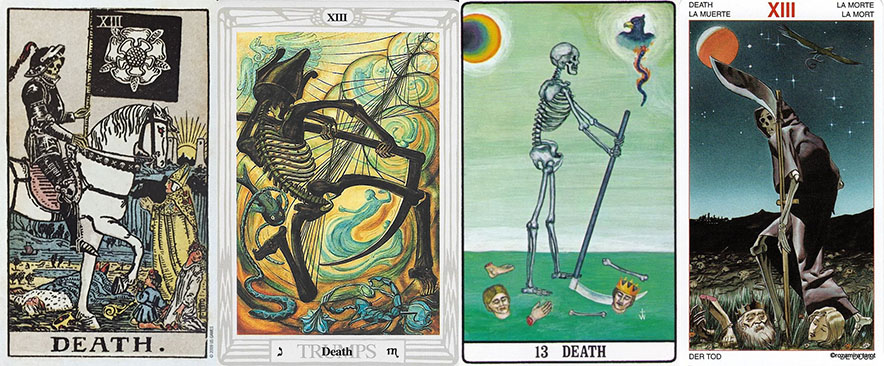
Fast forward to 2023. After an emotional period of personal turmoil, returning to in-person yoga classes that are full of crystals and tarot cards and affirmations felt good. It feels good to hear things like that I should "follow my dreams" and "stand in my power" and "take up space" or "live my truth" or whatever. (This is a genuine howl of supplication, though: please stop making me listen to coffee shop ho-hey music in yoga classes. It's undignified.) Anyhow, I didn't think much of this until one day, I was in the shower listening to Brown Acid Trippin’ on NTS Radio (as I am wont to do) and was pleasantly surprised to hear a deep cut I actually recognized, “Good for the Gander” by Hot Chocolate. The refrain: “What’s good for the gander / gotta be good for the goose.” Being in the shower, the crucible of deep and innovative thinking in today’s relentless world, my mind wandered a bit; I dwelled on the question, in particular, of when, under what conditions, is what’s good for the gander also good for the goose? How do we understand the relationship between a part (the goose) and the whole (the gander)? 

As an American, particularly an American scientist, everything I have learned and internalized, consciously and unconsciously, has instilled an reductionist, individualist mindset in me -- these are the tracks my thoughts run on. The geese are all distinct individuals, the gander then being nothing more than the simple aggregate of some number of individual geese. Is what’s good for the gander good for the individual goose? It depends on what the “what” is, and how representative the gander is, leading us to down a silly path (dare I say... a goose chase) that forks off into goose participatory democracy, goose demcent, goose Borda. How can an individual goose “make their voice heard,” what is the consensus rule for deciding who wins and who loses?

#4
September 28, 2023
Read more

Propositions on social murder 2: moral economy

Not a super fun or funny or engaging post, but what follows is the second part (of three) of my notes for Socialism conference. The ideas of moral economy and moral economy struggles I have found super generative in thinking about COVID. Maybe you will too!  A few more things are coming this week, including (I hope) the last part of these notes, some more fun stuff, and a (fun! Of course! Always fun!) explainer about public health and what it actually is.  

To start, from a chapter Nate wrote called “The Reproduction of Moral Economies in Capitalism: Reading Thompson Structurally”:

The Marxist historian and polemicist EP Thompson is often remembered today for having offered an analysis of what he termed the ‘moral economy’ in a series of writings from 1963 to 1971. For Thompson, a moral economy was a food market in which each commodity is bought and sold at a ‘fair price’ instead of a ‘free price’ determined purely by the market. In this way, the ‘moral economy’ subordinates profit-making to the need to avoid hunger and ultimately starvation. Thompson’s offered his analysis of the ‘moral economy’ in the context of a broader examination of popular riots in eighteenth-century England. He referred to these riots as a ‘pattern of social protest’ consisting of specific ‘forms of [collective] action’ which‘ depended upon a particular set of social relations’. ‘Moral economy’ was his term for that‘ particular set of social relations’, and in his view it offered ordinary people ideological resources for transgressing prevailing social norms and engaging in acts of collective resistance. For Thompson, a ‘moral economy’ existed, and it facilitated collective action, when it was generally believed that food prices should be regulated to ensure subsistence, when legal authorities were widely believed to enforce this norm, and when certain food vendors violated the expectations the norm generated by pricing bread and other food too high. Under these conditions, the popular classes could step in to punish seller for departing from general norms relating to bread pricing, thus enforcing the ‘moral economy’ as the background normative condition for food markets. 

#3
September 25, 2023
Read more

Hamlet soliloquizing at a crystal skull

I just read through Nate's posts and laughed so hard, holy shit. Then I got insecure and freaked out because my first post on here was so serious and unpleasurable. While I'm not a people pleaser, it's still important that you all know that I'm actually SUPER CHILL AND FUNNY, ACTUALLY.

I kid. I have no idea what I'm actually like and this isn't the place to speculate. I do have a bit of a special place in my heart for the brisk rap of a ruler on a desk top of it all, though. I like to be taught in a manner that is unflinching, arbitrarily exacting, and emotionally withholding, which maybe means that I am some kind of people pleaser after all, albeit in a very fussy way.

The coolest thing about rigor, or structure, or constraint or whatever you want to call it is that learning how to work with it also teaches you how to transcend it in a really emotionally satisfying way. If I were a filmmaker, I'd make a grueling experimental opus about Jacob Bernoulli or how the Annunaki were extraterrestrials or something like that. But since I'm (mercifully) an epidemiologist, this kind of level-up takes me instead into the realm of epistemology in the abstract. How do we know what we know, how valid or reliable are our ways of knowing -- certainly compared to each other, but also as faithful representations of some kind of absolute reality? It's a fucking mess in there, but it's also pretty fun -- the history of humans trying to know stuff like a junk shop with the most amazing and demented and cruel and outlandish and kind and avaricious and essentially human bullshit all cluttered together. Some fucking 11th century wizard obsessively boiling his own piss is, however indirectly, responsible for our entire way of life. You can thank him for your scented candles and moisture-wicking polymers.

That's funny even though the subject matter of actual human experience is often... not. We are really stressed out monkeys, trapped in a reality that we are fundamentally limited in our ability to comprehend and have no choice but to deal with. We can't know ultimate reality, we are in a profound state of ignorance, and we let our thinking minds delude us about all sorts of things, most specifically that they are us. So far, so good. The mind is infinite, but even mystical experiences are still experiences... right? Are our minds imprisoned in the squishy physical architecture of our brains? Whether we're photons of divine light, parcels of the Godhead, or simply selfish monkeys who think we're doing something, can the mind transcend its physical limitations? Fucking woo woo enough for you yet? I told you this shit was funny. (Just kidding, I jacked in to Source earlier -- by which I mean I banged 400 mg of Benadryl and thumb wrestled with the Hat Man -- and it told me with solemn seriousness to tell you to subscribe to my fucking newsletter.)

#2
September 22, 2023
Read more

Propositions on social murder 1: general themes

What follows is a lightly edited (for clarity, readability, etc.) version of notes I prepared in advance of the session that Nate and I both participated in at this year’s Socialism Conference called How Capitalism Kills: Social Murder and COVID-19. This was the second in a five-session track on health, disability, and capital organized by the Death Panel podcast, of which I am a cohost and which you should subscribe to.

I have broken the original notes document up into three shorter posts for ease of reading. Posts two and three will be linked here as soon as I post them!

Propositions on social murder broadly – what is it and how do we understand it?

• Engels's definition, from The Condition of the Working Class in England (1845):

#1
September 19, 2023
Read more
  Newer archives
Powered by Buttondown, the easiest way to start and grow your newsletter.