Closed Form logo

Closed Form

Archives
Subscribe

Closed Form

Archive

Social murder and social meaning

Just a quick introductory note -- this is an essay that is no longer going to appear in the publication it was scheduled to. Everything is fine, but since it's now sort of Vogelfrei (winking emoji) I'm just posting it here for all of your enjoyment. The idea is for this to be one essay of a series of length n summarizing a Marxist theoretical intervention that isn't explicitly related to the pandemic, and trying to use it to "think with" the concept of social murder we are developing. I hope you like it.


Thanks to the catastrophic experience of the COVID pandemic, Friedrich Engels’s obscure concept of “social murder” has enjoyed a small renaissance in some corners of the academic literature and discourse since 2020.  Ironically, as COVID has made the concept of social murder – which my colleague Nate Holdren describes as the “depoliticized mass killing of working people” and which Engels described as the death produced by placing working people in the position where they can neither survive the conditions of work, nor survive on the wages paid, nor survive without wages altogether – more popular, its inner mechanisms have become more and more depoliticized, mystified, and naturalized. Currently, provisional weekly death counts associated with COVID-19 – if you know where to find them – suggest lower levels of death relative to previous years. We are still, however, almost totally in the dark about transmission of the virus, and therefore of the general level of risk, following dismantling of testing infrastructure and associated reporting systems. 

The highly unequal distribution of COVID mortality drew a bright, highlighter-yellow line under other health inequalities in the United States, and further suggests some kind of structural explanation rather than the individualist-lifestyle attitudes many of us hold about health. But leftists and leftist formations in the US have largely not investigated this from a structural perspective, nor made any concerted attempt to develop a coherent analysis of the biggest mass death event in living memory. A recent book by Søren Mau, Mute Compulsion: A Marxist Theory of the Economic Power of Capital while not intended to address or make sense of either social murder generally or COVID specifically, is promising in terms of developing an actionable critical analysis of public health, the pandemic, and the catastrophically failed pandemic response. Specifically, Mau’s concept of economic power can help us make sense of several episodes in the pandemic in ways that mainstream explanations, focused on the cultural and ideological correlates of individuals, simply can’t. 

#13
December 14, 2023
Read more

Machines of loving grace

Recently on Death Panel we did a loose episode on AI in healthcare, inspired by the class action lawsuit against UnitedHealth over the use of its algorithmic tool "nH Predict" to deny coverage for post-acute care. What follows are my notes for that episode -- so if you listen to it, some of the points will be familiar. These really are just scratchy notes, not organized or edited at all, but perhaps interesting as I/we continue to develop critiques of so-called "artificial intelligence."

Distinct strands:

  1. The Life and Death Committee

  2. Overdose risk scoring/prescription drug monitoring programs (PDMPs)

  3. UnitedHealth scandal and lawsuit

  4. Other developments in health care

  5. "The Gospel," the IDF's AI-enabled target-production system

What unites all of these?

#12
December 12, 2023
Read more

If I knew the way, I would take you home

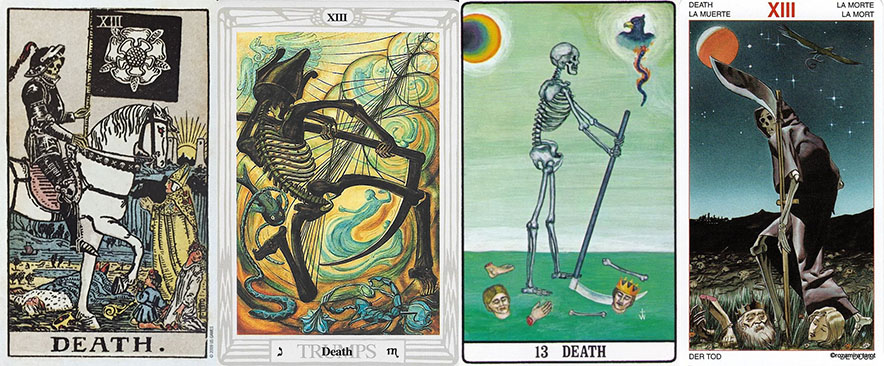
Source. Four Tarot cards, all depicting Trump XIII, Death. From left to right, Rider Waite Smith, Thoth, the Jungian Tarot, and Initiatory Tarot of the Golden Dawn. Not my Jessica Dore ass!

I've been listening to too much Ram Dass, because every time I think about sitting down to actually finish writing this, I immediately think "yeah, but who am I?" And then I don't do it. Everybody thinks they're somebody doing something. What the hell does it matter?

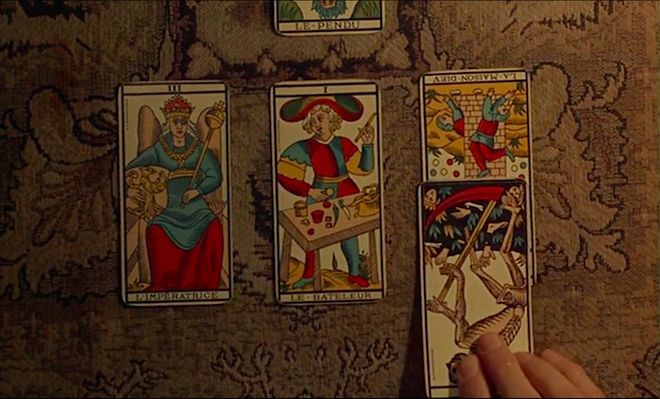
My birthday just happened, late in October. (I am now 35, apparently my "karmic year.") This makes me a Scorpio; according to the system of astrological correspondences in the tarot, my birth card is Death. Death can signify literal, biological death, as it seems to in the opening sequence of Cléo from 5 to 7.

Marseille tarot!
#11
November 18, 2023
Read more

Left analyses of COVID

As I have been working on a draft of something else, I have been thinking a lot about the explanations available to us for sense- and meaning-making around the pandemic. I have also been preoccupied with the uses of different kinds of explanation, and the difference between explanation and analysis (or in Jungian parlance -- apparently -- explaining vs. explaining away). Most of the explanations and narratives coming from the right about COVID are obviously bogus, and I won't spend time on them here. The explanations coming from the center, the great American ideological mainstream, are also obviously bogus; interesting in the social function they are supposed to serve, to exculpate and even celebrate the Biden administration, but little else.

What I'm most interested is leftist accounts of why the COVID response was such a disaster. These can be explanations, intended to make meaning by fitting the events of COVID into some narrative structure, or analyses, intended to illuminate the what and why of the pandemic and see what can be excavated in practical terms to inform organizing strategy. For our purposes (as... a left), I think the analytic approach is the right one. I have spent too much of my own life on dissipative tactical campaigns that are completely misinformed and misguided as to the nature of the problem. For example, I was once directed to canvass every house, without a plan, in a given municipality to get signatures in support of Medicare for All to take to the mayor of the municipality to try to get a resolution in support of Medicare for All passed. Needless to say, this is bad strategy and I did not comply.

The stakes are similar with COVID. Insofar as the left overall even seems interested in learning what can be learned from the most cataclysmic event in recent memory, the thinking seems to always redound to vagueness and hand-waving about "capitalism," or if the speaker wants to show their sophistication, "racial capitalism," "interconnectedness," "organizing." (Something I've just realized, we use "redound" on the podcast all the time but we're using it in a very archaic sense). One explanation that is superficially convincing and not altogether wrong -- and one that I myself have devoted substantial time to developing -- is that what happened with COVID is essentially a replay of the events covered in the book Merchants of Doubt. For anyone who isn't familiar, this is about how scientists allied with industry groups to distort the process of knowledge production in order to create false debate and the illusion of uncertainty on matters of public import, principally the dangers of tobacco smoking and climate change.

This was, undoubtedly, part of it. A very interesting part at that, specifically for what analysis of something like the Great Barrington Declaration can teach us about science under capitalism, how knowledge is made and disseminated. As a global explanation for the disaster of the pandemic response, though, I'm not sure it's comprehensive enough.

#10
November 10, 2023
Read more

A wan "howdy" from groover's paradise

Greetings! Happy Halloween! And apologies for the long interval between newsletters. Further apologies that this one isn't a very heavy hitter. The reason for all of it is that I was out of town for a week recently -- ever since the pandemic started, traveling is even more vexing and exhausting than it was before, and I'm fighting for my fucking life here trying to get back on some kind of track. So it goes. I went to Austin, TX, because I used to live there and haven't been back since pre-pandemic.

It's wild. Austin is a really interesting place. Here's what I noticed on this trip:

  • The volume and color contrast on everything are just sort of turned up. More people, more stuff, more kinetic energy...

  • More franchises. Austin is blessed with an incredible "food scene," and many, many, many of the restaurants that were new and just opening up when I lived there have mushroomed into gigantic franchise operations. We went to a Ramen Tatsu-Ya at South Congress and Slaughter (this is very far south and remote from the original location in north Austin), one of several franchises. There are a couple of Easy Tigers too. Just a few things I noticed.

  • Ugly box condos everywhere. Even more of them. Austin is, if not the ugly apartment complex capital of the world, a close second or third to Dallas or Houston. Previously quiet and "undeveloped" areas are now covered with big, hideous condo developments.

  • Everyone and everything I care about/am involved in has spun out to farther and farther reaches of the city -- the center is too molten, nobody can afford to even get close to it anymore. So that when I was there I was renting in Travis Heights and on the east side, but now most people are far south or far north. (North/South is the most important Austin axis, because the city has not invested at all in adapting infrastructure to the feverishly growing population, and traffic on the two major north-south arteries, Mopac and I-35, gets even more unmanageable and disruptive every year).

  • In spite of this and all the other horrible, intractable problems with the city that I haven't even mentioned... it's still fucking great. The vibes are still good. The food is still amazing. Time moves differently. The "porch culture" is still welcoming and fun. (The downside: it's VERY easy to be an alcoholic, to drink constantly... everyone's always socializing, the weather's always beautiful. Catch me in the morning.)

  • There are a lot more burners at Barking Springs. (Barton Springs is a huge pool, fed by a spring and unchlorinated, ice cold all the time, a very classic Austin institution... Barking Springs is the portion of the pool that isn't "included" in Barton Springs, separated by just some concrete and a fence, so called because you can do everything you're not allowed to do at Barton Springs -- drink, smoke, sit in an innertube with your dogs and your burner husband all day long, whatever).

  • Everyone, and I mean everyone, in Austin is a VVITCH these days. But only a brave minority (of which I am proudly a part) are witchy enough to go out and about in a city full of incredibly hot people with unshaven, unsightly stubbly legs.

The sociology stuff is all well and good. I'm no urban studies person. What's important to me is I stayed with my best friend from when I lived there, a woman I haven't spoken much to since I moved. A classic millenial tale, our lives simply knocked us spinning in different directions for awhile. Hard to describe the special feeling of being "back" in an older episode of life, but as a different person -- that's kind of what these long friendships are, at the end of the day, I guess. This friend is blessed with a big, echt-Austin constellation of girlfriends, one of whom was staying at the house with us a mere 12 hours or so after breaking through on DMT. Time moves differently, more leisurely, in Austin ("where adults go to retire," as my dad, an erstwhile but longtime Austin resident, puts it), and she and I had a lot of 1:1 time to talk ("integrate" as they say) and our conversations kept coming back to the same idea. The real thing, the important thing, is connection. Is it ever anything else?

#9
November 1, 2023
Read more

I'm the operator with my pocket calculator 🤖

Remember Co-Star? The algorithmic astrology app? (My Co-Star horoscope today: "You don't need to catalog everything you think." Well, you're not the boss of me.) A typical headline from late 2019, from Vogue: "Meet the astrology app that's intriguing millenials everywhere." From the article,

The app’s proprietary AI technology takes data from the publicly accessible Jet Propulsion Laboratory to map out the position of the planets. The team, which consists of 10 people, has writers who translate the astrological data into thoughtful daily horoscopes and push notifications.

Public data, proprietary algorithm. It's a common enough scenario, and an interesting one. What does it really mean to encode the esoteric knowledge of astrology practice -- in this case, the knowledge of the relative positions of planets -- in a mathematical algorithm that a tech company owns?

This is basically the question addressed in the first half of The Eye of the Master, a "social history of artificial intelligence" by Matteo Pasquinelli. (I got a galley copy of this book from a Verso pal I met at the conference in September, but Google informs me it actually came out yesterday!) It's definitely "a choice" to begin a social history of AI from the industrial revolution in England, and to start with a close reading of Marx's writings on machinery in the Grundrisse and Capital. I think it's a choice that makes sense. As Pasquinelli argues, pace Marx and Charles Babbage, science isn't the inventor of technology -- labor, or rather the division of labor, is. This did not make sense to me for the first few chapters of the book, to be quite honest, but I think it's a valuable insight and I'm going to try to explain why.

#8
October 11, 2023
Read more

Autumn playlist

Today is a bit of a failure to launch for me so I'm using this newsletter to construct a short playlist out of things that aren't available on streaming (to my knowledge). I really feel that music has a seasonal dimension. Springsteen for example: Darkness on the Edge of Town is a summer record, The River is for the dead of winter. Don't ask me to explain this. This morning was the first day that really felt autumnal; misty, a little rainy, cool, the leaves starting to go yellow and red.

The Bob Seger System - Lucifer

Bob Seger is our dad rock. Springsteen is for the east coast, Neil Young for the west, but Bob Seger is from Detroit. Pittsburgh isn't the Midwest, but Detroit is probably spiritually the most similar city. (Some autumn trivia, Pittsburgh and Detroit are the only cities in the USA where the night before Halloween is routinely called "devil's night.") If you only know Bob Seger from the Chevy commercials (WHOOOAA-OHH, LIKE A ROCK!) then you should be aware that Bob Seger fucking slaps. His earlier output with the Bob Seger System is particularly good -- a little more punk, a little more heavy psych, a little less classic rock.

#7
October 6, 2023
Read more

Therborn 1: ideology, subjectivity, angel numbers

I finished my first pass through Göran Therborn's The Ideology of Power and the Power of Ideology (1980) recently (this is a Nate recommendation, thank you Nate!) and what follows are some brief notes about the introduction to the (very short) book.

First, a few notes about the project and how Therborn posits it to the reader:

The main concern of this essay is the operation of ideology in the organization, maintenance, and transformation of power in society.

Ideology is not, Therborn argues, either consciousness or symbolic language; rather, partially extending Althusser's argument in "Ideology and Ideological State Apparatuses," Therborn identifies ideological work (done by a text, a speech, etc.) as work that "operates in the formation and transformation of human subjectivity." This follows closely to one sense of the analysis of ideology in Marx (it is "the medium through which men make their history as conscious actors") and completely breaks with another (ideology as "false consciousness," false belief).

#6
October 5, 2023
Read more

Propositions on social murder 3: social murder itself

This is the last part of my notes from Socialism Conference, based on my reading of a chapter in a volume that Nate contributed to (Nate! What's the citation? I will add it!) Apologies for the slow pace lately, just got a lot of plates in the air!

The polemic of "social murder" is important -- we are supposed to understand the fact of this ongoing death baked in to the function of capitalism as natural, certainly as apolitical. Theorizing social murder as a tendency inherent to capitalist economic and social relations -- as I've said many times before, this is a good theoretical foundation for public health, which really lacks one. (Public health explainer edition of this newsletter coming soon.)

This theory of social murder has two facets, per Nate: 1) "All versions of capitalism will tend to generate depoliticized killing of working class people" and 2) a theory of the capitalist state. This helps understand how capitalism generates both harm and social conflict (which may, as has been the case during COVID, take the form of a moral economy struggle). Thinking about moral economies around COVID and social murder; there was a lot of outrage over the conduct of Tyson plant managers during the early weeks of the pandemic. This outrage was channeled into some legal cases, not into general social unrest; for many and certainly for Tyson it's good enough to go back to the "normal" state of affairs for the company, which is absolutely brutal -- Tyson has been cited multiple times since 2020 for on-site employee deaths, hazardous chemical discharges, and more.

#5
October 2, 2023
Read more

The kingdom of heaven is where?!

Usually, when I wake up, I involve myself in a grueling morning routine for something like two hours. This routine includes caring for my neurotic cats, cleaning up any mess from the night before, making coffee and ideally also food, and, most importantly, yoga. I've done yoga off and on for more than ten years, and over the last few years of the pandemic I developed a home hatha practice that I really like. Still, in my eagerness to spend some more time out of the house recently, I've gone back to a few in-person yoga classes at studios. I do like to do this. The sociality, the particularly yoga-studio smell of incense and feet, and being forced to do poses and sequences that I myself didn't select are all very good for me. Studio yoga, though, has seemed to change since I was last in it.

Now, this could be a product simply of secular trends in my life. I'm older and have more money than I did before. When I first started, I did yoga at donation-based studios where I was taught by average-looking middle aged people, many of them in recovery, who wanted to share the benefits of yoga asana and spiritual practice with others. I'm sure there were lots of studios full of tight-assed ponytailed blonde women in expensive gear somewhere, but that wasn't my world.

Fast forward to 2023. After an emotional period of personal turmoil, returning to in-person yoga classes that are full of crystals and tarot cards and affirmations felt good. It feels good to hear things like that I should "follow my dreams" and "stand in my power" and "take up space" or "live my truth" or whatever. (This is a genuine howl of supplication, though: please stop making me listen to coffee shop ho-hey music in yoga classes. It's undignified.) Anyhow, I didn't think much of this until one day, I was in the shower listening to Brown Acid Trippin’ on NTS Radio (as I am wont to do) and was pleasantly surprised to hear a deep cut I actually recognized, “Good for the Gander” by Hot Chocolate. The refrain: “What’s good for the gander / gotta be good for the goose.” Being in the shower, the crucible of deep and innovative thinking in today’s relentless world, my mind wandered a bit; I dwelled on the question, in particular, of when, under what conditions, is what’s good for the gander also good for the goose? How do we understand the relationship between a part (the goose) and the whole (the gander)? 

As an American, particularly an American scientist, everything I have learned and internalized, consciously and unconsciously, has instilled an reductionist, individualist mindset in me -- these are the tracks my thoughts run on. The geese are all distinct individuals, the gander then being nothing more than the simple aggregate of some number of individual geese. Is what’s good for the gander good for the individual goose? It depends on what the “what” is, and how representative the gander is, leading us to down a silly path (dare I say... a goose chase) that forks off into goose participatory democracy, goose demcent, goose Borda. How can an individual goose “make their voice heard,” what is the consensus rule for deciding who wins and who loses?

#4
September 28, 2023
Read more

Propositions on social murder 2: moral economy

Not a super fun or funny or engaging post, but what follows is the second part (of three) of my notes for Socialism conference. The ideas of moral economy and moral economy struggles I have found super generative in thinking about COVID. Maybe you will too!  A few more things are coming this week, including (I hope) the last part of these notes, some more fun stuff, and a (fun! Of course! Always fun!) explainer about public health and what it actually is.  

To start, from a chapter Nate wrote called “The Reproduction of Moral Economies in Capitalism: Reading Thompson Structurally”:

The Marxist historian and polemicist EP Thompson is often remembered today for having offered an analysis of what he termed the ‘moral economy’ in a series of writings from 1963 to 1971. For Thompson, a moral economy was a food market in which each commodity is bought and sold at a ‘fair price’ instead of a ‘free price’ determined purely by the market. In this way, the ‘moral economy’ subordinates profit-making to the need to avoid hunger and ultimately starvation. Thompson’s offered his analysis of the ‘moral economy’ in the context of a broader examination of popular riots in eighteenth-century England. He referred to these riots as a ‘pattern of social protest’ consisting of specific ‘forms of [collective] action’ which‘ depended upon a particular set of social relations’. ‘Moral economy’ was his term for that‘ particular set of social relations’, and in his view it offered ordinary people ideological resources for transgressing prevailing social norms and engaging in acts of collective resistance. For Thompson, a ‘moral economy’ existed, and it facilitated collective action, when it was generally believed that food prices should be regulated to ensure subsistence, when legal authorities were widely believed to enforce this norm, and when certain food vendors violated the expectations the norm generated by pricing bread and other food too high. Under these conditions, the popular classes could step in to punish seller for departing from general norms relating to bread pricing, thus enforcing the ‘moral economy’ as the background normative condition for food markets. 

#3
September 25, 2023
Read more

Hamlet soliloquizing at a crystal skull

I just read through Nate's posts and laughed so hard, holy shit. Then I got insecure and freaked out because my first post on here was so serious and unpleasurable. While I'm not a people pleaser, it's still important that you all know that I'm actually SUPER CHILL AND FUNNY, ACTUALLY.

I kid. I have no idea what I'm actually like and this isn't the place to speculate. I do have a bit of a special place in my heart for the brisk rap of a ruler on a desk top of it all, though. I like to be taught in a manner that is unflinching, arbitrarily exacting, and emotionally withholding, which maybe means that I am some kind of people pleaser after all, albeit in a very fussy way.

The coolest thing about rigor, or structure, or constraint or whatever you want to call it is that learning how to work with it also teaches you how to transcend it in a really emotionally satisfying way. If I were a filmmaker, I'd make a grueling experimental opus about Jacob Bernoulli or how the Annunaki were extraterrestrials or something like that. But since I'm (mercifully) an epidemiologist, this kind of level-up takes me instead into the realm of epistemology in the abstract. How do we know what we know, how valid or reliable are our ways of knowing -- certainly compared to each other, but also as faithful representations of some kind of absolute reality? It's a fucking mess in there, but it's also pretty fun -- the history of humans trying to know stuff like a junk shop with the most amazing and demented and cruel and outlandish and kind and avaricious and essentially human bullshit all cluttered together. Some fucking 11th century wizard obsessively boiling his own piss is, however indirectly, responsible for our entire way of life. You can thank him for your scented candles and moisture-wicking polymers.

That's funny even though the subject matter of actual human experience is often... not. We are really stressed out monkeys, trapped in a reality that we are fundamentally limited in our ability to comprehend and have no choice but to deal with. We can't know ultimate reality, we are in a profound state of ignorance, and we let our thinking minds delude us about all sorts of things, most specifically that they are us. So far, so good. The mind is infinite, but even mystical experiences are still experiences... right? Are our minds imprisoned in the squishy physical architecture of our brains? Whether we're photons of divine light, parcels of the Godhead, or simply selfish monkeys who think we're doing something, can the mind transcend its physical limitations? Fucking woo woo enough for you yet? I told you this shit was funny. (Just kidding, I jacked in to Source earlier -- by which I mean I banged 400 mg of Benadryl and thumb wrestled with the Hat Man -- and it told me with solemn seriousness to tell you to subscribe to my fucking newsletter.)

#2
September 22, 2023
Read more

Propositions on social murder 1: general themes

What follows is a lightly edited (for clarity, readability, etc.) version of notes I prepared in advance of the session that Nate and I both participated in at this year’s Socialism Conference called How Capitalism Kills: Social Murder and COVID-19. This was the second in a five-session track on health, disability, and capital organized by the Death Panel podcast, of which I am a cohost and which you should subscribe to.

I have broken the original notes document up into three shorter posts for ease of reading. Posts two and three will be linked here as soon as I post them!

Propositions on social murder broadly – what is it and how do we understand it?

• Engels's definition, from The Condition of the Working Class in England (1845):

#1
September 19, 2023
Read more
  Newer archives
Powered by Buttondown, the easiest way to start and grow your newsletter.