
Plymouth Civic Centre plans and other news (27 Mar 2026)
Plymouth Civic Centre plans revealed, power in Poole, and other news.
On Monday Plymouth City Council confirmed that the planning application for the conversion of the Civic Centre had been submitted. They are now on the planning portal.
Plus other news, events and the like. I’m working on a deep dive and just waiting for a couple of people to come back to me.
Plymouth Civic Centre plans
Plymouth Civic Centre (Hector Stirling with Jellicoe, Ballantyne & Coleridge, 1962) is a rather divisive building. Some people always hated it, others are rather fond of it. I can remember adoring the reflecting pools though the only thing currently floating in them is rubbish. Even before the pandemic normalised home working, the council no longer needed a 12 storey office block in the centre of the city. Plans to demolish it were torn up after it was listed in 2007.
The council moved out in 2015 and sold the buildings to Urban Splash, with rumours its price tag was £1. Urban Splash, who had done much to revive Park Hill in Sheffield, shared its plans in 2018. Their redevelopment of the site stalled, and they sold the building back to the council.
BDP are now working to redevelop the Grade 2 listed building. Their planning application came in this week, and is for
“Conversion to residential apartments (Class C3), education space including ancillary cafe, salon, spa, office (Class F1a), restaurant (Class Eb), part demolition, alterations to elevations including new cladding, new public realm including external bridge and staircase, changes to parking, and associated works.”
BDP have done a lot of pre-application consultation and at first glance the proposal appears to restore some of the original features while bringing the building up to modern environmental spec. The original yellow tiles are still in place on the underside of the butterfly roof, hence the use of a matching bold mustard on the Heritage document. There are also plans to restore and reopen the rooftop pavilion and restaurant, which has me pretty excited. I’m a sucker for a restaurant on top of civic architecture.1
This comes alongside the much touted government investment in the city. That investment, however, stops short of making inner city Plymouth an official new town. The final list of seven new town locations announced this week left Plymouth off.2 It seems likely the housing investment across the city will need to come through other channels if the ambition to restore Devonport as a military shipyard is to happen.
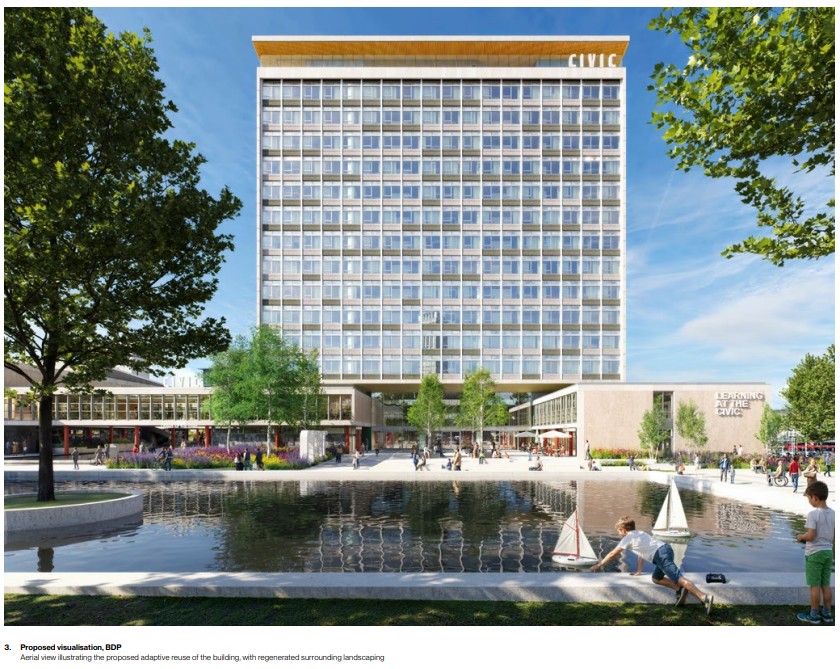
If you want to explore the proposals, including the 64 page Heritage statement, it’s on the Plymouth planning portal. Application number 26/00424/FUL. No obvious deadline for comments to be in by, so I assume it’ll be 15 April (21 days after publication).
The power of Poole
In the 1940s and 1950s, Britain had an ambition to ease energy shortages. Yes, I know. The postwar plan would increase the number of power stations around the country, meeting the rising demand for electricity. Some of the coal or gas fired power stations created then became icons, such as Bankside B (now Tate Modern) and Battersea (finished postwar to prewar designs). Others were demolished after they were decommissioned.
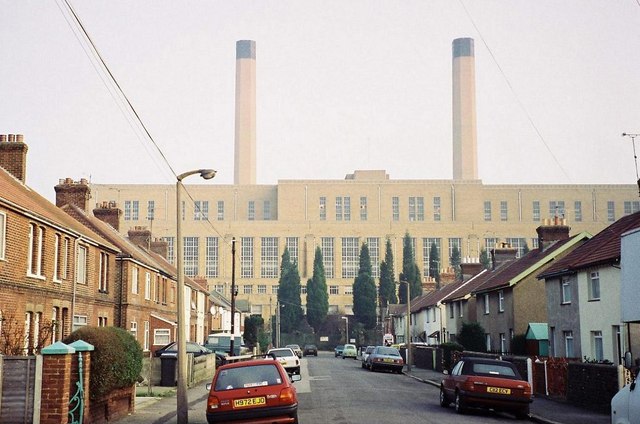
Poole Power Station (Mott, Hay and Anderson, circa 19493) was one such building. In plain brick it sat on reclaimed land until it was demolished in stages from 1993. A crowd of 7,000 people watched its chimneys coming down. The power station was built by the harbour, so that coal could be brought by ship.
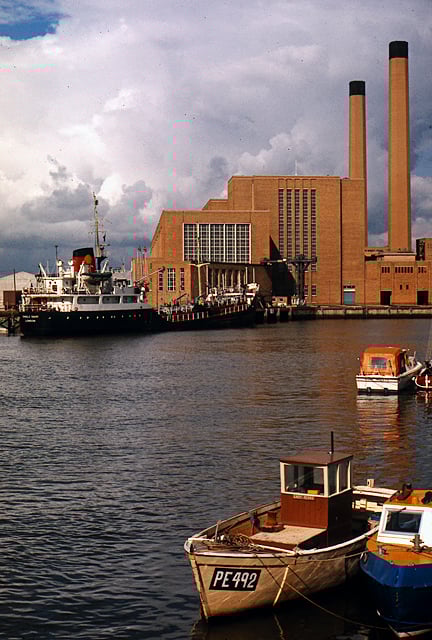
Poole Museum is now running an exhibition about it, and is also looking to collect memories, images and memorabilia. The exhibit, The Power of Poole, is on until August 2026. More details and how to find the museum on their website. (They’re also hosting a touring exhibit of Lucian Freud etchings until June.)
In brief
Moneycentre Plymouth
Home England has bought the Moneycentre (MWT, 1975) in Plymouth. This mid-70s building is one of my favourites as its white tile walls and smoked glass makes it very of its time.
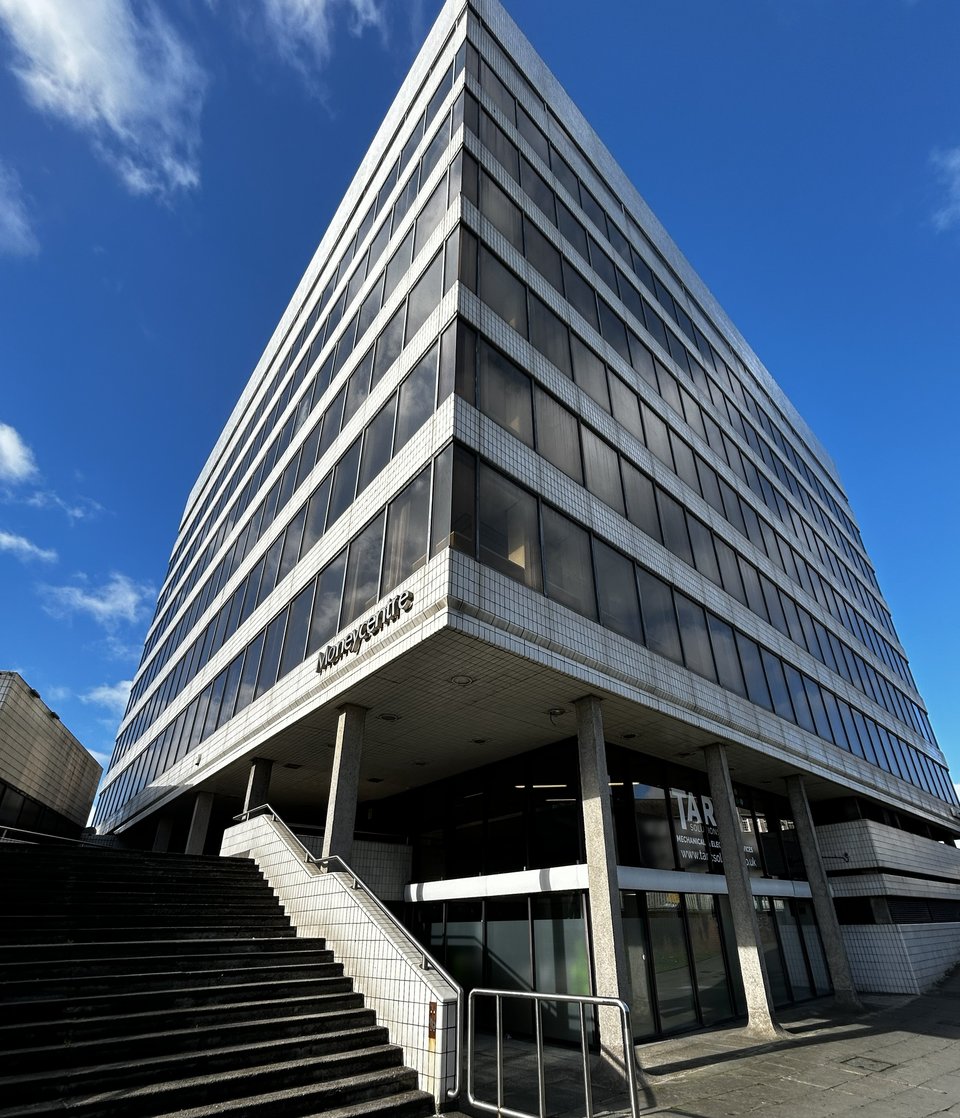
Combined with the other purchases by Homes England in Plymouth city centre, this means a lot of new apartments are due to appear over the next decade. Where the generic 1950s buildings they bought on Armada Way are being demolished, the latest on Moneycentre is only the tatty nightclub will go: the rest will be retained.
Valuing Seaside Heritage
The Seaside Heritage Network’s annual symposium is being held at Saltdean lido in June. The day will examine how seaside heritage contributes to regeneration, tourism, identity and long-term sustainability. It will include an evidence session from the project at Weston-Super-Mare. More details and how to book on the SHN’s website.
If you have an event or news item you think I should know about, you can contact me on Bluesky. If you’ve received this as an email, you can also just hit reply and the email will reach me.
If you’re enjoying this newsletter, feel free to share it with others.
If someone has sent you this, you can subscribe below.
A free sub will get you the weekly field notes and notice that a deep dive has been published.
A paid sub (£4 a month or £30 a year) will unlock the deep dives early, plus occasional bonus content and the warm knowledge that you’re supporting the project.
My ticket for the Fernsehturm Berlin is still stuck to my noticeboard 17 years after we went there for cake. ↩
Tempsford, one of the seven new towns, will be built on the old site of RAF Tempsford which is where Special Operations Executive (SOE) agents departed for Nazi-occupied Europe. This is one of those odd moments where two of my interests collide as I read a lot about women in the SOE. ↩
Mott Hay and Anderson are listed as the engineers in a 1949 Engineer supplement about contracts awarded. If they ring bells, it’s because they also built the Tamar Bridge in 1962. ↩
