
Field Notes: Teignmouth (11 March 2026)
Blow away the winter cobwebs with a walk around Teignmouth in Devon, in a quest for any modernism worth looking at.
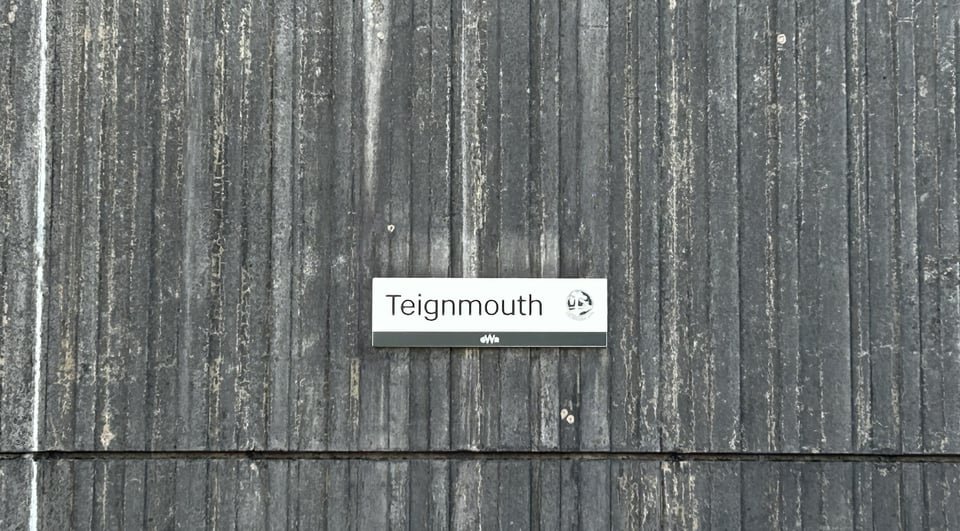
It’s odd what can trigger childhood memories. For me, the shuttered concrete retaining wall at Teignmouth station brings back 1970s holidays to the south west. One year we even actually stayed in Teignmouth, walking its red sandy beaches that stained our white summer clothes pink.
Now the winter’s Biblical rain has finally left us, I went to visit a site in Maidencombe I’m researching. The trip involved changing from a train to a bus at Tinny, so I took the opportunity for a wander about afterwards. Here’s my field notes on it.
Teignmouth is a port town on the south coast of Devon. It sits on the northern bank of the Teign river, with the rather more fancy Shaldon across the estuary. On eastern side, a long beach stretches along to Sprey Point and the giant concrete TEIGNMOUTH sign. I’ve no idea when the sign was cast, but it’s a serif font so I’m not going to dig in now.
At the town end of the beach, the promenade runs along the top of a sea wall. The lower ground behind the promenade is known as the Den. Until the 1930s, this was a fairly empty space of reclaimed marshland. Behind it sits the Georgian assembly rooms and houses. And behind those are the shops, the small terraces of fishing cottages and then, finally, the bypass and the railway. Much of the area immediately by the railway was redeveloped from around 1960 to 1975, creating a cluster of municipal buildings.
The Conservation Area report on the centre of Teignmouth has nothing positive to say about any of its twentieth century buildings. Pevsner remarks “The C20 has not been kind to Teignmouth”, in the introduction to the town.1 And to be honest, there are no standout iconic buildings, but I did find the odd bit of acceptable C20 design amidst the Georgian resort.
Teignmouth Station retaining wall and related infrastructure works (unknown, c1976)
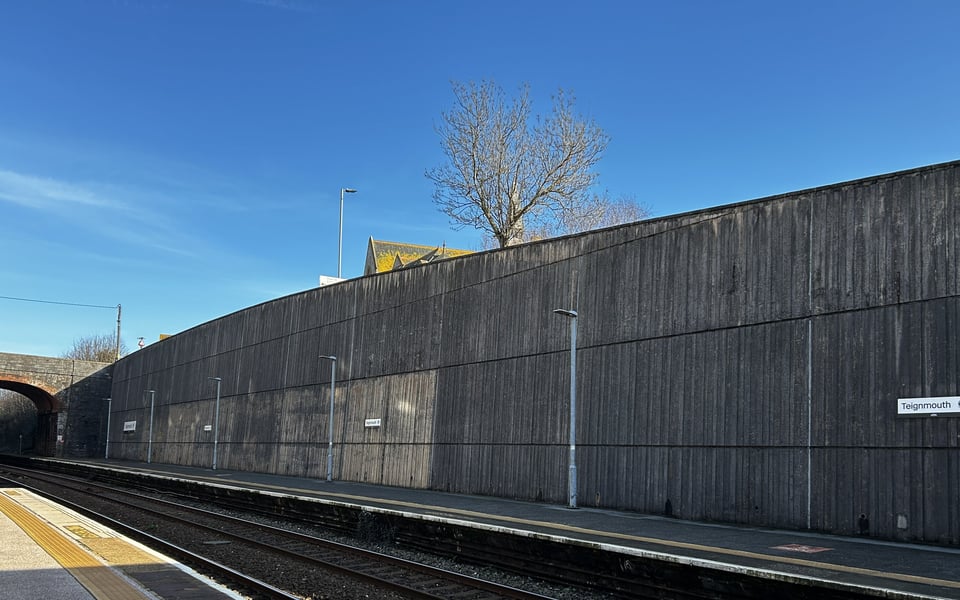
Pleasant is not the word for this, but I find it oddly pleasing, especially how there’s the ghost shadows of old advertising hoardings.
The station’s retaining wall was probably constructed in 1975 or 1976 as part of the work to create a deeply miserable bypass that cuts the bulk of the suburbs off from both the seafront and the town centre. This means most vehicles don’t go through the narrow town centre lanes so once you are across the bypass, you can wander fairly freely.
The official route to town is through some underpasses but for as long as I can remember, everyone instead crosses over the station forecourt and then the bypass. One of the underpasses has had some lovely mosaics added to liven it up.
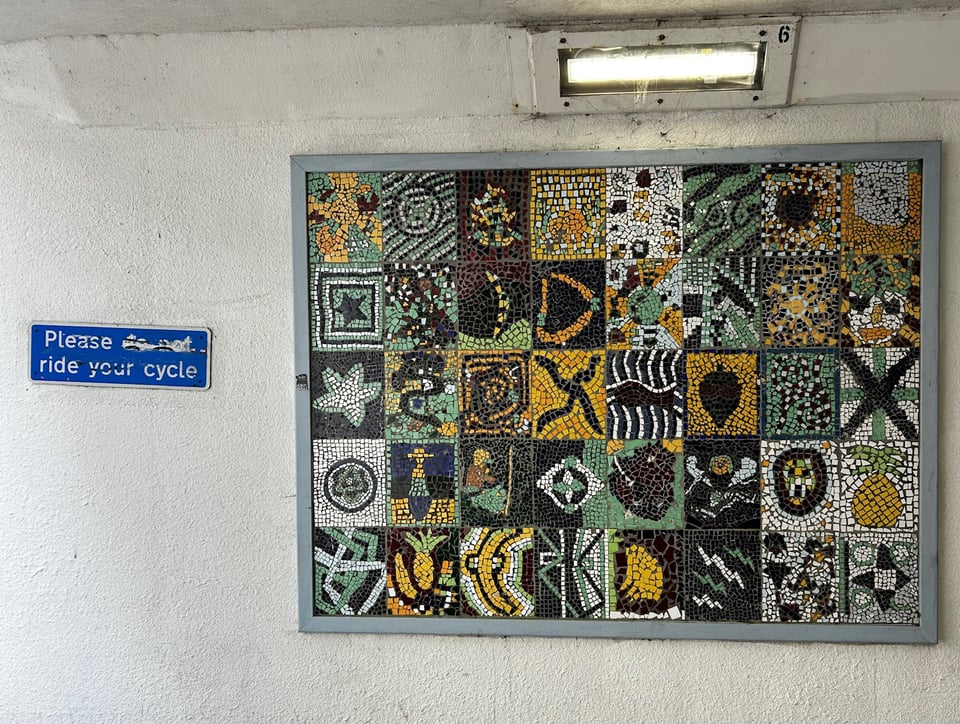
The mosaic underpass connects two 1960s developments. To the north, cut off from the town centre, is Teignmouth Library. To the south is Pellew House and Arcade.
Teignmouth Library (Narracott, Tanner and André, 1973)
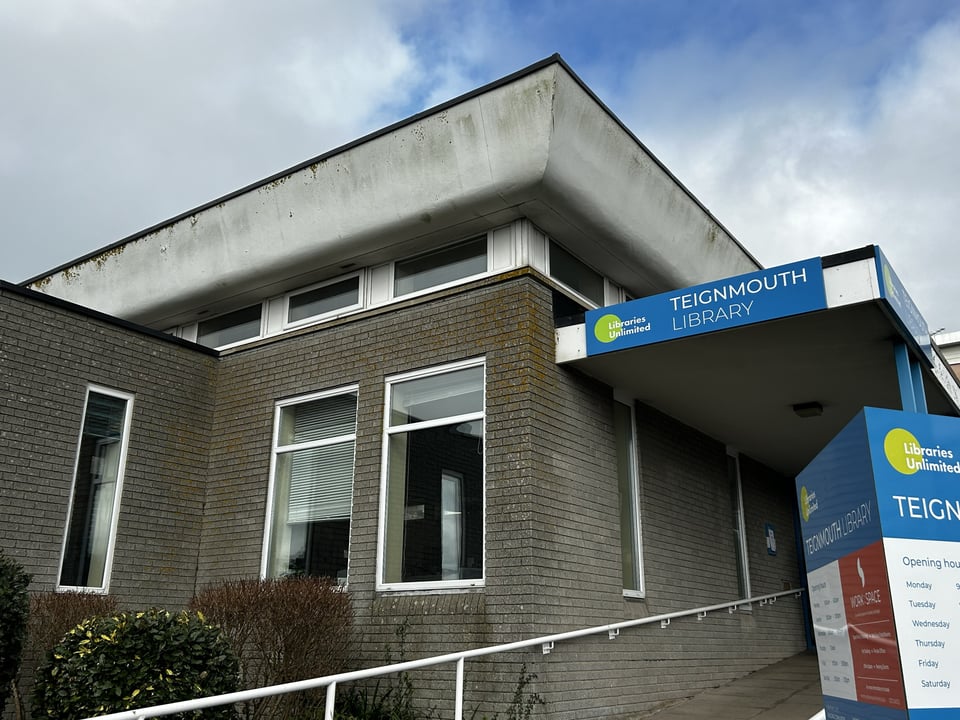
Described in Pevsner as “a brave Corbusian effort on an awkward left-over site”, the construction tender for this building went out in October 1970, with the consultant architects complaining of lack of progress in November 1972 before it finally opened in 1973.2
Narracott, Tanner and André’s best known work may be the Central Church in Torbay, an unabashedly brutalist church along the coast from Teignmouth. Narracott was a local firm, starting as builders in Torbay. By the 1960s they had expanded to become architects, and are still practising in Devon.
Teignmouth Library does not make me think of Corbusier, to be honest.
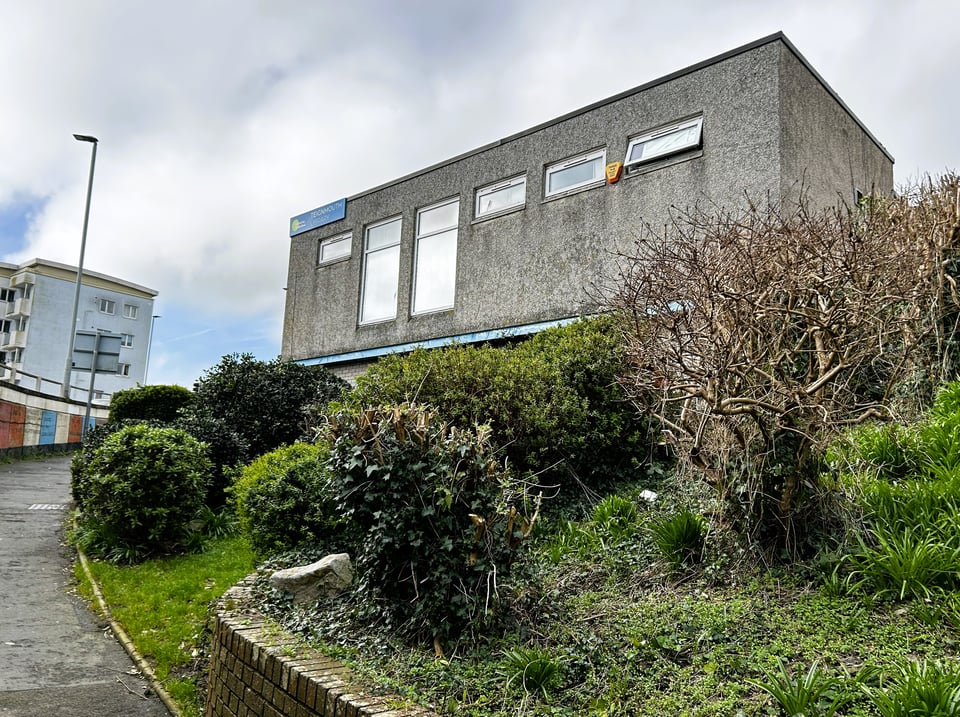
It is somewhat of a fortress, with its angles hidden. Most of its walls are ash-coloured brick, with one a dour grey pebbledash. The white curving soffit of the roof above clerestory windows is the only part that lifts it. It was also closed so I couldn’t go inside.
Pellew House and Arcade (unknown, 1969)
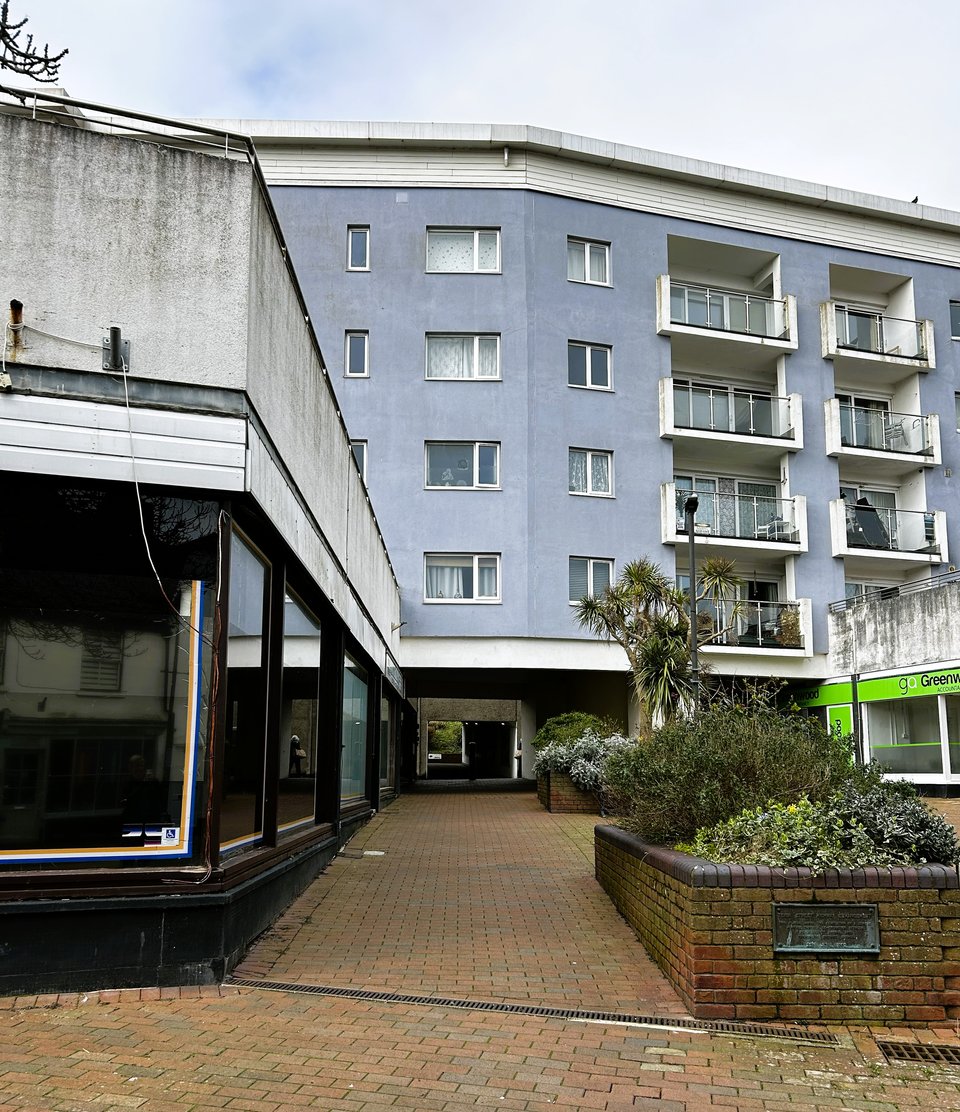
Admiral Edward Pellew, Baron Exmouth of Canonteign, bought Bittern House in Teignmouth in 1812. Bittern House is a late C18 mansion with grounds overlooking the Teign. Pellew House, in contrast, is a basic block of flats over some mostly empty shops with a view of the bypass.
These are part of a wider cluster of 1960s blocks built in this part of town. The tower has a rather nice single storey wing forming part of the arcade, but the retail unit is empty.
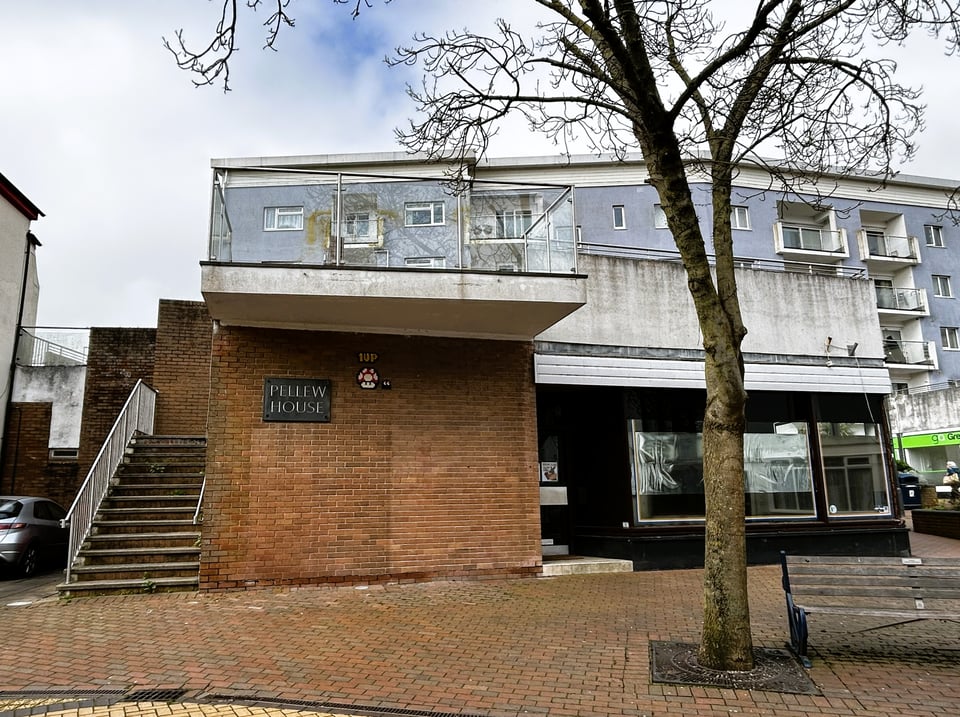
The arcade opened in May 1969, with an advertising feature explaining it was built by the Teignmouth Urban Council. “This quiet arcade also offers everything for the busy housewife. There is plenty of protection from the weather, a large expanse of safe space to leave the pram and numerous seats for a quick rest from carrying heavy shopping around town.”3 Hmm.
Seawall (unknown, 1977)
As with the station, one of my favourite parts of Teignmouth is structural: the seawall beneath the promenade.
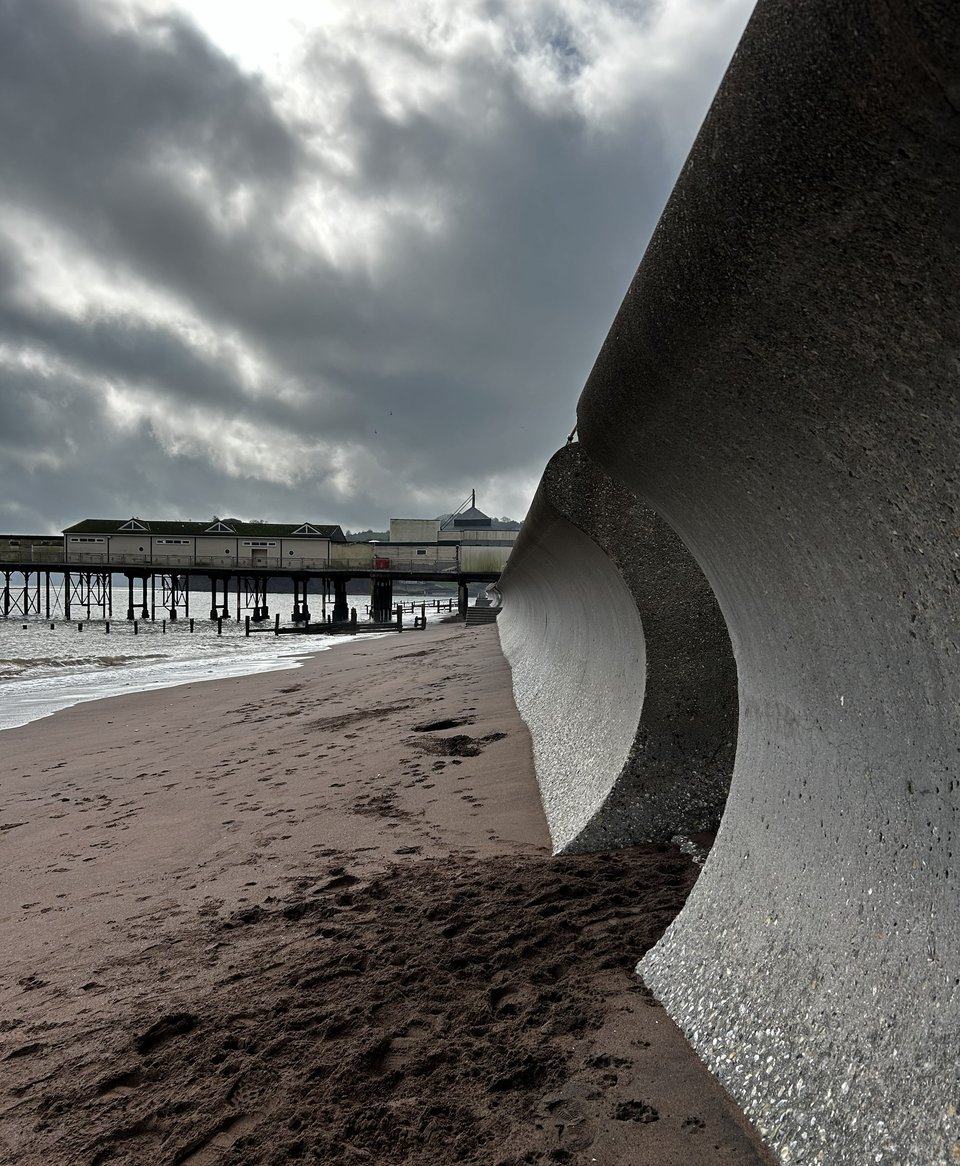
This curving wall has been built and rebuilt multiple times as storms have damaged it. One of the major schemes was completed in 1977, which makes me wonder if we went on holiday partly to look at it.4 The curve has been polished to a shine by the decades of wave action scouring the sand off it.
Above, on the promenade, the storm damage from this winter was evident. The flowerbeds have never looked the same since Storm Emma in 2018, when the salty seawater killed all the plants. Storm Chandra in January this year has flung a lot of debris about as well as taking out the end of the pier.
The “witches’ hats”, two permanent ice-cream kiosks built of heavy wood, feel like they should be from the 1976 rebuild of the promenade.
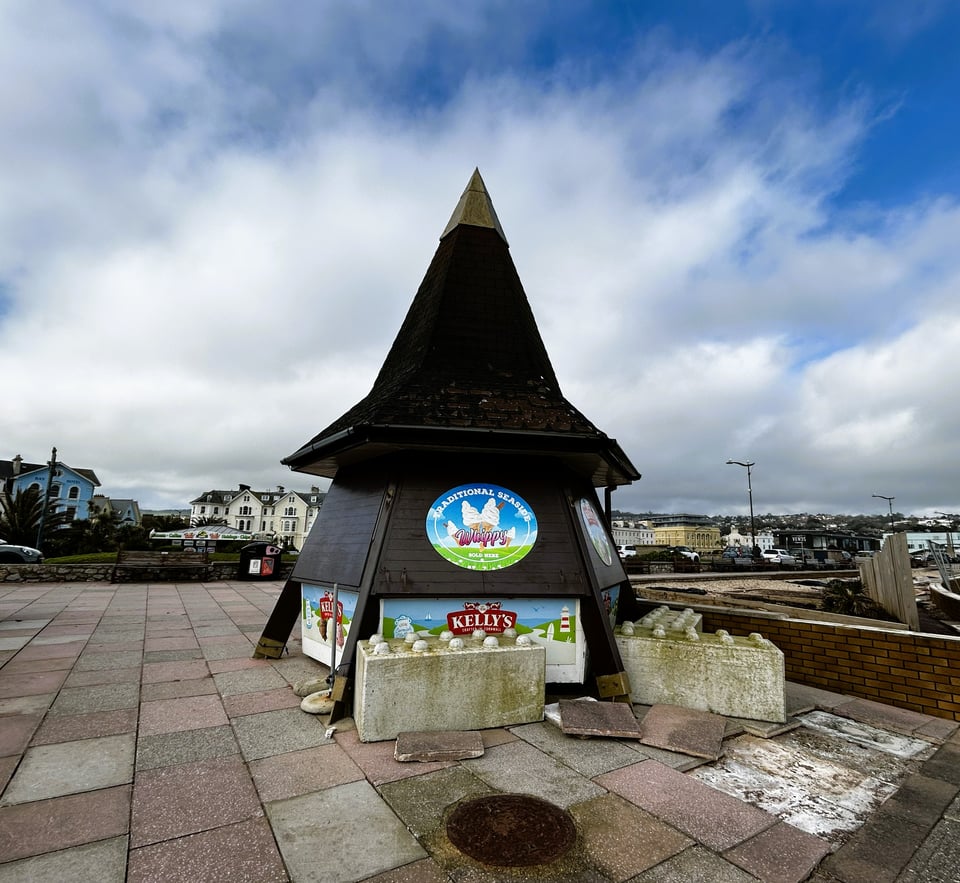
In fact, they are slightly later and date from 1984. This time of year they are boarded up against the storms, but the owner was repainting the picnic benches ready for the start of the season come Easter. I asked about the large concrete ‘Lego’ blocks jammed up against the kiosk. These had been shifted to their current positions by the storms.
It was while I was around here that a flock of gulls tumbled overhead, fighting over their first stolen ice-cream cone of the season.
You can support West Country Modernism by signing up for a paying sub for just £3.50 a month. That’s under 90p a week.
Subscribe (free and paid)Across the sand-covered promenade are more C20 buildings, which the Pevsner guide suggest are a blot on the landscape. These are or were all municipal buildings, owned by Teignbridge Council and leased out. There’s a drop of around 1.5 metres from the promenade to the Den, which means all these buildings have upper and lower ground floors. Since Bridget Cherry’s revision of Pevsner in 1991, there have been changes to the buildings.
The Den Bowling Club / Goldfish Bowl (unknown, 1966)
This building was built in 1960 to replace the 1930s bowling pavilion that had become the Den Theatre.5 The original design had something of a mini airport building to it, with an upper ground floor public sun lounge with views of both the green and the sea. This level was known as ‘the Goldfish Bowl’.
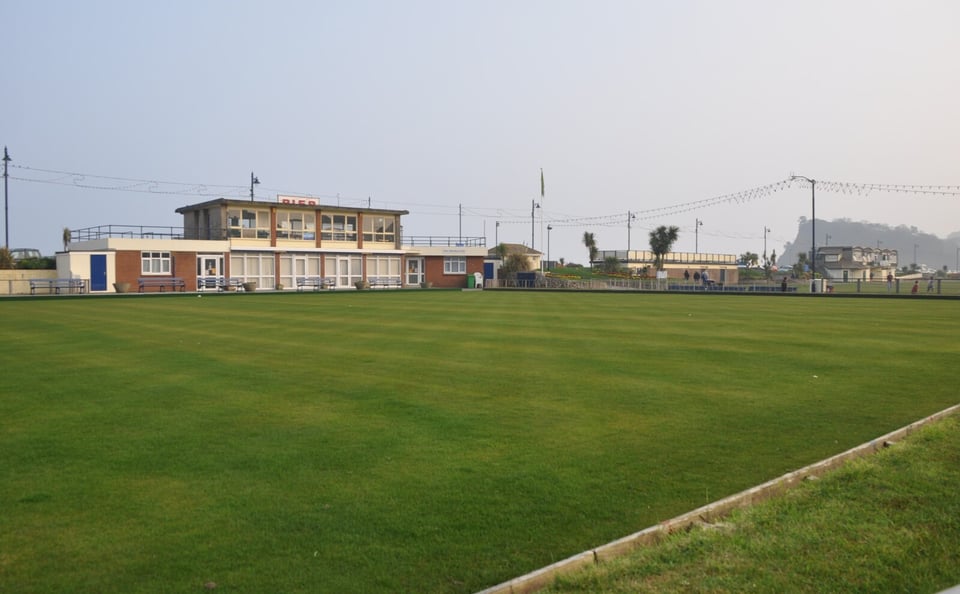
Much of this is now masked by 2019 changes when the council converted the old Goldfish bowl upper ground floor from a storage space into a restaurant, with the old design obscured by grey slatted screens. To the extent that I didn’t realise the 1960s building was still behind it.
On the lower ground floor, the Den bowls club has occupied the building since it opened.
The Carlton Theatre (unknown, 1950s to 1960s), demolished 2015
The Pavilions (LHC, 2016) opened a decade ago, replacing the mid-century Carlton Theatre.
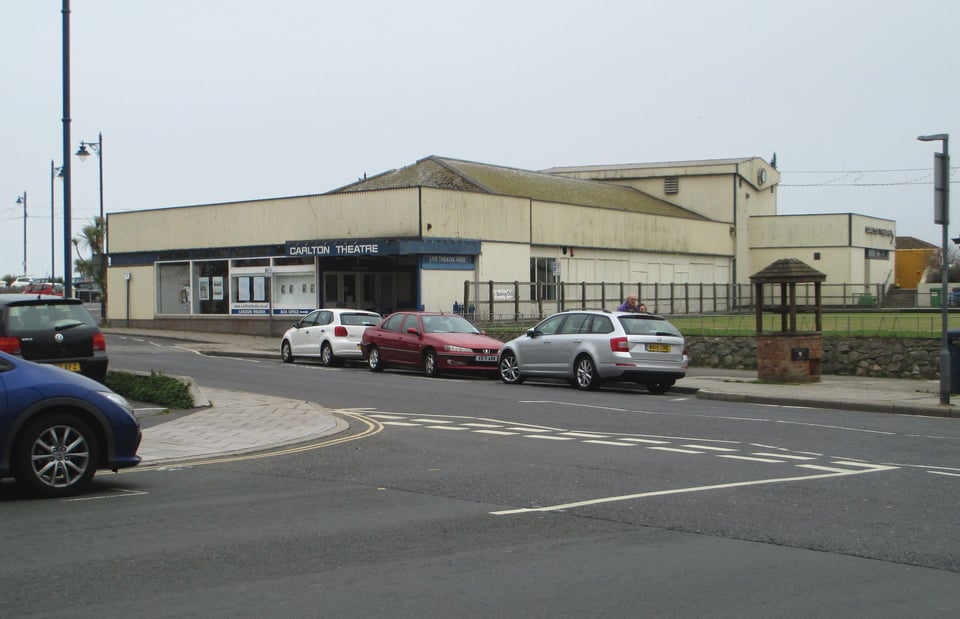
The theatre had been built in a rather piecemeal fashion. In the 1950s, it was listed in The Stage as The Den Pavilion.6 By 1967, the Stage was reporting another expansion and the rebranding as the Carlton, now the new Den bowls pavilion had opened.7 In this photo of it before demolition, you can just see the remains of the 1930s bowling pavilion along its side wall.
Beachcomber Café (unknown, c1950s)
The Beachcomber café was built by the council in the late 1950s and was damaged in a fire in 2017. To the west, facing inland, the lower ground floor has storage rooms and public toilets. This was originally an open colonnade by the lawns of the Den. Above, facing the promenade, the upper ground floor contains a restaurant. The best seats in here are along the beachfront side, where you can watch the sea and the gulls nicking ice-creams off the unwary.
Once my favourite spot for a milkshake and chips off a Formica table, it’s now a rather more fancy place called Venus. Very much in the Loungers style. This is because the council were unwilling to allow the old leaseholders back in after the fire.
As part of rebuilding and refurnishing it, the large picture windows have been restored, and a lot of the clutter has been removed. This means the concrete wave form roof pops rather more. There’s also a properly accessible lift from the promenade.
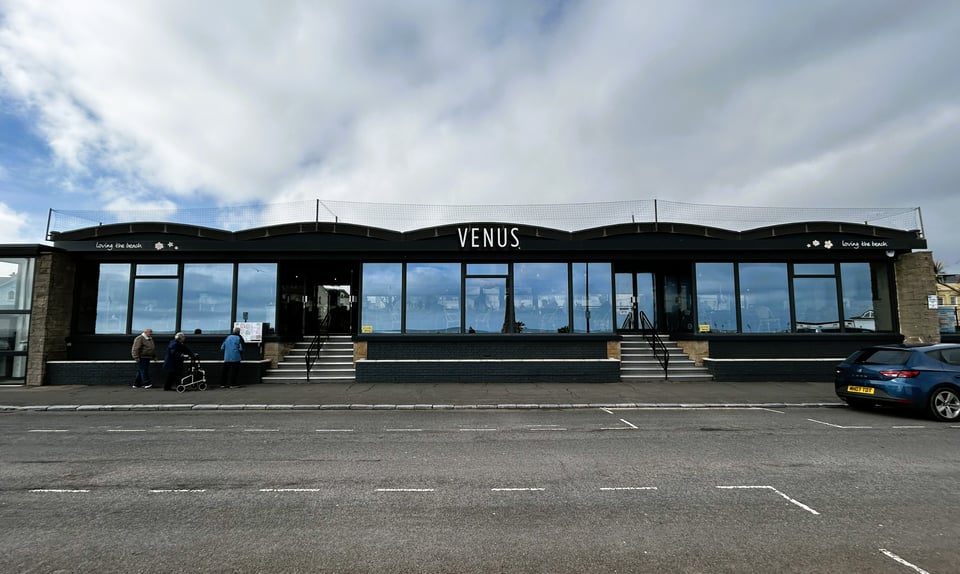
I can’t comment on the food, as I went to Nourish plant café instead and had a nice chat with some regulars there.
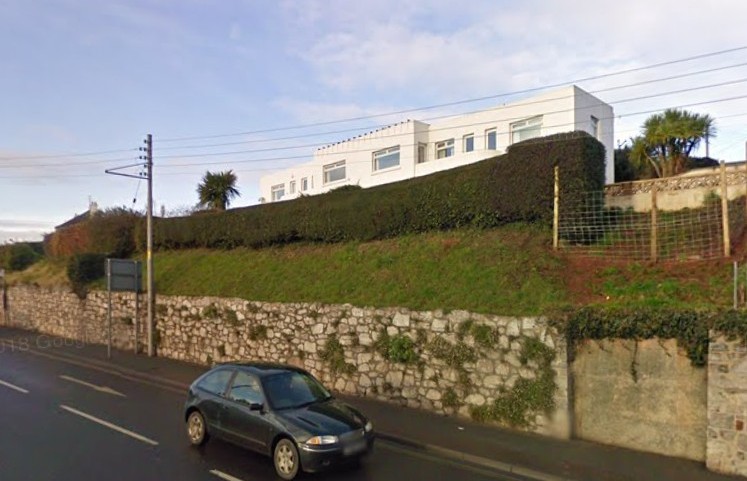
Finally, before heading home, I retraced the bus’s route from Maidencombe. As the bus had come in, I’d spotted a delightful 1930s moderne balcony and parapet over the high hedges. On foot, I found the buildings again: a semi-detached pair of villas. There was, however, no way to see their fronts from the main road, and I wasn’t going to wander into their back gardens. So the best shot I’ve got is this from google maps. You can just see the curved balcony of the nearer villa, and the subtle short fins along the parapet.
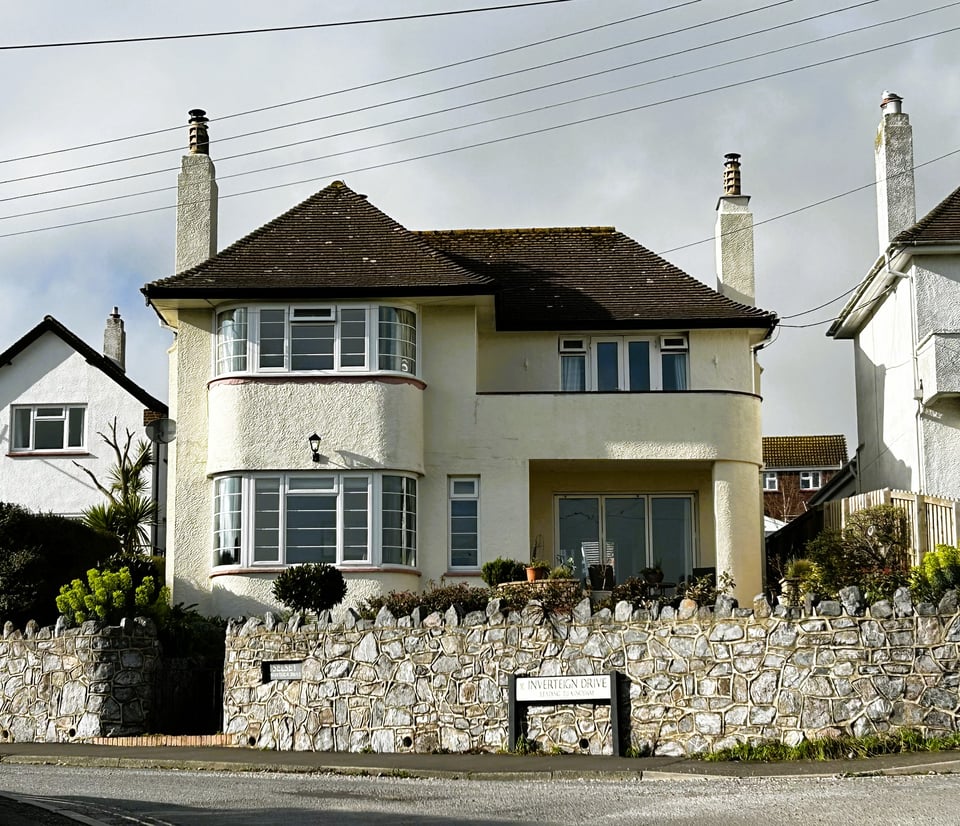
I also noticed this rather nice, detached house with hints of the same era about it. It has the traditional tiled pitched roof, but some lovely, curved bays with what looks like original frames and a balcony over the porch. Selsey will have been part of the expansion of Teignmouth’s suburbs in the 1930s.
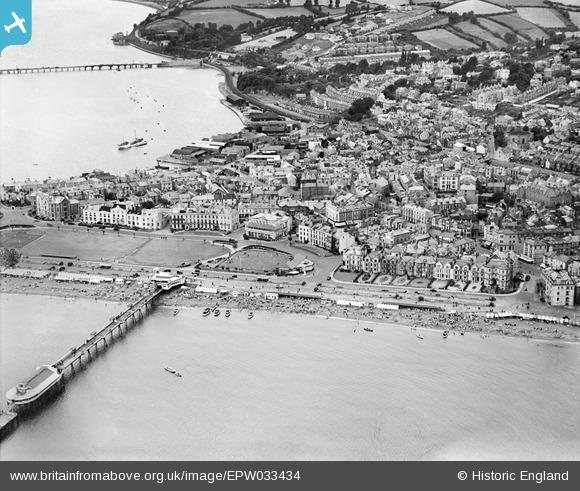
This aerial image shows the Inverteign area was still mostly fields in 1930, as well as how empty the Den beside the prom was.
There’s a temptation to connect these houses with a report in 1936 of “two new houses on the Inverteign estate”.8 The Mill Lane hospital was built just by these houses and opened in 1939. It then suffered a direct hit during bombing raids in WW2, and was rebuilt after the war.
I am familiar with a lot of south Devon’s coastal towns, from living in one and having friends living in others. What strikes me, looking for any good modernism in Teignmouth, is how it didn’t adapt and change in the 1930s. Along the line at Torbay, Torquay was branding itself the English Riviera, but Teignmouth stayed an Edwardian bathing resort. Its postwar rebuilding was not as comprehensive as deliberately bombed cities so the modernism lurks in a handful of buildings for tourists and a central municipal concrete cluster from the 1960s and early 1970s.
When I was on the trip, I’d texted a friend who grew up in Tinny: was there anything amazing I should look out for? No, they replied, then told me about once having a summer job in the witches’ hats.
If you know of an event or news item you think I should know about, you can contact me on Bluesky or by replying to this email.
If you know of a building or development you think deserves a deep dive, please let me know.
If you’re enjoying this newsletter, feel free to share it with others.
If someone has sent you this, you can subscribe below.
A free sub will get you the field notes, news round-up and notice that a deep dive has been published.
A paid sub (£3.50 a month) will unlock the deep dives early, plus occasional bonus content and the warm knowledge that you’re supporting the work.
Sources
Cherry, Nicola and Pevsner, Nikolaus. Buildings of England: Devon (2nd edition, Penguin, 1989) pg 794. ↩
Torbay Express and South Devon Echo, 16 Oct 1970, 29 Nov 1972 and 2 Dec 1972. ↩
Torbay Express and South Devon Echo, 22 May 1969. ↩
If your father is a civil engineer, you tend to spend your childhood holidays looking at infrastructure. ↩
Torbay Express and South Devon Echo, 25 November 1960. ↩
The Stage, 4 April 1957. ↩
The Stage, 29 June 1967. ↩
Torbay Express and South Devon Echo, 4 March 1936 ↩
