UARC Newsletter November
November has been another busy month for the Research Center! We organized two workshops/events (one on data science / The Turing Way, and the other one on the use of our University’s Open Knowledge Repository). We are now working towards the end of the year, with one more workshop coming up!
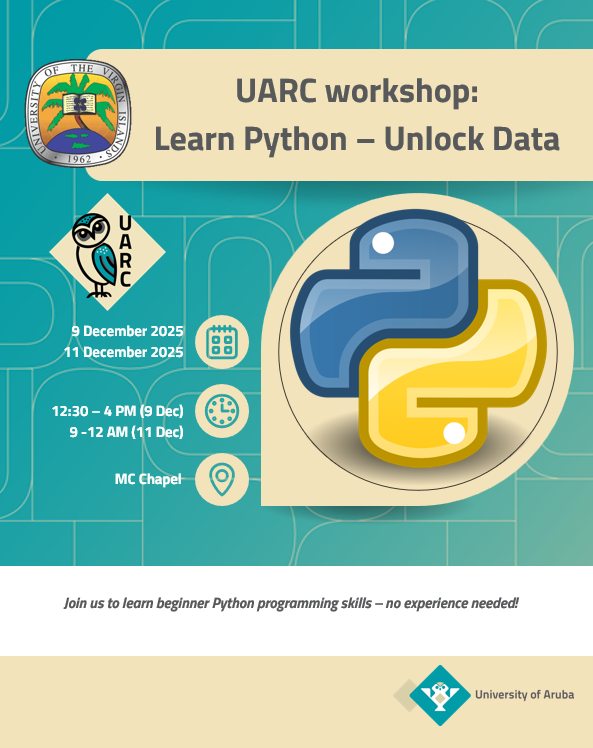
UARC workshop: Python for beginners
Interested in learning how to code and use Python for your data analysis? UARC is working together with the University of the Virgin Islands (Ayishih Bellew) for two Python workshops! Sign up now!
Beginner workshops, no experience or dataset needed!
You will need to bring a laptop, as this is a hands-on workshop
The session on 11 December will build on the session from 9 December
Coffee/tea and some cookies will be provided
Please sign up for further event communications and calendar invites!
When: 9 December (12:30-4:00 PM) + 11 December (9-12 AM)
Where: University of Aruba, MC Chapel
Who: UA staff, students or anyone not from the University that would be interested to attend!
Not sure if this event would be something for you? Check-in with research@ua.aw to ask, or pass by the Research Center in the MC building!
UARC session: Research Writing Sprints
Get your research writing done before the end of the year! We have two more Research Writing Sprints at the Research Center in December:
1 December - 2-4 PM
16 December - 11 AM - 1 PM
No sign up needed, but you can send an email to research@ua.aw to receive calendar invites!
External Events and Trainings
Looking to develop your AI knowledge for the biosciences? Applications are now open for a multi-location Latin America course from 20 – 24 April 2026. Check out all the locations and apply by 28 November. Note that you have a basic level of experience with Python and R to attend!
Join a discussion about geopolitical concerns in the Caribbean region on 11 December (4-5.30 PM - registration needed).
Past UARC event: The Turing Way Book Dash
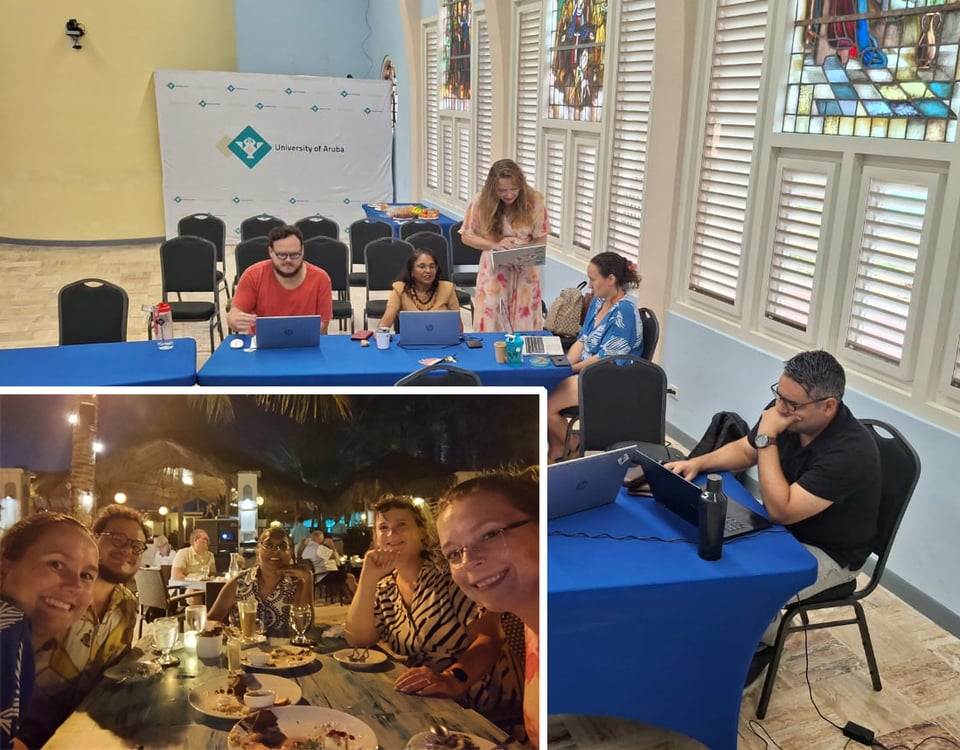
On 11 November UA-ers contributed to The Turing Way: a book and community on reproducible, ethical and inclusive data science. The event was possible thanks to funding from Open Science NL. We gathered together to: find broken links to information on ‘informed consent’ that no longer existed, fix incomplete paragraphs in the chapter on project design, translate The Turing Way information to Papiamento, update the contributor guidelines so that they are more inclusive and we discussed case studies such as dry area farming and qualitative research. We learned a lot about GitHub, and at the end of the day we also discussed completely different things at our dinner! Thanks to all that joined - and hopefully we can make another Aruba Hub happening next year!
Past UARC event: Repository Workshop
On 24 November the Research Center hosted a repeat workshop on ‘Building your Research Profile’. Pauline took the participants through all the steps needed to add their research outputs to the Open Knowledge Repository - which is important as only outputs added to the Repository will be reported in the UA’s annual report! If you have any troubles with adding your research outputs to the repository, send us an email at research@ua.aw or visit us at the Research Center in the MC building!
Research Highlight: Bart & Eric
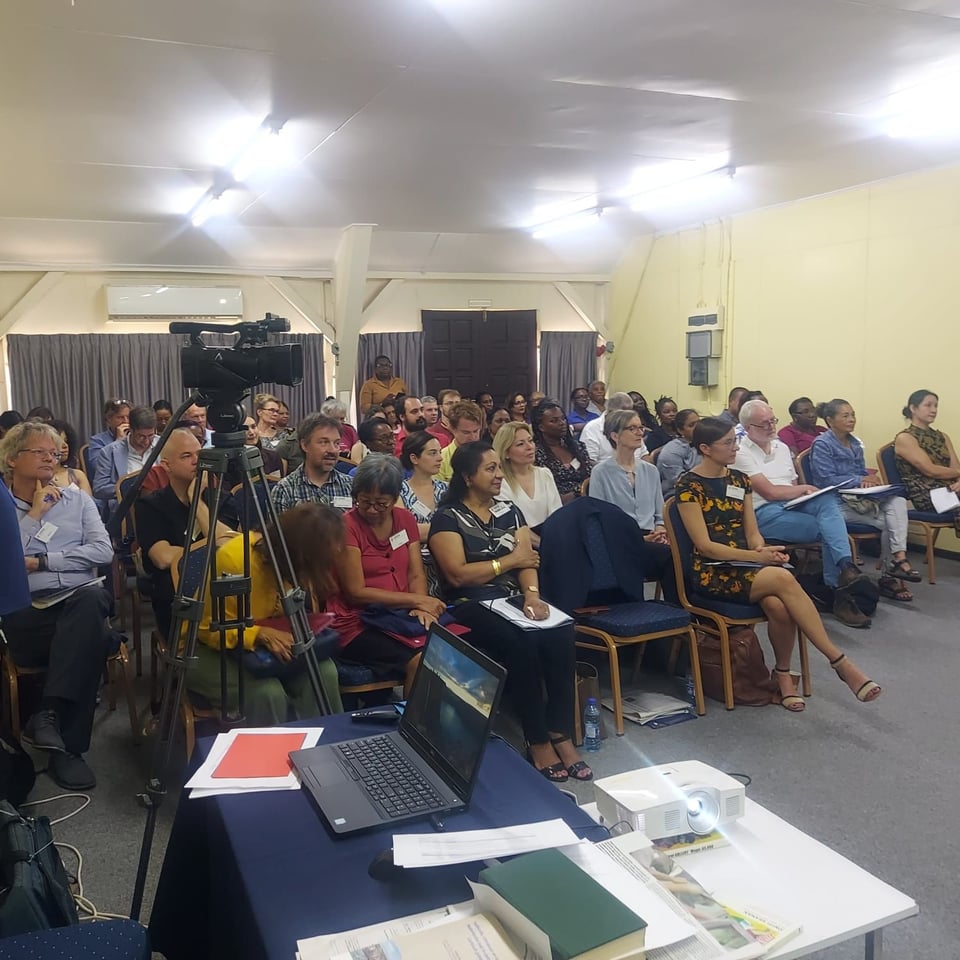
The bi-annual Caribbean Association for Dutch Studies (CARAN)-conference took place this month from 11-13 November in Surinam, Paramaribo. Both Eric Mijts and Bart van Donselaar contributed to this conference!
Research Highlight: Ruth Bonnevalle-Kok
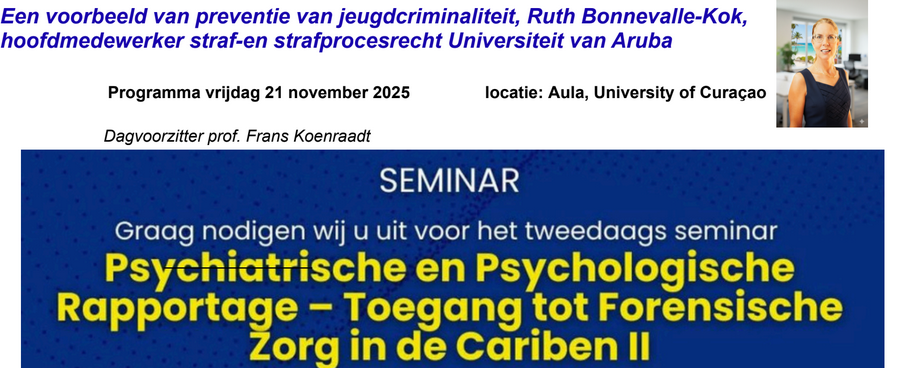
Dr. Ruth Bonnevalle-Kok contributed to the two-day seminar “Psychiatrische en Psychologische Rapportage - Toegang tot Forensische Zorg in de Cariben” at the University of Curaçao on 20-21 November. Stay tuned for upcoming sessions on Aruba and Bonaire in March 2026!
Research Highlight: Sustainable Island Futures VIII
This online symposium, co-organised by SISSTEM (Nigel John) consisted of a wide range of presentations focusing on small island contexts. You can view the program of the symposium on the Open Knowledge Repository, as well as the slides from Esther Plomp’s presentation.