White Desert
Patrick Woodhead skied to the South Pole and came back a changed person. Not in the vague, motivational-poster sense. In the specific, practical sense that he had seen something so staggering that he spent the next decade engineering a way to bring others there, without leaving a mark on the thing that had marked him.
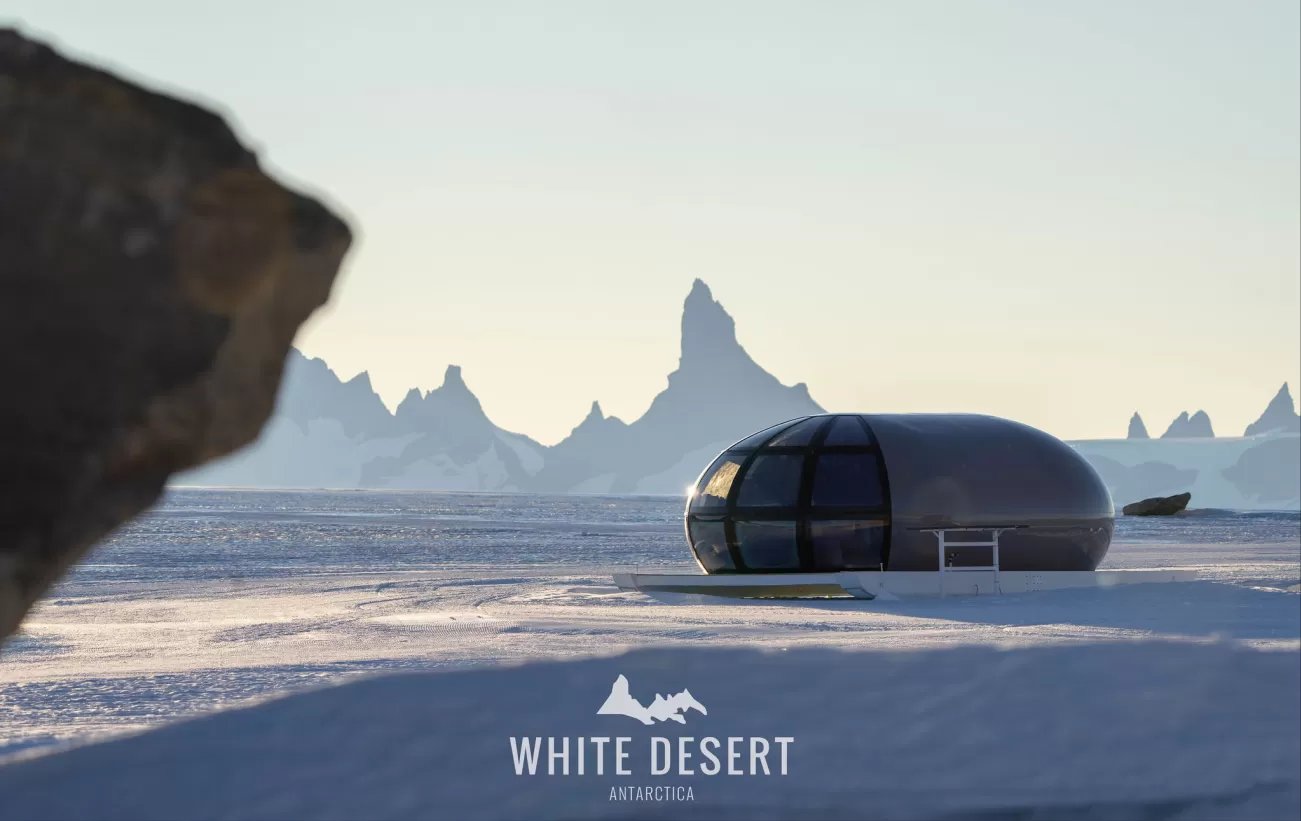
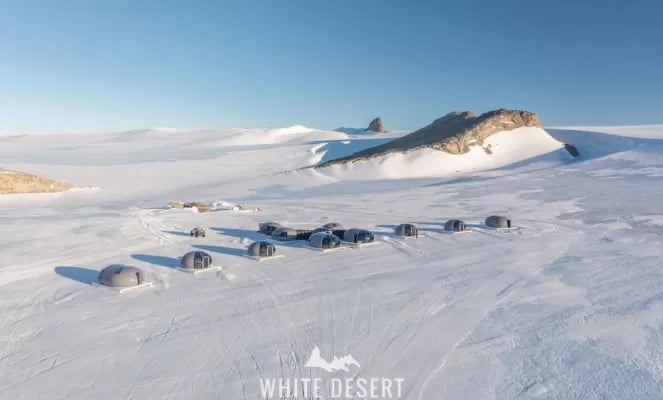
The result is White Desert — three seasonal camps planted in the vast, silent interior of Antarctica, operating November through February, and removed without trace at the end of every season. A temporary civilization on the planet's last true wilderness.
Getting There
The journey begins in Cape Town, South Africa, with a roughly five-and-a-half-hour flight south aboard aircraft capable of landing on blue-ice runways. Those runways are among the rarest in the world: naturally occurring stretches of ancient ice, prepared and marked for use, carved into the frozen plateau near the Wolf's Fang region and Schirmacher Oasis. The moment you step off the aircraft, the scale of what surrounds you makes itself known in a way that photographs never quite manage.
The Camps
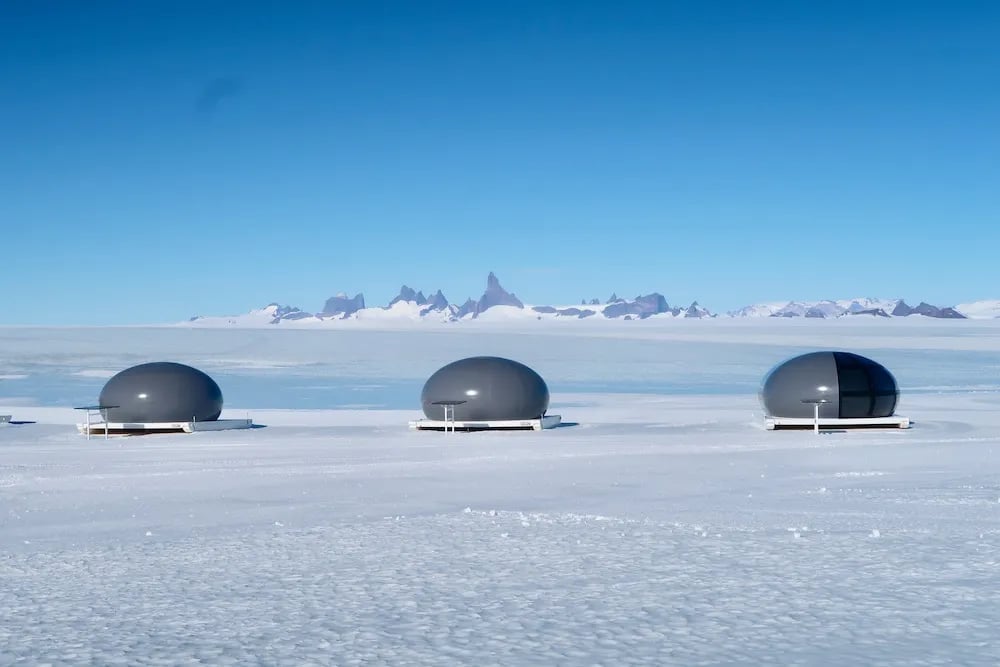
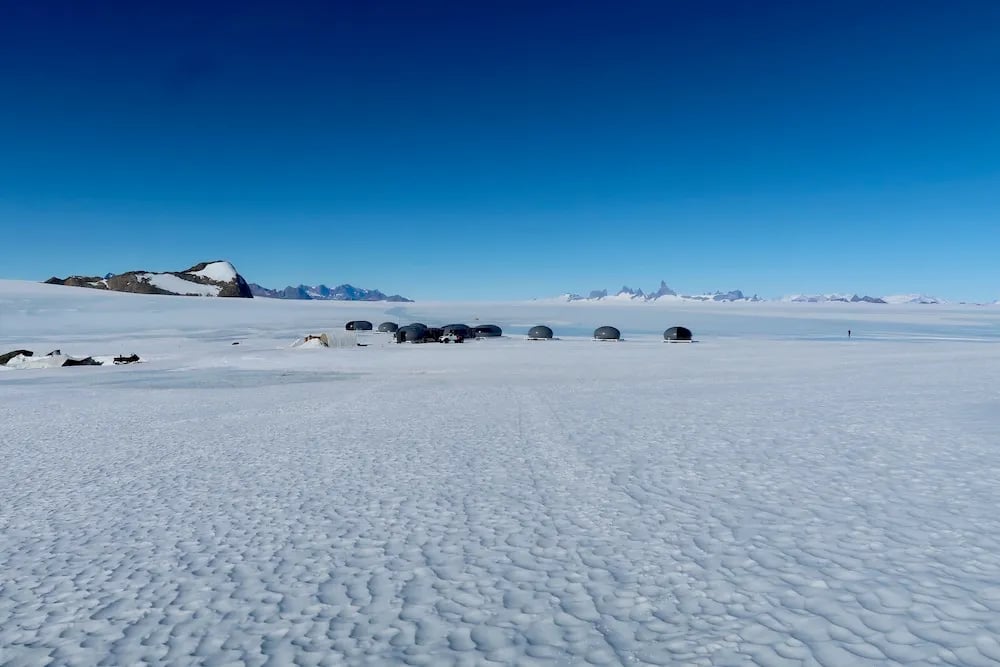
White Desert operates three distinct camps. Whichaway offers six heated, en-suite sleeping pods in the classic expeditionary style, clustered around communal lounge and dining domes. Echo, a newer and more design-forward camp, features six pods fitted with skylights, so the Antarctic light finds you even when you're horizontal. Explorer goes for a Swiss chalet style inside domed tents. All three camps hold a maximum of around twelve guests at a time. The intimacy is deliberate.
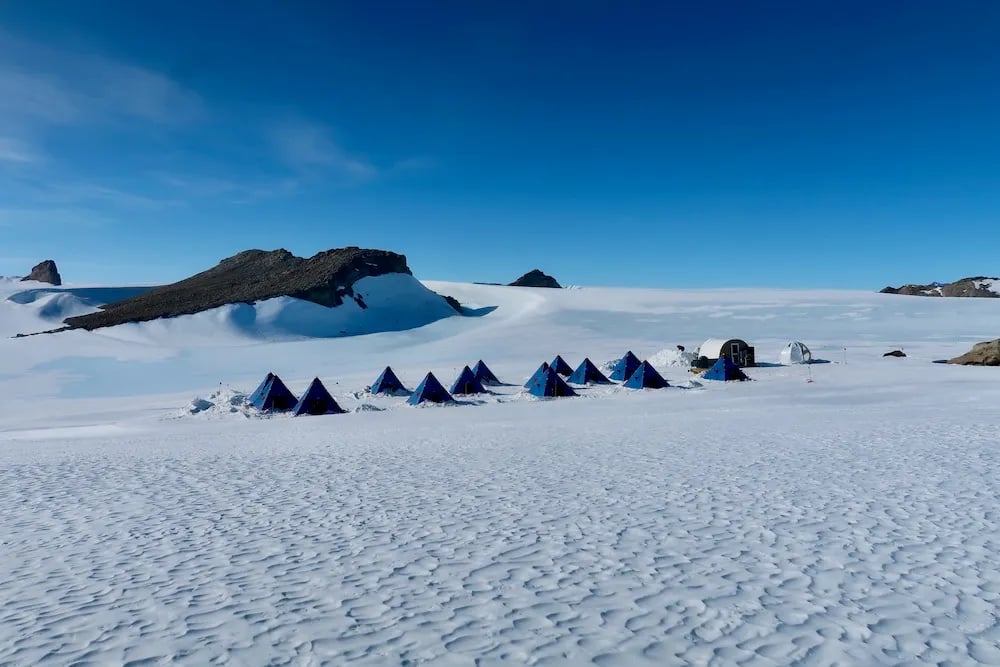
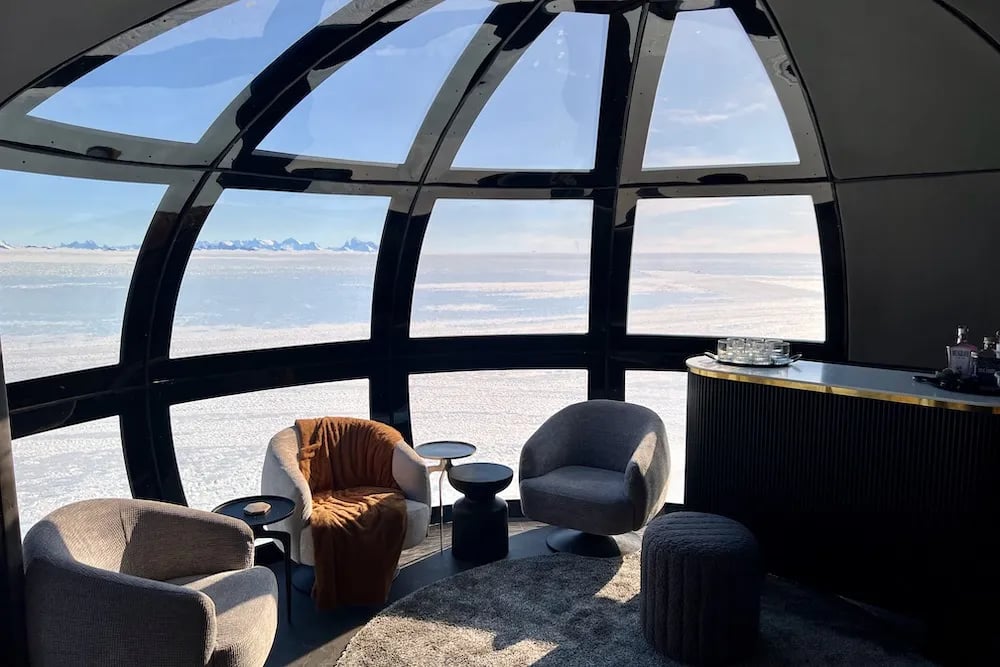
Back at camp after a day on the ice, the contrast is almost disorienting. There is champagne. There is a chef preparing multi-course meals from ingredients flown in from Cape Town. There are warm showers, plush bedding, and a small library stocked with polar exploration memoirs. Even an "ice cinema" with ice bar. Woodhead has deliberately avoided the word 'glamping' — this is expedition-grade infrastructure repurposed for comfort, not comfort draped over wilderness as an afterthought.
What You Actually Do
The activities available from White Desert have no real equivalent. Guests fly to visit emperor penguin colonies reachable by no other means. They stand at the geographic South Pole itself. They explore ice tunnels that glow in shades of electric blue, abseil into crevasses that haven't seen sunlight in millennia, climb frozen waterfalls, fat-bike across the plateau, and hike nunataks: the rocky peaks that pierce the ice sheet like tips of buried mountain ranges.
Every excursion is guided. Every piece of gear is provided. The experience is curated without ever feeling contrived.
The Footprint
White Desert is one of very few operators permitted to fly guests into the Antarctic interior, and that access comes with rigorous environmental accountability. All infrastructure is seasonal. Everything flown in is flown out. Zero permanent footprint is not a marketing line here. It is the operational reality. Carbon offsets are included in every itinerary.
The Price
Take a seat before you read this part. Trips start in the range of $80,000 per person for eight days, varying by itinerary and season. For that, you get the private charter flight, all accommodation, all meals, all guided activities including the South Pole visit and penguin colony flights, and full expedition support.
What the number doesn't capture is what you actually come home with.
Guests consistently describe the same thing when they try to explain White Desert to people who haven't been. Not the champagne. Not the South Pole photograph. The silence. A silence so total and so unfamiliar that people say they can hear their own heartbeat. In a world that hasn't been quiet in decades, that silence may be the rarest thing on the itinerary.
White Desert doesn't sell a destination. It sells a reckoning with the last place on Earth that still operates on its own terms.
Booking
Trips are available November through February. Itineraries and availability can be explored at white-desert.com. Given the limited capacity — around twelve guests per camp — seasons book well in advance.

