At the end of the Silk Road...
The orchards arrive before the buildings do. Driving in, you pass through elm trees and apricot groves so dense they block the mountains for a moment — then the cottages appear, low and quiet against the valley floor, the Karakoram peaks rising behind them like a wall someone forgot to stop building. The air is thin enough to raise your heart rate. And almost everything here runs on sunlight.
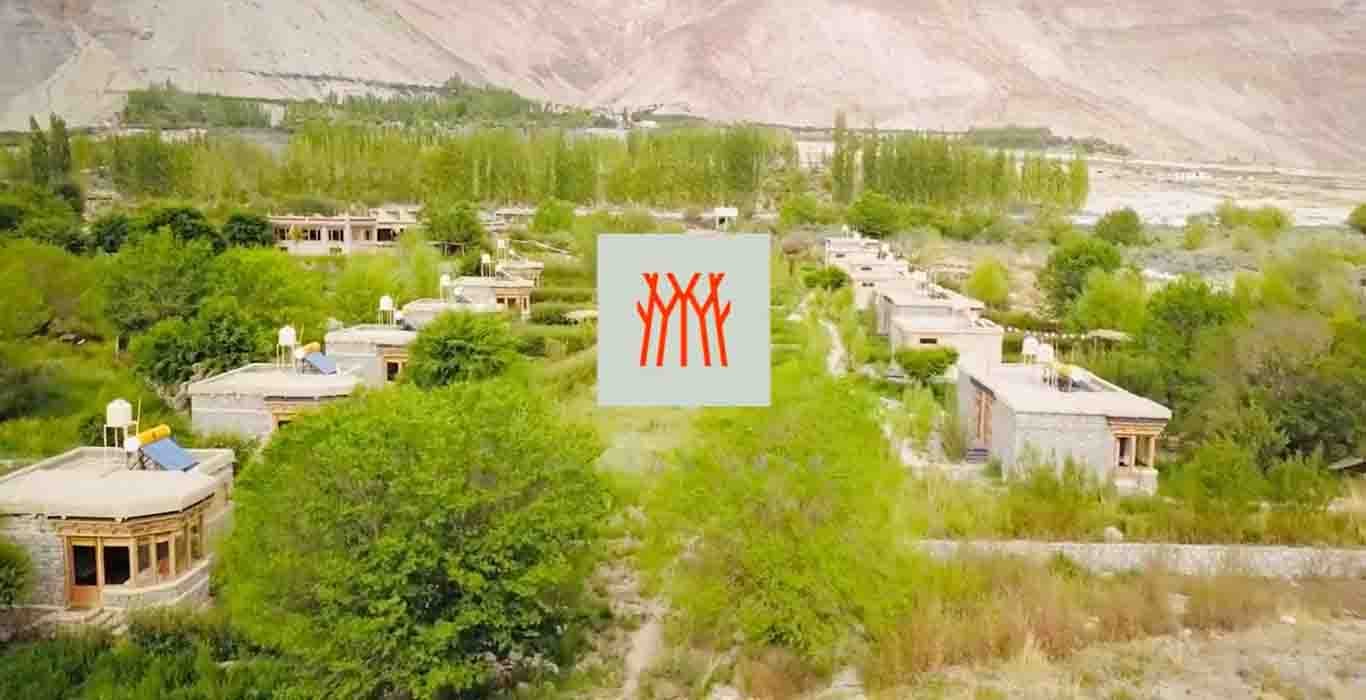
Rigzin Wangtak Kalon grew up in Nubra Valley before IIT Delhi and 14 years in the oil and gas sector took him elsewhere. In 2016, he came back to his family's ancestral grazing lands in Teggar Village and built a retreat from the ground up using mud, stone, willow, and poplar. No concrete.
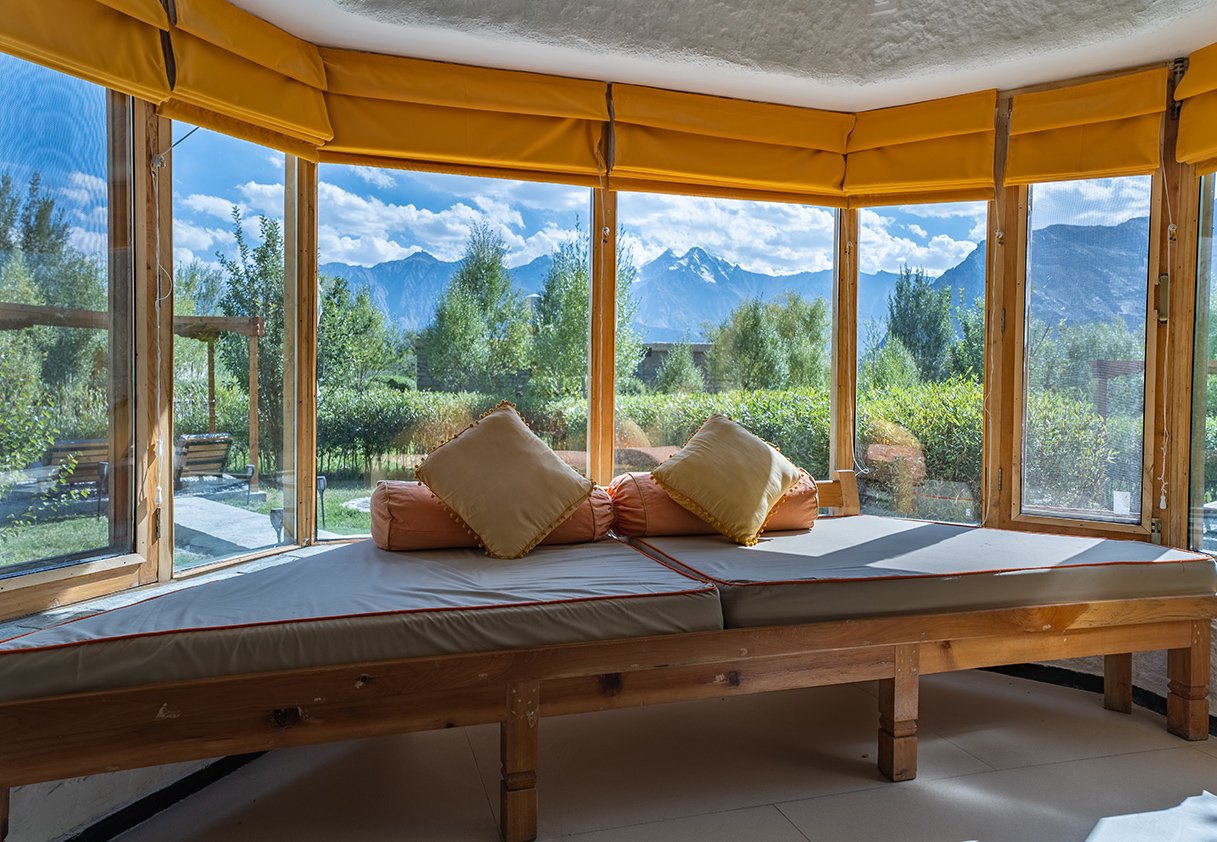
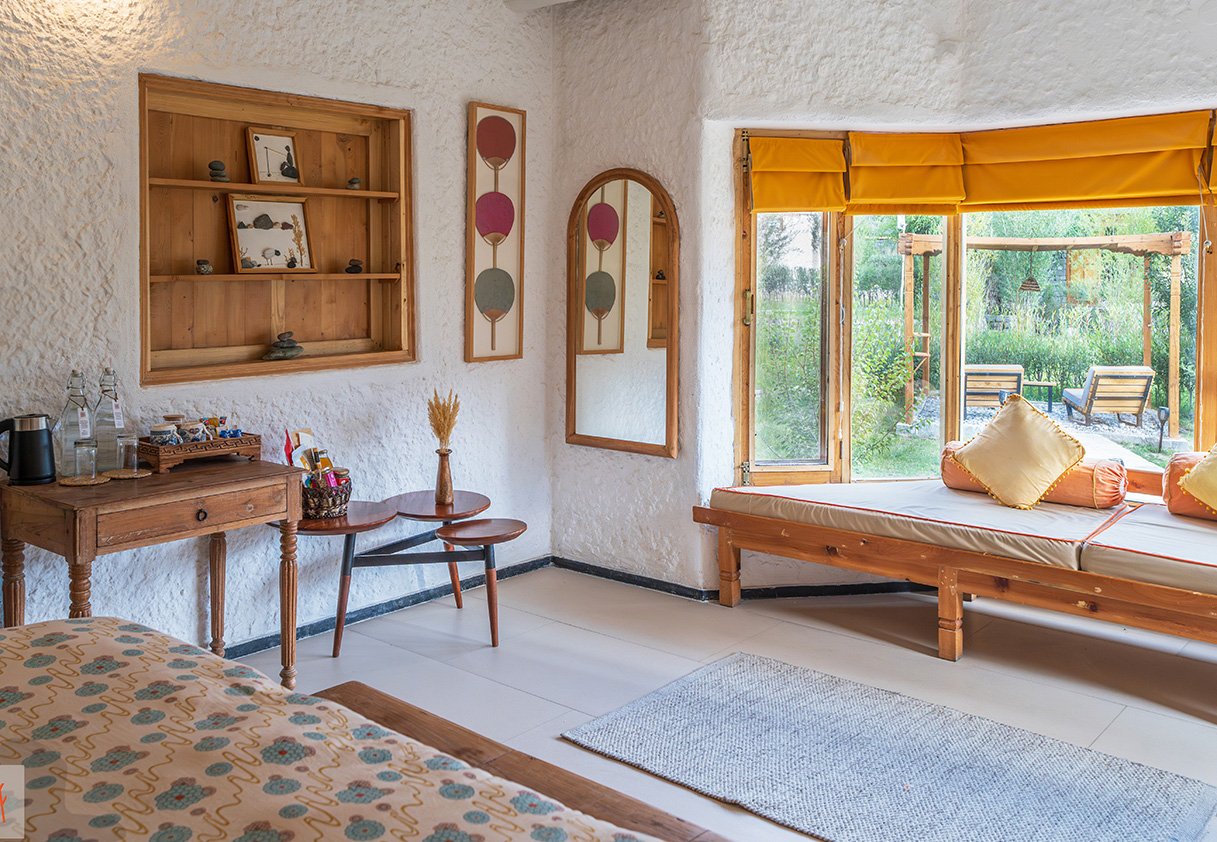
He worked with hospitality consultant Pio Coffrant — the mind behind The Rose in Delhi — on the interiors: white distressed walls, black oxide floors, handpicked rugs, pastel furnishings that feel considered rather than designed.
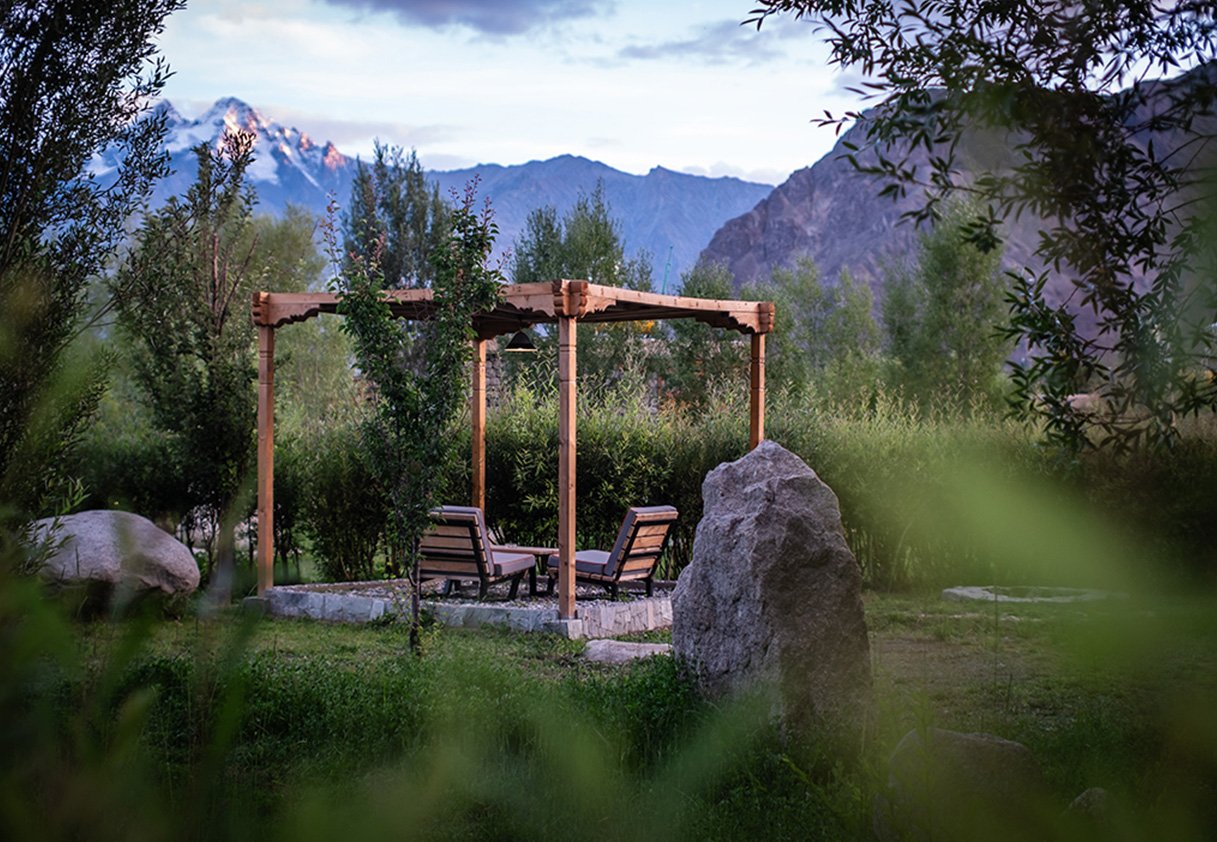
The result is 17 freestanding cottages, each 120 square meters, each with a private garden and a terrace facing the peaks. The property is named Lchang Nang, which translates as "House of Trees" in Ladakhi.
The trees in question trace back to Silk Route traders who passed through this valley centuries ago and left orchards behind them. The retreat sits at what was historically the final stop on that ancient route, and the valley still carries that quality — a place people arrive at after a long journey and find harder to leave than expected.
Getting here requires crossing Khardung La at roughly 18,000 feet, one of the highest motorable passes in the world, four hours from Leh's airport. BSNL is the only cell network that works in the valley.
These facts are not buried in the fine print. They are, in a way, the point.
The kitchen celebrates Ladakhi culinary heritage specifically: Chhutagi pasta, Mok Mok dumplings, dishes prepared by local women on a menu that changes every day. One of the property's signature experiences is dinner inside a 400-year-old heritage home run by the Women's Alliance of Teggar.
Another is dinner on the Sumur Sand Dunes — where Bactrian camels still roam — under a sky with no competing light. The produce comes partly from an on-site hydroponic greenhouse that grows fresh greens year-round, through peak winter at -17°C, powered entirely by solar.
Ninety-five percent of the property's energy needs come from a 20KW solar captive plant. Guests drink filtered glacial snowmelt. Over 80% of materials and produce are locally sourced.
Last year, Lchang Nang was named overall winner of the Indian Responsible Tourism Awards 2024. The award is deserved, but the more interesting thing is that none of this feels like it was built to win awards.
It feels like someone came home and tried to do things properly.
I find myself thinking about the orchards. Planted by travelers who weren't staying, tended by families across generations, now shading guests who crossed a mountain pass to get here.
There's a version of travel that leaves something behind rather than taking something away. This place is trying to be that.
Have you ever arrived somewhere after a hard journey and felt, immediately, that it was worth it?
Hit reply and let me know.
Standard season for Lchang runs May to mid-October, with limited late-season availability. Rates around $150/night.

