What Is It About Japanese Fiction?
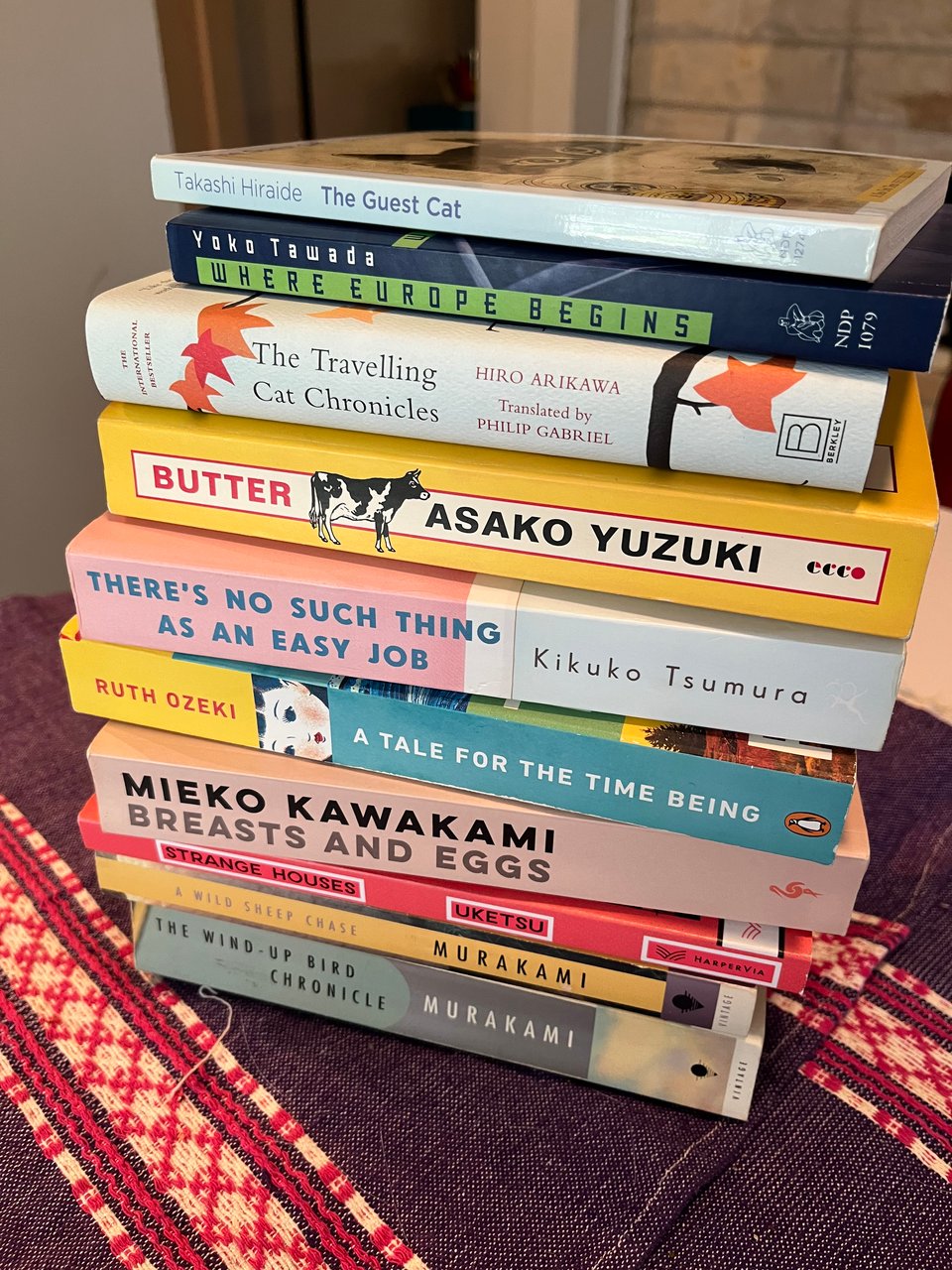
I am in the middle of Asako Yuzuki’s novel Butter, which has become a hit with Anglophone audiences. I have much to say about it, but I will save that for a future post after I finish it. Last week, I briefly recapped Uketsu’s Strange Houses, another Japanese hit with English-speaking readers. With these two books, I’m jumping on some recent trends –Japanese fiction is wildly popular in the U.S. and U.K. right now. But I’ve been intentionally seeking out Japanese writers, especially Japanese women writers, for about 5 years, and I read books translated from Japanese more than any other language in translation.
I haven’t always, though. For a long time, the only Japanese fiction I had read was, of course, Haruki Murakami. If you were reading trendy literary fiction in the 00s and early 10s in the U.S., you read Murakami. His work resonated with disaffected, cynical American audiences, with all the Beatles references and off-kilter surrealism. I always thought his female characters were off. They were never real people like his male protagonists. For a long time, that was all I knew of Japanese literature, despite Japan’s thriving publishing industry and substantial literary output.
But in 2019, I found The Guest Cat by Takashi Hiraide at Malvern Books, a now-shuttered local bookstore that specialized in works in translation. (Alienated Majesty Books reopened in the same location under different ownership and has a similar commitment to stocking writers in translation.) The Guest Cat is a sweet, poetic novella about a writer making sense of life’s changing seasons as he recounts his years-long relationship with his neighbor’s cat.
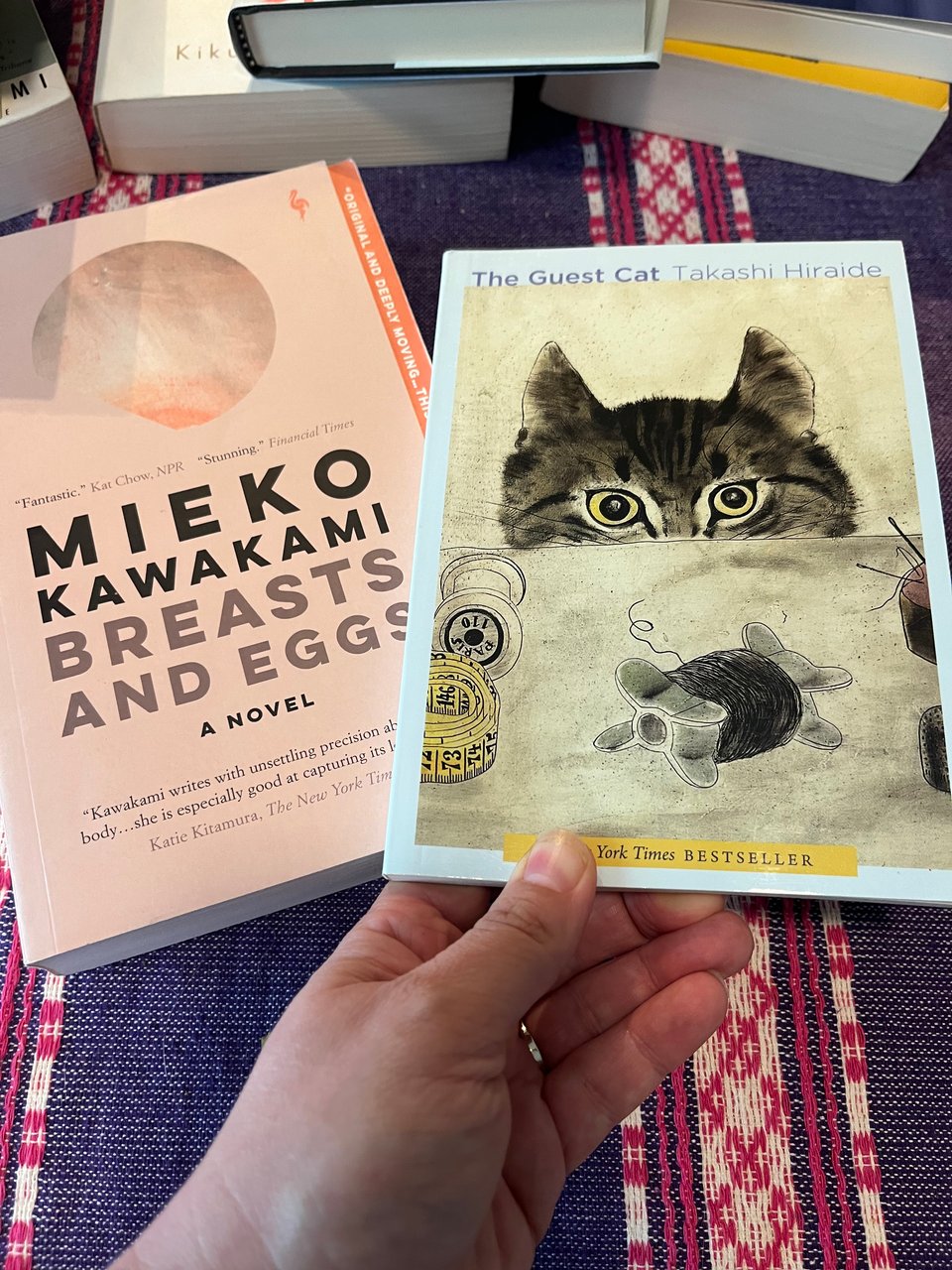
Fast forward to 2021, in that brief, dizzying time between the vaccine rollout and the Delta variant, I took a trip to NYC to see my family and stopped by Books Are Magic, where I bought Mieko Kawakami’s Breasts and Eggs at a bookseller’s recommendation. This book completely changed my perspective on Japanese fiction. I was so blown away by Kawakami’s exploration of the female experience — the intensity of teen girlhood, complex sister relationships, the desire to be a mother, and the realities of being a single woman supporting oneself. It suddenly mattered less that Murakami’s female characters felt lacking. I just wasn’t reading enough Japanese women writers!
And in the years since, I’ve read a great deal more Japanese fiction and some memoir, too. I used to think Murakami was some master of absurd magical realism, but now that I’ve read a great deal more Japanese fiction, I’ve come to realize that the absurd, the uncanny, and the macabre are common themes and moods in Japanese novels. I haven’t studied the Japanese language at all, but what little I know (in part, thanks to a colleague who explained some differences in verb tenses) is that Japanese can be challenging to translate into English. I find these challenges give the translated prose a strange, hazy quality that amplifies the surreal or uncanny plot and mood.
I’m hesitant to read too much more into this because it can easily veer into orientalism and othering, although I suspect that’s exactly the appeal for many Western readers. Yet, it’s in realism, rather than the surreal, that I’ve found my favorite Japanese novels and writers. I’m grateful we have so many options in translation that are getting buzz and that more and more Americans are discovering Japanese literature.
If you haven’t read much Japanese fiction, I have plenty of recommendations:
There’s No Such Thing As An Easy Job by Kikuko Tsumura - A funny and sharp tale about a burnt-out woman trying to find, well, an easy job.
Mornings Without Mii by Mayumi Inaba - technically a memoir, it reminded me a great deal of The Guest Cat, sweet and moving.
The Wind-Up Bird Chronicle by Haruki Murakami - I wasn’t kind to Murakami in this post, maybe because he was the darling of American literati and the token Japanese author for so long. But this is my favorite of his books, and his work is still a lot of fun to read.
A Tale for the Time Being by Ruth Ozeki - This is an outlier because Ozeki is Japanese-American and writes in English. She lived in Japan for many years, and part of this book is set in Tokyo. It’s all-around such an excellent novel that I had to include it in this list.

