Moving in - the good the awkward and the community
Hello friend,
I’m writing this to you having officially moved in (and still officially without internet…)
It feels somehow like writing you a letter, even though I’m very much typing it on the same laptop I would if I were online.
As we are navigating the process of settling in to the new home (and realising just how internet-reliant we are between the dongles and the hotspots), I wanted to share some reflections.
I’m finding myself torn between the part of me that wants to be in community and the part of me that holds all the barriers to that and the need for sanctuary and distance.
I’ve written about this before in various ways, but I’m always interested and daunted by our desire to be in community.
“everyone wants a village but no one wants to be a villager”
is something that is said often these days, and I can’t say I totally agree...
The concept of the ‘village’ is something that shows up everywhere, particularly around childcare and the idea of a ‘village raising a child’.
And absolutely, evolutionarily we would have been much more embedded in communities and circles than most of us are now.
But that was also because there was no question of whether this would happen.
Because there were practices to support this that were handed down and taken up, generation after generation.
The systems of capitalism and colonialism, have ripped these practices, resources, connections from us.
We’re siloed in a way that means that creating these connections that were once a given is now like swimming upstream against the tide of increased pressure, stress and grief, in a sea of forcibly embedded cultural norms of individualism, that try to make us feel that reaching out for connection is weird, weak and/or embarrassing.
Basically it’s actually really bloody hard to know where and how to start.
I think presenting it as laziness is just playing into the same systems that create these barriers to connection in the first place.
Oh do we not do this? – my (autistic) misunderstandings in early parenthood
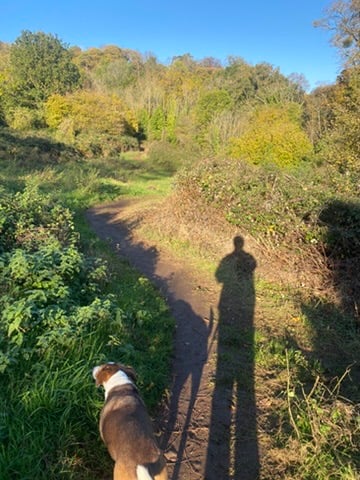
I vividly remember, shortly after I’d had my (highly sensitive neurodivergent) baby, and I built up my confidence taking him out for strolls around the streets where I lived – I imagined that I would connect with other parents of babies.
Having walked dogs for all my life and there being a cultural norm of smiling, greeting or even chatting to other dog owners, I somehow thought this would translate.
So I wandered around the busy streets where we lived, bleary eyed from sleep deprivation, grinning at other people pushing prams.
I had about a 25% success rate of getting a smile back.
I felt like a fool, and yet I couldn’t stop. I kept smiling, kept trying.
(at the time I also had no idea that myself and my child were neurodivergent - a lens that now makes so much make more sense).
And yet as I write this, I suddenly realise that there were definitely days when I wasn’t smiling at people – when I kept my head down or where my eyes were too full of tears and a body too full of adrenaline to see whether others might be trying to connect with me.
I think most of us are longing for connection, but don’t know how or where to find it.
I notice this in my space holding - when someone shares something vulnerable, it almost always opens up possibility and connection.
I often find myself seeking more connection during times of more vulnerability - postpartum, moving house, becoming ill.
It’s counterintuitive in some ways, as reaching for connecting (swimming against the tide) can feel so vulnerable in and of itself.
And also perhaps those are the times when the illusion of individualism and separation become less persuasive. Times when we need connection the most.
I’ve been wondering whether we can think more outside the box with what community and connection looks like.
Some of my dearest friends and connections are primarily if not entirely online.
The length of time you’ve known someone doesn’t have to equate to the closeness or trust that you can feel in that relationship.
I’m thinking about this particularly in light of moving house and establishing ourselves whilst the UK government suggests we all stockpile (all the while they continuing to make catastrophic decisions that escalate the likelihood of needing to stockpile).
What are some ways that we can future plan for more than our individual homes?
How can we unpick the cultural norms and assumptions that prevent us from connecting? (theres an interesting piece in here for me around my being late identified autistic, and whether actually my autistic asusmptions might be helpful in some places to try to break what may be some neuronormative ideas that block potential sources of connection).
I’d love to know what’s coming up for you – where do you experience barriers, where do you sense more potential for community?
Warmest wishes
Harriet
(she / they)
How can I support?
FREE RESOURCES
Co-tending this month - two sessions! (dates TBC - if you have day and time preferences please pop me a reply!)
‘Window of Capacity’ FREE resource
FREE Sensation Mediation - This is one of the monthly meditations I offer as part of The Mycelium
**
JOIN THE WAITLISTS:
Reply to this email to join the list
(Tender You)
Covid Conscious Resilience Toolkit (starting mid November, dates will be shared next week - we have a nice group gathering and there are still a few spaces)
(Tender Little Beings)
Cothù - Free programme of autistc-designed and led parent support (likely Late November)
***
Any questions about any of these?
Who is writing this?
I’m Harriet, and I work under the name ‘Tender Being with Harriet’. I am a coach, facilitator and guide who is particularly passionate about supporting neurodivergent, sensitive and deeply feeling people and families.