TEETH: A February catch-up of inspiration and excitement.
Welcome, you mysterious Sea Peoples, to the TEETH newsletter! This is a (not actually) weekly transmission about our explorations in the very secret land of Tabletop Roleplaying-Games.
What appears within this letter is written and compiled by veteran game critic and designer, Jim Rossignol, and former Mojang alumni and famed illustrator, Marsh Davies. Why not come and join us over on the TEETH Discord! Free tooth emojis for everyone!
Hello, you.
Working on Gold Teeth
Playing Blades In The Dark: Deep Cuts
Playing Mythic Bastionland
Reading The One Ring
Other things
Hello, you.
So we’re a little way into the exciting waterslide of 2026 (who knows where it goes!? Maybe somewhere good? /distant screaming) and it’s been a while since we talked, so let’s catch up on what we’ve been up to in TTRPG land! The themes are: being inspired, and getting excited. Let us begin.
Working on Gold Teeth
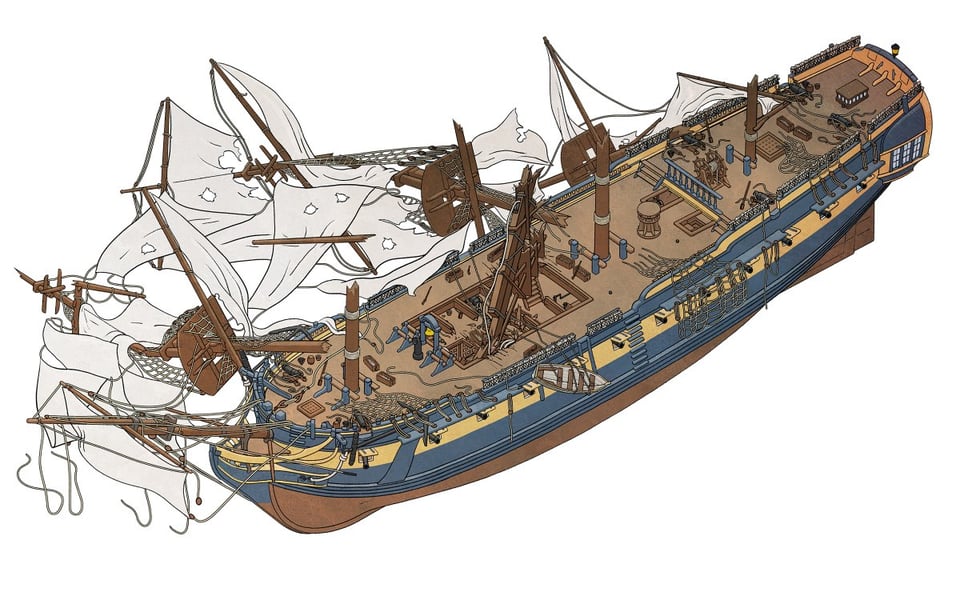
Naturally, this is a big part of what’s been happening. I just wrote a disgusting table of cursed seafood! Marsh has been sequestered in his tower with a quill and a bucket of squid ink, and will not come out again until all the ink has been applied to paper. Luckily for us, he also had time to write about how our new Luck system folds directly into the superstition of sailors and pirates at sea, and then put it in a Kickstarter update.
“In Blades, the narrative currency is Stress, fittingly reflecting the themes of that game, where personal abilities are pushed to the limit and beyond in high-stakes heists. In Gold Teeth, a game in which you are literally and figuratively all in the same boat, it felt appropriate to make it a currency you have to share. Furthermore, Luck is not just a resource, but an all-encompassing obsession that reflects the psychological welfare of the whole crew, and a self-fulfilling prophecy that sits at the intersection between superstition and the supernatural. If sailors believe they are lucky, then, to some extent they are. They make their own luck. The opposite is also true: misfortunes may compound the sense of unluckiness, leading to a despondency that invites further misfortune.”
Go have a read, and in the meantime Marsh will draw several more lines on a pirate’s snarling face.
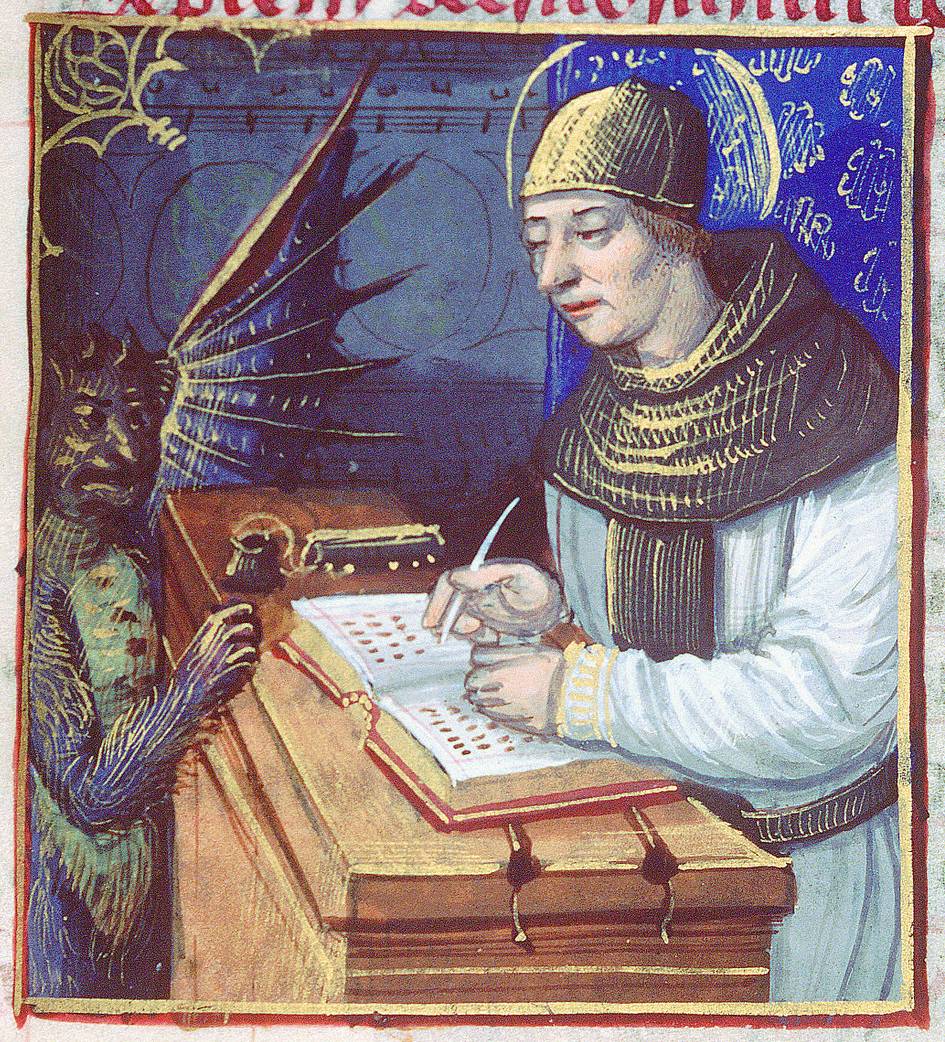
*That particular demon is Titvillus, who apparently I should remember from his integration in the pantheons of D&D, but do not. More importantly: that is a real demon who introduces errors in your work, also known as Autocorrect by modern scholars.
Playing Blades in the Dark: Deep Cuts
So for Secret Reasons, we have been playing the DEEP CUTS version of Blades in the Dark. In case you missed this, Deep Cuts is an official supplement (not sequel, but with sequelly elements) to the now-classic scoundrel ‘em up from John Harper, in which he introduced both new sets of optional rules (basically delivering how he now plays the game to his community) and a bunch of additional lore stuff.
It’s been interesting! Not least because we’ve been playing Blades on and off since 2017 and as a result already have our own calcified table-rules for doing things. We also managed to mix up old and new rules, and ended up with a confusing porridge of both. To be clear: I am not recommending anyone do that, and can only portray my running of the game as a sort of warning to pay attention.
As we've observed before, the starkest cut in Deep Cuts is the Action roll changing to the Threat roll. The idea behind this is that player actions should always succeed in a way that carries the story forward. If you want to do a thing, then that is what happens, and the risk is that there will be a negative consequence to that outcome. Success means you succeed without the negative outcome, failure means you succeed with the negative outcome. For example: you might want to knock out a guard. You will do it in either situation, but you might get hurt doing so on a failure.
What this design wants is for you to avoid the dead ends created by binary “ah no, you didn’t do the thing” rolls that many systems imply, even if they explicitly deny it. The 1-3 of the traditional Blades set up still had this meaning, and was played as such by us for many years. Now though, this “fail” roll indicates that an agreed threat is incurred, even though the action was carried out. This took some getting used to and I am not sure it will ever sit quite as naturally with us as the original mode did. The Threat of failure, Deep Cuts explains, is a special case: one in which the outcome of an attempted action seems especially unlikely so that the negative outcome is it not happening at all. This is especially sticky for the new Desperate roll, which is only ever a success on a six.
Once I had accepted that Failure was a special case of Threat, then these rules did make more sense to me. (The book also provides a third way, which is to offer the Threat and failure of action as alternatives to the player. One of them must happen, and they should choose.) This stuff, as well as the further condensing of the Push and Resist rules (you now spend stress to improve your result, after the fact), all sit comfortably at our table, even if we do tend to err on the side of making Failure the main threat. Perhaps our Scoundrels are just clowns who fail catastrophically more than they ought. But it's usually funny, and so that's okay.
All that aside, it’s been the lore stuff in Deep Cuts that has actually had the most significant consequences at our table. If you are a player who is likely to be in a campaign based on these new materials then I would strongly recommend that you avoid the marked spoilery stuff (I think it’s like a red diamond in the text) because this new material (extending the existing world’s many factions and their interrelations) is super good! It’s also not a complete picture, and joining up the dots that Harper has provided has been an absolute joy for myself and my players. It’s also weirdly timely and relevant to our era in a way that has ended up being a bit spooky: refugees from another world? Treated badly? Hmm! It’s almost like some sort of commentary.
I have always felt that the exquisitely judged setting and lore is actually one of the most powerful bits of Blades, but that conclusion has been compounded by the experience we have had with introducing Rowan House, the Unity Commission, and The Strangers to our longer-term campaign. We jumped forward ten years, added a new player, new characters, and made it so one character had died and become a ghost, while others aged and became more experienced and more comfortable. All this sits well with the changes to the lore that Deep Cuts provides, and has created a sense that things are moving on, politically, socially, and technologically, within the city. All this bodes well for Blades ‘68 which is set a century in the city’s future and… ah, well. Let’s just say it bodes well.
Playing Mythic Bastionland
This outing will doubtless be explored in the excessive prose produced over on Old Men Running The World, but I wanted to mention in here, while we are still in the throes of it, that it has been a true expedition into a different sort of game for our Tuesday night team. Experiencing this back to back with The Between has been a fascinating exercise in how different RPGs can be to play even with the exact same players and the same GM. We’ve been palpably transported by MB’s hex-engined world-generation and spark-tabled emergence and absolutely riveted by the ruleset.
I suspect we’ll get into the details of why this is fascinating as a comparison to other games we’ve played, and, probably, why a far few people seem to be misunderstanding the game, over on the other blog, but what I would and must say here, though, is that McDowell is clear and away a master game designer at this point, with the combat system in Mythic Bastionland being one of the most convincing I have ever engaged with. Fast, incredibly flexible, and extraordinarily capable of conveying the danger of that activity within its abstractions, MB’s combat is how you wish TTRPG combat to be. Or at least how I wish it was. And I suspect other game combat is going to come off comparatively badly in future. Hell, I am sure people will write entire articles on this topic, but in case you are teetering on the Mythic Bastionland ledge I can say: yes, the book is worth it and your knights will have an amazing time. Rarely have I cheered dice rolls with as much gusto. It counts for a lot.
Reading The One Ring
Now, if you enjoyed Marsh’s recent notes on what we got up to over the Christmas break (as many people did) it will come as no surprise to you that we’ve been preparing a The One Ring campaign for our Monday group to start later in 2026. I think this is notable because that group of players (currently playing Blades In The Dark, and the playtesting force behind literally all of the TEETH games) are now pushing a decade of gaming together and rarely volunteer for traditional fantasy. And what could be more traditional than Middle Earth? Have they volunteered this time? Well not exactly: instead, Marsh and I became so enamoured with Gareth Hanrahan’s LotR writing, and the snippets of forthcoming Hands of The White Wizard that we read, that it simply became an inevitability. Personally, I went from thinking, “Oh, I should probably read Lord of the Rings again, it’s been 30 years,” to DOES THE FOUNDRY MODULE INCLUDE PROPER JOURNEY SYSTEMS FOR THE ONE RING?! (It does not seem to, but we’ll sort that out before things kick off.)
Also, ALSO, there has been a lot of fawning over how delicious these books are. “A warm fantasy bath,” our kid Alex W opined. I hate to use the word opined, and obviously it’s banned by the newsletter police, but I brazenly employ it here (at my own risk) because it is accurate to the considered vibe of the moment. The man read and opined about that book. I swear that he did.
Anyway, at the Core Rules level The One Ring is an appealing system for the likes of us because it has a lot of story levers to pull, while not being too complicated. It’s still procedure laden, true, but the most complex bit is certainly combat, which still seems very quick compared to Other Systems. Will we get on with all the mechanical parts? Who can say at this pregnant moment? But the initial read has left me glowing, so I should think we shall.
What has me most convinced of Good Times To Be Had, however, and as mentioned, are the sourcebooks. Am I getting into adventures as I approach my sixth decade on Earth? Or am I simply remembering what it was like to get to grips with a new setting and be overwhelmingly excited about taking my players there? It’s not really clear, but what is transparent is that Hanrahan’s writing in these books is absolutely riveting. These are adventures I immediately want to place in the context of a campaign, and the Saruman stuff is as exciting a bit of adventure set up and framework as I have ever read. I rarely get really psyched for anything that derives from a big licence, and most Famed Characters leave me a little cold -- this is TTRPGs! We make our own! -- but here the story, and the tantalising possibilities of saving one of the great book’s most doomed characters from himself is well, oh, wow. The possibilities. It really is something I want to make happen, even if it stumbles to disaster. (The alternative fate of Saruman, I mean, not The One Ring campaign. I am sure that will be juuust fine.)
Other things we’re excited about
Gallow’s Corner
This RPG from the Mappa Mundi folks, which is about the actual Peasant’s Revolt, is Kickstartering now, and doing enormously well. The book follows the Essex-based rebellion which climaxed with fun times for the king just outside of London, but I regularly have lunched in a pub close to where our local Somerset branch of the Peasant’s Revolt kicked off so, in an extremely tenuous way, this is a topic close to my heart/stomach.
But even if that were not the case I would absolutely be all over this on the basis that it is filled with medieval grimness of a register that will be familiar to long-time readers of our work. Playing as a medieval outlaw? With overt political themes? And ultimately being about hope? With heavy emphasis on creating the story and character as you play? Hot damn. It really sounds like a fun system, but the appeal here is even more about the alternative history of “what if the revolt had gone further/better?” That’s a counter-factual that’s almost as enticing as saving Saruman from his embarrassing downfall at the hands of some trees. Yes, there aren’t many TTRPG books I feel will inevitably make it to the table, but this is certainly one.
Blades ‘68
Back to this: we mentioned ‘68 earlier, and that’s because we’ve had a little look at the early version of this book and came away high on RPG fumes like a hippie trapped in an LSD cookhouse. It’s packed, and hits so many Sixties notes that you’d think it was a documentary about the Beatles. The Kickstarter is live now and you can download the preview over there, too. This is going to be quite a book. Obviously there is zero possibility that we, the people who make games inspired by Blades In The Dark, won’t end up playing this, but what we’ve seen of both Blades ‘68 and the fresh rules Denee has created absolutely make that a paisley-clad inevitability. It’s fun, it’s occasionally berserk, and very very stylish.
Which is what we are coming to expect from Denee! We had a very fine time playing Denee’s Deathmatch Island over Christmas, and the work he’s doing here is evidently putting into practice all that he’s learned over the past few years. Hell, he’s just started a blog to explain some of what he’s learned and how he figured it out. The big show off.
So we’ll be talking more about Blades ‘68 as the year goes on, but I just wanted to say: what we’ve seen so far left us excited, inspired, and slightly breathless. This is tremendously promising stuff.
Oh, and we are creating a stretch goal for it. So there’s that.
Intergalactic Bastionland
Holy shit! The reasons to be cheerful keep on coming. I mean, look, it’s no surprise that McDowell was going to do a spaceship game, he’s been talking about it for ages, but the surprise is that a playable playtest game is here, right now. And it features some of the best bits of Mythic Bastionland’s clever rules.
Faithful and attractive readers of the other place will recall that I was blathering on about my requirements for running a space game in a 2025 update, and I have to say that Intergalactic Bastionland is readily hitting most of those beats. Lots of cool prompts for deranged sci-fi space stuff, instructions for creating and role-playing the crew of a spaceship, thoughtful combat based on the successful template of Mythic that I already thrummed about upthread, and so on. I can’t imagine any universe in which this too doesn’t hit the table of one of our regular groups. It’s going to be a busy year.
And hey, it’s exciting that we get this to play with, regardless of how far off Kickstarters and books are, but also inspiring that McDowell is working at this rate on such an incredibly solid set of books. It feels abundant and mature, like a medium growing to full strength. That means something, I reckon.
Wyrd Science
Finally, if you are a regular reader of this newsletter then you will want to pick up the next issue of Wyrd Science, which I understand is to be announced imminently. Go follow them on Bluesky or sign up to the newsletter. You will not regret doing so.
So like I said: excitement, inspiration. A bit of perspiration. 2026 has a lot of promise! We’re holding on tight.
Remain steadfast, brave readers.
More soon!
- Marsh & Jim (but mostly Jim, as I wrote the newsletter this time. Cheers!)
-
Great update, thanks! Extremely cool to shout out other people's work as part of it.
Is there currently a plan to reprint the original TEETH at some point?
Add a comment: