The Big Santa Lie, Autistic Gift Guide Part II, and Whats In That Pudding??
Timely holiday resources at TPGA and some advice if you’ve lied to your child about Santa

How about a great list of gifts autistic people actually want, according to TPGA community members? Highlights includes books! books! books!, gifts related to favorite characters and themes, soft tag-free clothing (raises hand), and gifts related to building, crafting, and constructing. Enjoy!
Here are more gifting ideas from Emily Brooks, a journalist on the autism spectrum, specifically ideas for autistic people on a budget planning their own gift-giving. She also has great tips for navigating a profoundly sensorily overwhelming holiday season. Find out what to do, for example, if you have these questions:
How do I start a conversation with my cousins or end one with someone’s neighbor? What’s in that pudding and do I really want to eat it? And how can I have fun when I feel like hiding in the attic?
And forewarned is forearmed when it comes to making the big reveal about Santa to an autistic child, writes disability advocate Kate Ryan. As someone who was very much the last child in my elementary school to still believe in Santa, yes to this:
And I do recommend, highly, having a Santa Claus talk with any kid over ten who hasn’t figured it out yet. Autistics, as a whole, can be very naïve … not to mention the whole teasing and age-appropriateness thing.
News you can use
-
Without notice and as an apparent act of revenge, the US Department of Health and Human Services (HHS) has summarily terminated millions of dollars in grants to the American Academy of Pediatrics (AAP). The grants in part funded research related to early autism identification and reducing sudden infant death, according to reporting from several outlets, including the Washington Post and The Guardian.
A total of seven grants were terminated, according to the AAP’s CEO Mark Del Monte. The HHS has linked to terminations to the AAP’s use of “identity-based language,” such as referring to “pregnant people.”
I note yet again that even if you limit the scope of who can become pregnant to cisgender women and girls, which appears to be the administration’s strawperson, that group includes girls, of whom almost 13 of every 1000 become pregnant in the United States. The claims of Epstein apologists notwithstanding, girls are not women. I know that the administration does not care and perhaps embraces this concealment, given that their policies will result in more forced births for girls. - Speaking of lying, the top whopper on FactCheck.org’s list of “the most egregious and noteworthy falsehoods and distortions” of the year comes to us by way of Robert F Kennedy the Lesser, and yes, it’s the Tylenol-autism claims. FactCheck.org notes:
In a falsehood-filled press conference, Trump, along with Health and Human Services Secretary Robert F. Kennedy Jr., touted an unproven link between autism and taking Tylenol during pregnancy. Kennedy, long known for spreading inaccurate information about vaccines, also features prominently in this year’s compilation. In his efforts to change the nation’s vaccine and public health recommendations, he pushed unproven therapeutics for treating measles and made false claims about the COVID-19 vaccines.
-
Must be something in the air because not one but two Nature Publishing Group journals are highlighting the benefits of including autistic people in scientific research. Nature Geoscience has a multi-author opinion piece calling for support and recognition of autistic learners for the benefit of the geosciences. Meanwhile, Nature Astronomy features six interviews with neurodivergent astronomers – Scott Gaudi, Meridith Joyce, Dan Burger, Ryan Dungee, Olivia Greene, and Jessica Schonhut-Stasik – who are, the editors say:
unanimous in seeing their neurodivergence as both an asset and a reason for struggle — with many, for instance, seeing their ability to hyperfocus in intense bursts as responsible for their high levels of productivity and their communication differences as leading to problems such as exhaustion, misunderstandings and needs that are not accounted for in a standard classroom.
People you should know
- Meeting the Kitley sisters, Elizabeth and Raven. Raven, the older of the two, is autistic and a huge fan of Virginia Tech women’s basketball. Elizabeth, the younger, chose to play at the school in part because during the recruiting process, Raven forged real bonds with the team’s head coach and the staff. Raven has become a Hokies (that’s the mascot) fan favorite, and she and Elizabeth have teamed to hold an “Autism Friendly Game” at the home court every year. As Raven says that, "Virginia Tech's done a really great job with spreading awareness. I love seeing how people are learning about autism now, because when I was born in the ‘90s, nobody knew as much about it. Autism is not going anywhere, so we have to learn how to embrace it.”
- In pursuing her enthusiasm for figure skating, Lilly Gonzalez found that new routes to communication opened up, too. Gonzalez was introduced to the sport at age 10 by a caregiver who loved it. Now 13, Lilly is nonspeaking but uses an alternative communication device to support her communications with coaches. In addition to experiencing many personal benefits from the sport, Lilly participates in a half dozen competitions each year and competes locally in the Special Olympics. She and her mother, Stefanie, had to figure out how best to use the alternative communication device they acquired (an iPad), which led her mother to start sharing her knowledge on social media and eventually to establish Lilly’s Voice, a nonprofit to provide devices for children who can’t otherwise get funding for them.
No newsletter next week!
We hope you enjoy what the season brings.
Got something autism-related to share with us? Send it along to editorial@thinkingautism.com.
Got a comment? We’d love to hear from you, so drop us a line below. Please note that comments are moderated per TPGA guidelines.
About the Author
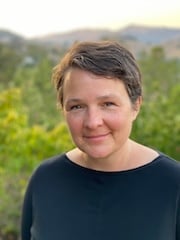
Dr. Emily Willingham is a 2022 MIT Knight Science Project Fellow, and the author of several books, including the upcoming If Your Adolescent Has Autism: An Essential Resource for Parents from Oxford University Press, and has served as a regular contributor to Scientific American and other national publications.


Add a comment: