"Profound autism" label is profoundly useless
Clustering autistic people under an arbitrary, demeaning label erases their individual humanity and needs.

Will splitting autistic people into arbitrary categories functionally shunt those who are nonspeaking and intellectually disabled into a medicalized corner of existence where their quality of life doesn’t even get glancing attention?
This request for applications (RFA) from the Autism Science Foundation (ASF) certainly sets the (low) bar for that scenario. While research into quality of life gets no mention at all, here’s what does get mentioned: research into mechanisms (molecular pathways that underlie the development of autism), into medical or genetic treatments, and into “co-morbid” conditions, and an emphasis on “projects which address challenges in recruitment, retention or data collection in individuals with profound autism.”
The RFA cites the 2021 Lancet Commission on the Future of Care and Clinical Research in Autism as validating the term “profound autism” to single out autistic people based on perceived function related to speaking and IQ scores, among other factors. The Autistic Self Advocacy Network (ASAN) responded to that report at the time, noting the harms that functioning labels cause autistic people. They also noted that the mention of the term “profound autism” was a “sidebar recommendation” and an “administrative classification,” rather than a diagnostic recalibration.
Media coverage at the time focused heavily on this recommendation rather than the “need for better services and research for autistic people, including the need for individualized services, and research that prioritizes quality of life” that the report actually emphasized. One reason for the media emphasis was the ready availability of the founder of ASF, who made sure that the organization provided a news release complete with ready-to-lift breathless quotes about how “thrilled” she was about the designation, along with publication of a thrilled-sounding op-ed she wrote. No surprise really, as she was a member of the commission, and once she got that label into the report, she was free to run around wedging it into every news story she could.
What’s wrong with the label, designed to be applied to autistic people who need 24-hour daily care? ASAN makes that clear:
‘Profound autism’ is just an attempt to rebrand the same harmful notion. The reality is that autistic people, just like people with Down Syndrome or Cerebral Palsy, have a wide range of abilities and support needs, for lots of different reasons. The Lancet Commission conflates needing 24/7 support with having a measured IQ of 50 or below or being nonspeaking, but this is a harmful oversimplification — for example, there are many autistic people who speak or who have higher IQs but who require around-the-clock services, and there are autistic AAC users who live independently. We also know that IQ tests are notoriously unreliable for autistic people, particularly nonspeaking autistics. Nor is it clear why the presence of co-occurring disabilities like intellectual disability or speech apraxia should result in a different label, when co-occurring disabilities are common in autistic people and already accounted for by the DSM.
I also note that in the much-hyped genetics study characterizing “four subtypes” of autism – which had important limitations and a troubling fuzziness – a subtype that did not emerge in that analysis was one that even hinted at the contours claimed for “profound autism.” And yes, autistic people with intellectual disability and language impairment were included in the analysis. In fact, the list of features that have been shoved under the “profound autism” umbrella were split into two separate subtypes in that genetics study.
It’s almost as if trying to put autistic people into arbitrary boxes instead of working on adaptations that generalize across commonalities just ends with autistic people not getting supports that they need.
It doesn’t help that some parents who seem to want to foreground their grievances more than anything else dismiss autistic people who speak for themselves, especially if those autistics are self-diagnosed. According to research conducted by autistic people and ally researchers, self-identified autistic people struggle to access services they need and would (obviously) have better outcomes if they could. And yet according to researchers who medicalize being autistic, self-diagnosed people seeking services should be eyed with suspicion because they are probably just seeking attention and “seeking … a specific ‘desired diagnosis’ … to frame vague feelings of inadequacy in terms that resonate socially.”’
This latter condescending interpretation served as ammunition for Grievance Parents (GriPars) who are thrilled about the “profound autism” label (is it to resonate socially?). The GriPars used the latter study to claim that self-diagnosed autistic people push back against causation studies and splitting labels not because such studies are eugenicist but because an identified cause could exclude an autism diagnosis for them. Yes, that’s a real thing that someone really thought and typed on a social media platform, to enthusiastic acceptance from acolytes.
In an ironic twist that only GriPars could achieve, the GriPars also have determined that self-diagnosed autistic people are actually narcissists. Seems that it’s OK for them to throw labels pejoratively at other people, but not for other people to have realizations about their own neurobiology and seek support.
Labels that “resonate socially” for them but not for thee, I guess. This useless divisiveness is a profound shame.
News you can use
Do you or a family member use a smartwatch? Please take heed of this warning from U Michigan’s Ford School of Public Policy: “... a lack of ethical and longitudinal smartwatch research, unprecedented federal protected data sharing policies, and the current administration's spread of misinformation around autism erasure will harm people who are autistic instead of helping them.”
Sensory overload may not be what you think it is, writes Hari Srinavasan: “From the outside, this appears to be oversensitivity. From the inside, it often feels like work that never quite lets up.”
Under the dark of night, with no public announcement, Robert F Kennedy the Lesserhas appointed some notorious anti-vaxxers to the Interagency Autism Coordinating Committee (IACC) , STAT reports. The committee is supposed to include at least three autistic people, but whether it does is unclear, and “many people in the autism community told STAT that they have not heard from federal officials about their applications to join the committee.” Public health may suffer (again, more, still): “A small coalition of people on IACC could influence the direction of federal funding and orient private organizations in crucial ways. Former members said that it would be easy to write reports and organize study roundups in ways that support further changes to the vaccine schedule, a move Kennedy has pursued as the health secretary. The committee could also push to change the federal attitude toward debunked autism treatments.”
Latest blog post from TPGA
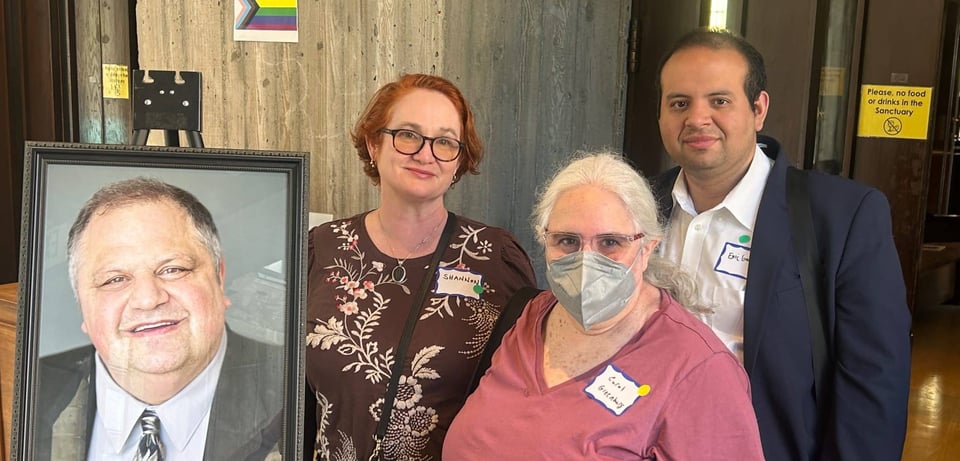
About That Mensch, Steve Silberman, and How Much We Miss Him
People you should know
We want to share with you the work of autistic artist Max Alexander, whose joyful output celebrates autistic play. You can learn more and view his art here.
Ron Funches was a contestant on the show “The Traitors” (I confess to not having watched it), and his experience there of “other … participants being a dick to him” and subjecting him to “cruel trauma” led him to realize he is autistic, like his son who was diagnosed at age 2. "I honestly didn't know I myself had Autism; I thought I was just an ally and parent of an autistic child," he wrote on social media.
Jim Coleman is a late-diagnosed autistic professor who’ll be giving a talk on March 30 (online and in person) at Vanderbilt University. The title of the talk, which made me feel seen, is “Pathologically Genuine.”
Thanks for reading, and may we all continue to be pathologically genuine.
Got something autism-related to share with us? Send it along to editorial@thinkingautism.com.
Got a comment? We’d love to hear from you, so drop us a line below. Please note that comments are moderated per TPGA guidelines.
About the Author
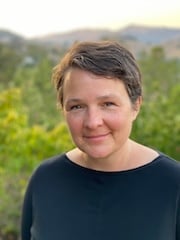
Dr. Emily Willingham is a 2022 MIT Knight Science Project Fellow, and the author of several books, including the upcoming If Your Adolescent Has Autism: An Essential Resource for Parents from Oxford University Press, and has served as a regular contributor to Scientific American and other national publications.


Add a comment: