Black history is also neurodivergent history
Highlighting Instagram accounts that enlighten and inform about the Black neurodivergent and disabled experience.

February is Black History Month.
In honor of Black History Month, we are highlighting Instagram accounts that enlighten and inform about the Black neurodivergent and disabled experience.
A Color of Autism’s (IG: @colorofautism) Black History Month Spotlight: “Black history is also neurodivergent history. From science and space to art and literature, Black innovators have always thought differently—and changed the world because of it. This month, we’re honoring Black trailblazers whose brilliance reminds us that neurodiversity is strength, not a limitation. Swipe, learn, celebrate, and uplift the stories that deserve to be told—loudly. Because when we recognize all minds, we unlock all possibilities.”
Phenomenally Autistic (IG: @phenomenallyautistic): “We are all apart of history each & everyone of us, just your existence alone contributes to our history! Black Disabled History too!! Our strength is Black History ✊🏽 Our resilience is Black History 🖤 Our beauty is Black History 🦋 Our influence is Black History ✨ Black Disabled history matters because disabled people contributed so much to our history 👌🏽”
Autistic Self Advocacy Network (ASAN) (IG: @autisticselfadvocacy): “Happy Black History Month from ASAN! Take some time this month to learn about Black history, especially Black disabled history that is often erased.”
And for your viewing pleasure, the Disability Rights in Black 2020 playlist.
News you can use
For many years, pretty much every single description of the autistic population said that people assigned male at birth represented about three quarters of that population. The assumed male predominance gave rise to weird ideas about autism and hormones like testosterone, like the hypothesized (and debunked) “extreme male brain.” These weird ideas in turn opened the way to grifters like Mark and David Geier to flog a prostate cancer drug as a testosterone-lowering “cure” for autism. Yes, the same David Geier who’s now joined Kennedy the Lesser’s cabal of quackery at the HHS.
Welp, turns out that the “male predominance” thing isn’t actually a thing. A study out of Sweden that tracked diagnosis rates for people born from 1985 through 2000 has found that at earlier ages, those assigned male at birth do make up a large proportion of diagnoses, but by the teens, the ratio is about even between this group and those assigned female at birth. The reason for difference in diagnostic timing is not clear, but viable candidates include differences in presentation or biases baked into assessment tools
[CW for murder and suicide] When a man and woman murdered their beautiful autistic boys before dying by suicide themselves, much of the coverage focused on the hardship the parents faced instead of on the horrific fact that they murdered their young sons. Even worse, the parents actively declined respite care, which was available for them. TPGA has written about the tendency of the fourth estate to conflate murder and devotion in its coverage of these tragic murders, and here we are, almost 10 years after that was written, seeing it happen again.
Here’s the thing: Our job as parents is to do everything we can to support the life and health of our children. That means that if we are overwhelmed, we ask for help, even if the only recourse is to call emergency services. There is never, ever an excuse for murdering a child, and news coverage of these heinous acts should always focus on the victims whose young lives were abruptly ended by their own parents, and not on pity for the parents or framing that feeds the public perception that disabled people are better off dead.In fact, according to ASAN, in just the last five years, 548 people with disabilities have been murdered by their parents. This magnitude of loss has led to the establishment of March 1 as a formal day of morning for disabled victims of these crimes. You can find out more about this year’s event at ASAN’s site.
Autistic children are more likely to have head circumferences at the edges of the human continuum according to a small-ish study out of Israel, published in Autism Research.
In the last newsletter, I talked about how science is less a process of one-step-forward-at-a-time and more like a series of pendulum swings. At the time, the pendulum had swung from “Covid during pregnancy linked to having an autistic child” to “Covid during pregnancy not linked to having an autistic child.” Well, this week, it’s back over to “linked to having an autistic child,” per a study in Translational Psychiatry. What’s weird is that the authors found a link to an autism diagnosis but not to speech/language or motor delays, which … are not at all uncommon in autistic children?
People you should know
I wrote last week about how Aliya Rahman’s treatment by ICE goons included their mocking her for being disabled. Rahman took the story of this treatment to members of Congress in strong, clear testimony about the experience. Another repeat mention in this section for Eric Garcia, the autistic political journalist featured here before, who interviewed Rahman for The Independent.
Noor Pervez is the community engagement manager for ASAN and also happens to be a doll collector who advised Mattel in the development of the autistic Barbie that got so much attention lately. WBUR interviewed Pervez about the experience.
Recently at TPGA

The Day My Cat Died, on Autism and Grief
Thanks for reading, and let’s all take some time this month to learn about Black history, especially Black disabled history.
Got something autism-related to share with us? Send it along to editorial@thinkingautism.com.
Got a comment? We’d love to hear from you, so drop us a line below. Please note that comments are moderated per TPGA guidelines.
About the Author
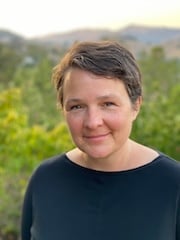
Dr. Emily Willingham is a 2022 MIT Knight Science Project Fellow, and the author of several books, including the upcoming If Your Adolescent Has Autism: An Essential Resource for Parents from Oxford University Press, and has served as a regular contributor to Scientific American and other national publications.


Add a comment: