Autistic people don't need TWO terrible national committees
Singer *loathes* autistic advocates, and you should always be very skeptical of her autism projects.

Alison Singer of the Autism Science Foundation is involved in pulling together an alternate autism coordinating committee. It’s intended as a counter to the pack of outdated wannabees RFK the Lesser has appointed to the Interagency Autism Coordinating Committee, or IACC. The proposed alternate is called the Independent Autism Coordinating Committee, or I-ACC. TPGA has posted some shareable commentary on social media about this plan for an alternative committee, explaining why it might seem promising but is, in fact, not positive news for autistic people. Below is a summary of that commentary from a Bluesky thread (if Instagram is more your thing, you can find a precis to share here):
Singer loathes (and never stops trying to smear) autistic advocates, and you should always be very skeptical of her autism projects. Even the IACC — compromised as it is — has three autistics on board (although yes, associated with anti-vaxxers and/or cure promoting). To date, Singer's I-ACC has exactly one autistic person.
This is not "nothing about us without us." Singer and her "profound autism" campaigners were really mad about the increased autistic IACC representation in 2022, because they wanted more "profound autism" parents on the committee, even though other IACC parents/siblings did have high-support autistic loved ones.
By creating this new I-ACC autism committee, Singer and her "profound autism” campaigners can finally, openly exclude autistic advocacy and rights from research priorities. They can focus on cures and treatments. This is not what autistic people want or need. The I-ACC is a bad project.
News you can use
Autism researcher emerita Uta Frith has decided that the autism spectrum no longer exists, apparently. Autistic advocate Anne Borden unpacks why that’s nonsense over at TPGA. Despite some history of disputation around the spectrum metaphor, as Borden notes, “The spectrum concept has helped to humanize autistic people: instead of a rigid category list, autistics are now understood as a community with shared experiences — and authorship of those experiences. The autistic rights/neurodiversity community has mainly endorsed the spectrum concept because the degree of disability from autism varies so widely throughout the lifespan, and because autistic people can massively relate to each other regardless of their support needs.”
Frith seems anxious to claim that evidence is on her side in disputing the relevance of the spectrum (and Borden handily deals with those claims), but then Frith says, “People still hang on to the idea that there is something that unites all the people who are diagnosed as autistic. I don’t believe that any more.”
Thing is, Frith can’t have it both ways, claiming high ground based on evidence (that she hasn’t kept up with) and then referring to a “belief” as support for such a sweeping and readily debunked statement dismissing the commonalities that autistic people share.
Relatedly (IYKYK): Someone decided that autistic people couldn’t intuit other people’s thought processes thanks to a couple of dolls named Sally and Anne and a marble that got moved. The result? An entire cottage industry of research was born, all predicated on the assumption that autistic people lack theory of mind. Travis LaCroix of Durham University unpacks what is yet another history of autism research that led to millions of dollars wasted and immeasurable harm because of inapt assumptions about autistic people and empathy. We featured his work and response to commenters in our last newsletter, but here he is offering more detail over at The Conversation:
“… my recent analysis argues that theory-of-mind research in autism has become ‘degenerating’. Rather than generating new, risky predictions, the theory survives by shifting definitions and goalposts to avoid being disproved. When no possible result counts against a theory, it stops being scientific.”
This just in: Autism caused by actual brain farts, apparently. The gas involved in this case is nitric oxide, which is an all-around workhorse of a signaling molecule, and this study claiming that its (over)production in the brain underlies autism was done in mice. You’ll need so many grains of salt for this one, you’ll have more salt than science.
Speaking of wasting money on things that don’t help autistic people and could harm them, RFK the Lesser’s at it again, looking so hard for the “causes” of autism (and of course, all he apparently plans to look at is vaccines). A quarter of a century, we’ve been watching this bullshit drag on and on and on. This entire administration wants to live nowhere but the past, apparently.
But wait! What if researchers did actually conduct research into what might be beneficial for autistic people? You get things like this paper on factors that make for a good life for autistic children. The study currently in preprint and thus not yet peer reviewed. It highlights four themes from interviews with autistic people:
✓ Being accepted by others in a way that allows the child to be themselves
✓ Finding “the things that light the child”
✓ Having a sense of control over their own life
✓ Physical/sensory environments matter.The authors note that all of these themes were “common to both autistic adults and parents of autistic children.”
Athletes are known for doing their best when they enter into a “flow state,” that elusive but freeing total absorption in the moment at hand. They’re not alone in the experience – autistic people also can enter into a flow state, an especially intense one, when they’re immersed in what captures their minds. And research suggests that this flow state might be one that autistic people need on a daily basis to feel relief from everyday stress and manage their self-regulation and social interactions. In other words, getting in that bubble and muting the sensory world all around is a positive and desirable daily need for best function.
People
Autistic researcher Rachel Moseley was on Science Friday talking about those decades-long artificially lower rates of autism diagnosis among people assigned female at birth. In addition to unpacking the history of why so many girls go overlooked, Moseley got to emphasize that using a strengths-based approach to talking to someone about their autism diagnosis would be the proper foundation for redesigning current diagnostic criteria to be “more neurodiversity-affirmative.” Amen.
Thanks for reading, and here’s to strength-based approaches.
Got something autism-related to share with us? Send it along to editorial@thinkingautism.com.
Got a comment? We’d love to hear from you, so drop us a line below. Please note that comments are moderated per TPGA guidelines.
About the Author
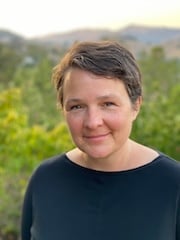
Dr. Emily Willingham is a 2022 MIT Knight Science Project Fellow, and the author of several books, including the upcoming If Your Adolescent Has Autism: An Essential Resource for Parents from Oxford University Press, and has served as a regular contributor to Scientific American and other national publications.
-
I value your articles and opinions.


Add a comment: