Autistic Holiday Gift Guide | Spectrum Santas | Elves We'd Shelve
Would you like to express a joyful spirit with intention in these trying times? Consider these autistic-curated gifts to show the autistic people in your life that yes, you see them, and that yes, they are seen.
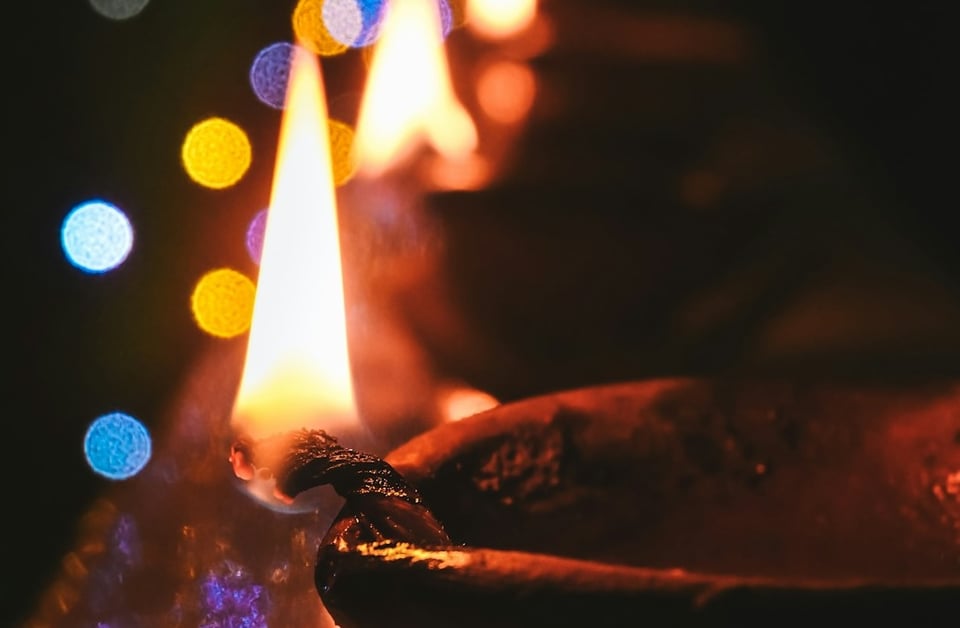
‘Tis the season for love and light and perseverance with arms wide open to goodness, giving, and receiving. Would you like to express a joyful spirit with intention in these trying times? Consider these autistic-curated gifts to show the autistic people in your life that yes, you see them, and that yes, they are seen. The guide is curated by the good people at Autastic, which offers resources and community for adult-identified autistic BIPOC. As their website says, they affirm “all genders, orientations, identities, bodies, and abilities. Be kind. Be courteous. Lead from the heart.”
There are some very cool, very useful, and sometimes very humorous items on this list, wherever your heart leads you. Consider:
The “Smells like a late-diagnosed autistic candle” – tagline “Feel cozy and warm with the comfort that your entire life now makes sense”
The book “All the Noise at Once” in which “a Black, autistic teen tries to figure out what happened the night his older brother was unjustly arrested in this ‘propulsive,’ moving story about brotherhood, identity, and social justice.”
Little Ouchies Spiky Fidget, offering “portable anxiety relief”
A “Normal Is Boring” sticker for that one remaining space on the can’t-go-anywhere-without-it water bottle
Or check out the comfort clothing, weighted blankets, sensory-soothing gadgets, or … OK, just go look at them all! It’s a fab list.
If you’re looking for a cookbook that meets autistic needs in every way, check out Matthew Broberg-Moffitt’s “Color, Taste, Texture!” As an autistic professional chef, Broberg-Moffitt writes what he knows for people who will benefit most. He even includes a Food Preference Profile and Worksheet to support understanding and choice-making.
News you can use
The World Health Organization has reaffirmed that vaccines are not linked to autism. Its 26-year-old vaccine-safety committee has once again reviewed dozens of studies and has reaffirmed “its previous conclusions from 2002, 2004 and 2012: vaccines, including those with thiomersal and/or aluminum, do not cause autism.” In a rational world, people would understand the level and scope of expertise involved in this conclusion and shut up about it, but as we know, there’s nothing rational about some people when it comes to vaccines and/or autism.
Which takes me to the persistent dipshittery of US Senator Ron Johnson (MAGA-Wisconsin), who has endorsed a book by a physician who lost his certification for advocating quack treatments. According to ProPublica, the book touts chlorine dioxide – yes, bleach, again – as a cureall for everything from cancer to Covid to autism. Among a host of competitive candidates, chlorine dioxide might well top the list of “WTF are they thinking” snake oil products that gain traction in some groups. It is literally bleach, used in paper products and as a disinfectant, yet it has had a remarkably long shelf life in the quack armory. You can find some of its twisted history in this post from 13 years ago at TPGA, and it might surprise you to learn that it first came onto the scene as a form of sacrament in a church invented by grifters who spent most of their time hiding in Mexico. You can find how easily I demonstrated that it is bleach in this other TPGA post, from back in 2013. Yes, for more than a decade, these grifters have been successfully convincing people to drink this stuff, administer to their children as enemas, or bathe their children in it. This country is allowed only 100 senators at the federal level. It is beyond unfortunate that even one of them would buy into this bullshit and endorse it. But he’s just part of the same posse of parasites who prey on parents and others in the public who find themselves desperate when science doesn’t yet have the answers they need. As ProPublica notes:
“In November, Johnson and Kory were listed among the speakers at a conference of the Children’s Health Defense, a nonprofit that stirs anti-vaccine sentiment. It was launched in 2018 by Health and Human Services Secretary Robert F. Kennedy Jr., whose FDA is considering new ways to more closely scrutinize vaccine safety.”
Thanks to people like them, pediatricians are having to spend more time, again, addressing questions from parents about vaccines and autism. American Academy of Pediatrics’ autism subcommittee chair Alice Kuo offers some advice for clinicians facing these questions: “Do not say, ‘Vaccines don’t cause autism, but it’s important to find out what’s behind this terrible disorder,’” said Dr. Kuo, who notes that many in the neurodiversity community take issue with autism being characterized as a disorder. “Constantly asking about etiology is problematic, because trying to figure out why someone is the way they are implies that there's a problem.”
Some people have yet to get this message. Here’s the journal Pediatric Research publishing a study about the “burden” of autistic people in which the authors use eugenics language right out of the 1930s playbook: “This study emphasizes the need for integrated strategies in ASD prevention, early detection, and intervention to address growing global burden." It’s almost 2026, people. Perhaps Pediatric Research’s editors could heed the above advice from the AAP about what constitutes humanizing language about autistic people. Or any people.
I’ve sent this study, published in the Journal of Autism and Developmental Disorders, to quite a few people in my life. It quotes extensively from autistic people about their experiences of anxiety, and I know that many, many autistic people will see themselves in the material.
Some examples:
“I’m having to monitor my own body language and all that and tone and everything and also try and manually filter out any background noise and background lighting. I can’t just ignore it.”
“…smells, sounds they all become more intense. My sense of smell gets a lot more — it improves a lot more — I have a greater range of what I can smell and smells get stronger and sounds become stronger.”
Autistic people have reported that “not being able to engage in ‘restricted and repetitive behaviours’ (stimming) either due to social pressure or environmental constraints, was a cause of ‘anxiety and stress’.” The review authors say that this information
“… underscores the importance of recognising stimming not as a symptom to be minimised but as a vital form of emotional regulation.”
Perhaps someone could alert ABA practitioners to this fact.
I imagine a lot of readers will recognize the “social hangover”:
“I didn’t realise there was such a thing as social hangovers and that was a big thing. I had to realise that if I went out to a party with friends or I go to a big family thing I am probably going to need a day or two after that that is just quiet because I can’t do too much at once. It’s sort of like trying to drain a fuel battery and there is nothing left.”
And being diagnosed was helpful:
“… I have learned, you know, post diagnosis that I am starting to go to events because I can tell them my accessibility needs in advance, which is helpful.”
As is being around other autistic people and just letting the autistic flag fly. The authors write:
“Like-minded partners created an environment that was comfortable and fostered a sense of belonging. Further, miscommunication between autistic conversations partners is less likely: ‘I’ll say a very straightforward question and they’ll give me a straightforward answer.”
People
In the Santa multiverse, anyone can be Santa. After all, he’s a fictional character, leaving the way open to interpretations that span the human spectrum. That’s what we learn in “Santa Camp,” a 2022 documentary film directed by Nick Sweeney. Camp co-founders Dan and Diana Greenleaf bring an ethos of inclusion and representation to training as Santa — and as Mrs. Claus, too. The doc focuses on three trainees, a Black Santa, a disabled Santa, and a transgender Santa. Curious? Enjoy this preview of the film.
In what ended up being a long, winding road with some surprises lurking around a curve here and there, I wrote a book about parenting autistic adolescents. Published by Oxford University Press, it’s called “If Your Adolescent Has Autism: An Essential Resource for Parents,” with a foreword by Susan W. White, PhD. Oxford has published an excerpt from the opening of the book here and pushed out a news release about it here if you’d like to learn more.
Bits and bobs
KQED held a forum with experts discussing advances in suicide prevention for autistic young people.
Vanderbilt U is looking for autistic undergrads to participate in a study that looks all right.
Thanks for reading. Let’s lead from the heart and keep the light going.
Got something autism-related to share with us? Send it along to editorial@thinkingautism.com.
Got a comment? We’d love to hear from you, so drop us a line below. Please note that comments are moderated per TPGA guidelines.
About the Author
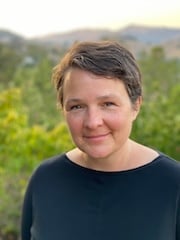
Dr. Emily Willingham is a 2022 MIT Knight Science Project Fellow, and the author of several books, including the upcoming If Your Adolescent Has Autism: An Essential Resource for Parents from Oxford University Press, and has served as a regular contributor to Scientific American and other national publications.


Add a comment: