Autism Acceptance Month: recommended reading and a warning
April is Autism Acceptance Month. Here's a short reading list for you, plus guidance on suspect autism organizations.

April is Autism Acceptance Month. We have a short reading list for you, starting with “The Truth About Autism” from The Autistic Self Advocacy Network:
Autism is not a tragedy. It is a big problem when people hear that autism is a tragedy. It makes people assume that autistic people’s lives must be bad because we are autistic. This means they don’t think about ways our lives could be better. It means they might not realize when people or society are hurting us and our families.
Scientific American made a splash with a visualization of the autism spectrum using 39 numbered traits. In the visualization, the numbered traits are clustered by color, and shading within each cluster signifies the strength of each trait’s association with autism.
But Stimpunks put forth a beautiful case for looking past traits to the patterns they form to uncover the environments that shape those patterns — and (re)designing these environments to be supportive, rather than challenging. From their fascinating post:
Traits on their own don’t explain much. They start to make sense when you see the patterns behind them — and the environments that shape them.
If this feels like you, don’t stop at naming it.
Follow it:
- into the patterns that keep repeating
- into the conditions that change outcomes
- into designs that actually support you.
Labels can have their uses as starting points for understanding. But when they’re wielded only to manipulate certain outcomes — such as using “profound autism” to cater to grievance parents’ needs — they are simply harmful. Functioning labels like “profound autism” “don’t describe us; they gatekeep access to support, autonomy, and opportunity,” writes Helen Edgar at the Neurohub Community Journal.
Finally, a warning: Like labels, not all organizations claiming associations with autistic people exist for the benefit of autistic people. Instead, they exist to benefit parents, or a juggernaut industry based on abuse, or people who grift by telling lies about “causes” of autism or “cures” for autism. TPGA has developed five criteria for gauging the mission of autism-related organizations, along with a list of useful autism organizations and organizations to avoid.

How do you know if an autism organization is good?
Not every autism organization helps autistic people. Here's how you can tell the difference, with examples.
News you can use
- It’s not a compliment! "When someone says you don’t look disabled, they are seeing the output of an enormous amount of effort they had no access to.[…] What they are not seeing is the cost of that functioning, or what follows it," writes autistic podcaster Lovette Jallow.
- In the last newsletter, I wrote about Uta Frith’s dismissiveness regarding masking — she stated that there is no scientific basis for saying that autistic people socially mask to the point of disabling exhaustion. She was wrong, of course — not only is there a basis (3-day recoveries are definitely a thing for me!), but also there is demonstrable harm from the burden of masking. From the LA Times: "For kids who cope by masking, constantly deciphering and mimicking social responses is often cognitively and emotionally exhausting. ‘Masking is actually a risk factor of suicide for autistic people,’ said Lisa Morgan, founder of the Autism and Suicide Prevention Workgroup, who is autistic herself."
-
Speaking of masking, Sara Cork, an autistic clinical social worker, has some informed experience to share:
Is comparing the skepticism of autism in high-masking women to lobotomies and eugenics an over-exaggeration? Am I engaging in my own histrionics? Having sat across from client after client sobbing through the story of how a professional told them that the autism diagnosis they had been given, which led to so much personal growth, was incorrect, it doesn’t seem like an exaggeration.
- TPGA senior editor and co-founder Shannon Rosa pointed me to Unbound Futures, a new podcast from two neurodivergent parents (Joyner Emerick and Shubha Balabaer) about parenting really, really high support non-speaking autistic kids:
Parenting non-speaking kids means centering trust, because we often know what our kids need, but not why. This podcast offers practical examples of how to support our kids to feel trusted, in non-traditional ways.
- From a PSA in honor of World Down Syndrome Day: Using the R-word is just as outdated as formerly accepted customs like ... washing your clothes with urine or giving your kids heroin syrup (a real thing my grandmother used to give my mother because, let’s say, none of us fell far from the family tree, and some of us tend to express this by night wakefulness). No excuses: stop using that slur. JUST EVOLVE.
New from TPGA

The State of the Science: On Tokenism in Autism Research — THINKING PERSON'S GUIDE TO AUTISM
Autism research is a revolving door which Autistic people virtually never get to enter and allistics virtually never bother to exit.
- A collection of personal experiences attending conferences, authored by Xavier Penn, that explores what’s still going wrong in autism research.

An Autistic Patient Uprising Is Happening Now — THINKING PERSON'S GUIDE TO AUTISM
How one autistic mother’s pursuit of truth is part of a broader shift toward patient-led accountability, ethics, and reform.
- “Over the past three decades, autism moved from the margins of medicine into the center of public policy and large-scale service systems. As diagnoses increased and behavioral interventions like ABA became embedded in Medicaid and insurance frameworks, a powerful system took shape: one defined largely by clinicians, researchers, and institutions. Public policy only acknowledged Autistic people as patients of intervention, and regarded them as a silent minority group who cannot inform their own care. The current uprising emerges from that imbalance. It is not a sudden rupture, but a response to a system built without the people it claims to serve.” Excerpted from “An Autistic Patient Uprising Is Happening Now,” by Henny Kupferstein over at the TPGA website.
People
-
Tigist Hailu is the parent of an autistic teen in Addis Ababa, Ethiopia, where she founded Melu’e Foundation, with a mission of empowering autistic people and their families. In this Q&A, she says:
At our center today, we continue to bring the community closer to our children, to promote interaction, understanding, and inclusion. We believe autism is not a disease, but a different way of seeing the world.
- Tal Anderson talks about her role as Becca King, the autistic twin to the autistic coded Dr Mel King on “The Pitt,” also played by a neurodivergent actor (Taylor Dearden). Anderson has a new book, “Oh, Tal, Not Like That,” the second in a series published with illustrator Michael Richey White, just published in conjunction with Autism Awareness Month.
- Also out there in bookland is Steve Edwards, an autistic college writing instructor whose new collection, Rare Good Essays on Art, Autism, and Astonishment, was just published.
- Love to hear two of our favorite autistic journalists talk entertainment shop on the Bubble People Podcast, and of course what they’re talking about is “Heated Rivalry.” Catch the ep, “Subtle autism in ‘Heated Rivalry’ with journalists Eric Michael Garcia and Sara Luterman” here.
Thanks for reading, and may we all find ways to change outcomes into designs that actually support us.
Got something autism-related to share with us? Send it along to editorial@thinkingautism.com.
Got a comment? We’d love to hear from you, so drop us a line below. Please note that comments are moderated per TPGA guidelines.
About the Author
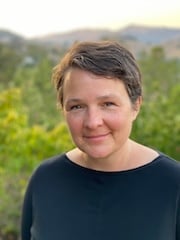
Dr. Emily Willingham is a 2022 MIT Knight Science Project Fellow, and the author of several books, including the upcoming If Your Adolescent Has Autism: An Essential Resource for Parents from Oxford University Press, and has served as a regular contributor to Scientific American and other national publications.


Add a comment: