4 autism subtypes: hype in August, still hype now
As with all such genetics studies, it’s unclear what the results offer for autistic people.

For reasons that are unclear, WaPo picked up on the “four autism subtypes” hype from last summer in late December, four months after everyone else covered the study (and 5 months after it was published). Of course, WaPo being what it is in the national mind, “4 aUtIsM SuBtYpEs” has now become part of The Discourse on Autism (and many questions directed our way about it). The WaPo piece claims the study was published with “little fanfare,” although back in the summer, it was covered by little-known outlets such as Scientific American, Reuters, The Daily Mail, and New York Post, among dozens of other publications. WaPo must have a very different definition from mine of “fanfare.”
In a massive scoop on WaPo, we ourselves covered this study back on August 11. Some highlights from our analysis, in which we noted at the time that “the study got a lot of attention”:
One long-time autism researcher noted to Scientific American that the work had a “rediscovering the wheel” aspect to it. Another veteran researcher told the outlet that these broad categories “follow lots of findings by other researchers.”
There’s always been a discussion around “types” of autistic people, just like there are discussions around “types” of men or “types” of teachers or “types” of fans of companion animals (are you a dog or a cat person?). But the utility of drawing these artificial lines around autistic people who are, after all, autistic because of shared traits has never been clear. This study does not bring the contours or meaning of such efforts into greater focus.
As is common, most children whose information was included in the study were white. How these findings might bear up or apply for children of non-European ancestry is not known.
Given that children of non-European ancestry make up the vast majority of children on earth, that’s kind of a big omission.
… children in each category still had behaviors that overlapped with those in other categories. All of the children are still autistic children.
As with all such genetics studies, it’s unclear what the results offer for autistic people.
This is one group doing one study, and the collective mass of single scientific studies that end up going nowhere would outweigh Mt Everest. Even if the results ultimately prove to be “real” in some broad sense, these categories would be about as useful as having “gendered” colors for toy aisles – an imposed construct that creates false expectations and assumptions about biology and human behavior and elides the reality that none of us exist in one of a handful of clearly labeled boxes of limitations and abilities.
News you can use
-
Life at the autistic/nonbinary intersection: Autistic people are more likely than the nonautistic population to express genders that fall outside of the falsely constructed social binary. So it makes sense for researchers to look at the experiences of autistic transgender and gender-diverse people and ask them about the specific experience at this intersection of existence. A study published in Plos One reveals the experiences of people in this group and as might be expected, the identities can sometimes enhance community and chosen family and sometimes collide.
There’s respondent Micky, who felt uncomfortable being openly autistic at work but felt protected and confident about being transgender and seeking company supports for inclusion. There was a system in place for the latter – such as making name changes on paperwork – but “no all encompassing way to support autistic people at work.” Other respondents talked about how a lack of accommodations and understanding about autistic sensory needs drove them from workplaces.
The study also touched on the experience of this population in healthcare, where there is another disconnect in understanding and accommodation regarding the specific needs of autistic people who also are transgender or gender divergent. Among the struggles is the navigation of the healthcare itself: “Navigating gender identity healthcare is demanding; patients need to organise appointments, admin and correspondence whilst experiencing a highly emotional personal process,” with one respondent saying that he needed “significant help from hospital staff to be able to access gender identity healthcare.”
Finding a way in some of LGBQT+ spaces also was a mixed experience. The welcoming of autistic LGBQT+ spaces received praise, but respondent Sam noted a collision of worlds in their nightclub experiences: “Sam explained how they felt unbelonging in LGBT+ nightclubs as their sensory sensitivities were not supported. They suggested that it was more socially acceptable to be overly intoxicated than to ask for a sensory break.”
Finally, the not-uncommon experience of breaks with or abuse from family members has made chosen family a haven for respondents. Sam “aspired to create a community living environment in which members could share resources, knowledge and skills so that everyone could invest in their community: “I would like a commune, for all of my sick, queer and disabled friends … we could all just move in together and help each other,” they said.
Read here for a plain-language summary of the study from the authors. - Is it disinformation? The Autistic Self Advocacy Network has a guide to support us in figuring that out in the realm of autism claims. ASAN lists 11 debunks of some of the hottest autism disinformation of the current moment, and yes, acetaminophen is on the list. - The Autism Industrial Complex: I’ve long viewed and characterized the ABA industry as a self-regenerating, insatiable monster that destroys autistic people, but perhaps “Autism Industrial Complex” is a more dignified way to describe it. Disability studies scholars Alicia A. Broderick and Robin Roscigno, respectively of Montclair State University and Rutgers University, take a look at this insidious cottage industry of harm. According to this coverage of their work:
“In their notion of the AIC, the medical-industrial complex and the education industrial complex create a series of networks that promote their products and services to generate profit. These networks also generate the ideas and beliefs that make these products and services appear necessary and legitimate. The main “players” in the AIC are academic behaviorists, psychologists/psychiatrists, non-autistic parents of autistic children, the Behavior Analyst Certification Board (a private, non-profit corporation established in 1999 that certifies behavior analysts), and the advocacy/policy lobbying organization, Autism Speaks.”
The two scholars write:
We fear (and assert) that the AIC is driven not by the interests of autistic individuals but by the interests of those who stand to profit from the AIC. Additionally, we contend that the costs to autistic people of the proliferation of the AIC have generally been regarded, thus far, as insignificant in the face of its profitability.
Yep.
-
Centering family means including and recognizing BAP-py parents: A clinician argues (gasp) for a family-centered care model that “acknowledges the family as the ‘experts’ in providing diagnostic delivery. Central to this approach is open communication, shared decision-making, and mutual respect between providers and caregivers or families.”
The clinician is Dr. Amy Weitlauf, associate professor at Vanderbilt University Medical Center and associate director of research at the Treatment and Research Institute for Autism Spectrum Disorders. In her practice, she recognizes the reality of the “broad autism phenotype” (BAP) and the role that genetics plays in being autistic – and being BAP-py parents of an autistic child. “A lot of the time, parents bring it up about themselves,” she says. “Parents will say, ‘I’m pretty sure that I’m autistic but I was never diagnosed. A lot of the time, after a child gets a diagnosis, parents can reflect on themselves or other people in their family and see similarities.”
- Retraction watch: Gosh, who could have predicted that a study based on using AI-face recognition tech to “diagnose” autistic children might have entailed issues related to “ethics and validity of the dataset underlying the study”? The study in question, “Can artificial intelligence and face recognition using deep learning detect emotions in children with autism?” both keeps to the Betteridge law of headlines and has been retracted in part because it is “not clear whether the legal guardians of the children included in the dataset gave consent for these images to be distributed in a public dataset or used in academic research.”
- Visa for a child declined for being autistic: A family of Indian origin living in Aotearoa/New Zealand is dealing with the trauma of authorities denying their autistic child’s visa and the ensuing risk of deportation from the country. The brutal decision: “Responding to the case, INZ deputy chief operating officer Jeannie Melville said applicants assessed as likely to impose significant costs on health and education services could not be granted a waiver.” The father came to Aotearoa/New Zealand as a much-wanted, badly needed healthcare worker under the country’s “Tier 1” immigration program, and he and his wife gave up their professional licenses in India after being registered professionally in Aotearoa/New Zealand, further damaging any potential they have for being able to return to India.
People
- “Bob Kafka, a renowned disability rights advocate, died at his Austin, Texas home on December 26. He was 79 years old. Kafka was an organizer with ADAPT (American Disabled for Attendant Programs Today), a group which advocates for policy change to support people with disabilities. Mark Johnson, co-founder of ADAPT and a longtime friend of Kafka who confirmed his death, told NPR Kafka's advocacy was as much about changing laws as it was changing lives.”
- Natasha Nelson is an autistic TPGA contributor and a featured source in an article in The Independent on being diagnosed as autistic in adulthood. She was diagnosed after her daughter received a diagnosis.
- Joe Giacinto is a blind, autistic musician who played the national anthem on the clarinet for an Atlanta Hawks opener, a bucket-list checkbox for him. [NB: After more than 20 years of monitoring coverage of autistic people, I can say that 20 years ago, an article like this would have had a very different tone and likely not have featured an interview from the actually autistic person – I’ve been seeing this positive change consistently across a lot of coverage, and y’all – the world can be changed by persistent well-doing. It really can.]
Bits and bobs
- Submissions on misinformation sought! “Ought: The Journal of Autistic Culture: Current Call for Submissions Misinformation (7.2) Deadline: March 15, 2026. From Ought: “There has always been misinformation about autism and autistic people. Even before the official existence of the diagnostic label, conjecture about autism’s cause has led to false leads, and sometimes, outright falsehoods. Misinformation about autistic people abounds in literature, television, and film representations even today. Consequently, autistic individuals face discrimination in daily interactions with misinformed neurotypical people.”
- Mentoring program: A new report describes favorable outcomes from a mentoring project for autistic people in Scotland that ran from 2022 to 2025. “An emerging theme of the project has been the positive impact of talking. Having a mentoring relationship made both parties more connected and confident. Some connections have progressed beyond the project, with pairs wishing to keep in touch and continue enjoying shared time together. Many mentees at the end of the programme reported that they are now able to do many things they couldn’t before such as traveling independently, working at the job they wanted, enrolling for specialised support and much more.”
Thanks for reading,
and let’s keep up the persistent well-doing.
Got something autism-related to share with us? Send it along to editorial@thinkingautism.com.
Got a comment? We’d love to hear from you, so drop us a line below. Please note that comments are moderated per TPGA guidelines.
About the Author
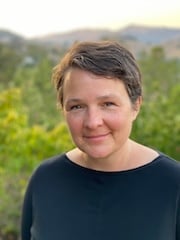
Dr. Emily Willingham is a 2022 MIT Knight Science Project Fellow, and the author of several books, including the upcoming If Your Adolescent Has Autism: An Essential Resource for Parents from Oxford University Press, and has served as a regular contributor to Scientific American and other national publications.


Add a comment: